





Why Spiral Steel Silos Perform Well in Large-Volume Agricultural Storage
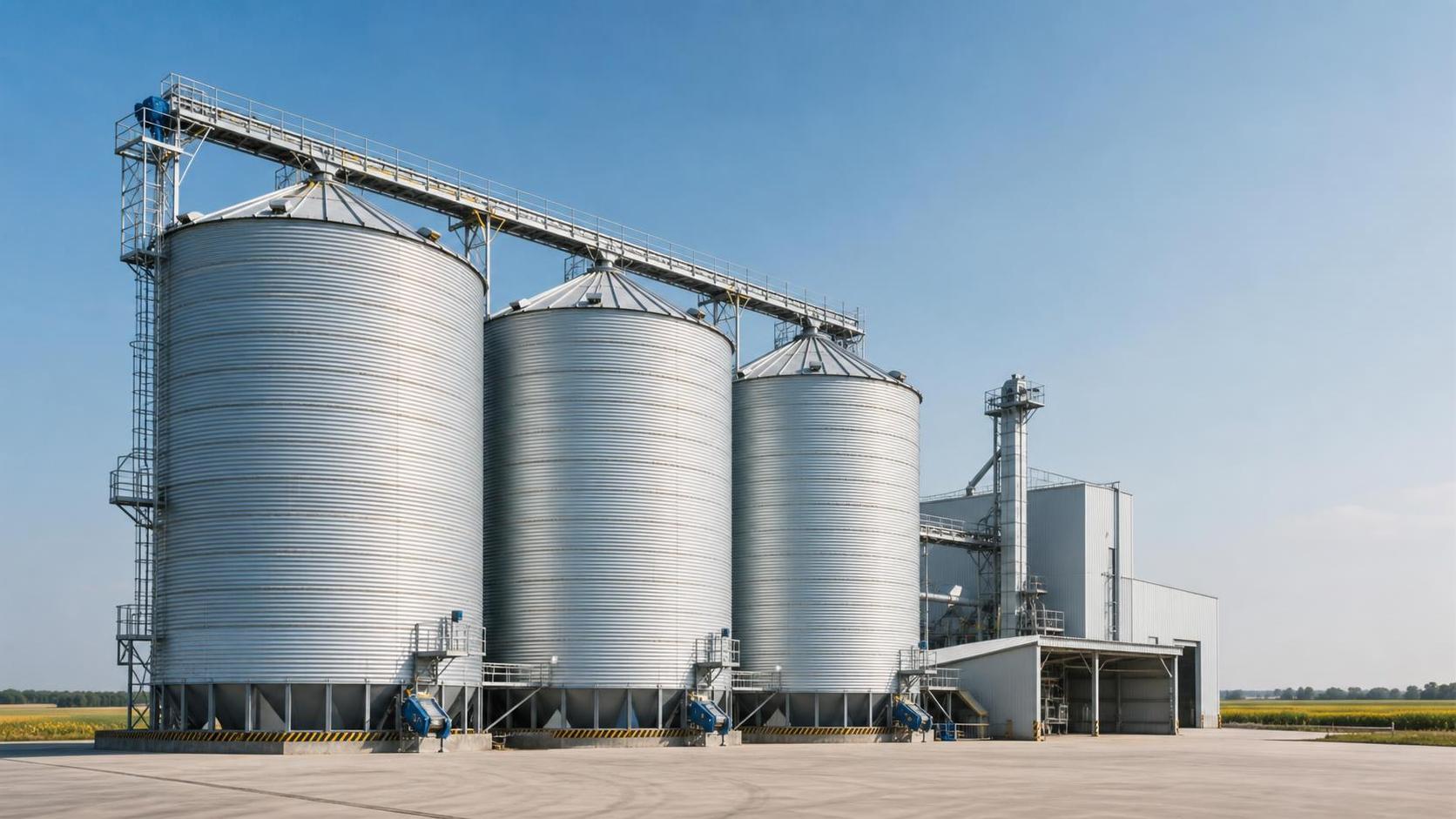
For project managers responsible for large-volume agricultural storage, the choice of silo is rarely just a purchasing decision. It affects land use, construction scheduling, grain quality, unloading efficiency, maintenance planning, and the ability to expand when seasonal throughput grows. A spiral steel silo is often selected because it addresses these pressures in a practical, project-oriented way: it provides substantial enclosed capacity without requiring an excessively complicated structural solution.
Unlike storage systems assembled from many bolted panels, a spiral-formed silo is produced by continuously shaping and seaming galvanized steel strip into a cylindrical shell. That construction method creates a distinctive continuous spiral seam along the silo wall. For agricultural projects handling wheat, maize, rice, soybeans, feed ingredients, or other dry bulk materials, this design can offer a sound balance between speed of erection, structural continuity, and long-term operating reliability.
The real value is not that one silo type fits every site. It is that a spiral steel silo gives engineering teams a dependable starting point when they need to store significant tonnage, preserve commodity quality, and keep the project moving through uncertain weather windows and tight harvest schedules.
Large-volume storage is a system challenge, not a vessel-only decision
A high-capacity agricultural storage project usually involves more than putting up one or several bins. The facility may need truck receiving, cleaning, conveying, drying, temperature monitoring, aeration, discharge equipment, dust control, electrical integration, and future transfer routes. If the silo structure consumes too much time, labor, or site space, the rest of the material-handling system can become harder to coordinate.
This is why project leaders tend to look beyond nominal capacity. They ask whether the silo can be erected efficiently, whether its foundation loads are manageable, whether it suits the available site geometry, and whether it will operate smoothly during peak intake. They also need confidence that grain stored for weeks or months will remain protected from water ingress, pests, condensation risks, and avoidable damage caused by poor flow design.
Spiral steel silos are well suited to this wider decision process. Their construction approach supports the development of tall, cylindrical storage units with a relatively compact footprint. Where land is limited near a grain collection center, feed mill, port terminal, or processing plant, vertical capacity can be more valuable than simply spreading storage across a large area.
Why the continuous spiral seam matters
The defining characteristic of a spiral steel silo is its continuously formed wall. Galvanized steel strip is shaped into a helical profile and joined as the shell rises. Rather than relying on numerous horizontal rows of bolts and overlapping panels, the wall is created as an integrated spiral structure.
For a project manager, this matters for several reasons. Fewer conventional bolted joints across the wall can reduce the number of locations that require detailed fastening checks during installation and later inspection. A continuous formed shell also creates a clean cylindrical profile that is compatible with the natural vertical loading behavior of bulk material storage.
Grain and other agricultural commodities place substantial lateral pressure on silo walls, particularly during filling, settlement, and discharge. The actual load pattern varies with material density, moisture content, flow characteristics, fill level, wall friction, and discharge method. A properly engineered spiral structure is designed with those realities in mind, using suitable steel thicknesses, reinforcement arrangements, roof configuration, and foundation interfaces for the required capacity and local conditions.
The spiral seam itself should not be treated as a marketing detail. It is a construction feature with operational implications. When specified and manufactured correctly, it contributes to wall continuity and can simplify the overall shell arrangement. Still, project teams should review the complete engineering package rather than judging a silo only by its appearance. Wind conditions, seismic requirements, snow loads, corrosion exposure, and the stored material’s behavior all influence the final design.
Construction speed can protect the wider project schedule
Agricultural projects are frequently governed by a calendar that does not wait. Harvest periods, procurement cycles, financing milestones, and processing demand can all create a narrow commissioning window. Delays in storage construction may force a facility to rely on temporary storage, extend trucking distances, or limit intake during the most commercially important period of the year.
Spiral silo forming methods can help reduce on-site assembly complexity because the silo wall is built through a continuous process rather than through the installation of a large number of individual wall sheets. This does not remove the need for planning. Foundation readiness, crane access, power availability, equipment delivery, safety procedures, roof installation, and conveyor interfaces remain essential. But a more streamlined wall-formation process can make the storage structure easier to coordinate with the rest of the build.
There is also a practical site-management advantage. A project with fewer separate wall panels and fastening operations may have less small-part handling on site. This can improve organization in busy construction areas where civil work, mechanical installation, electrical work, and truck movements overlap.
Schedule gains are most realistic when the project team makes early decisions about scope boundaries. Before mobilization, clarify who is responsible for the foundation, embedded items, access ladders, platforms, aeration ducts, sensors, discharge equipment, and control interfaces. A well-made silo cannot compensate for unclear handoffs between contractors.
Capacity, footprint, and modular growth
Large agricultural storage projects often face a familiar tension: the site needs more capacity, but available land may already be constrained by roads, receiving pits, drying towers, utility corridors, and drainage requirements. Taller steel silos can concentrate storage volume within a relatively small ground area, allowing planners to preserve circulation and leave room for process equipment.
This is especially relevant for facilities that expect phased growth. A first construction stage may serve current crop volumes, while later stages add storage, cleaning lines, transfer conveyors, or packaging capacity. The layout should therefore consider future truck routes, gallery elevations, electrical allowances, and space for additional bins before concrete is poured.
For mid-to-large storage requirements, solutions such as 800-1500 Tons Silos can be evaluated as part of a broader storage block rather than as isolated units. The right configuration depends on how the facility receives and dispatches material. A single larger silo may simplify some aspects of handling, while multiple silos provide better segregation by crop type, grade, moisture level, or harvest batch.
Project managers should avoid assuming that “bigger” automatically means “better.” A storage plan with several appropriately sized silos may reduce operational bottlenecks and make inventory rotation easier. Conversely, too many small units can increase the number of valves, conveyors, sensors, and maintenance points. The best choice comes from matching capacity to the movement pattern of the commodity.
Grain quality depends on what happens inside the silo
Steel storage provides the enclosure, but commodity preservation depends on a complete grain-management strategy. A spiral steel silo performs best when the internal environment is designed around the actual storage conditions. Grain that enters too warm, too wet, or too dirty can develop quality problems regardless of the strength of the silo wall.
Aeration is often central to this strategy. Properly designed aeration systems help equalize grain temperature, reduce moisture migration, and support safer long-term storage conditions. The required airflow and duct layout should be based on grain depth, climate, target storage duration, and the characteristics of the material. Not every crop behaves in the same way, and fine powders or feed ingredients may require different considerations from whole grain.
Temperature cables or monitoring systems provide another useful layer of control. They do not replace regular management, but they allow operators to identify temperature trends before a local issue spreads. For projects with multiple silos, integrating monitoring information into the operating routine can make inspections more targeted and reduce dependence on manual checks alone.
Roof ventilation, sealing details, access arrangements, and cleaning provisions deserve similar attention. Moisture entry and condensation are often gradual problems rather than dramatic failures. A project team that plans for sound roof drainage, suitable vents, protected openings, and safe inspection access is making an investment in grain quality as well as structural durability.
Reliable discharge begins with realistic material-flow assumptions
Storage is only half of the operating cycle. Grain must also leave the silo predictably, whether it is being sent to a processing line, loaded to trucks, transferred to a dryer, or moved to another storage area. Poor discharge planning can leave residual material, cause uneven flow, increase manual cleaning work, and create safety concerns.
When assessing a spiral steel silo, review the hopper or flat-bottom discharge arrangement in relation to the commodity and desired operating mode. Hopper-bottom configurations may be appropriate where faster gravity discharge and lower residual material are priorities. Flat-bottom silos are commonly chosen for larger capacities and can be paired with sweep augers or other reclaim equipment. Each option has consequences for civil works, equipment selection, energy use, maintenance access, and total project cost.
Material flow should be discussed honestly with the supplier and engineering team. Grain varieties, moisture levels, fines content, and storage duration can all influence discharge behavior. If the silo will store materials beyond standard cereal grains—such as oilseeds, blended feed ingredients, fertilizer-related products, or powders—additional analysis may be necessary. A design that works well for free-flowing maize may not be the right answer for a more cohesive bulk material.
What to verify before approving a spiral steel silo package
Because storage silos sit at the intersection of civil, mechanical, and operational design, procurement decisions should be supported by a clear technical review. The following questions help project managers compare proposals on more than price:
- What material will be stored? Confirm bulk density, moisture range, particle size, expected fines, and flow behavior.
- What is the required working capacity? Distinguish between nominal geometric volume and usable storage capacity under real operating conditions.
- What environmental loads apply? Review local wind, snow, rainfall, seismic, temperature, and corrosion exposure requirements.
- How will the silo be filled and emptied? Check conveyor capacity, loading point design, discharge method, and whether filling must be centrally distributed.
- What grain-conditioning equipment is included? Clarify aeration fans, ducts, vents, temperature monitoring, level indicators, and control requirements.
- How does the silo connect to the foundation? Foundation design, anchor arrangement, drainage, and settlement control should be coordinated early.
- How will personnel access the structure safely? Ladders, platforms, roof access, guards, and maintenance procedures should be part of the scope, not late additions.
- What expansion path is protected? Reserve space and structural interfaces for future conveyors, additional storage units, and utility upgrades.
These questions are not intended to complicate procurement. They reduce the chance that a seemingly simple storage purchase becomes a source of change orders and commissioning delays later.
A practical fit for integrated agricultural storage projects
For engineering teams, the strongest argument for a spiral steel silo is not a single feature. It is the way several practical benefits work together: compact high-volume storage, an efficient wall-construction method, durable galvanized steel protection, adaptable integration with handling equipment, and suitability for structured expansion plans.
Shandong Guokai International Trade Co., Ltd. supports steel storage silo projects across grain, building materials, electric power, and chemical applications. That cross-industry perspective is useful when agricultural projects require more than standard storage equipment. It encourages attention to material properties, conveying interfaces, structural loading, and the operational details that determine whether a storage system remains manageable after handover.
A spiral steel silo is most effective when treated as part of the facility’s material-flow design, not as a standalone container. With sound capacity planning, appropriate aeration and monitoring, carefully coordinated foundations, and realistic discharge requirements, it can provide a stable platform for large-volume agricultural storage. For project managers balancing time, land, commodity protection, and future growth, that balance is often exactly what the project needs.
Related Posts
- ▶ How a Dry Bulk Silo Handles Pneumatic Filling and Gravity Discharge
- ▶ What Is a Dry Bulk Silo, and When Does a Factory Need One?
- ▶ Can dry bulk storage silos be integrated into existing PLC-controlled batching systems?
- ▶ Do dry bulk silos designed for API 650 compliance meet ASME Section VIII requirements?
- ▶ Is almacénamiento de sólidos a granel en silos de acero inoxidable viable for small-scale agrochemical distributors?
- ▶ How do vibration-based level sensors perform in stainless steel silos with powder coating?
Online Message