





Spiral Steel Silo or Concrete Silo: Which Delivers Better Project Value?
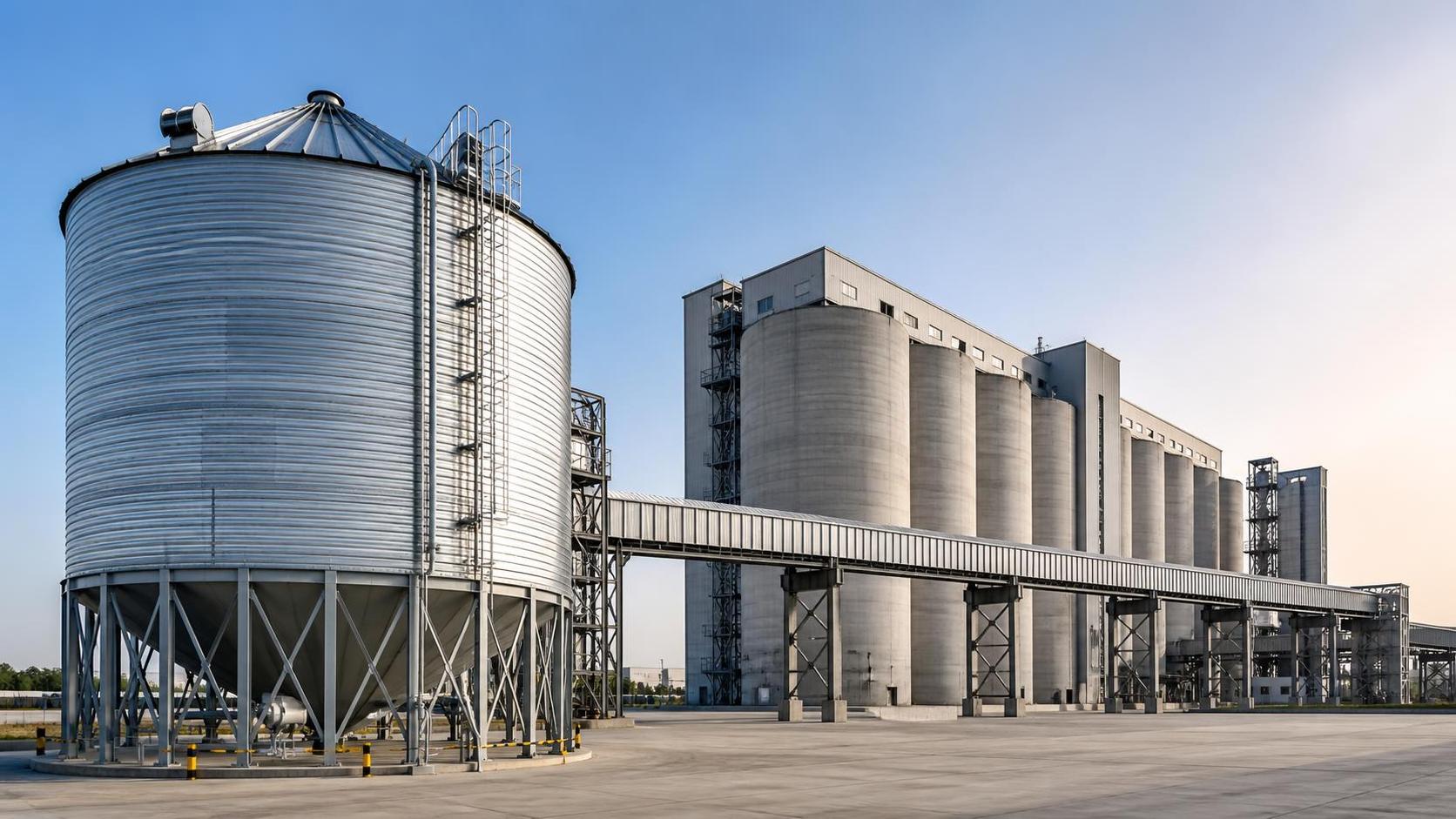
When selecting storage infrastructure, decision-makers must weigh construction speed, lifecycle cost, capacity flexibility, and operational reliability. A spiral steel silo and a concrete silo each offer distinct advantages, but the better choice depends on project requirements, material characteristics, and long-term investment goals. The central question is not which structure is “better” in the abstract. It is which structure removes the most relevant operational and financial constraints over the planned life of the facility.
For grain, feed, cement, fly ash, minerals, coal-related materials, and selected chemical bulk solids, silo selection affects more than storage volume. It influences commissioning dates, logistics continuity, working capital tied up in inventory, maintenance planning, safety exposure, and the ability to expand without disrupting production. A low initial construction price can become expensive if it delays a plant start-up or cannot adapt to a changed storage strategy. Conversely, a technically durable structure may not create value if it is oversized, poorly matched to the stored material, or difficult to build at the selected site.
The comparison should begin with the operating model, not the shell material
Concrete and steel are often compared as competing construction materials. In practice, the more useful comparison is between two project models.
A concrete silo is usually a permanent, site-built civil structure. It can be designed as a single large storage unit, a group of cells, or an integrated tower incorporating receiving, cleaning, drying, conveying, and dispatch functions. Its value is strongest where the process layout is stable, the facility is expected to operate for decades, and large fixed capacity is essential.
A spiral steel silo is generally formed from continuously profiled and seamed galvanized steel sheets. The spiral construction method creates a cylindrical shell with continuous seams, allowing relatively rapid erection compared with conventional cast-in-place structures. Its commercial logic is different: shorter construction cycles, scalable capacity, lower structural weight, and a more standardized delivery model.
Neither approach eliminates the need for serious engineering. Foundations, unloading arrangements, aeration, dust control, corrosion protection, temperature monitoring, access systems, and local permitting remain critical in both cases. The difference lies in where time, cost, and risk are concentrated.
Construction speed can have greater value than a lower capital estimate
Construction duration is frequently underestimated during early-stage budgeting. If storage is linked to a new grain processing line, port terminal, feed mill, cement plant, or power-generation fuel system, a delay in storage commissioning can delay the entire operating sequence. The cost is not merely contractor overhead. It may include lost sales, alternative storage rental, inefficient transport scheduling, demurrage exposure, or reliance on smaller and less efficient inventory batches.
A spiral steel silo normally has an advantage where schedule certainty matters. Much of the fabrication can be standardized before site work is completed, while on-site assembly is less dependent on large-scale formwork and extended concrete curing cycles. This is particularly relevant in regions with short construction seasons, limited availability of skilled civil contractors, or sites where building a tall concrete structure would require complicated logistics.
Concrete silos can still be the practical choice for very large, highly integrated projects. Slip-form construction and experienced specialist contractors can deliver impressive speed under the right conditions. However, that performance depends heavily on local contractor capability, weather management, continuous material supply, and strict quality control. A schedule assumption based on an ideal concrete construction sequence should be stress-tested against local labor availability and site conditions.
For projects with a narrow commissioning window, the evaluation should include a “time-to-revenue” scenario. Estimate the financial impact if commercial operation is delayed by one, three, or six months. This often changes the apparent cost advantage between the two options.
Initial cost is not lifecycle cost
Concrete is commonly perceived as the premium long-life solution, while steel is viewed as the lower-cost, faster alternative. That shorthand is too simplistic. Capital cost depends on capacity, site geotechnical conditions, local cement and steel prices, transport distance, seismic and wind design requirements, process integration, and the number of compartments required.
Concrete structures are heavy. Where soil bearing capacity is poor, foundation design can become a major cost driver. Piling, ground improvement, and substantial reinforced foundations may reduce or eliminate an assumed economic advantage. Spiral steel silos are lighter, which can reduce foundation demand, although they still require properly engineered base slabs and anchoring systems.
Steel systems may offer lower initial construction expenditure for many medium-capacity installations, especially where standardized designs are suitable. The cost picture changes when the project requires complex galleries, elevated receiving systems, numerous internal partitions, very high capacities, or specialized fire and explosion mitigation measures. At that point, the overall handling system—not the silo wall alone—becomes the main economic issue.
Lifecycle analysis should include at least five cost categories:
- civil works, foundations, shell, roof, and access infrastructure;
- mechanical equipment, including loading, unloading, aeration, and monitoring systems;
- routine inspection, coating repair, sealing maintenance, and corrosion management;
- downtime or inventory losses caused by cleaning, repair, or flow problems;
- future expansion, relocation, modification, or eventual decommissioning.
A concrete silo may provide long-term structural permanence when maintained correctly, but concrete cracking, moisture ingress, reinforcement corrosion, and difficult repairs should not be treated as remote risks. Steel requires attention to corrosion protection, joints, roof interfaces, fasteners, and coating condition. Its maintenance burden can be manageable, but only when material moisture, chemical aggressiveness, and external environmental exposure were properly assessed at the design stage.
Material behavior matters more than nominal capacity
One of the most expensive selection errors is choosing a silo based on tonnage alone. Bulk materials behave differently under pressure, temperature change, humidity, consolidation, and vibration. A suitable shell type cannot compensate for a poorly designed hopper angle, inadequate outlet geometry, wrong liner selection, or an unloading system that does not match the product’s flow properties.
Free-flowing dry grains and many granular materials are often well suited to spiral steel silo systems, provided moisture management, aeration, fumigation requirements, and temperature control are correctly specified. Grain storage also requires attention to insect control, condensation risk, roof ventilation, and safe access for inspection.
Fine powders such as cement, fly ash, lime, starch, and certain chemical products require a more detailed flowability assessment. They can bridge, rat-hole, compact, or generate dust hazards. Abrasive products can wear liners and discharge components. Hygroscopic materials may cake against surfaces. In these cases, decisions should be based on bulk density, moisture content, particle size distribution, angle of repose, wall friction, consolidation behavior, and explosion characteristics where applicable.
Concrete may be favored for aggressive industrial environments or facilities where thermal mass and structural integration are valuable. Yet it is not automatically superior for corrosive materials. Chemical attack on concrete, especially through acids, chlorides, sulfates, or moisture-driven reactions, can be severe without appropriate linings and protective systems. Steel may also require upgraded coatings, stainless components, or specialized internal liners. The material stored and the atmosphere above it must guide the specification.
Liquid storage should not be forced into a dry-bulk silo decision framework. Facilities handling edible oils, fats, or temperature-sensitive viscous liquids need insulated tanks, hygienic design, heating arrangements where necessary, and controlled drainage. In a mixed storage project, solutions such as Insulated Stainless Steel Oil & Fat Liquid Tanks should be evaluated separately from bulk-solid silos, even if they share utilities, loading facilities, or a common site infrastructure plan.
Flexibility is a strategic advantage, but only if it is planned into the project
Markets change faster than fixed infrastructure. Feed producers may switch formulations, grain traders may alter seasonal inventory strategies, and building-material producers may add new products or serve different geographic markets. Storage that cannot adapt can constrain growth long after the original project assumptions have changed.
A spiral steel silo often provides stronger expansion flexibility. Additional units can be added in phases if land, conveyor routing, electrical capacity, and foundations are planned accordingly. This supports staged investment: build enough capacity for current throughput, then add modules as demand becomes proven. It can reduce the risk of investing heavily in underused storage during uncertain market conditions.
Concrete facilities can also be expanded, but expansion is usually more complex. New cells, towers, galleries, and foundations may need to be integrated into an existing structural and process system. The work can affect ongoing operations and may involve more extensive permitting and site disruption. For stable, high-volume operations, this lack of flexibility may be acceptable because the facility is optimized around a fixed long-term flow.
There is a limit to the flexibility argument. Adding silos without planning receiving and dispatch capacity simply shifts the bottleneck. A phased storage strategy should reserve space for truck access, rail loading where relevant, dust collection, conveying corridors, control systems, and fire access. The question is not whether another silo can fit on the plot; it is whether the added inventory can move through the facility efficiently.
Reliability depends on engineering discipline, not just construction type
Both systems can operate reliably for many years, and both can fail prematurely when design, fabrication, or installation quality is weak. Buyers should be cautious of supplier comparisons that focus exclusively on wall thickness, total tonnage, or headline capacity.
For a spiral steel silo, the review should cover steel grade, galvanizing or coating specification, seam-forming quality, anchoring design, roof drainage, sealing, ventilation, access safety, corrosion assumptions, and the engineering basis for wind, snow, seismic, and discharge loads. The unloading mechanism deserves particular scrutiny because eccentric discharge or unexpected material behavior can create asymmetric loads that were not adequately considered.
For concrete silos, key issues include concrete mix design, reinforcement detailing, crack-control strategy, construction-joint treatment, curing records, waterproofing, liner interfaces, and the experience of the contractor with silo-specific loads. A concrete structure is not simply a building with material inside it. Stored bulk solids exert complex loads during filling, discharge, and uneven flow, which must be addressed through appropriate silo engineering.
In either case, instrumentation is increasingly part of reliability rather than an optional upgrade. Temperature cables, level sensors, pressure monitoring, bearing sensors, dust monitoring, and remote alarms can reduce losses and allow maintenance teams to intervene before a small defect becomes a shutdown event. The right level of automation depends on product value, storage duration, labor model, and consequence of failure.
Safety, compliance, and insurability should be reviewed before contract award
Storage projects sit at the intersection of structural safety, occupational safety, environmental control, and, in some sectors, food or chemical compliance. Requirements vary by jurisdiction, so local building codes, fire rules, environmental permits, and workplace regulations must be confirmed for the actual project location. Applicable design standards should be identified in the tender documents rather than assumed from a supplier’s general statement of compliance.
Dust explosion risk is particularly important for combustible dusts, including many grain, feed, food, biomass, and organic powder applications. Prevention and protection may involve dust extraction, housekeeping design, explosion venting or suppression, isolation devices, grounding, electrical area classification, and operating procedures. These measures affect capital cost and layout. They should not be added late as an afterthought.
Confined-space access is another recurring issue. Inspection doors, ladders, platforms, rescue planning, lockout procedures, and safe cleaning methods must be designed around actual operating practices. The cheapest access arrangement is rarely the lowest-risk arrangement over the life of the asset.
A practical decision rule
A spiral steel silo usually delivers better project value when the priority is rapid deployment, modular expansion, efficient use of capital, and reliable storage of suitable dry bulk materials. It is especially compelling for phased projects, remote sites, seasonal storage expansion, and operations where a shorter path from order to commissioning has measurable commercial value.
A concrete silo is more likely to justify its higher complexity when the project requires very large permanent capacity, deep integration with a fixed processing plant, multiple large compartments, substantial elevated handling equipment, or an operating model expected to remain unchanged for decades. Its value comes from permanence and integration rather than from speed or modularity.
The final decision should be based on a site-specific comparison using the same design basis for both options: required working capacity rather than gross volume, material flow data, loading and unloading rates, foundation assumptions, environmental conditions, safety systems, expansion requirements, and expected operating life. Requesting two prices against vague capacity figures produces a misleading comparison. Requesting two engineered solutions against the same operating assumptions produces a decision that can withstand technical, financial, and operational scrutiny.
Related Posts
- ▶ How a Dry Bulk Silo Handles Pneumatic Filling and Gravity Discharge
- ▶ What Is a Dry Bulk Silo, and When Does a Factory Need One?
- ▶ Can dry bulk storage silos be integrated into existing PLC-controlled batching systems?
- ▶ Do dry bulk silos designed for API 650 compliance meet ASME Section VIII requirements?
- ▶ Is almacénamiento de sólidos a granel en silos de acero inoxidable viable for small-scale agrochemical distributors?
- ▶ How do vibration-based level sensors perform in stainless steel silos with powder coating?
Online Message