





Do dry bulk silos designed for API 650 compliance meet ASME Section VIII requirements?
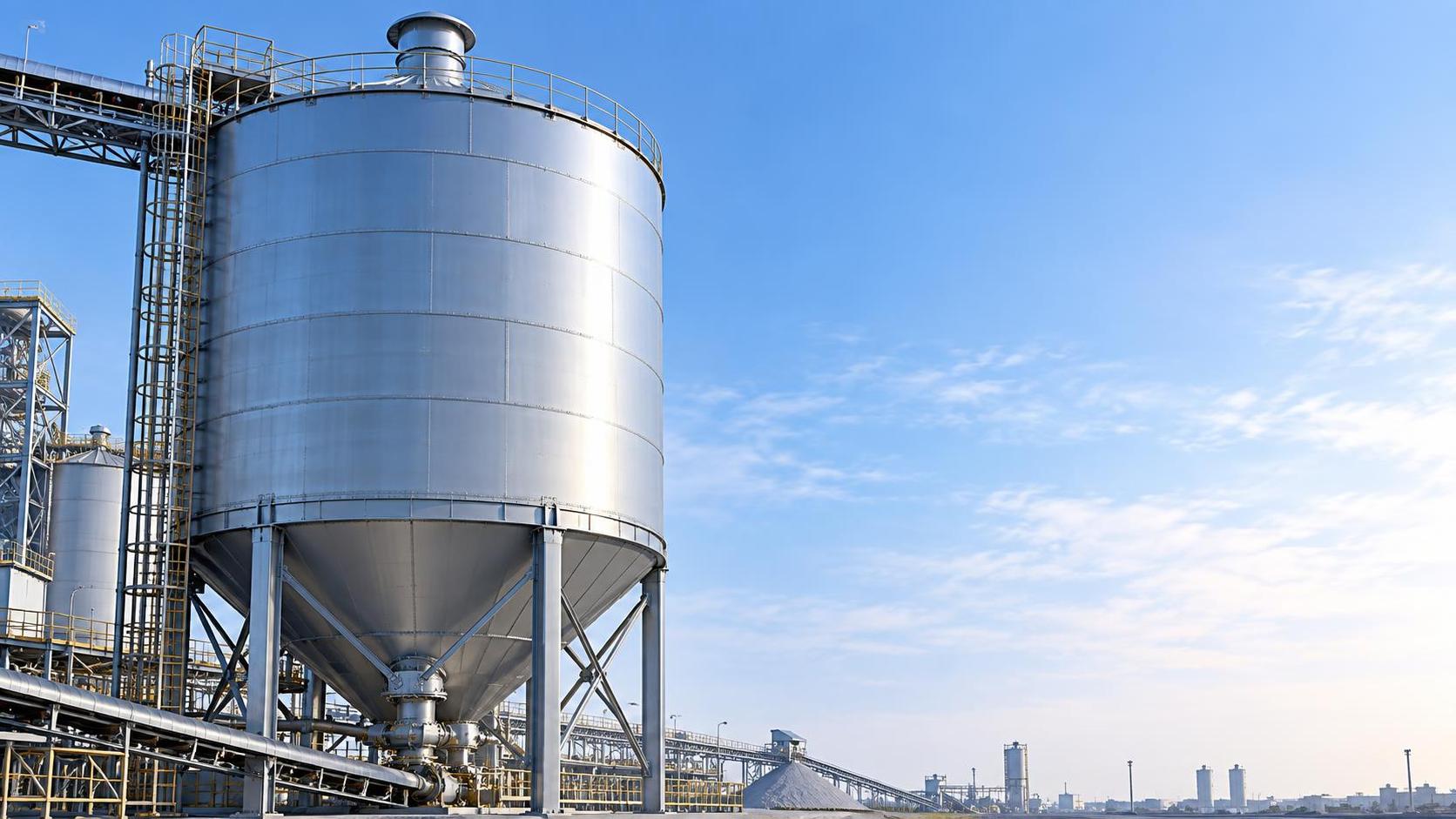
API 650 and ASME Section VIII serve fundamentally distinct design domains—neither supersedes the other, and compliance with one does not imply compliance with the other. A dry bulk silo engineered to API 650 is explicitly intended for atmospheric or near-atmospheric storage of solids such as cement, fly ash, limestone, or grain. Its structural philosophy centers on gravity-driven loading, wind and seismic lateral forces, and material-induced hopper pressures—not internal pressure containment. In contrast, ASME Section VIII, Division 1 (and especially Division 2), governs vessels designed to withstand sustained internal or external pressure differential—typically ≥15 psi gauge—requiring rigorous stress categorization, fatigue assessment, and mandatory joint efficiency verification.
Material and Fabrication Requirements Are Not Interchangeable
API 650 permits a broader range of carbon steels—including ASTM A36, A283, and A572—with allowable stresses derived from yield strength and safety factors appropriate for non-pressurized service. ASME Section VIII mandates stricter material traceability: full heat treatment records, certified mill test reports (MTRs) per ASTM A6/A6M, and often requires impact testing for low-temperature service—even when ambient conditions appear benign. More critically, ASME prohibits certain weld joint configurations permitted under API 650. For example, single-sided fillet welds without backing are acceptable for API 650 shell-to-bottom attachments but violate ASME’s requirement for full-penetration welds in pressure-retaining boundaries. Likewise, API 650 allows lap joints for non-pressure zones; ASME Section VIII disallows them entirely in pressure boundary construction.
Stress Analysis Scope and Methodology Diverge Significantly
API 650 relies on simplified membrane and bending stress approximations based on shell geometry, fill height, and material density. It does not require finite element analysis (FEA) for standard configurations and treats hopper transitions as secondary load paths. ASME Section VIII demands detailed stress classification: primary membrane, primary bending, secondary, and peak stresses—each assigned different allowable limits and evaluated against specific failure modes. A silo operating at 5 psi internal pressure due to pneumatic conveying surges may fall below ASME’s 15 psi threshold for mandatory pressure vessel classification—but if cyclic pressure variations exceed 1,000 cycles over its design life, ASME Section VIII, Division 2 fatigue rules apply regardless of peak magnitude. This nuance is frequently overlooked during initial specification.
Inspection and NDE Protocols Reflect Different Risk Hierarchies
API 650 specifies visual inspection (VT) for all welds and optional radiographic testing (RT) only for Category A joints in tanks exceeding 200 ft in diameter or storing hazardous materials. ASME Section VIII mandates RT or ultrasonic testing (UT) for all longitudinal and circumferential butt welds in pressure-retaining components—regardless of size—and requires 100% coverage for critical joints. Additionally, ASME requires hydrostatic or pneumatic testing post-fabrication, including pressure holding periods and leak monitoring protocols that have no equivalent in API 650. These tests impose logistical constraints: field hydrotesting of large-diameter silos demands water sourcing, containment, drainage planning, and structural verification of foundations under transient load—factors rarely addressed in API 650 execution.
When Dual Compliance Becomes Operationally Necessary
Dual compliance arises not from regulatory overlap but from functional convergence. A cement silo feeding a fluidized bed reactor may experience transient backpressure during system upsets; a biomass storage unit integrated with anaerobic digestion may generate biogas accumulation requiring pressure-rated venting. In such cases, the silo’s lower section—including hopper, outlet nozzle, and first 2–3 ring courses—must meet ASME Section VIII while upper cylindrical sections remain API 650-compliant. This hybrid design demands precise interface detailing: transition reinforcement, differential thermal expansion accommodation, and coordinated inspection staging. Misalignment here often leads to rework—especially when nozzle reinforcement pads are sized for API loads but fail ASME’s area replacement calculations.
Manufacturers capable of delivering such integration must maintain dual-certified welding procedures (WPS/PQR), ASME “U” stamp authorization for pressure boundary work, and API 650-specific quality control plans—separate from their pressure vessel program. Certification scope matters: an ASME “U” stamp covers only pressure-retaining components; it does not extend to API 650 shell or roof structures unless explicitly included in the Certificate of Authorization scope. Verifying this alignment before procurement avoids contractual gaps during third-party review.
Design Boundary Clarification Is Non-Negotiable
One common misstep is assuming that adding a pressure relief valve automatically triggers ASME Section VIII applicability. It does not. The governing criterion remains whether the vessel is *designed* to contain pressure—not whether it *might* experience it. If the relief valve is sized solely for emergency venting of dust explosions (per NFPA 68), and the silo structure lacks pressure-rated nozzles, flanges, or reinforcement, ASME Section VIII does not apply—even if transient overpressure exceeds 15 psi. Conversely, specifying a “pressure-rated” outlet gate without verifying its integration into a fully qualified ASME boundary creates a false sense of compliance. The entire pressure-retaining path—from inlet flange through shell to outlet flange—must be analyzed as a unified system.
For applications where powder flow dynamics induce sustained differential pressure across discharge equipment—such as dense-phase pneumatic transfer lines directly connected to silo outlets—the line-of-sight structural interface becomes the critical compliance junction. Here, even Horizontal Bulk Powder Storage Tanks configured for low-head gravity discharge may require ASME-reviewed outlet manways if upstream conveying pressure is transmitted through flexible connections or unisolated piping spools.
Field Verification Often Reveals Hidden Gaps
During commissioning, discrepancies typically surface in documentation rather than fabrication. API 650 requires material test reports tied to shell course numbers; ASME Section VIII requires heat number traceability down to individual plate segments. When plates are cut from larger rolls and re-stamped, ASME traceability can be lost unless the fabricator maintains dual-logbook practices. Similarly, API 650 permits post-weld heat treatment (PWHT) exemptions for thin sections; ASME Section VIII may mandate PWHT for identical thicknesses if the material group and carbon equivalent warrant it—even if the same steel grade is used. These distinctions become enforceable only during final inspection, when missing PWHT records or incomplete MTRs halt sign-off.
Ultimately, the question “Do dry bulk silos designed for API 650 compliance meet ASME Section VIII requirements?” has a definitive answer: no—not by default, not structurally, and not procedurally. Conformance requires deliberate, documented engineering choices at every stage: material selection, joint design, stress evaluation method, NDE scope, and test protocol. Assuming equivalency risks non-acceptance by jurisdictional authorities, insurance underwriters, or process licensors—particularly in electric power, chemical processing, and regulated grain export facilities where audit trails are scrutinized to the weld map level.
Related Posts
- ▶ How a Dry Bulk Silo Handles Pneumatic Filling and Gravity Discharge
- ▶ What Is a Dry Bulk Silo, and When Does a Factory Need One?
- ▶ Can dry bulk storage silos be integrated into existing PLC-controlled batching systems?
- ▶ Do dry bulk silos designed for API 650 compliance meet ASME Section VIII requirements?
- ▶ Is almacénamiento de sólidos a granel en silos de acero inoxidable viable for small-scale agrochemical distributors?
- ▶ How do vibration-based level sensors perform in stainless steel silos with powder coating?
Online Message