





Is almacénamiento de sólidos a granel en silos de acero inoxidable viable for small-scale agrochemical distributors?
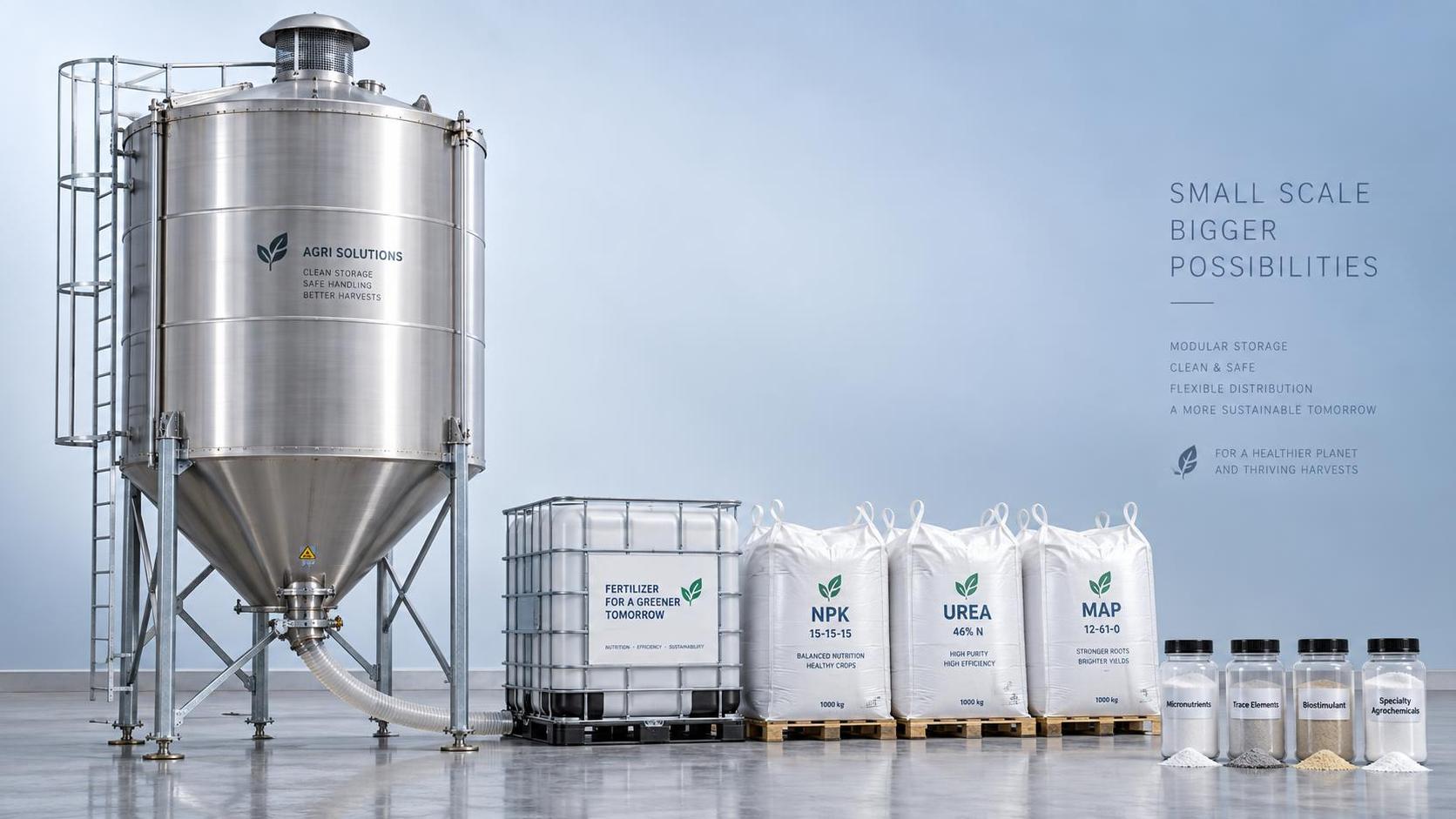
For small-scale agrochemical distributors, the question isn’t just *what* to store—but *how*, *where*, and *for how long*—without compromising safety, compliance, or cash flow. You’re not running a port terminal or a national fertilizer hub. Your warehouse is tight. Your team wears multiple hats. Your margins are thin—and your regulatory exposure? Anything but small.
So when you hear “almacenamiento de sólidos a granel en silos de acero inoxidable”, it’s natural to pause. Stainless steel silos sound like infrastructure for industrial giants—polished, permanent, prohibitively expensive. But what if that assumption is outdated? What if the real bottleneck isn’t scale—it’s *perception*?
Let’s start with reality: Agrochemicals aren’t uniform. Some granular fungicides cake in humidity. Others react subtly with carbon steel over time. Trace moisture, airborne chlorides, or even residual cleaning agents can accelerate corrosion—not just in the material, but in your reputation. A single batch contamination incident doesn’t just cost product; it costs trust, shelf space, and future tenders.
That’s why many small distributors default to lined mild-steel bins or plastic-lined concrete pits. They’re cheaper upfront. But they come with hidden trade-offs: shorter lifespans, unpredictable maintenance windows, and growing uncertainty around hygiene validation—especially as regional regulators tighten traceability and residue thresholds for crop protection products.
Stainless steel isn’t about luxury. It’s about predictability. Grade 304 or 316 stainless offers passive corrosion resistance where it matters most: at the interface between powder and surface. No coatings to chip, no liners to degrade, no hidden crevices where dust accumulates and reacts unseen. For distributors handling multiple formulations—some hygroscopic, some mildly alkaline, some containing copper or sulfur compounds—that consistency isn’t optional. It’s operational insurance.
But viability hinges on more than material. It hinges on *fit*.
A silo isn’t just a container. It’s part of a workflow: receiving, sampling, blending (if applicable), bagging or bulk loading, inventory tracking, and periodic cleaning. At small scale, flexibility often outweighs raw capacity. That’s why modularity matters—not as a buzzword, but as a functional response to real-world constraints. Think: a footprint under 8 meters in diameter. A height that clears standard warehouse clearance without structural retrofitting. A design that allows gravity discharge into IBCs or small-batch mixers—not just railcars.
Shandong Guokai International Trade Co., Ltd. builds with this nuance in mind. Their expertise spans grain, chemicals, and building materials—not because they’re generalists, but because each sector teaches something different about bulk behavior, thermal expansion, vibration tolerance, and long-term fatigue. Grain demands gentle flow; cement requires abrasion resistance; agrochemicals demand both purity *and* process resilience. Their approach avoids over-engineering—not by cutting corners, but by matching geometry, wall thickness, and support structure precisely to duty cycle and load profile.
Take their 500-800 Tons Silos. That range isn’t arbitrary. It reflects a deliberate sweet spot: large enough to reduce inbound logistics frequency (cutting transport costs per ton), yet compact enough to install without cranes or reinforced flooring. These units integrate seamlessly with common pneumatic conveying systems, feature adjustable outlet hoppers for variable discharge rates, and allow full internal access for inspection or manual cleaning—critical when switching between herbicide and micronutrient batches.
Cost remains the elephant in the room. Yes, stainless steel carries a higher initial investment than painted carbon steel. But consider total cost of ownership over five years:
- No scheduled recoating or liner replacement
- Minimal downtime for surface prep or leak patching
- Lower risk of cross-contamination recalls
- Easier audit readiness (smooth, non-porous surfaces simplify swab testing)
- Resale value retention—stainless retains integrity, not just appearance
One distributor in central Spain shifted from a 20-year-old concrete bunker (with epoxy lining cracks and moisture seepage) to a 650-ton stainless unit. Their annual maintenance budget dropped 62%. More importantly, their batch release cycle shortened by 1.8 days—because inspectors could verify cleanliness in under two hours instead of waiting for lab reports on swab samples from suspect zones.
It’s not just about hardware. It’s about how the system supports *your decisions*. Do you stock three formulations year-round—or rotate based on planting season? Does your customer base prefer pre-mixed blends or raw components? Are you expanding into organic-certified inputs, where metal leaching limits are stricter? Stainless steel silos don’t lock you into one strategy—they give you room to adapt without retooling your core storage.
There’s also the human factor. Operators notice difference. No more scraping off crusty residue from chutes. No more guessing whether that faint odor near the discharge valve means moisture ingress—or early decomposition. The visual clarity of polished stainless—combined with intuitive access points—reduces cognitive load during routine checks. In high-stakes environments, that quiet reliability compounds.
Of course, not every stainless silo is right for every distributor. Oversized units waste space and capital. Poorly integrated discharge systems create flow issues—even with ideal material. And while stainless resists corrosion, it doesn’t eliminate the need for proper venting, moisture control, or regular calibration of level sensors. Viability depends on partnership—not just purchase.
That’s where Shandong Guokai’s project-focused model becomes relevant. They don’t ship catalogs. They review your material specs, your facility layout, your typical fill cycles, and your quality protocols—then engineer a solution that aligns with your actual rhythm, not an industry average. Their engineers speak fluent chemistry *and* construction—not just metallurgy. They’ve designed units for distributors who handle everything from calcium cyanamide to zinc oxide powders, each with distinct density, abrasiveness, and electrostatic behavior.
Almacenamiento de sólidos a granel isn’t merely logistical. It’s a silent part of your brand promise: that what arrives at the farm gate performs as labeled, uncontaminated, and consistent. When your storage system operates invisibly—no surprises, no stoppages, no compliance alarms—you gain something harder to quantify than ROI: credibility.
So is stainless steel viable for small-scale agrochemical distributors? Not as a blanket yes—or no. It’s viable when matched to purpose, scaled to reality, and supported by partners who understand that your “small scale” doesn’t mean small stakes. It means precision matters more. Responsiveness matters more. Long-term trust matters more.
The question isn’t whether you *can* afford stainless steel. It’s whether you can afford the cumulative cost of alternatives—measured not just in euros, but in time, reputation, and resilience.
And if your current storage feels like a compromise you renew every quarter… maybe it’s time to reframe the question entirely. Not “Is stainless possible?” but “What would change—if reliability were built in, not bolted on?”
Because in agrochemical distribution, the most powerful leverage point isn’t always in the formulation. Sometimes, it’s in the vessel.
Related Posts
- ▶ How a Dry Bulk Silo Handles Pneumatic Filling and Gravity Discharge
- ▶ What Is a Dry Bulk Silo, and When Does a Factory Need One?
- ▶ Can dry bulk storage silos be integrated into existing PLC-controlled batching systems?
- ▶ Do dry bulk silos designed for API 650 compliance meet ASME Section VIII requirements?
- ▶ Is almacénamiento de sólidos a granel en silos de acero inoxidable viable for small-scale agrochemical distributors?
- ▶ How do vibration-based level sensors perform in stainless steel silos with powder coating?
Online Message