





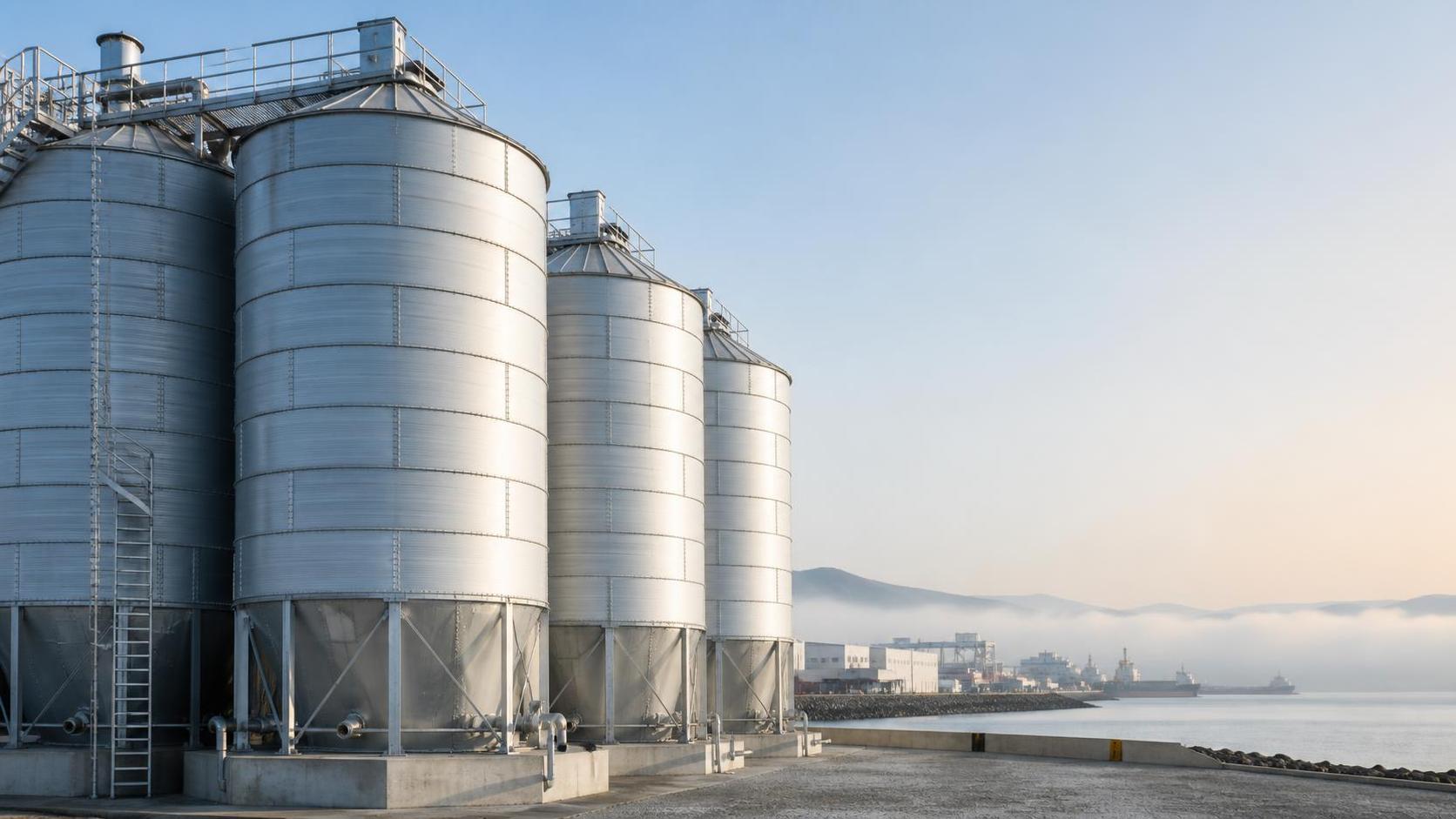
In humid coastal regions, corrosion can shorten equipment life, compromise storage safety, and increase maintenance costs for steel silo owners and operating teams.
For after-sales personnel, protecting a spiral steel silo requires a practical understanding of salt-laden air, condensation, coating failure, structural weak points, and repair priorities.
Start With the Real Coastal Corrosion Threat
Coastal corrosion is rarely caused by humidity alone. Chloride salts carried by sea air settle on steel surfaces, attract moisture, and create persistent electrochemical corrosion conditions.
Even a silo located several kilometers inland may be affected when prevailing winds carry salt aerosol through loading yards, ventilation openings, roof seams, and access platforms.
Maintenance teams should assume that any exposed galvanized or painted surface can become vulnerable when salt deposits remain wet for extended periods after rainfall or fog.
The highest-risk locations are usually not obvious broad wall areas. They are joints, fasteners, roof penetrations, discharge openings, stiffeners, ladders, and enclosed moisture traps.
A spiral steel silo has continuous formed seams that offer structural and installation advantages, but seam areas still require close inspection when protective coatings deteriorate.
Corrosion often begins beneath deposits, damaged paint edges, loose bolts, or overlapping components where water remains after washing, rainstorms, or night-time condensation cycles.
After-sales teams should distinguish between superficial staining and active metal loss. Red rust may be visible, while more serious hidden corrosion develops behind seals or attachments.
The practical goal is not simply removing visible rust. It is stopping the moisture, salt, oxygen, and coating damage cycle before structural integrity becomes affected.
Identify the Silo Areas That Need More Frequent Inspection
Inspection frequency should be based on exposure conditions, stored material behavior, operating hours, and the condition history of each spiral steel silo installation.
External roof sections deserve priority because they receive direct salt deposition, ultraviolet exposure, wind-driven rain, and thermal cycling that can open coating defects.
Roof vents and pressure-relief devices require special attention because they introduce humid outside air while also collecting dust, residue, and corrosive condensate.
Check flashing around roof openings for cracked sealant, loose mechanical fasteners, ponding water, and signs that water has migrated beneath protective layers.
Wall sections near loading equipment should be inspected for abrasion. Repeated contact from conveyors, hoses, access tools, or mobile machinery can expose bare steel.
Support legs, base plates, anchor bolts, and foundation interfaces are critical because saltwater spray or poor drainage can accelerate corrosion where structural loads concentrate.
Inspect the bottom cone, discharge hopper, slide-gate supports, and transition sections carefully. These areas may experience product buildup, vibration, abrasion, and trapped moisture.
Inside the silo, examine areas below roof vents, near inspection doors, and around grain bridges, where condensation or material fines can retain moisture against steel.
Control Condensation Before It Becomes Internal Corrosion
Internal corrosion is frequently underestimated because maintenance teams focus on external weather exposure. In reality, condensation can be more damaging inside poorly managed storage systems.
Warm, moist coastal air entering a cooler silo can reach its dew point on roof sheets, wall panels, ladders, and internal stiffening components.
Temperature differences become especially severe after sunny afternoons, during seasonal transitions, or when stored material temperature differs significantly from surrounding ambient conditions.
When moisture condenses repeatedly, fine dust and product residue form a wet layer that holds salts, organic acids, and other contaminants against steel surfaces.
Monitor roof sweating, damp product crusting, unusual caking, wet patches near access doors, and moisture streaks beneath roof components during routine service visits.
Ventilation should be managed according to actual weather conditions rather than operated continuously. Drawing humid night air into a cooler structure may worsen condensation.
Where applicable, use controlled aeration, insulated roof components, sealed openings, and moisture monitoring to reduce repeated internal wetting events during storage cycles.
Documenting temperature and humidity readings gives after-sales personnel evidence for recommending operational changes instead of treating every corrosion symptom as a coating problem.
Assess Coatings Systematically Instead of Repairing Only Visible Damage
A coating inspection should evaluate adhesion, thickness, continuity, contamination, edge coverage, mechanical damage, and compatibility with the original protective system.
Small coating defects become high-priority repairs in coastal environments because chloride contamination can spread beneath an apparently intact surrounding paint film.
Look for blistering, chalking, underfilm rust, peeling edges, pinholes, cracking, discoloration, and corrosion creep around bolts, welds, and repaired locations.
Before repainting, remove loose corrosion products and determine whether salt contamination remains. Painting over chloride residues can cause early failure despite a clean appearance.
Surface preparation should match the extent of deterioration. Local mechanical cleaning may suit minor defects, while severe corrosion may require broader abrasive treatment.
Repair coatings should be selected for marine or coastal industrial exposure, including resistance to moisture, ultraviolet radiation, salt spray, and expected cleaning chemicals.
Pay particular attention to cut edges and fastener heads. These points often receive thinner coating coverage and are common starting locations for corrosion.
After repair, record the material used, preparation method, weather conditions, repair area, and expected reinspection date for future maintenance traceability.
Protect Fasteners, Seams, and Interfaces Where Corrosion Spreads Fastest
Fasteners create different corrosion behavior because dissimilar metals, damaged galvanizing, water retention, and tightening stress can accelerate localized attack around connection points.
Inspect bolts for red rust, white corrosion products, coating loss, looseness, elongated holes, and staining that indicates water has entered a joint.
Do not immediately replace every stained bolt. First assess whether corrosion is limited to surface deposits or has reduced the fastener section or thread engagement.
Spiral seams should remain clean and dry, especially near openings or equipment supports. Deposits along seam lines can retain water and conceal coating deterioration.
Sealants around joints should be flexible, compatible with the coating system, and resistant to weathering. Hardened sealants can crack and allow water ingress.
When replacing components, avoid combining metals without considering galvanic corrosion. Saltwater films can turn incompatible material combinations into accelerated corrosion cells.
Drainage paths around platforms, brackets, and equipment supports should remain open. Standing water near interfaces is more damaging than brief rain exposure.
For installations requiring enhanced containment and controlled sealing, Sealed Eco Powder Spiral Silos may support maintenance strategies focused on reducing moisture entry and residue accumulation.
Use a Risk-Based Inspection Schedule for After-Sales Work
Routine inspection intervals should not be identical for every site. Exposure severity, maintenance history, production schedule, and stored material characteristics should determine priorities.
High-exposure coastal sites may need visual checks every month, detailed condition reviews every quarter, and formal structural assessments at planned annual intervals.
After severe storms, typhoons, salt spray events, flooding, or prolonged fog, inspect roof sealing, drainage points, access doors, anchors, and exposed equipment immediately.
Create a simple corrosion map for each silo. Divide the structure into roof, wall, seam, foundation, discharge, platform, interior, and accessory zones.
Assign each observed defect a condition category such as monitor, repair soon, urgent repair, or engineering assessment required. This improves communication with site managers.
Photographs should include a scale reference and location identifier. Repeating photographs from the same angle makes corrosion progression easier to evaluate over time.
Thickness measurements are valuable when corrosion appears advanced, especially around load-bearing supports, shell transitions, base components, and areas exposed to chemical residues.
A clear inspection record protects both the service provider and customer because it links repair recommendations to observable conditions rather than subjective impressions.
Respond Correctly When Corrosion Is Already Advanced
When corrosion has progressed beyond surface staining, maintenance personnel should avoid treating it as a cosmetic issue. Structural and operational consequences must be evaluated.
Escalate immediately when metal loss is visible near anchors, load-bearing members, roof supports, discharge systems, stair connections, or equipment mounting brackets.
Deformation, cracking, loose anchors, leaking seams, product contamination, or falling rust scale may indicate that routine maintenance is no longer sufficient.
Before repair work begins, isolate affected equipment where necessary and confirm whether stored product, dust, confined-space conditions, or mechanical loads create additional hazards.
Localized steel repair should follow an engineering review when load paths may be affected. Improvised welding or drilling can introduce new stress concentrations.
Where replacement is necessary, specify compatible materials and restore the complete protective system, including surface preparation, primer, intermediate layer, and topcoat if required.
Repair crews should also correct the underlying cause. Repainting without improving drainage, sealing, ventilation, or cleaning practices usually produces repeated corrosion failures.
After major repairs, schedule an early follow-up inspection. This confirms coating adhesion, seal performance, drainage behavior, and absence of renewed moisture intrusion.
Improve Cleaning and Operating Practices at Customer Sites
Many corrosion problems can be reduced through operating discipline. After-sales personnel should explain which daily practices affect silo condition between scheduled service visits.
Salt deposits should be removed from accessible external surfaces using appropriate fresh-water cleaning methods, followed by drying or conditions that allow effective evaporation.
Avoid aggressive cleaning methods that damage coatings, force water into seams, or leave chemical residues. Cleaning products must be compatible with protective finishes.
Dust accumulation should not be ignored. Dust absorbs moisture and can trap corrosive contaminants, particularly around roofs, hoppers, platforms, and ventilation equipment.
Customers should repair leaking doors, damaged gaskets, blocked drains, and loose covers promptly. Small leaks can create long-term corrosion conditions inside protected spaces.
Stored material management matters as well. Wet grain, corrosive powders, chemical residues, and prolonged stagnant storage can increase internal corrosion risk significantly.
Encourage operators to report unusual condensation, rusty runoff, material discoloration, recurring leaks, or changes in discharge performance before problems become expensive repairs.
Maintenance guidance is more effective when it is site-specific. A coastal grain terminal, cement plant, power station, and chemical facility face different contaminant conditions.
Make Corrosion Control Part of Long-Term Silo Reliability
Effective corrosion management combines inspection, cleaning, coating repair, moisture control, documentation, and timely escalation. No single action can protect a silo indefinitely.
For after-sales teams, the most valuable approach is early detection. Addressing minor coating damage and drainage failures is faster, safer, and less costly than structural restoration.
A spiral steel silo operating near the coast should be evaluated as a complete system, including shell surfaces, internal atmosphere, accessories, foundations, and customer operating habits.
Service recommendations should be based on evidence from inspections, photographs, measurements, and environmental exposure rather than generic maintenance intervals or appearance alone.
When customers understand why salt deposits, condensation, and damaged interfaces matter, they are more likely to support preventive maintenance before production is interrupted.
Consistent corrosion control extends equipment life, protects stored materials, supports safer operations, and helps preserve the reliability expected from professionally designed steel silo projects.