





Which Bulk Material Storage Silo Suits Powders, Pellets, and Granules?
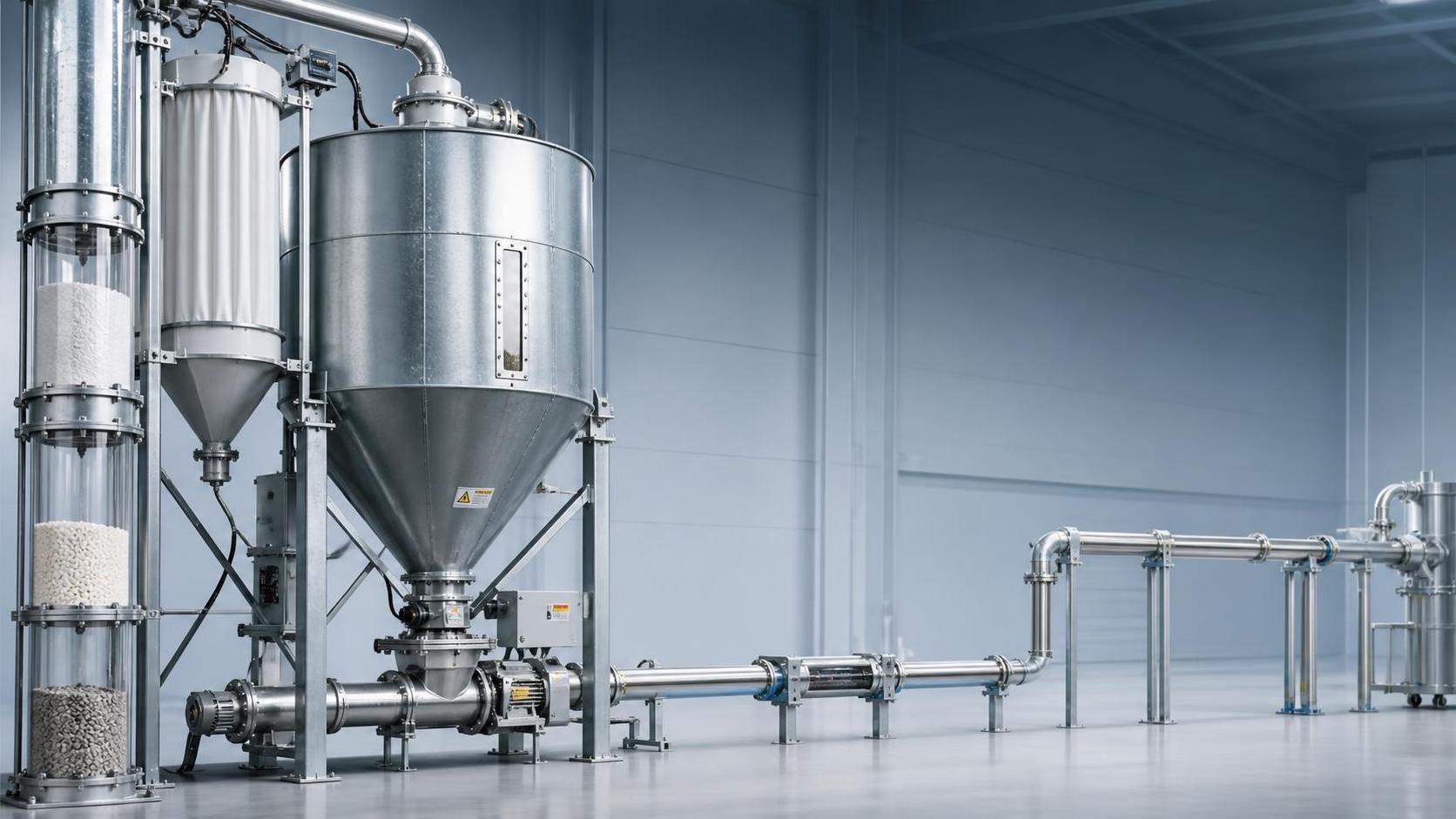
Choosing a silo is rarely a matter of selecting a diameter, height, and nominal capacity from a catalogue. For buyers handling powders, pellets, or granules, the real question is whether the stored material will remain stable, discharge predictably, stay protected from moisture, and fit into the wider receiving, conveying, batching, or loading process. A vessel that works well for dry grain may create serious flow problems with cement powder. A design suited to free-flowing plastic pellets may be unsuitable for hygroscopic chemical granules.
That is why bulk material storage silos should be selected from the material outward, not from capacity backward. The material’s particle size, bulk density, moisture behavior, angle of repose, abrasiveness, tendency to segregate, and sensitivity to contamination all affect the silo body, hopper geometry, discharge equipment, ventilation arrangement, and safety provisions. Procurement decisions made without these inputs often shift risk downstream to operations and maintenance teams.
The Material Usually Decides the Silo
Powders, pellets, and granules may all be described as “bulk solids,” but they behave very differently inside storage equipment. The distinction matters because a silo is not simply a container. It is part of a controlled material-handling system, and its geometry determines how material loads the wall, settles, bridges, flows, and exits.
Fine powder is usually the most demanding category. Flour, mineral powder, cementitious materials, fly ash, chemical additives, and similar products can consolidate under storage pressure. If moisture enters the system, or if the powder has cohesive characteristics, a flat-bottom silo with an inadequately designed outlet may leave stagnant zones that never discharge without manual intervention. This is not only a productivity issue; entry into a confined storage space introduces avoidable operational risk.
Pellets generally flow more freely, but that does not make them uncomplicated. Grain, feed pellets, plastic resin pellets, and biomass pellets can be damaged by high drop heights, sharp transitions, or excessive conveying velocity. Broken particles increase fines, which can change flow behavior and generate more dust. If product appearance, downstream dosing accuracy, or pellet integrity matters, the receiving route and internal filling arrangement deserve as much attention as shell capacity.
Granular products occupy the middle ground. Some granules flow reliably when dry yet become difficult after absorbing humidity. Others segregate during filling, with larger particles collecting near the perimeter and smaller particles settling toward the center. Fertilizer, salt, sugar, sand, mineral granules, and certain chemical products may each require a different approach. It is unwise to assume that two materials with similar particle size will need the same storage solution.
Start with Flow Behavior, Not Rated Tonnage
Capacity remains important, but it should be calculated after the material’s actual bulk density and operating inventory are understood. A silo volume that appears adequate on paper may not provide the usable working capacity required once freeboard, material variability, safety stock, and discharge constraints are considered. Buyers should also distinguish between maximum static storage and the stock level needed to maintain uninterrupted production.
The most useful supplier discussions begin with a material data sheet or representative sample. At a minimum, the project team should clarify whether the material is free-flowing, cohesive, abrasive, corrosive, hygroscopic, combustible, degradable, or prone to bridging. If laboratory flow-property testing is available, it can inform hopper angles and outlet dimensions more reliably than assumptions based only on a product name.
There are two broad discharge patterns to consider. In mass flow, material moves across the entire cross-section toward the outlet, which is generally preferred where first-in, first-out behavior, consistent product age, or segregation control is important. In funnel flow, material moves mainly through a central channel while material near the wall remains relatively stagnant. Funnel flow can be acceptable for some free-flowing, non-degrading materials, but it can be problematic for cohesive powders, materials with long residence times, or products that may cake.
A request for “smooth discharge” is therefore too vague for design purposes. The buyer should define the target discharge rate, whether intermittent or continuous withdrawal is required, and what downstream equipment will receive the material. Rotary valves, screw conveyors, vibrating equipment, pneumatic systems, belt reclaimers, and gravity spouts each impose different constraints on the silo outlet.
Choosing Between Flat-Bottom and Hopper-Bottom Storage
For larger inventories and long-duration storage, a flat-bottom steel silo is often considered because it can offer efficient use of footprint and volume. This configuration is common in grain handling, building materials, and some industrial raw-material applications. Its discharge arrangement may use sweep augers, reclaim systems, aeration features, or other equipment selected around the stored product.
A hopper-bottom design is often more appropriate where complete discharge, frequent product changeover, or elevated gravity discharge is needed. It can simplify unloading to conveyors, bagging equipment, mixers, or process lines. However, the hopper must be designed for the actual material rather than treated as a standard cone. An undersized outlet or insufficient hopper slope can turn a theoretically efficient arrangement into a regular source of blockages.
The practical choice depends on operating rhythm. A facility holding one product for extended periods may prioritize storage economy and reclaim capability. A process plant that uses multiple recipes or needs reliable day-to-day emptying may value discharge control and cleanout more highly. Neither arrangement is universally better; the material and process sequence decide.
Moisture, Dust, and Temperature Are Design Inputs
Many silo problems begin at the roof, not the outlet. Moisture ingress can cause caking, corrosion, mold risk in agricultural products, or unacceptable quality changes in sensitive materials. The roof structure, access points, vents, seals, and inspection openings should be reviewed as a complete weather-protection system. In climates with significant temperature changes, condensation risk also deserves attention, particularly when warm material enters a cooler silo or when a storage cycle spans changing seasons.
Dust control is equally important. Fine material displaced during pneumatic filling or rapid loading must be managed so that internal pressure remains within the equipment design basis and the surrounding work area is not unnecessarily exposed. The correct venting and filtration arrangement depends on the filling method, material characteristics, and applicable site requirements. Where dust may present a combustible hazard, the assessment must be project-specific and aligned with the relevant local rules and engineering practice; it should never be addressed through a generic equipment assumption.
Temperature monitoring, aeration, and level measurement may be justified for certain stored products, but they should not be added merely because they appear on a specification list. Grain storage may need monitoring to support quality management. Some powders need protection from compaction rather than aeration. Some granular products need carefully controlled airflow because excess humidity can be more damaging than a lack of circulation.
Steel Silo Construction: Look Beyond the Shell
Steel is widely used for bulk material storage silos because it supports scalable fabrication, practical transportation, and different structural configurations. Yet a procurement review should look beyond steel grade or plate thickness in isolation. Foundation interface, wind and seismic conditions, corrosion exposure, internal wear zones, roof loading, access platforms, ladders, and maintenance clearances all influence whether the final system is appropriate for the site.
Bolted construction can be especially relevant when logistics, installation access, or future capacity expansion are part of the decision. For grain-focused projects, Grain Bolt Assembly Silos can provide a useful reference point when evaluating modular steel storage arrangements. The important question is not simply whether the silo is bolted or welded, but whether the selected construction method suits transport constraints, sealing needs, assembly quality control, and the material’s storage environment.
Corrosion protection deserves a similarly practical review. Outdoor location, coastal air, chemical vapors, fertilizer contact, washdown conditions, and condensation can create very different service environments. The required protective approach should be confirmed against the actual exposure, expected inspection access, and maintenance plan. A lower initial cost may not remain economical if corrosion-prone areas cannot be inspected or repaired without major disruption.
Questions That Prevent Expensive Scope Gaps
The fastest way to improve a silo quotation is to give suppliers a complete operating picture. Before comparing proposals, procurement teams should clarify several items that are often left unresolved until late in the project:
- What is the material’s bulk density range, particle size range, moisture condition, and expected storage duration?
- How will the material enter the silo: bucket elevator, belt conveyor, screw conveyor, pneumatic line, or another method?
- What discharge rate is required, and what equipment is downstream of the outlet?
- Is complete emptying required between batches or products?
- What local structural loads, site restrictions, environmental conditions, and safety obligations apply?
- Which items are included in the supply boundary: civil drawings, platforms, sensors, ventilation, installation supervision, controls, and commissioning support?
These questions also make proposal comparisons fairer. One supplier may include only the silo shell and roof, while another includes discharge equipment, access structures, level indication, and engineering interfaces. Comparing headline price without comparing scope, material assumptions, and performance responsibilities can create misleading results.
Match the Supplier’s Engineering Scope to the Project Risk
Silo projects sit at the intersection of civil works, steel structure, mechanical conveying, electrical controls, and process operations. A supplier that understands only vessel fabrication may not identify issues created by fill rate, outlet transition, or the connection between storage and the process line. For projects involving grain, building materials, electric power, or chemical materials, the most useful technical partner is one that can discuss these interfaces early rather than treating them as someone else’s responsibility.
Shandong Guokai International Trade Co., Ltd. develops, manufactures, and supplies steel storage silo solutions and works on silo projects across grain, building materials, electric power, and chemical applications. In a selection process, that cross-industry perspective can be valuable when the requirement goes beyond storing a single straightforward material and includes discharge behavior, site integration, or a tailored steel silo configuration.
The right silo is the one that makes the material easier to manage throughout its storage cycle: when it arrives, while it waits, and when production needs it. Buyers should ask for a design discussion based on material data, operating sequence, and site conditions before locking in volume or construction type. That discipline is particularly important for powders and sensitive granules, where a small shortcut in the initial specification can become a recurring operational problem long after installation.
Related Posts
- ▶ How a Dry Bulk Silo Handles Pneumatic Filling and Gravity Discharge
- ▶ What Is a Dry Bulk Silo, and When Does a Factory Need One?
- ▶ Can dry bulk storage silos be integrated into existing PLC-controlled batching systems?
- ▶ Do dry bulk silos designed for API 650 compliance meet ASME Section VIII requirements?
- ▶ Is almacénamiento de sólidos a granel en silos de acero inoxidable viable for small-scale agrochemical distributors?
- ▶ How do vibration-based level sensors perform in stainless steel silos with powder coating?
Online Message