





Bulk Material Storage Silo Trends Shaping Food and Feed Logistics
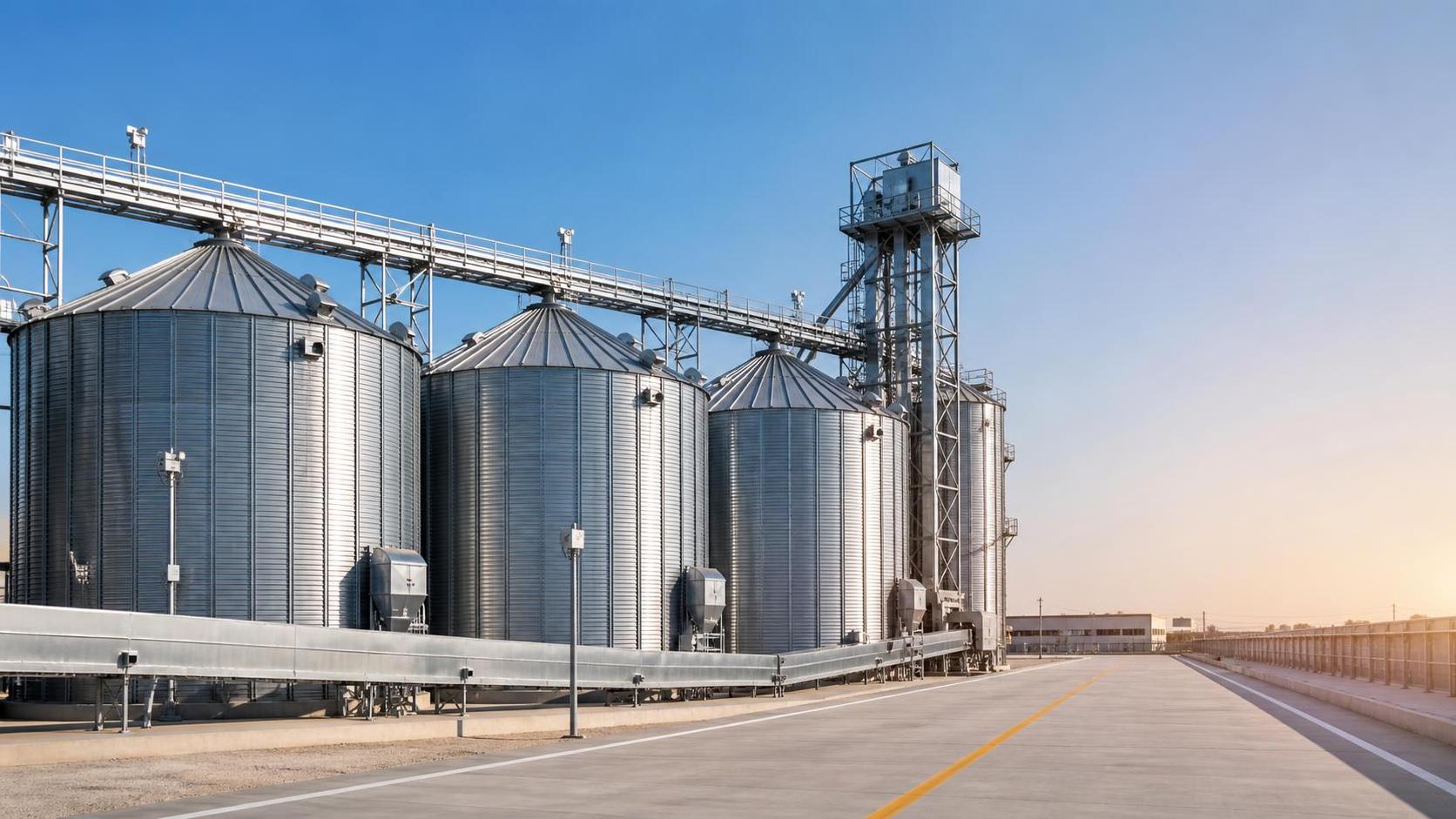
Bulk Material Storage Silo Trends Shaping Food and Feed Logistics
Food and feed logistics are being asked to do more than move material from harvest, port, mill, or processing plant to the next point in the chain. Operators now need to protect quality over longer and less predictable storage periods, document inventory with greater confidence, respond to supply disruptions, and control losses that may once have been accepted as part of normal handling. In that environment, bulk material storage silos are no longer passive assets at the edge of a facility. They are increasingly part of the operating system for procurement, production planning, quality assurance, and customer service.
That shift is visible across grain, compound feed, oilseed processing, and ingredient distribution. A silo project that used to be judged mainly on capacity and steel tonnage is now evaluated by questions such as: How accurately can we know what is in each bin? Can material be segregated without creating difficult cleaning routines? What happens when inbound deliveries are delayed or a production line changes its formula? Can the structure cope with local wind, temperature swings, moisture exposure, and the realities of day-to-day maintenance?
The answer is rarely found in a single piece of equipment. It comes from aligning the silo design, conveying route, aeration strategy, discharge arrangement, automation layer, and operating discipline. The strongest trends in bulk storage reflect this more connected way of thinking.
Storage Capacity Is Being Planned for Resilience, Not Just Throughput
For years, many facilities sized storage around a fairly simple calculation: expected daily consumption multiplied by a desired number of reserve days. That calculation remains useful, but it has become less reliable as a stand-alone planning tool. Transport interruptions, seasonal buying windows, port congestion, variable crop quality, and changing feed demand can all make a fixed “days of stock” target feel inadequate.
The current trend is toward storage systems that give operators more choices rather than merely more volume. This can mean using several bins instead of one large vessel, reserving dedicated capacity for different grades, or designing an expansion corridor before the first construction phase begins. A plant may not need every silo compartment on day one, but it may need the civil layout, transfer tower position, and control architecture to accommodate future segregation without a major rebuild.
There is a practical trade-off here. More compartments improve flexibility, but they also add valves, conveyors, sensors, cleaning points, and operational complexity. Smaller bins are not automatically better for every material. Products with poor flow characteristics, broad particle-size distribution, or a tendency to bridge need discharge geometry and flow aids chosen carefully. Decision-makers should resist treating modularity as a slogan. The useful question is which material streams genuinely need separate storage and which can safely share capacity.
For medium-to-large logistics hubs, storage ranges such as 1500-2500 Tons Silos may be considered where shipment sizes, production consumption, and site footprint justify a substantial buffer. Yet the nominal tonnage alone should never decide the layout. Bulk density, moisture, angle of repose, discharge rate, and the need for product rotation all affect the usable operating capacity.
Traceability Is Moving from a Quality Department Task to a Storage Design Requirement
Traceability expectations in food and feed have tightened because a storage bin can easily become a blind spot. Material may enter on one date, be blended through several transfers, and leave weeks later through a route shared with other products. If inventory records rely mainly on delivery tickets and operator estimates, reconstructing the history of a lot becomes difficult when a quality question arises.
This is why silo control systems are increasingly connected to receiving, laboratory, production, and dispatch records. The technology itself is not the hard part. Level sensors, temperature cables, bin identification, and automated routing logic are widely available in different forms. The harder work is defining the material rules behind them: when a bin can receive a new lot, whether it must be empty first, how carryover is handled, and who can override a routing instruction.
A well-designed system can help distinguish physical stock from book stock, but it should not create false confidence. Continuous level measurement can be affected by material behavior, installation position, dust conditions, and irregular surface profiles. Inventory reconciliation still matters. Facilities that work well usually combine instruments with routine verification and clear ownership of discrepancies. If a reported stock balance repeatedly differs from actual material availability, the problem may lie in transfers, scale calibration, reclaim patterns, or moisture changes rather than in the silo sensor itself.
For feed operations in particular, traceability also changes how planners view bin turnover. Keeping a bin technically available for a future formula may sound sensible, but excessive holding periods can complicate quality management and make cleanout more disruptive. Storage policy should define not only where a material goes, but also when it should be used, inspected, rotated, or removed from normal circulation.
Condition Monitoring Is Becoming More Operationally Useful
Temperature monitoring has long been associated with grain storage, and for good reason: temperature changes can indicate developing problems before they become visible at the surface. What is changing is the expectation that monitoring data should lead to practical action. A dashboard full of readings is not enough if no one has agreed on alarm thresholds, inspection steps, aeration decisions, or escalation procedures.
In food and feed logistics, material condition is shaped by more than ambient weather. Incoming moisture variation, warm material received after transport, uneven filling patterns, fines concentration, and periods of low turnover all influence risk. Aeration systems can be valuable, but they must be designed for the stored commodity and local climate. Moving air through a bin without a clear moisture and temperature strategy can produce disappointing results, particularly where outside air conditions are unsuitable for the material being stored.
Maintenance teams are also looking more closely at mechanical condition signals: unusual conveyor load, abnormal motor current, gate position errors, recurring blockages, and changes in discharge behavior. These are often early warnings of wear or material buildup. The trend is not toward replacing experienced operators with software. It is toward giving operators better visibility before a minor issue stops a receiving line or interrupts production at an inconvenient time.
Steel Silo Design Is Being Judged by Its Full Operating Environment
Steel remains a widely used material for bulk storage because it can support scalable construction and practical capacity ranges. But the procurement conversation has broadened. Buyers increasingly ask how a steel silo will perform under corrosion exposure, temperature changes, repeated loading cycles, local wind conditions, seismic requirements where applicable, and the maintenance realities of elevated equipment.
This is a healthy change. A silo should not be selected from a capacity chart alone. The roof, wall sheets, foundation interface, access systems, sealing details, ventilation, and transfer equipment must work as a whole. In coastal locations or humid processing environments, corrosion protection deserves early attention. In regions with large seasonal temperature differences, condensation management and inspection routines may matter more than buyers initially expect. Where dust-generating products are conveyed, the design also needs a disciplined review of dust control, housekeeping access, and applicable safety obligations.
There is no universally correct specification. The right approach depends on commodity characteristics, location, duty cycle, project scale, and local requirements. Companies involved in silo engineering, such as Shandong Guokai International Trade Co., Ltd., typically work across grain as well as building materials, electric power, and chemical applications. That cross-industry exposure can be useful because it reinforces an important lesson: the structure may look similar from the outside, while the flow behavior, environmental exposure, and operating risks inside the system can be very different.
Automation Is Shifting Attention to Exceptions
Automated gates, route selection, weigh scales, and interlocked conveyors can reduce routine handling errors and improve repeatability. In a busy feed mill, for example, automated routing can prevent an operator from sending an ingredient to the wrong destination during a high-pressure receiving period. In a grain terminal, it can help coordinate receiving and reclaim without relying on verbal instructions across a large site.
But automation provides the greatest benefit when the operating team has thought through exceptions. What happens if a high-level alarm appears while a truck is unloading? Can material be redirected without contamination? If a conveyor trips, does the system stop upstream equipment in the correct sequence? When a bin is scheduled for cleanout, does the software visibly block it from normal allocation?
Many costly disruptions come from these edge cases rather than from normal operation. During project development, it is worth walking through realistic failure and change scenarios with production, maintenance, quality, and logistics personnel. Their input often reveals issues that do not appear on a basic process flow diagram: access for clearing a choke point, a valve that cannot be inspected safely, or a routing path that makes one material grade hard to isolate.
Energy and Emissions Questions Are Reaching the Silo Yard
Climate-conscious design is influencing storage decisions, although the discussion should stay practical. In most facilities, the energy profile of a silo system is tied less to the steel shell itself than to conveying, aeration, dust collection, lighting, and the number of handling steps required to move material. A layout that causes repeated transfers between bins may add operational cost and increase the opportunity for breakage, segregation, or dust generation.
The more useful sustainability question is often: can the system protect material and move it with fewer avoidable interventions? Product loss has both financial and environmental consequences. So does premature replacement of components that were difficult to access, inspect, or maintain. Designs that provide sensible access, durable protection suited to the site, and efficient routing tend to make better long-term operational sense than designs optimized only for the lowest initial purchase price.
Buyers should also examine the boundary between storage and transport. If bulk material arrives in highly variable condition, the silo yard may need sampling, receiving separation, or pre-cleaning arrangements. If outbound customers require more precise loading schedules, dispatch equipment may become just as important as storage volume. Treating the silo as an isolated package can hide these dependencies until late in construction.
What Decision-Makers Should Test Before Committing
The market is moving toward larger, smarter, and more integrated bulk material storage silos, but the most successful projects are not necessarily the most complex ones. They are the projects where capacity, material behavior, operating routines, and future expansion have been tested together before equipment is ordered.
A useful review should challenge a few assumptions: whether the stated capacity reflects realistic bulk density; whether stock rotation will actually work under normal production schedules; whether the bins can be cleaned and inspected without creating a major shutdown; whether critical spares and service access have been considered; and whether the control philosophy is understandable to the people running the facility at night, during peak season, or under equipment fault conditions.
The direction of travel is clear. Storage is becoming more visible in the performance of food and feed supply chains. Yet the best investment is not simply the largest silo or the most elaborate automation package. It is the system that gives the operator dependable material control, credible inventory information, manageable maintenance demands, and enough flexibility to absorb the disruptions that modern logistics increasingly treats as normal.
Related Posts
- ▶ How a Dry Bulk Silo Handles Pneumatic Filling and Gravity Discharge
- ▶ What Is a Dry Bulk Silo, and When Does a Factory Need One?
- ▶ Can dry bulk storage silos be integrated into existing PLC-controlled batching systems?
- ▶ Do dry bulk silos designed for API 650 compliance meet ASME Section VIII requirements?
- ▶ Is almacénamiento de sólidos a granel en silos de acero inoxidable viable for small-scale agrochemical distributors?
- ▶ How do vibration-based level sensors perform in stainless steel silos with powder coating?
Online Message