





When Does a Silo Engineering Project Need a Detailed Flowability Study?
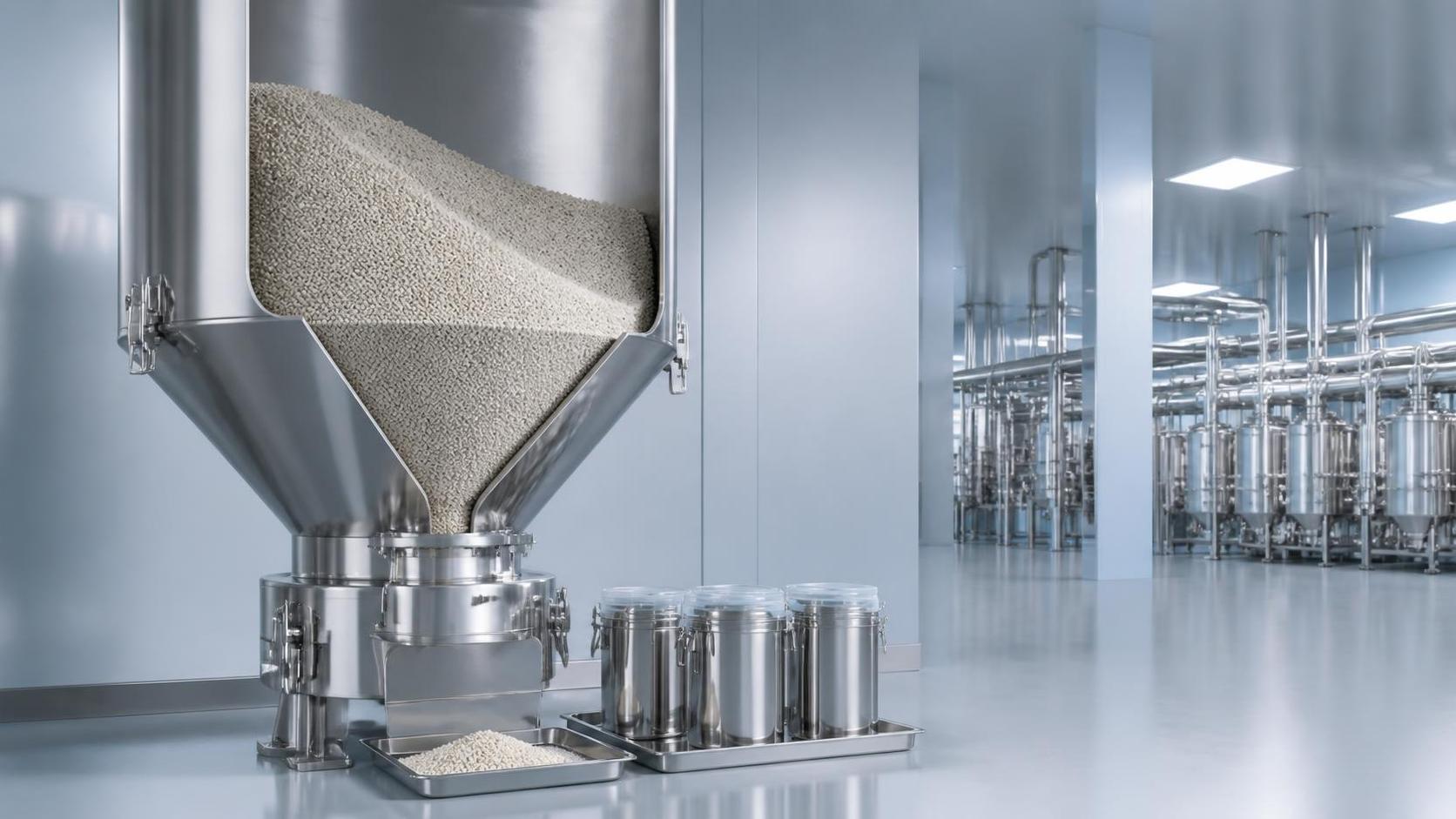
A new storage silo can look complete on drawings and still become the source of daily operating trouble after commissioning. The warning signs are often familiar: material discharges well during the first few cycles, then begins to hang up near the hopper; operators need to strike the cone or use air assistance; one product grade flows normally while another stalls; or the material at discharge no longer matches the material that entered the silo. These problems can interrupt production, complicate housekeeping, and put unnecessary pressure on equipment and operating staff.
In silo engineering, it is tempting to treat flow as a detail that can be resolved later by making the outlet larger, steepening the hopper, or adding a flow aid. That approach sometimes works for free-flowing materials, but it can be expensive and unreliable when the stored bulk solid is cohesive, moisture-sensitive, segregating, compressible, abrasive, or variable between deliveries. A detailed flowability study is not necessary for every project, but certain conditions make it a design-stage priority rather than an optional refinement.
The moment a “simple storage silo” stops being simple
Many projects begin with a reasonable assumption: if the material has moved through conveyors, trucks, bags, or small bins before, it should also move through a larger silo. The missing factor is stress. Material in a large vessel experiences consolidation under its own weight, especially near the lower hopper and outlet. A powder that appears loose in a sample container can develop enough strength under storage pressure to form a stable arch over the outlet. A granular product can also segregate while filling, leaving fine particles in one zone and coarse particles in another.
The need for a detailed assessment becomes clearer when the project includes one or more of the following operating conditions:
- Material that is known to bridge, cake, smear, pack, or retain moisture.
- Several material grades, suppliers, or seasonal variations handled through one silo.
- High discharge rates where intermittent flow would disrupt downstream dosing, conveying, milling, mixing, or packaging.
- Long storage periods, particularly where material may consolidate or be exposed to temperature changes.
- Strict requirements for first-in, first-out handling, blend consistency, contamination control, or residue reduction.
- A narrow design envelope in which building height, footprint, outlet size, or supporting structure cannot be changed easily later.
- Materials that are abrasive, corrosive, heat-sensitive, hygroscopic, or prone to degradation under mechanical agitation.
One of these factors does not automatically mean that a laboratory program is required. Several together usually justify one. The more difficult it will be to modify the hopper after construction, the more valuable it is to understand material behavior before steel fabrication and civil work are finalized.
Symptoms that point to a flowability question
A flowability study is often requested after problems appear in an existing system, but the same symptoms can be used earlier as warning indicators. If a preliminary material description includes terms such as “slightly sticky,” “can form lumps,” “not always dry,” “contains fines,” or “varies by source,” the design team should avoid assuming standard hopper angles are sufficient.
Bridging is one of the most visible risks. It occurs when a stable arch forms across an outlet and supports the material above it. The opening may appear large enough when judged by eye, yet still be too small for material that has gained strength under pressure. Ratholing is different: material flows through a central channel while stagnant zones remain along the hopper wall or vessel perimeter. This can reduce usable capacity, allow old material to remain for long periods, and create unpredictable discharge when the stagnant material finally collapses.
Segregation deserves equal attention in grain, mineral, feed, chemical, and building-material applications. If particle size, density, shape, or moisture content varies, the filling process may separate the material. Discharge then becomes inconsistent even if there is no blockage. For a system feeding a continuous process, inconsistent composition can be as disruptive as no flow at all.
Another sign is dependence on intervention. If operating plans already include manual poking, repeated vibration, frequent air pulses, or a requirement to keep the vessel nearly full to make it discharge, the basic geometry may not match the material. Flow aids have a role, but they should not be used to hide an unverified hopper design.
Start with the process, not the test request
The useful question is not simply, “Does this material flow?” Every bulk solid flows under some conditions. The relevant question is whether it will flow reliably through a specific silo geometry, at the intended discharge rate, after the expected storage time, in the actual operating environment.
Before commissioning laboratory work, gather the operating details that shape the study. This avoids obtaining a technically correct report that does not answer the design problem.
Define the material range honestly
A single “typical” sample may be misleading. The design basis should identify expected particle size distribution, moisture range, bulk density, temperature, presence of fines, additives, and likely changes between sources or production batches. If the silo will handle several grades, those grades should be classified by risk rather than treated as interchangeable. The most difficult credible material condition is often more important than the average condition.
For agricultural products, the handling path may include whole kernels, broken material, fines, dust, and changing moisture levels. In food storage applications, cleanability and material-contact requirements also affect the equipment choice. Where these requirements are central to the project, materials and vessel configuration may be considered alongside options such as Food Grade Stainless Steel Grain Tanks. The key point is that a suitable tank material does not, by itself, prove reliable discharge; the stored product and flow path still need to be evaluated together.
Map the full handling sequence
A silo is not isolated from the rest of the plant. The filling method can influence segregation and impact damage. The discharge device can affect whether the outlet sees uniform drawdown. A feeder that pulls material unevenly from one side of the outlet can create dead zones even when the hopper is designed for mass flow. Downstream pneumatic conveying, screw feeding, belt transfer, or weighing may impose limits on the allowable discharge rate.
Document how the silo will be filled, how often it will be emptied, whether it will be topped up during discharge, and how long material may remain static. Note whether the process requires complete emptying between products. These details determine whether the design should aim for mass flow, funnel flow, expanded flow, or another controlled pattern.
What a detailed study should answer
A well-scoped flowability study does more than produce a general statement about whether a powder is “good” or “poor” flowing. It should provide design-relevant information that can be translated into equipment decisions.
Typical work may include measuring bulk density in loose and consolidated states, wall friction against candidate liner or hopper materials, internal friction, cohesive strength after consolidation, and permeability where air movement is relevant. Depending on the material and process, particle size, moisture sensitivity, compressibility, attrition, and segregation tendency may also require review. The sample preparation method matters because a sample tested dry and loose may not represent the material after transport, storage, or environmental exposure.
The resulting information can support decisions on hopper wall angle, outlet dimensions, transition shape, wall finish, liner selection, feeder interface, and the suitability of flow aids. It can also reveal when a proposed vessel is unlikely to meet the operating requirement without significant compromise.
For example, wall friction testing helps determine whether material will slide along a chosen hopper surface. If the selected wall material creates too much resistance, simply increasing hopper angle may not solve the issue within practical construction limits. Cohesive strength data helps estimate the outlet size needed to prevent stable arches. These are different mechanisms, so they should not be confused. A hopper can be steep enough to reduce wall stagnation and still have an outlet too small to prevent bridging.
Choosing the right depth of investigation
Not every project needs the same level of study. For a dry, uniform, free-flowing granular material with established handling history in a comparable configuration, an engineering review of available material data and proven geometries may be adequate. The design should still account for reasonable variation, but extensive testing may not add much value.
A more detailed program is appropriate when there is no reliable operating history, when the material is difficult, or when the project consequences are high. This includes large-capacity storage, difficult-to-access sites, continuous production lines, hazardous materials, and installations where downtime would require major disruption. It is also justified when the project proposes a nonstandard hopper, a new liner, an unusually large discharge rate, or a single vessel intended to handle a wide material range.
There is also a middle ground. Sometimes a targeted test of wall friction and cohesive strength under expected moisture conditions answers the main design uncertainty. The objective is not to test every property available. It is to remove the assumptions that could cause a wrong decision in the final silo configuration.
Turning test findings into practical design choices
Test data only creates value when it reaches the drawing, specification, and procurement stages. In silo engineering, the design team should review the findings before hopper geometry, outlet dimensions, and feeder selection become fixed. A late report that identifies a larger outlet requirement can affect structural supports, downstream equipment, gates, dust collection connections, and the overall arrangement.
Mass-flow design is often selected where first-in, first-out movement, minimal stagnant material, and consistent discharge are important. In a true mass-flow arrangement, material moves along the hopper walls and the entire contents are activated during discharge. Achieving it may require steeper walls, smoother contact surfaces, and a sufficiently large outlet. It is not automatically the best choice for every application, because it can increase vessel height or cost, but it should be evaluated where product age, hygiene, segregation, or consistency matters.
Funnel flow can be acceptable for free-flowing materials where some stagnant storage is tolerable and capacity utilization is understood. The risk comes from applying funnel-flow geometry to a material that compacts, degrades, or changes over time. A design should state the intended flow pattern rather than leaving it to chance.
Flow aids should be selected after the base geometry is assessed. Mechanical vibration, air pads, air cannons, fluidization, agitators, and external devices may each help under certain conditions, but they can also create segregation, compaction, product damage, dusting, or maintenance needs. Their role should be clearly defined: occasional assistance, controlled startup support, or an integral part of the discharge concept. If reliable operation depends on constant intervention, revisit the fundamental outlet and hopper design.
Questions to settle before releasing fabrication
Several practical questions can prevent later disputes between process, mechanical, and operations teams. Has the selected sample represented the full material range? Was the material tested after realistic consolidation or storage conditions? Are hopper angles based on measured wall friction for the proposed contact surface, not a generic rule? Does the outlet size address cohesive arching rather than only nominal throughput? Has the feeder been evaluated as part of the flow channel? Are cleaning, inspection, and safe access possible if material remains in the vessel?
It is also worth checking whether changes in climate or cleaning practice will alter material behavior. A grain product that receives warm air, a powder exposed to humidity during transfer, or a chemical solid stored after a temperature change may behave differently from the original receiving sample. The design basis should identify these operating boundaries so that future product changes do not silently exceed the original assumptions.
When to bring in specialist support
Specialist input is most useful before a project becomes committed to a geometry. Seek it when test interpretation is uncertain, when the silo must support a difficult product, or when several operating objectives conflict. For example, a vessel may need low residue, high discharge rate, low headroom, and compatibility with multiple products. These requirements can pull the design in different directions, and a calculation or test result may need to be balanced against construction and operating constraints.
A detailed flowability study is therefore not a routine document to request for every vessel, nor is it a sign that a project is unusually complicated. It is a risk-control tool. If material behavior is uncertain, the storage period is long, the discharge duty is demanding, or modifications after installation would be costly, studying flow early gives the design team a firmer basis for selecting hopper geometry, outlet size, surfaces, and discharge equipment. That is usually far more effective than diagnosing repeated blockages after the silo is already part of the operating plant.
Related Posts
- ▶ How a Dry Bulk Silo Handles Pneumatic Filling and Gravity Discharge
- ▶ What Is a Dry Bulk Silo, and When Does a Factory Need One?
- ▶ Can dry bulk storage silos be integrated into existing PLC-controlled batching systems?
- ▶ Do dry bulk silos designed for API 650 compliance meet ASME Section VIII requirements?
- ▶ Is almacénamiento de sólidos a granel en silos de acero inoxidable viable for small-scale agrochemical distributors?
- ▶ How do vibration-based level sensors perform in stainless steel silos with powder coating?
Online Message