





Silo Engineering Risks That Can Delay Commissioning and Raise Project Costs
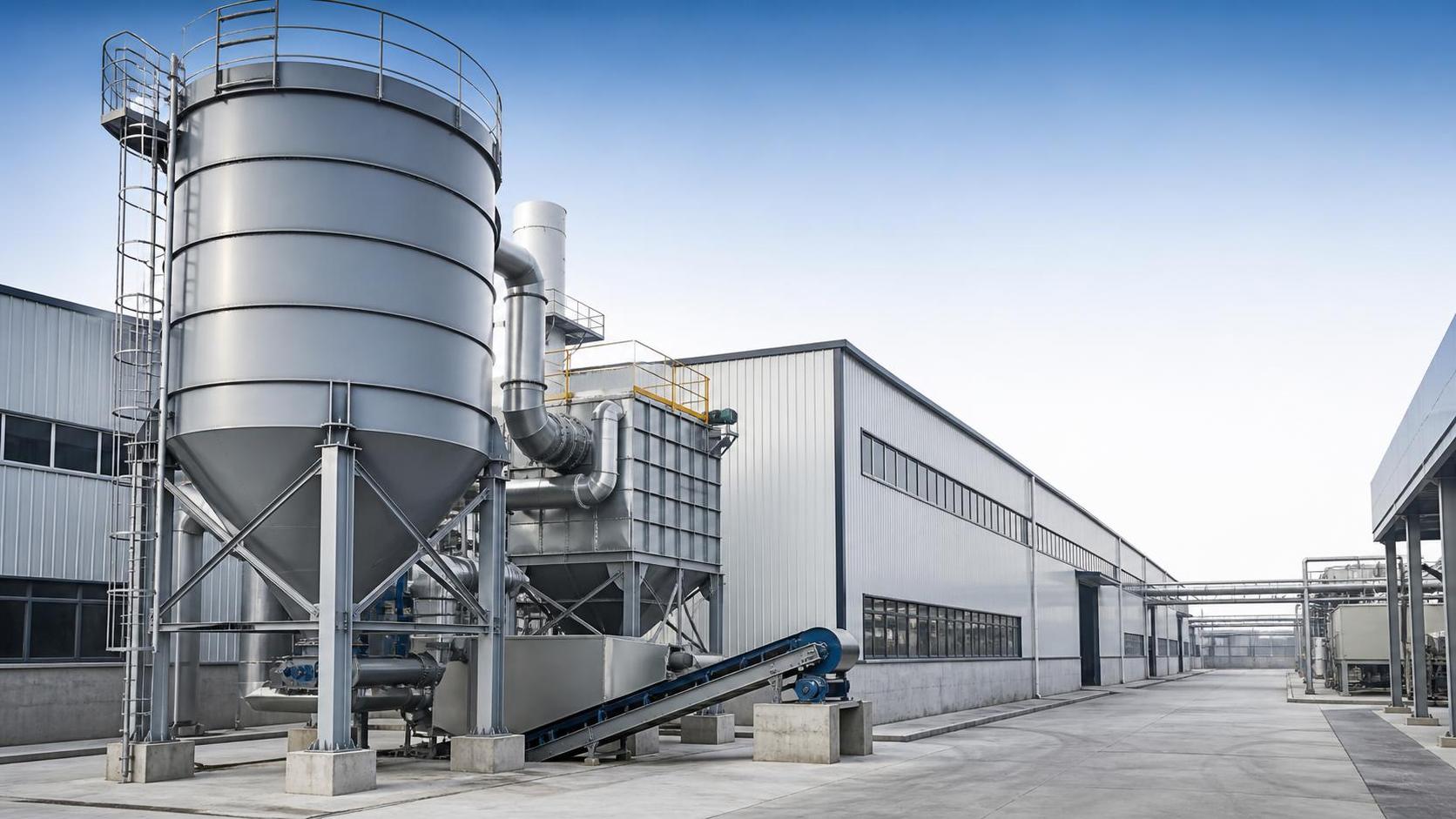
The Cost Problem Usually Starts Before Fabrication
Commissioning delays are often described as construction problems: equipment arrived late, installation took longer than expected, or the material would not discharge as designed. In practice, many of these outcomes are set in motion much earlier. A silo project can appear commercially complete when a supplier quotation is accepted, yet still contain unresolved decisions about material behavior, site interfaces, safety duties, and operating responsibility.
That is why silo engineering deserves attention from business decision-makers, not only technical teams. A storage silo is not an isolated steel structure. It sits between upstream production, logistics, process equipment, controls, environmental systems, and the plant's operating procedures. If any of those interfaces are treated as someone else's scope, the missing work may emerge during commissioning, when changes are slow, disruptive, and expensive.
For grain processors, power plants, chemical producers, and building-material operations, the commercial question is therefore broader than the purchase price: what assumptions does the quoted silo system depend on, and who bears the cost when those assumptions prove wrong?
Foundation Design Is a Schedule Risk, Not Just a Civil Scope
Foundation work is one of the most common sources of hidden risk because it is often split between the silo supplier, a local civil contractor, and the project owner. The steel structure may have a clear specification, while the foundation design is based on preliminary geotechnical information, incomplete load cases, or an unclear understanding of adjacent equipment loads.
A filled silo creates vertical loads, but that is not the whole engineering picture. Wind actions, seismic requirements where applicable, discharge equipment vibration, eccentric loading, thermal movement, vehicle traffic around the structure, and the load transfer from platforms or conveyors can all affect the foundation arrangement. A foundation designed only around a nominal full-storage load may be inadequate for actual operating conditions.
Problems often surface when anchor-bolt layouts do not match the final silo drawings, elevations conflict with conveyors, or concrete curing and survey checks fall behind the steel delivery schedule. These are not minor site inconveniences. They can leave fabricated components waiting on site, force crane rescheduling, and create disputes over whether the supplier or civil contractor is responsible for rectification.
Before contract award, buyers should require a documented interface schedule that identifies:
- Design loads and the party responsible for confirming them;
- Geotechnical inputs and their date of issue;
- Foundation drawings, anchor-bolt tolerances, and survey requirements;
- Final elevations for infeed, discharge, access platforms, and dust-control equipment;
- The approval sequence needed before fabrication begins.
A low initial civil allowance can become costly if it is based on assumptions that have not been tested against the final operating design.
Stored Material Determines More Than Capacity
Decision-makers sometimes compare silos by diameter, volume, steel thickness, and quoted tonnage capacity. Those figures matter, but they do not establish whether the silo will work reliably with the intended material. The material itself should drive the engineering basis.
Grain, fly ash, cement, mineral powder, plastic pellets, chemical intermediates, and mixed industrial by-products can behave very differently. Bulk density may change with moisture, particle distribution, compaction, temperature, or batch variation. Fine powders can bridge or rat-hole. Hygroscopic products can adhere to internal surfaces. Abrasive material can wear discharge zones and transfer points. Some dusts may create combustible-atmosphere concerns, while certain chemical materials require careful consideration of corrosion, contamination, or sealing.
One of the misleading assumptions in procurement is that a larger outlet will solve all flow issues. Outlet size is important, but reliable discharge depends on the combined system: hopper angle, wall material, surface condition, feeder type, aeration or flow aids, product consolidation behavior, and operating sequence. A silo can have adequate rated storage but still fail to deliver a consistent feed rate to the process below it.
For critical materials, the buyer should ask how the supplier has defined material properties. Has the design been based on representative samples, credible historical operating data, or only a generic material name? “Cement,” “coal powder,” or “chemical powder” is rarely enough information for a robust flow design. Where downtime has a significant production consequence, independent bulk-solids testing or a formal material-handling review may be justified before finalizing the discharge concept.
Do Not Treat Nominal Capacity as Usable Inventory
Storage capacity is frequently stated as a geometric volume converted using an assumed bulk density. That is useful for early planning, but it should not be mistaken for usable operational inventory. The actual working capacity may be lower because of freeboard requirements, level-control settings, material segregation, inventory uncertainty, product retained in hopper sections, or the need to maintain buffer capacity for continuous process operation.
This distinction matters when a project business case depends on a specific number of hours or days of supply. A plant that requires 48 hours of buffer stock cannot rely on a nominal capacity calculation without considering maximum and minimum operating levels, dispatch variability, and the amount of material that can be reliably reclaimed.
Capacity should therefore be reviewed alongside the production plan, supply interruptions, truck or vessel unloading cycles, and maintenance windows. The best-sized silo is not necessarily the largest one; it is the one that provides the required operating buffer without introducing disproportionate civil, safety, or maintenance cost.
Sealing and Dust Control Need an Operating Definition
Environmental performance is increasingly part of project approval, especially where fine powder handling is involved. Yet terms such as “sealed,” “dust-free,” or “eco-friendly” are sometimes used without a defined operating boundary. No storage system can be assessed properly until the project team identifies where dust may be generated: filling, venting, pressure relief, loading, discharge, filter cleaning, inspection, and maintenance.
For powder applications, a spiral silo configuration may be considered where site conditions, storage volume, and environmental-control requirements support that approach. For example, Sealed Eco Powder Spiral Silos may be relevant as a reference option when the procurement team is evaluating contained powder storage rather than simply comparing shell capacity. The decision should still be based on the full handling system, including filtration, pressure balance, loading connections, discharge equipment, and cleaning access.
A common commissioning issue occurs when the filter or venting design is sized as an accessory rather than as part of the process. Pneumatic filling rates, air-to-cloth assumptions, product fines, moisture, and cleaning cycles all affect actual performance. If the filter cannot manage the air displaced during filling, the plant may experience pressure alarms, material emissions, slow unloading, or repeated operator intervention.
Buyers should ask for clear performance responsibilities. What conditions apply to the claimed sealing performance? Which equipment is included in the supplier's scope? Are ducts, fans, electrical interlocks, and discharge points provided by the same contractor or coordinated among several parties? A system can be technically capable on paper while still underperforming because the interfaces were never made explicit.
Safety Compliance Cannot Be Added at the End
Silo risks are not limited to cost and throughput. Depending on the stored material and local jurisdiction, projects may need to address dust explosion hazards, confined-space entry, working at height, structural access, pressure relief, electrical classification, fire protection, and emergency isolation. Exact legal duties and applicable standards vary by country and facility type, so the governing requirements should be verified for the project location before design release.
The commercial risk is that safety elements omitted from early specifications tend to be added late, often after a review by insurers, authorities, corporate EHS teams, or the commissioning contractor. Late additions can require structural modifications, revised access routes, additional electrical work, or changed equipment layouts.
The appropriate question is not whether a silo “has safety features.” It is whether the complete operating task has been reviewed. Can operators inspect level instruments safely? Is there controlled access for filter maintenance? Can a blockage be addressed without unsafe entry or improvised work at height? Are emergency conditions considered for filling, discharge, and loss of power? Those practical questions expose gaps that a generic compliance statement will not.
Installation Coordination Is Often Underestimated
Even a well-designed silo can lose time during installation when responsibilities are fragmented. Projects may involve a manufacturer, local erection team, civil contractor, crane provider, electrical contractor, mechanical installer, process integrator, and the owner's operations staff. A schedule that shows only “silo installation” does not provide enough control.
The critical path should include detailed readiness checks: foundation acceptance, delivered-component inspection, crane access, lifting plans, weather constraints, working-at-height provisions, utility availability, cable routing, control-panel location, and mechanical alignment with upstream and downstream equipment. Each item needs an owner and a documented acceptance point.
It is also important to distinguish between mechanical completion and commissioning readiness. Mechanical completion may mean the structure is assembled. Commissioning readiness means instruments are calibrated, motors have been checked, interlocks are tested, level alarms are functional, dust-control equipment is available, operating procedures are prepared, and staff understand abnormal-condition responses. Conflating those milestones creates optimistic schedules that fail under real startup conditions.
Lowest Bid Comparison Can Hide Scope Gaps
Competitive quotations are necessary, but a silo engineering purchase should not be awarded solely by comparing the final price line. Two proposals may look similar while excluding different items: foundation design support, access platforms, instrumentation, filters, discharge aids, electrical panels, installation supervision, commissioning support, spare parts, or performance testing.
Cost control improves when bidders respond to the same technical and commercial schedule. Rather than asking suppliers for a general proposal, issue a comparison sheet that separates supply, installation, design responsibility, exclusions, lead time, documentation, warranties, and post-commissioning support. This does not eliminate variation, but it makes variation visible before a contract is signed.
Business leaders should be particularly cautious about broad statements such as “turnkey,” “complete system,” or “standard design.” These descriptions have value only when backed by a scope boundary. A turnkey offer may still exclude site utilities, civil works, permits, or process integration. A standard design may be entirely appropriate for a familiar material and repeatable application, but it should not be used to bypass a site-specific review.
Questions That Improve the Investment Decision
Before committing funds, the project sponsor should be able to obtain concise, defensible answers to several questions:
- What operating problem is the storage system intended to solve: supply buffering, process continuity, environmental control, logistics flexibility, or capacity expansion?
- What material data supports the selected shell, hopper, discharge, and filtration design?
- Which project assumptions remain unverified, and when will they be closed?
- What interfaces fall outside the silo supplier's scope?
- What failure modes would stop production after startup, and how are they mitigated?
- What evidence will demonstrate that the system is ready for handover?
These questions do not require every executive to become a bulk-materials engineer. They require the project team to turn assumptions into accountable decisions before those assumptions become site changes.
Commissioning Should Be Designed Into the Project
The strongest projects treat commissioning as a design deliverable rather than the final stage of construction. Acceptance criteria should be agreed early: fill rate, discharge behavior, level measurement, dust-control operation, alarms, interlocks, and documentation. The site team should know what materials are needed for testing, how nonconformities will be recorded, and which conditions must be met before production takes responsibility for the asset.
For companies evaluating storage investments across grain, building materials, electric power, or chemicals, the central lesson is straightforward. The visible steel shell is only one part of the investment. Project cost and startup reliability depend on whether the material, foundation, discharge path, controls, safety measures, and installation interfaces have been engineered as one operating system. The earlier those decisions are made with evidence, the less likely commissioning becomes the point where unresolved design choices turn into paid delays.
Related Posts
- ▶ How a Dry Bulk Silo Handles Pneumatic Filling and Gravity Discharge
- ▶ What Is a Dry Bulk Silo, and When Does a Factory Need One?
- ▶ Can dry bulk storage silos be integrated into existing PLC-controlled batching systems?
- ▶ Do dry bulk silos designed for API 650 compliance meet ASME Section VIII requirements?
- ▶ Is almacénamiento de sólidos a granel en silos de acero inoxidable viable for small-scale agrochemical distributors?
- ▶ How do vibration-based level sensors perform in stainless steel silos with powder coating?
Online Message