





A Practical Review Checklist for Silo Engineering Drawings and Specifications
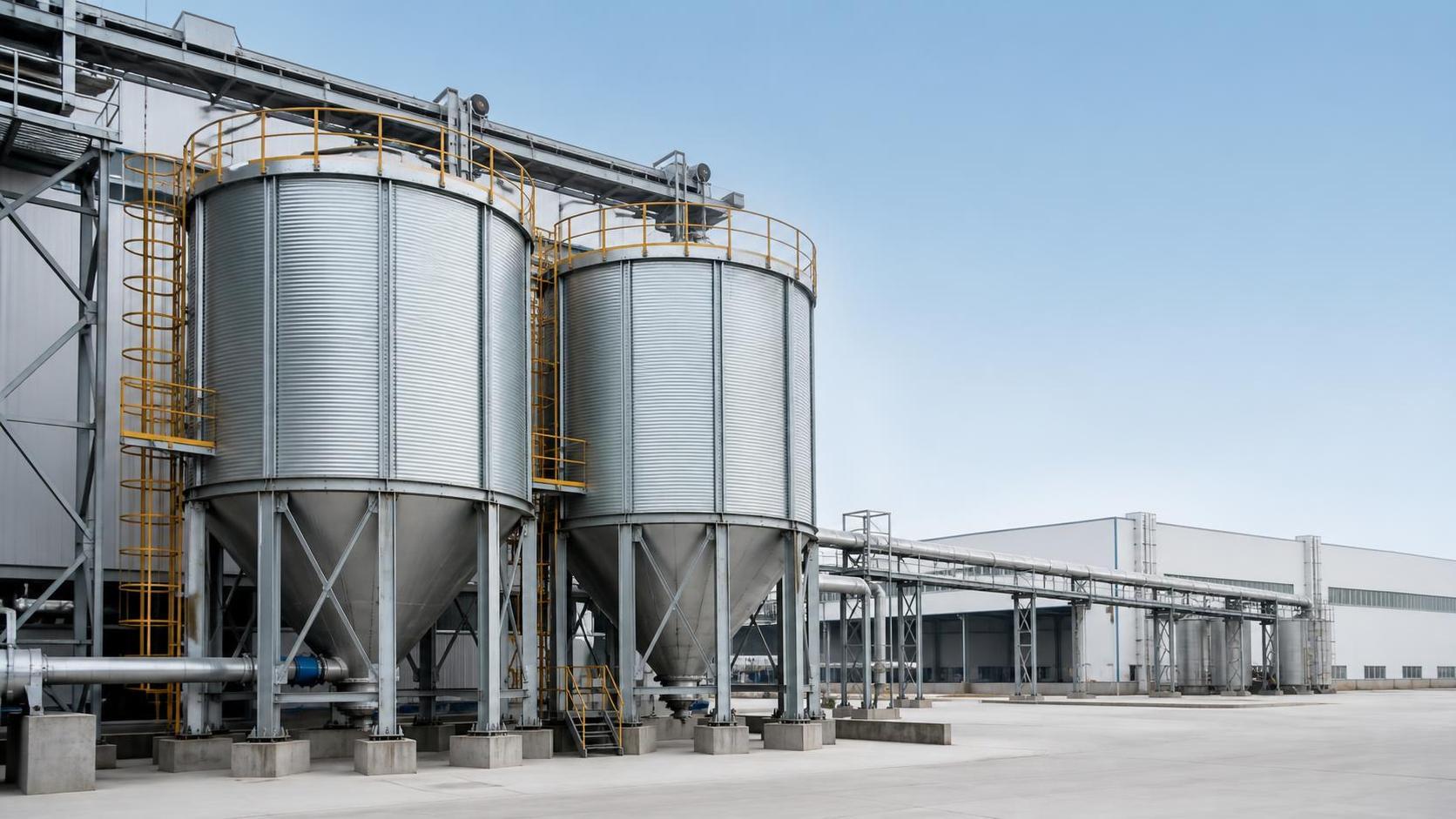
A Practical Review Checklist for Silo Engineering Drawings and Specifications
Effective silo engineering begins well before steel is cut, panels are rolled, or foundations are poured. The design review stage is where unclear assumptions become visible: a design storage capacity that does not match the actual material, a roof opening that conflicts with conveying equipment, an access ladder without a safe transition point, or a discharge arrangement that cannot reliably empty the stored product. These issues are less expensive to correct on drawings than on site.
For a steel silo project, drawings and specifications should be reviewed as one coordinated package. A drawing can look complete while the written specification leaves key responsibilities open. Likewise, a detailed specification may not help if the general arrangement, foundation loads, interfaces, and safety details are missing from the drawings. The purpose of review is not simply to approve a document set; it is to confirm that the proposed system can be fabricated, installed, operated, inspected, and maintained under the project’s actual conditions.
Start with the design basis, not the steelwork
The first question is deceptively simple: what is the silo designed to store? “Grain,” “powder,” or “bulk material” is not enough for technical approval. Material behaviour drives most of the critical decisions in silo engineering, including wall pressure, hopper flow, wear protection, dust control, unloading arrangement, and cleaning access.
Review documents should identify, where applicable, bulk density, moisture range, particle size, angle of repose, flowability, abrasiveness, corrosiveness, tendency to bridge or cake, and expected storage duration. The operating material may vary from the nominal design material, especially where a facility handles seasonal grain, mixed feed ingredients, cementitious products, coal-related materials, or chemical raw materials. If a substitute material is anticipated, the allowable range should be stated rather than assumed.
Capacity requires the same discipline. Check whether the stated figure is gross geometric volume, usable storage volume, or mass capacity based on an assumed bulk density. A silo may have adequate cubic volume but not meet the required tonnage when the stored material is lighter than expected. Conversely, a denser material can raise structural loading beyond a casual capacity calculation. The review record should preserve the assumptions used to convert volume into stored mass.
Also confirm the loading and unloading sequence. Eccentric filling, partially filled operation, asymmetric discharge, and material buildup can produce loading conditions different from a centrally filled, centrally emptied silo. A drawing that shows one fill point and one outlet should still make clear whether that arrangement reflects actual operating practice.
Check the structural package for traceable assumptions
A structural review should not be limited to plate thicknesses and member sizes. Those values only make sense when the loading basis and design criteria are known. The package should identify the governing design standard or project-required code, as well as applicable environmental inputs such as wind, snow where relevant, seismic action, temperature range, and site exposure. Local authority requirements and the project contract may impose additional criteria, so a generic manufacturer standard should not be accepted without comparison.
Verify that the drawings distinguish between permanent loads, stored-material loads, equipment loads, maintenance loads, and temporary construction loads. Roof-mounted conveyors, filters, level sensors, platforms, walkways, maintenance hoists, and ductwork all add forces that can be overlooked when equipment is designed by separate parties. Their support reactions and connection locations should be coordinated before fabrication.
Foundation information deserves particular attention. The silo supplier may define column reactions, anchor-bolt patterns, base ring details, and allowable tolerances, while civil design remains with another contractor. That division is workable only if interfaces are explicit. Review whether the documents state vertical loads, horizontal forces, overturning effects where applicable, and any requirements for flatness, elevation, grout, drainage, or bolt positioning. A mismatch between anchor layout and fabricated supports is a common site-level problem precisely because each drawing package can appear correct in isolation.
Shell, roof, and connections
For bolted silos, inspect the detailing of sheet overlaps, fastener grades, sealing method, joint location, and corrosion protection at cut edges or interfaces. For welded assemblies, drawings should identify weld types, locations, inspection requirements where specified, and any restrictions created by coatings or site installation conditions. It is not necessary to prescribe a fabrication method where the project does not require it, but the approved documents must make the required quality level understandable.
Roof penetrations are another frequent coordination point. Every vent, fill pipe, cable entry, dust extraction connection, manhole, or sensor nozzle should be shown with a location, size, reinforcement requirement if applicable, and sealing responsibility. Unplanned field penetrations can affect weather tightness, structural continuity, and dust containment. A review should challenge any note that merely says “by others” without identifying the interface and design limit.
Material specification is more than a grade designation
Steel grade, coating system, and fastener material should correspond to both the environment and the stored product. The external atmosphere may be humid, coastal, industrial, or exposed to repeated wetting. Internally, condensation, product acidity, cleaning methods, or chemical vapours may create a different corrosion environment. The drawings should identify where galvanized steel, painted steel, stainless steel, wear liners, or other protective measures are intended, without assuming that one finish suits every part of the system.
Reviewers should ask practical questions: Are dissimilar materials in contact, and if so, is corrosion risk addressed? Are bolts, washers, and nuts suitable for the same environment as the panels? Is touch-up treatment required after site modification? Are internal coatings compatible with the stored material? If a food, feed, or chemical application has special hygiene or contamination requirements, those requirements need to appear in the project specification rather than remain in an informal procurement note.
In grain applications, material protection and operational details often need to be considered together. A page covering Grain Steel Silos can help frame the equipment category, but project approval still depends on the actual grain properties, climate, ventilation approach, and handling equipment selected for that installation.
Treat access and safety as engineered features
Safe access is often drawn late, after the vessel geometry and process equipment have already been fixed. That is backwards. Ladders, platforms, handrails, cage arrangements where used, rest points, walkways, roof access, guardrails, and anchor points affect both structural loads and daily usability. A person should be able to reach inspection points, level instruments, vents, drives, and cleanout locations without relying on improvised access.
Review access drawings in relation to surrounding equipment. A platform can meet a dimensional requirement yet remain impractical if a conveyor blocks the landing, an opening faces a handrail, or a maintenance door cannot fully open. Confirm clearance for personnel, tools, and replacement of serviceable components. Where work at height or confined-space entry is possible, project procedures and local requirements may call for additional provisions. The design documents should identify these needs early enough for the responsible parties to incorporate them.
Dust hazard assessment also cannot be inferred from a general arrangement drawing. Depending on the material and process, the project may need dust collection, venting, grounding or bonding provisions, explosion protection measures, and controls that follow the applicable local standards. The reviewer’s role is not to assume which measures apply, but to confirm that the hazard assessment, process information, and equipment design are aligned. A silo is part of a system; a safe vessel alone does not resolve risks created by transfer points, elevators, filters, or enclosed conveyors.
Read the process interfaces line by line
Many approval delays arise from interface omissions rather than from the silo itself. The drawing set should show the boundaries between silo supply, civil works, electrical installation, mechanical conveying, controls, ventilation, and commissioning. For every connection, determine who supplies the flange, transition, support, field welding, cable route, instrument, and seal.
Pay close attention to inlet and outlet geometry. The fill pipe should not create an unaddressed eccentric loading condition or interfere with level detection. The outlet must suit the material’s flow behaviour and the downstream feeder or conveyor capacity. Hopper angle alone does not guarantee mass flow or reliable discharge. If the process requires complete emptying, controlled reclaim, segregation prevention, or a specific discharge rate, the specification should state that operational requirement and the verification method.
Instrumentation notes should likewise be functional, not vague. “High level alarm” does not establish sensor type, mounting point, alarm logic, access for inspection, or responsibility for connection to the plant control system. The same applies to temperature monitoring, aeration controls, pressure indication, and interlocks. A concise interface schedule is often more useful than a crowded drawing full of unassigned callouts.
Use a controlled approval checklist
Before releasing drawings for manufacture, a review team should be able to answer the following questions with documented references rather than verbal assurances:
- Is the stored material, density basis, moisture condition, and operating range defined?
- Do stated capacity, filling method, discharge method, and duty cycle reflect the process design?
- Are structural design criteria, equipment loads, foundation reactions, and anchor details coordinated?
- Are materials, protective finishes, fasteners, seals, and internal contact surfaces specified for the actual environment?
- Can operators safely access, inspect, clean, and maintain all required locations?
- Are dust, ventilation, emergency, electrical, and process-control interfaces addressed under the applicable project requirements?
- Do supplier, civil, mechanical, electrical, and site-installation responsibilities have clear boundaries?
A comment log should classify each issue as a clarification, drawing revision, technical deviation, or hold point. This prevents a serious safety item from being lost among cosmetic drafting comments. It also creates a useful audit trail when later changes affect layout, capacity, material selection, or operating conditions.
Approval should establish readiness, not merely close a document cycle
A well-reviewed silo package provides a reliable bridge from design to fabrication and installation. It makes assumptions visible, assigns interfaces, and identifies what must be verified on site. That is especially valuable for projects crossing several industrial settings, where the same steel storage concept may serve grain, building materials, electric power, or chemical handling but face very different operating risks.
Shandong Guokai International Trade Co., Ltd. develops, manufactures, and supplies steel storage silo solutions for these varied applications. In such work, the useful contribution of an experienced technical supplier is not a generic drawing set; it is the ability to bring process conditions, structural detailing, fabrication requirements, and installation interfaces into the same review conversation.
Do not approve a silo engineering package simply because every sheet carries a revision mark. Approve it when the material basis, loads, access arrangements, protective measures, and inter-party responsibilities can be followed from specification to drawing and from drawing to the finished installation.
Related Posts
- ▶ How a Dry Bulk Silo Handles Pneumatic Filling and Gravity Discharge
- ▶ What Is a Dry Bulk Silo, and When Does a Factory Need One?
- ▶ Can dry bulk storage silos be integrated into existing PLC-controlled batching systems?
- ▶ Do dry bulk silos designed for API 650 compliance meet ASME Section VIII requirements?
- ▶ Is almacénamiento de sólidos a granel en silos de acero inoxidable viable for small-scale agrochemical distributors?
- ▶ How do vibration-based level sensors perform in stainless steel silos with powder coating?
Online Message