





Industrial Silos Explained: Storage Functions Across Process Industries
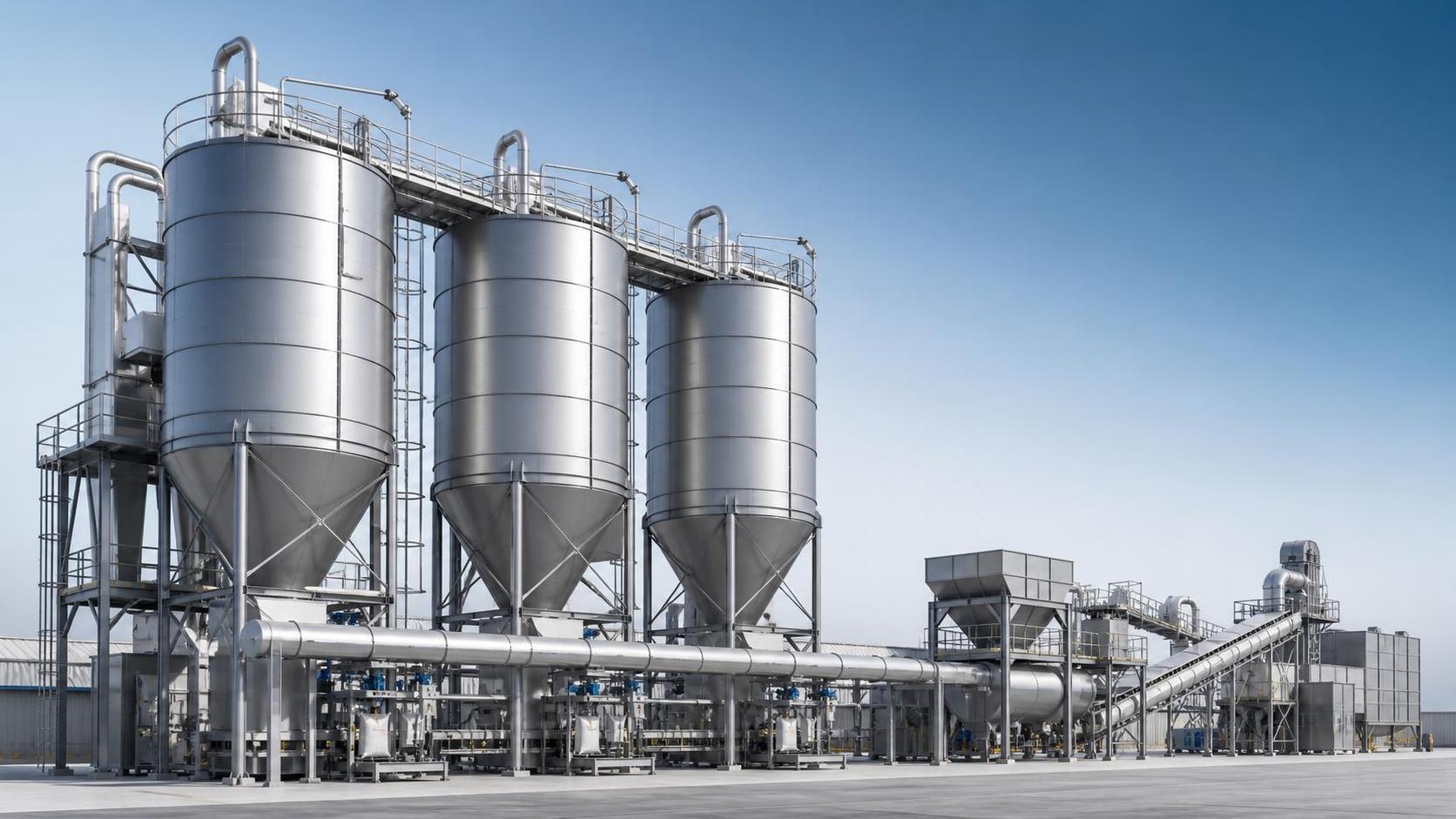
Industrial Silos Explained: Storage Functions Across Process Industries
Industrial silos are not simply large containers placed beside a production line. In a working plant, they sit between purchasing, transport, processing, quality control, and dispatch. A well-designed silo gives a facility a stable buffer between irregular inbound deliveries and the steady material demand of production. A poorly matched one can create bridging, contamination, dust issues, difficult cleaning, or a bottleneck that only becomes visible when the plant is under pressure.
That is why industrial silos appear in such different sectors: grain handling, cement and building materials, power generation, chemical processing, feed production, plastics, minerals, and many other bulk-material operations. The basic objective is consistent—store dry bulk material safely and release it when needed—but the practical requirements can vary sharply. Wheat does not behave like fly ash. Cement does not behave like plastic pellets. A silo selected only by volume may look adequate on a layout drawing and still perform badly in daily operation.
For companies reviewing a storage project, the useful question is not just “How much material can this silo hold?” It is “What must this storage system allow the operation to do, every day, under real conditions?”
The Core Function: Creating a Controlled Material Buffer
The most visible function of industrial silos is bulk storage, but capacity is only one part of the job. A silo typically gives a plant time. It allows raw materials to be received in larger shipments, held in reserve, protected from the environment, and metered into downstream equipment at a more controlled rate. This buffer is particularly valuable where trucks, rail deliveries, vessels, or upstream milling processes do not operate on exactly the same schedule as the production line.
In a grain operation, for example, storage may be needed after receiving and before cleaning, drying, milling, blending, or shipment. In a cement plant, silo storage can separate grinding from packing or bulk loading. At a power facility, storage supports a dependable feed of materials such as coal, biomass, limestone, or ash-related products, depending on the process. Chemical plants may use silos to isolate incoming powders from a batch process that needs accurately timed dosing.
This buffering role affects the whole project. Required storage days, delivery frequency, production consumption, future expansion plans, and the consequences of a supply interruption all need to be considered together. A silo that is technically large enough may still be operationally too small if a delayed delivery forces production to stop. On the other hand, excessive storage can tie up capital, increase material aging risk, and make stock rotation harder.
Storage Is Also About Material Protection
Many bulk solids are more sensitive than they first appear. Moisture can affect flow, promote spoilage, change product quality, or cause caking. Fine powders can absorb humidity and become difficult to discharge. Grain can be damaged by water ingress, insect activity, temperature variation, or insufficient aeration. Some chemical materials require careful separation from incompatible products or protection from outside contamination.
A silo therefore acts as part of the material-protection system. Roof design, sealing details, ventilation, inspection access, surface finish, temperature monitoring, aeration arrangements, and cleaning access may all matter. The right choices depend on the material and the process, not on a generic silo category.
Food and feed applications are a good illustration. Where hygiene and corrosion resistance are priorities, stainless-steel storage may be more appropriate than a conventional carbon-steel arrangement. Equipment such as Food Grade Stainless Steel Grain Tanks can be relevant where grain or similar agricultural materials need storage conditions that support cleanliness and routine inspection. Still, material selection should be confirmed against the actual product, required cleaning method, local food-contact expectations, and operating environment.
One frequent oversight is treating outdoor exposure as a minor detail. In practice, rain, coastal air, temperature swings, wind loads, and site drainage can influence both the silo structure and the quality of what is stored inside. The structure and the handling system should be reviewed as one package.
How Silo Requirements Change by Industry
The term “industrial silo” covers a wide range of applications, so broad comparisons are more useful than a one-size-fits-all definition.
Grain is often considered free-flowing, yet its storage behavior depends on moisture, broken kernels, fines, temperature, and time in storage. Cement and similar powders may need aeration or other discharge assistance because compaction and moisture can interfere with flow. Abrasive materials can wear through transfer points and discharge equipment long before the main shell becomes a concern. Plastic pellets may flow reasonably well but can be vulnerable to cross-contamination when product changeovers are frequent.
These differences explain why experienced silo suppliers ask detailed questions before proposing a configuration. Shandong Guokai International Trade Co., Ltd., for example, works across steel silo projects for grain, building materials, electric power, and chemical applications. That cross-industry exposure matters because it reinforces a basic project lesson: the stored material and its route through the plant should drive the design, rather than a standard drawing alone.
The Difference Between Holding Material and Discharging It Well
The most troublesome silo problems often occur at discharge. A vessel may fill efficiently and still fail to provide stable material flow. Common issues include bridging, where material forms an arch over the outlet; rat-holing, where a narrow channel empties while material remains around it; segregation, where particles separate by size or density; and inconsistent feed rates into downstream equipment.
These are not minor operational inconveniences. If a batching line receives inconsistent material, product quality may suffer. If workers need to intervene manually near a blocked outlet, the situation can become a serious safety concern. If material remains in a silo for too long because it does not flow properly, first-in, first-out inventory control becomes difficult.
Flow performance depends on several connected factors: particle size distribution, moisture, bulk density, angle of repose, cohesion, wall friction, hopper geometry, outlet size, and the selected extraction device. Conveyors, rotary valves, screw feeders, pneumatic systems, vibratory devices, and fluidization methods all have their place, but none should be treated as a universal cure. A device that works for one powder may damage another material, consume unnecessary energy, or simply move the blockage to a different point in the system.
Where material behavior is uncertain, it is sensible to obtain representative material information and discuss it early with the engineering team. This is especially important for new formulations, recycled materials, blended powders, or products whose moisture varies by season or supplier.
Steel Silo Construction: More Than a Shell Choice
Steel silos are widely used because they can be engineered for substantial capacity, integrated with handling equipment, and adapted to different site layouts. Depending on the project, the solution may involve a bolted steel silo, a welded arrangement, a hopper-bottom vessel, or a flat-bottom storage structure. Each approach has implications for installation, inspection, maintenance, transport, and future modification.
The shell material is only one decision. Foundations must match site conditions and structural loads. Access ladders, platforms, manholes, level detection, pressure relief provisions, dust collection connections, and maintenance clearances should be planned before construction rather than added awkwardly afterward. A silo can appear complete while still being difficult to inspect safely or impossible to clean properly.
For corrosive environments or materials with strict hygiene requirements, stainless steel may be considered for all or part of the contact surface. For other duties, coated or galvanized steel may be appropriate, subject to the material, operating conditions, and project specifications. There is no universally “best” steel; there is only a better fit for a defined duty.
Questions Worth Answering Before Selecting a Silo
A productive inquiry does not start with diameter and height. It starts with the material and the operating pattern. Before moving into detailed engineering, project teams should be able to clarify the following points:
- What material will be stored, and how variable are its moisture, particle size, and bulk density?
- How much reserve capacity is actually needed between deliveries and production consumption?
- Is the material intended to flow by gravity, mechanical extraction, pneumatic conveying, or a combination?
- Does the process require first-in, first-out flow, batch separation, blending, or frequent product changeover?
- What dust, explosion, hygiene, environmental, or local compliance requirements apply at the installation site?
- How will the system be inspected, cleaned, maintained, and accessed without creating avoidable safety exposure?
The local regulatory framework and site-specific safety requirements need to be checked by the responsible project parties. This is particularly important when combustible dust, pressurized conveying, hazardous chemicals, or food materials are involved. Safety features should never be left as a late purchasing decision after the structural design has already been fixed.
What Good Silo Planning Looks Like in Practice
Good planning usually begins with the process flow rather than the silo itself. Trace the material from receiving point to final use: how it arrives, where it is weighed, whether it is cleaned or screened, how it enters storage, how it is monitored, and what equipment receives it after discharge. That exercise often reveals constraints that are not obvious in a capacity calculation—limited headroom, truck circulation, an awkward conveyor route, cleaning access, or a need for a second silo to avoid mixing materials.
It also helps to distinguish between expansion capacity and operational redundancy. A larger single silo may store more material, but two or more silos can provide separation, maintenance flexibility, and better inventory management. The better choice depends on production continuity, product range, available space, and the cost of a shutdown. There is no need to overbuild a simple operation, but underestimating changeover and maintenance needs is a common source of regret.
Industrial silos earn their place in a process plant when they make material movement calmer, cleaner, and more predictable. The right project is not defined by the tallest structure or the largest nominal capacity. It is defined by whether the stored material remains protected, flows as intended, and reaches the next process step without creating a new problem elsewhere in the line.
Related Posts
- ▶ How a Dry Bulk Silo Handles Pneumatic Filling and Gravity Discharge
- ▶ What Is a Dry Bulk Silo, and When Does a Factory Need One?
- ▶ Can dry bulk storage silos be integrated into existing PLC-controlled batching systems?
- ▶ Do dry bulk silos designed for API 650 compliance meet ASME Section VIII requirements?
- ▶ Is almacénamiento de sólidos a granel en silos de acero inoxidable viable for small-scale agrochemical distributors?
- ▶ How do vibration-based level sensors perform in stainless steel silos with powder coating?
Online Message