





When Is a Welded Steel Silo the Right Choice for Harsh Plant Conditions?
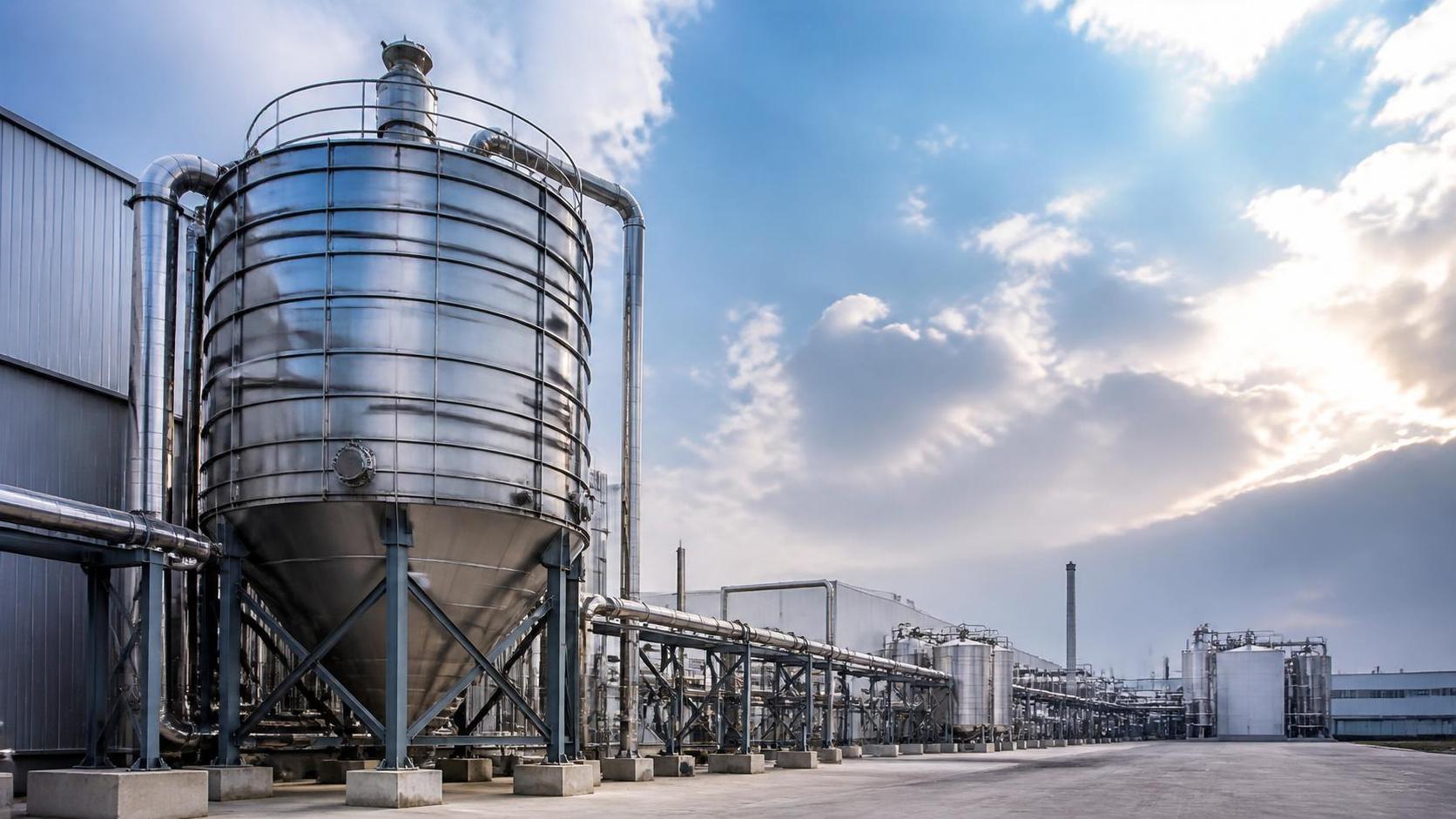
A welded steel silo is the right choice when the stored material, operating environment, and duty cycle place continuous stress on the silo shell and its connections. In harsh plant conditions, the decision usually turns on whether bolted joints, lighter wall construction, or segmented sealing details could become recurring maintenance points. Where abrasion, temperature variation, pressure fluctuation, moisture exposure, or heavy discharge loads are expected, welded construction can provide a more stable long-term enclosure.
The strongest case for a welded steel silo appears when the storage vessel must behave as a unified structure rather than an assembly of many connected panels. A continuously welded shell can reduce the number of external joint lines exposed to dust, rainwater, corrosive air, and vibration. That does not remove the need for inspection, coating repair, or careful design, but it can simplify the structural load path and reduce locations where fine material may escape or water may enter.
Conditions That Favor Welded Construction
Fine powders, abrasive bulk solids, and materials that bridge or compact during storage can impose loads that are difficult to predict from capacity alone. Cement, fly ash, mineral powder, coal dust, chemical intermediates, and some feed ingredients may create wall friction, uneven flow channels, and localized pressure during filling or discharge. If flow becomes eccentric, the silo wall may see nonuniform stress. A welded steel silo with appropriately selected plate thickness, stiffeners, hopper geometry, and transition details is often better suited to this type of service than a design selected only for nominal tonnage.
Outdoor exposure is another important factor. In areas with frequent rain, wind-driven dust, freezing and thawing, high humidity, or large day-to-night temperature changes, joint integrity becomes a practical concern. Bolted systems can perform well when correctly designed and maintained, yet every joint requires controlled assembly and remains a possible point for seal aging, fastener loosening, or moisture retention. A welded shell reduces the number of exposed mechanical connections across the storage cylinder, especially where weather sealing is a major requirement.
High-temperature service should be evaluated separately from ordinary dry-material storage. Elevated material temperature can affect steel strength, coating performance, expansion behavior, gasket selection, instrumentation, and the connection between the silo and upstream process equipment. A welded design may be suitable where thermal movement is addressed through expansion allowances and properly designed nozzles. It should not be assumed that welding alone makes a silo ready for hot service. The temperature profile during filling, holding, and discharge must be defined, including the difference between internal material temperature and ambient conditions.
Heavy-duty cyclic service also favors a robust welded arrangement. Repeated filling, discharge, aeration, vibration, and pneumatic conveying may cause local fatigue around openings, supports, transitions, and discharge cones. The design should account for actual operating cycles rather than treating the silo as a static tank. Frequent starts and stops in conveying systems, intermittent loading from bucket elevators, and periodic vibration from flow-assistance devices all influence the required reinforcement around attachments.
Capacity Is Only One Part of the Selection
A rated capacity does not establish whether a silo is structurally appropriate. Bulk density, angle of repose, particle size, moisture content, flowability, and expected fill level all affect the real stored mass and wall pressure. A material with variable density can place a substantially different load on the foundation and shell than a nominal capacity figure suggests. Material behavior also changes after storage: powders can consolidate, granular products can segregate, and hygroscopic materials can form hard deposits near the hopper or discharge opening.
For larger storage requirements, such as 1500-3000 Tons Silos, the evaluation should extend beyond the shell diameter and total volume. A larger vessel increases the importance of foundation settlement control, wind load, seismic design where applicable, roof loading, access arrangement, and erection sequence. The engineering review should confirm whether the stated tonnage is based on the actual bulk density of the intended material, not a generic reference material.
Discharge geometry deserves particular attention. A silo can have adequate shell strength and still perform poorly if the hopper angle, outlet size, feeder interface, or internal flow aids do not suit the material. Mass-flow and funnel-flow behavior lead to different wall pressures and different risks of stagnant material. Abrasive products may wear the cone and outlet rapidly, while cohesive materials may require aeration pads, vibrators, air cannons, mechanical reclaimers, or other flow-assistance equipment. Each added device introduces local loads and maintenance access requirements that should be included in the original layout.
Material and Fabrication Details That Affect Service Life
The term “steel silo” is too broad for a reliable technical comparison. Plate grade, thickness range, welding procedure, stiffener design, roof arrangement, corrosion allowance, and protective coating system should be reviewed as a connected set. Selecting thicker plate without considering corrosion, condensation, abrasion, and weld accessibility can shift the risk rather than resolve it.
For dry but abrasive materials, wear zones commonly include the inlet impact area, the lower shell near the normal material flow channel, hopper slopes, outlet transitions, and equipment chutes below the silo. Wear liners, replaceable plates, or abrasion-resistant materials may be justified in these locations. The lining system needs to be compatible with the stored material and should allow inspection without requiring extensive structural dismantling. A liner can protect the base steel, but loose or damaged liner sections can obstruct flow, contaminate product, or create unexpected loading.
Corrosion is often driven by local conditions rather than the average atmosphere around the plant. Moisture trapped under insulation, condensation below an unvented roof, chemical vapors near process vents, and water accumulation at platform connections can all create concentrated corrosion. External coating specifications should identify surface preparation, coating type, dry-film requirements where relevant, repair method, and compatibility with the anticipated environment. Internal protection may also be necessary when the stored material is corrosive or when moisture is present during cleaning and shutdown.
Weld quality requires traceability appropriate to the service duty. Shell seams, hopper transitions, nozzle reinforcements, support connections, and roof interfaces should be fabricated according to controlled procedures. Inspection methods may include visual examination, dimensional checks, and non-destructive testing where the design or contract requires it. The useful question is not whether every weld receives the same examination, but whether critical joints are identified before fabrication and inspected to a defined acceptance standard.
Sealing, Dust Control, and Environmental Exposure
Reliable sealing is one of the practical advantages of a welded steel silo, particularly for fine powders or products sensitive to moisture. However, the main shell seam is only part of the sealing system. Roof manholes, inspection doors, level sensor connections, pressure-relief devices, fill pipes, vent filters, cleanout openings, and discharge gates must all be considered. A well-welded cylinder will not compensate for poorly detailed roof penetrations or an unsuitable vent arrangement.
Pressure and vacuum conditions should be established early. Pneumatic filling can produce transient internal pressure, while rapid discharge, blocked vents, or certain extraction arrangements may create negative pressure. Relief devices must be selected for the actual conveying and ventilation conditions, then positioned so their discharge, access, and weather protection are practical. Dust collection equipment should not be treated as an isolated accessory; its resistance, cleaning cycle, and connection arrangement influence silo pressure behavior.
In cold or humid climates, roof condensation can affect both product quality and corrosion. Insulation, roof ventilation, controlled air exchange, or material temperature management may be considered depending on the process. The chosen approach should be based on the moisture sensitivity of the material and the expected operating pattern. A silo that remains partially full for long periods can behave differently from one that is emptied and refilled every day.
Installation Constraints Can Change the Preferred Design
Welded construction often shifts more work toward fabrication planning and site erection. Transport limits may require the shell to be delivered in sections, rings, or panels for field assembly. Site welding then becomes a controlled activity that depends on access, lifting capacity, weather protection, fit-up accuracy, power supply, safety arrangements, and inspection coordination. These requirements should be evaluated before the purchase specification is finalized, especially where the installation site has restricted access or limited laydown space.
Foundation readiness is equally important. The concrete base, anchor bolt pattern, embedded components, flatness tolerance, drainage, and earthing provisions must match the silo drawings. Misalignment at the foundation stage can complicate shell erection and create stress at supports or anchor locations. Where differential settlement is possible, geotechnical information and foundation design need to be aligned with the loaded condition, including equipment mounted on the roof and loads transferred through connected conveyors.
A practical installation review should resolve several issues before steel reaches the site:
- Whether delivery routes can accommodate the largest fabricated sections, including turning clearance and unloading space.
- The crane configuration needed for shell rings, roof components, platforms, and connected conveying equipment.
- How field welds will be protected from rain, wind, dust, or low ambient temperatures when required by the welding procedure.
- Access for inspection after erection, including roof safety systems, platforms, ladders, and clearance around level instruments and relief devices.
These points are often treated as construction details, yet they directly affect cost exposure, schedule reliability, and final quality. A design that is structurally sound in drawings may become difficult to execute if the lifting plan, field weld sequence, and inspection access are not considered together.
Common Selection Errors
One frequent error is specifying a welded steel silo solely because the material is heavy. Heavy material matters, but the decisive issues may instead be flow pattern, moisture, abrasion, temperature, or the load introduced by connected equipment. Another error is assuming that a thicker shell eliminates the need for suitable stiffening. Wall buckling under external effects, uneven filling, wind, vacuum, or local attachments must be addressed through the complete structural design.
Another weak assumption is that all bulk materials with similar bulk density can use the same hopper and outlet arrangement. Two powders with comparable weight can behave very differently during discharge. One may flow freely through a modest outlet, while another may bridge, rathole, compact, or smear against hopper walls. Representative material data, including moisture range and particle characteristics, should be supplied before finalizing the design.
Maintenance access is also regularly underestimated. Internal inspection doors, external platforms, roof access, cleanout locations, and equipment isolation points should be planned around real servicing tasks. A difficult-to-reach pressure-relief device or level switch can turn a minor inspection into a shutdown requiring temporary access equipment. Similarly, wear areas should be located where repairs can be completed without compromising the shell or interrupting adjacent process equipment for longer than necessary.
Turning Requirements Into a Defensible Specification
A useful specification for a welded steel silo begins with the material and process rather than a generic capacity request. It should state the material name, bulk density range, moisture condition, particle size, abrasiveness, temperature at entry, storage duration, expected filling method, discharge method, and any known flow problems. The required useful capacity, maximum fill level, and allowance for material retained in the hopper should be distinguished.
Structural requirements should then identify the site environment, wind and other design actions relevant to the location, foundation interface, operating loads from conveyors or filters, and any limitations on shipping or field welding. Requirements for coating, internal liners, access structures, instrumentation openings, dust-control connections, and testing records should be clear enough that quoted configurations can be compared on the same basis.
Before release to fabrication, drawings should be reviewed for nozzle positions, platform elevations, discharge equipment interfaces, inspection openings, and the routing of fill and vent lines. This review is where conflicting dimensions are most efficiently resolved. It is also the right time to verify that the chosen welded steel silo can be erected, inspected, and maintained within the available plant space.
Welded construction is most defensible when harsh service conditions require durable shell continuity, controlled sealing, and a design tailored to actual material behavior. The value comes from matching the vessel, its attachments, and its installation method to the conditions it will face after commissioning.
Related Posts
- ▶ Sizing a Dry Bulk Silo Around Delivery Loads and Production Demand
- ▶ How a Dry Bulk Silo Handles Pneumatic Filling and Gravity Discharge
- ▶ What Is a Dry Bulk Silo, and When Does a Factory Need One?
- ▶ Can dry bulk storage silos be integrated into existing PLC-controlled batching systems?
- ▶ Do dry bulk silos designed for API 650 compliance meet ASME Section VIII requirements?
- ▶ Is almacénamiento de sólidos a granel en silos de acero inoxidable viable for small-scale agrochemical distributors?
Online Message