





Welded Steel Silo Applications for Cement, Fly Ash, and Mineral Powders
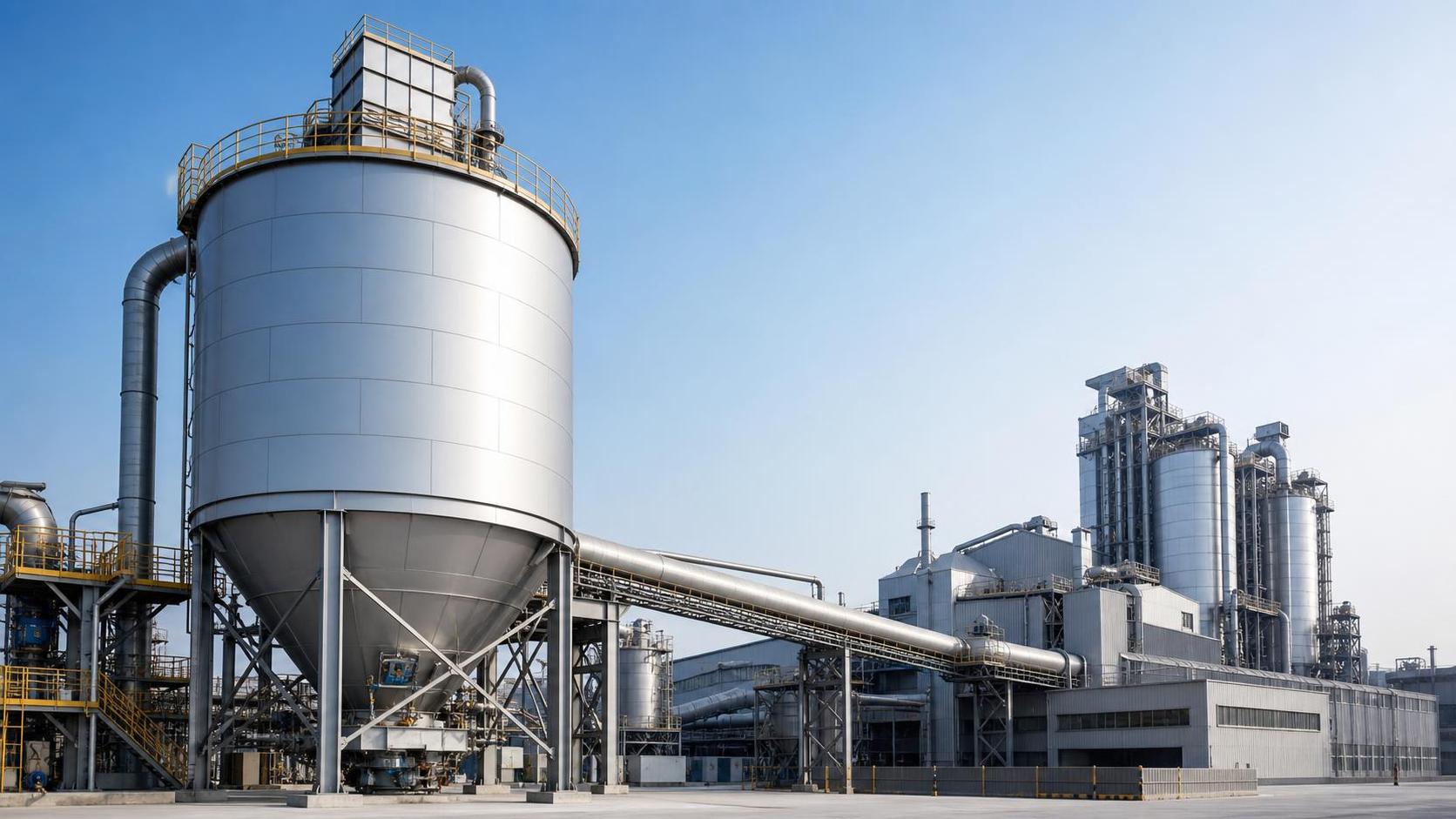
Welded Steel Silo Applications for Cement, Fly Ash, and Mineral Powders
For cement plants, fly ash handling systems, and mineral powder facilities, selecting the right welded steel silo directly affects storage reliability, material flow, construction schedules, and operating costs.
Project managers should evaluate more than nominal capacity. A suitable silo must match material behavior, discharge requirements, structural loads, environmental conditions, and the practical realities of installation and maintenance.
What Project Managers Are Really Evaluating
When searching for a welded steel silo, project teams usually need a dependable bulk-storage solution that can be specified, fabricated, installed, and commissioned with limited operational risk.
The central question is not simply how many tonnes the silo can hold. It is whether the system will discharge consistently and remain structurally reliable over its intended service life.
Cement, fly ash, limestone powder, slag powder, and other mineral materials can appear similar in drawings while behaving very differently during storage, aeration, and discharge.
A poorly matched silo can create bridging, rat-holing, segregation, excessive dust, moisture-related caking, elevated energy use, and repeated manual intervention at the discharge cone.
For an engineering project leader, these problems become schedule risks, safety risks, warranty disputes, production interruptions, and avoidable expenses after plant handover.
The best welded steel silo selection process begins with operating data, rather than a standard silo diameter, a generic capacity estimate, or a supplier quotation alone.
Project teams should define the material, required stock level, feed pattern, unloading method, discharge rate, operating environment, and downstream equipment before fixing the silo configuration.
Start Capacity Planning With Plant Operations
Capacity should reflect actual supply and consumption variability, not only average daily throughput. Delivery delays, planned shutdowns, peak production periods, and emergency stock requirements all matter.
A cement grinding station may require several days of cementitious material storage, while a batching plant may prioritize rapid replenishment and a smaller operational inventory.
Fly ash storage often requires additional allowance because deliveries may be irregular, seasonal demand can fluctuate, and power-plant supply conditions may change unexpectedly.
Mineral powder operations should also consider whether one silo supports a single grade or whether separate storage is needed to prevent contamination between formulations.
Nominal capacity must be calculated using realistic bulk density. Loose bulk density, compacted density, and aerated density can differ enough to change the effective tonne capacity substantially.
Project specifications should state both volumetric capacity and usable mass capacity. This prevents misunderstandings when materials with different density, moisture content, or particle-size distributions are stored.
Freeboard is another practical requirement. The vessel should not be filled to its geometric maximum if filling equipment, dust collection, pressure relief, and level monitoring require safe operating space.
For multi-silo projects, operational flexibility may be more valuable than one large vessel. Separate silos can support maintenance, grade changes, blended products, and uninterrupted production.
A realistic capacity model also identifies the required number of truck unloading positions, transfer conveyors, pneumatic lines, and loading cycles needed to maintain the desired stock level.
Match the Welded Steel Silo to Material Flow Behavior
Material flow is often the decisive design factor for a welded steel silo. Powder properties determine the required cone angle, discharge opening, aeration layout, and flow-assistance equipment.
Cement is generally free-flowing when dry, but it can compact during long storage periods. Moisture intrusion and incomplete aeration may quickly create localized hardening or discharge restrictions.
Fly ash may be fine, cohesive, and highly sensitive to moisture. Its behavior can vary between sources because combustion processes, carbon content, particle shape, and collection systems differ.
Mineral powders can range from relatively coarse limestone meal to extremely fine fillers. Each material should be assessed for angle of repose, compressibility, cohesion, abrasiveness, and permeability.
A mass-flow design encourages material to move across the entire hopper surface. This approach reduces stagnant zones, minimizes segregation, and supports more predictable first-in, first-out material handling.
Funnel flow can be acceptable for some materials and applications, but it creates stagnant regions around the vessel wall. These zones may compact, age, or retain older product.
The supplier should receive representative material data whenever possible. Laboratory flow testing is particularly useful for new products, blended powders, difficult fly ash, or high-value specialty minerals.
Design decisions should include hopper geometry, internal surface condition, outlet size, pneumatic fluidizing pads, air slides, vibrators, rotary valves, screw feeders, and discharge gate arrangements.
Installing excessive flow aids without understanding the material is not a reliable solution. Incorrect aeration can fluidize powder unevenly, cause flushing, increase dust loading, or worsen segregation.
Project managers should request a clear explanation of the expected discharge pattern. This creates accountability for design assumptions before equipment fabrication begins.
Structural Design Must Address More Than Stored Weight
Welded steel silos provide strong design flexibility because plate thickness, shell geometry, stiffeners, roof design, and support arrangements can be adapted to project-specific loading conditions.
Stored material weight is only one component of the structural calculation. Wind, seismic action, internal pressure, vacuum, thermal movement, foundation settlement, and equipment loads must also be considered.
Bulk solids impose nonuniform wall pressures that differ from liquid pressure. Fill conditions, discharge conditions, eccentric loading, and possible material arching can create significant localized stresses.
Roof structures must support filters, inspection platforms, safety rails, level indicators, piping, access ladders, and sometimes blower equipment. These loads should be included early in the design.
In regions with high wind speeds or seismic activity, structural requirements can materially affect shell thickness, anchoring systems, foundation reinforcement, and the overall project budget.
Connection details deserve close attention. Pneumatic conveying lines, pressure-relief devices, dust filters, access doors, and discharge equipment must integrate without weakening critical areas of the shell.
Corrosion protection should reflect the external environment. Coastal sites, chemical plants, humid climates, and outdoor storage locations may require upgraded coating systems and disciplined inspection planning.
For materials prone to moisture absorption, the roof, manholes, vents, and pipe penetrations need careful sealing. A structurally sound silo can still underperform when water enters the system.
Some projects also require thermal insulation or condensation control. Solutions developed for products such as Insulated Moisture-Proof Grain Silos can illustrate the importance of controlling moisture exposure, although powder-storage requirements must be engineered separately.
Before approving drawings, project leaders should confirm applicable codes, design standards, welding procedures, nondestructive testing requirements, and documentation responsibilities for the complete silo package.
Choose an Installation Strategy That Protects the Schedule
Installation is a major advantage and a major risk area for welded steel silo projects. The chosen fabrication and erection method should fit site access, crane availability, and construction sequencing.
Large shop-fabricated sections can reduce field welding time, but transportation limits may constrain diameter, height, weight, and route selection. Early logistics review prevents costly redesigns.
Field welding offers flexibility for large silos and restricted sites, but it requires qualified welders, weather protection, inspection procedures, and careful coordination with other civil and mechanical work.
Foundation readiness is essential. Anchor bolt locations, elevation tolerances, concrete strength, drainage, grounding, and equipment interfaces must be verified before the erection team mobilizes.
A silo project should not be treated as an isolated steel structure. It must align with truck unloading systems, pneumatic conveying equipment, dust collection, electrical systems, automation, and maintenance access.
Construction schedules should include time for coating repairs, pressure checks, instrument calibration, interlock testing, dry commissioning, loaded commissioning, and operator training before final acceptance.
Commissioning plans should define who supplies compressed air, power, test material, temporary conveying arrangements, and operators. Missing temporary services can delay completion despite mechanical installation being finished.
Project managers should also establish clear responsibility for interface engineering. Problems often arise where the silo supplier's scope ends and the conveyor, blower, electrical, or civil contractor begins.
A detailed interface list reduces ambiguity. It should identify flange standards, nozzle loads, instrument signals, platform boundaries, cable routes, support steel, and commissioning responsibilities.
Control Dust, Pressure, and Moisture From the Beginning
Fine powders generate operational risks that are not resolved by storage volume alone. Reliable dust collection, pressure relief, and filling controls are fundamental to safe silo operation.
During pneumatic filling, displaced air and conveying pressure must be managed correctly. An undersized filter or incorrectly selected pressure-relief valve can damage equipment or cause dust emissions.
High-level alarms and independent overfill protection should be specified based on the plant's risk profile. A single level switch is often insufficient for high-consequence applications.
Continuous level measurement can improve inventory management, while point-level devices protect against overfilling. The final instrument arrangement should account for dust, buildup, temperature, and material dielectric properties.
Moisture control is especially important for cement and reactive mineral powders. Rainwater entry, condensation, wet compressed air, and leaking inspection covers can reduce flowability and compromise product quality.
Compressed-air quality should be considered during design. Water and oil contamination in aeration air can create avoidable storage problems, especially where the material remains in the silo for extended periods.
Access arrangements should support safe inspection and maintenance. This includes ladders, platforms, cages, guardrails, roof access, lighting, and sufficient clearance around filters and valves.
Safety planning should also address confined-space procedures, lockout requirements, fall protection, dust exposure, and the risks associated with entering a silo containing bridged or compacted material.
Evaluate Lifecycle Cost Instead of Purchase Price Alone
A lower initial quotation can become expensive when it excludes essential equipment, provides inadequate coating protection, assumes unrealistic material flow, or shifts interface work to other contractors.
Project managers should compare complete installed value. The review should include fabrication, transport, erection, foundation interfaces, automation, filtration, aeration, commissioning, spare parts, and expected maintenance.
Energy consumption is another lifecycle factor. Pneumatic conveying, aeration blowers, dust collectors, and discharge equipment can impose recurring operating costs over many years.
Maintenance access affects both cost and plant availability. Filters, relief valves, level devices, fluidizing components, and discharge mechanisms should be serviceable without unnecessary shutdown complexity.
A well-designed welded steel silo can reduce losses from material residues, rejected batches, production delays, emergency cleanouts, and unplanned labor. These savings often justify stronger upfront engineering.
Warranty terms should be reviewed carefully. They should distinguish between structural performance, equipment supply, material-flow assumptions, installation quality, and operating conditions controlled by the customer.
For critical facilities, requesting reference projects is useful. Relevant references should involve similar materials, comparable capacities, similar climates, and equivalent discharge or conveying requirements.
Supplier capability matters beyond manufacturing capacity. Effective partners can provide engineering support, fabrication control, field coordination, commissioning assistance, and documentation suitable for project closeout.
A Practical Procurement Checklist for Project Teams
Before issuing a request for quotation, prepare a concise technical data package. This allows suppliers to design against actual operating requirements rather than rely on broad assumptions.
The package should identify material properties, bulk density range, moisture range, required capacity, feed rate, discharge rate, storage duration, operating temperature, and site environmental conditions.
It should also define the preferred discharge method, downstream equipment, filling method, available utilities, electrical classification, automation requirements, and applicable local regulations or design standards.
Ask bidders to state their assumptions clearly. Comparable quotations require transparency regarding usable capacity, cone geometry, plate thickness, coating system, insulation, aeration, filter capacity, and installation scope.
Technical evaluation should not focus solely on overall dimensions. Review drawings for maintenance access, platform layout, access doors, relief devices, inspection locations, and safe removal of replaceable components.
Commercial evaluation should identify exclusions early. Civil works, cranes, lodging, scaffolding, field welding, electrical cabling, compressed-air piping, and commissioning labor are frequent sources of budget variation.
For Shandong Guokai International Trade Co., Ltd., relevant project experience across building materials, electric power, chemical, and grain-related storage applications can support a broader review of manufacturing and engineering capability.
The final contract should include approved drawings, quality requirements, delivery milestones, inspection points, packing requirements, erection support, commissioning obligations, and handover documentation in measurable terms.
Conclusion
A welded steel silo for cement, fly ash, or mineral powders should be selected as an integrated process asset, not merely as a steel vessel with a stated capacity.
Successful projects connect capacity planning, material-flow engineering, structural design, installation coordination, safety systems, and lifecycle cost evaluation before fabrication begins.
For project managers, the strongest decision is usually the one supported by verified material data, transparent supplier assumptions, clear interfaces, and a commissioning plan that reflects real operating conditions.
When these factors are addressed early, the welded steel silo can provide dependable storage, smoother production flow, lower operating disruption, and a more controlled path from construction to long-term operation.
Related Posts
- ▶ How a Dry Bulk Silo Handles Pneumatic Filling and Gravity Discharge
- ▶ What Is a Dry Bulk Silo, and When Does a Factory Need One?
- ▶ Can dry bulk storage silos be integrated into existing PLC-controlled batching systems?
- ▶ Do dry bulk silos designed for API 650 compliance meet ASME Section VIII requirements?
- ▶ Is almacénamiento de sólidos a granel en silos de acero inoxidable viable for small-scale agrochemical distributors?
- ▶ How do vibration-based level sensors perform in stainless steel silos with powder coating?
Online Message