





What to Check Before Buying Bulk Material Storage Silos for Cement, Grain, or Powders
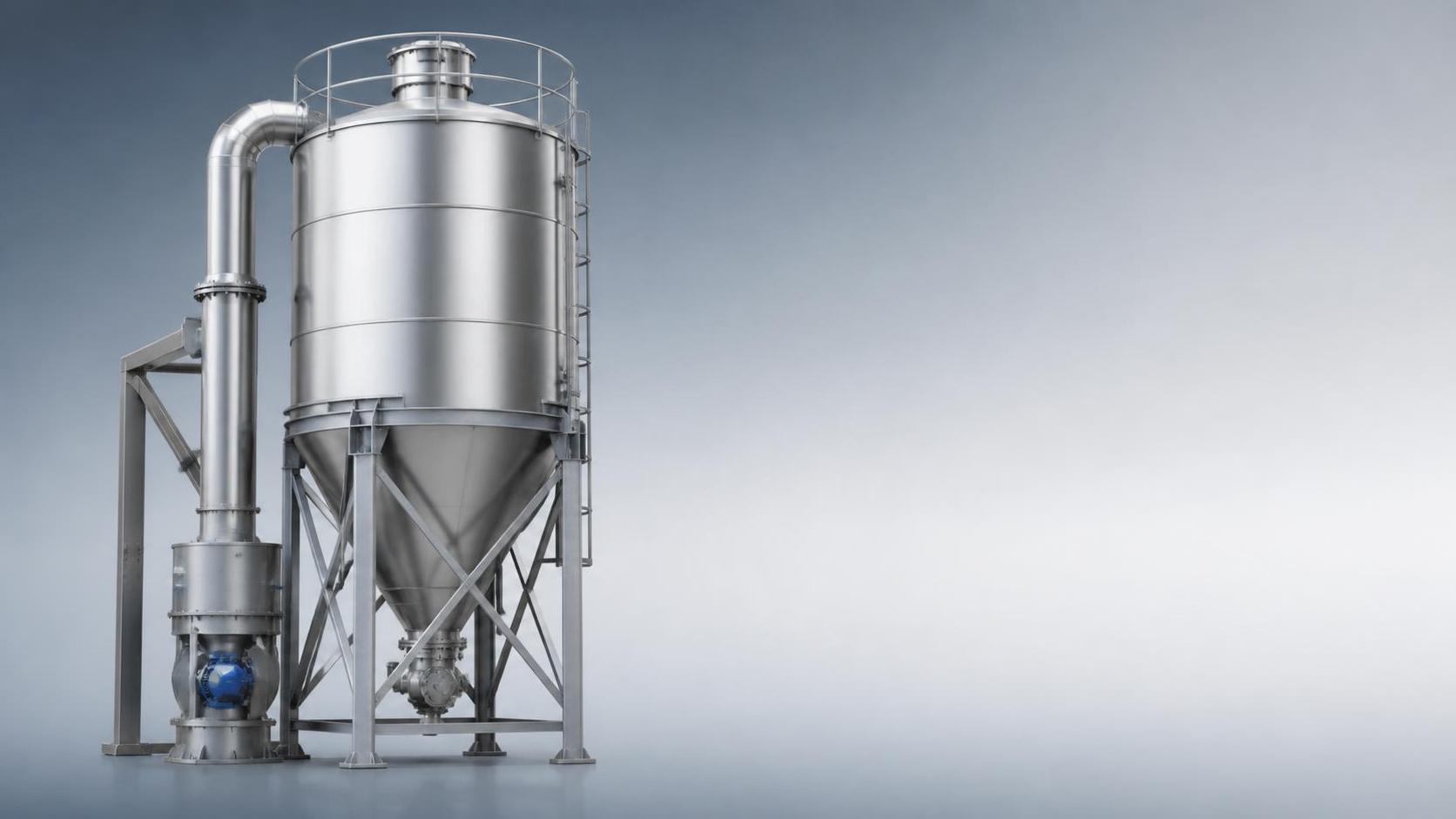
Start with the material, not the tank
The first mistake buyers make with bulk material storage silos is treating cement, grain, and powders as if they all behave the same. They do not. A silo that works well for free-flowing grain can cause bridging, rat-holing, or cleaning headaches with fine powders. Cement brings its own problems too: abrasion, dust control, and the need to manage flow without turning the discharge area into a maintenance point.
Before you compare prices, define the material profile in plain terms: particle size, moisture sensitivity, bulk density range, flow behavior, and how often the silo will be emptied. If your material changes by season or source, use the worst-case behavior in the specification. That one detail usually decides whether you need a basic storage vessel or a more engineered system.
Check usable capacity, not brochure capacity
Sales sheets often highlight total volume, but procurement should ask for usable working capacity. Headroom, cone geometry, discharge angle, and internal fittings all reduce what you can realistically store. If the silo feeds production on a tight schedule, even a small mismatch between nameplate capacity and actual usable volume can create unnecessary replenishment runs and higher transport cost.
Ask how the supplier calculates fill level and whether the design assumes ideal flow. For Grain Spiral Silos, for example, the real question is not only how much grain fits inside, but how much can be discharged consistently without leaving dead zones or forcing manual intervention. Buyers should make the supplier show the working assumptions, not just the geometry.
Match the silo to the material flow behavior
This is where many low-cost purchases go wrong. Material that seems fine in a truck or bag can behave very differently in a tall steel silo. Cohesive powders may hang up on walls. Cement can compact. Grain may bridge if moisture rises or the outlet is undersized. Once flow problems start, the cost is not just downtime. You also get labor waste, product loss, and avoidable wear on discharge equipment.
- Check whether the outlet size and cone angle suit the material, not just the silo diameter.
- Confirm whether flow aids, aeration, or vibration are part of the design or add-ons.
- Ask what happens if the material sits longer than normal. Some materials tolerate delay; others cake fast.
If the supplier cannot explain flow assumptions in practical terms, that is a warning sign. A cheap silo that looks fine on paper can become expensive the first time it refuses to discharge cleanly.
Inspect structure, wind load, and foundation logic together
Procurement teams sometimes compare silo quotes without comparing the structural basis behind them. That is a mistake. Steel thickness, stiffeners, roof design, anchor arrangement, and foundation assumptions all belong to the same decision. A silo is not just a container; it is a loaded structure that must stay stable through filling, discharge, wind, and site conditions.
Do not accept a design that ignores the installation site. Soil condition, local wind exposure, seismic requirements, and indoor or outdoor placement change the final engineering. If the quote looks unusually cheap, check whether the supplier has simply left out foundation work, accessories, or load calculations. Many budget offers are incomplete rather than efficient.
Look hard at sealing and dust control
For cement and fine powders, sealing is not a cosmetic detail. Poor sealing means dust escape, contamination risk, and loss of product during transfer. For grain, sealing helps protect quality and limit moisture ingress. In both cases, the real issue is whether the silo and its connected equipment form a controlled system, not just a metal shell with a hatch.
Review manholes, access covers, roof joints, discharge points, and pipe interfaces. Ask how the sealing surfaces are handled during fabrication and what wear parts will need replacement over time. If the design includes filters, vents, or conveying connections, make sure those components are compatible with the silo rather than treated as afterthoughts.
Check access for inspection, cleaning, and maintenance
A silo that is hard to inspect becomes expensive to own. This matters more than many buyers expect. Access doors, ladders, platforms, safety points, internal inspection access, and cleanout arrangements all affect how often staff can safely enter or service the unit. If a silo is difficult to clean, residue builds up; if it is difficult to inspect, small problems become shutdowns.
The maintenance question should be asked before purchase, not after installation. Who replaces wear liners? How are discharge parts accessed? Can the site team inspect critical areas without dismantling half the system? These are cost questions as much as technical ones, because poor service access drives labor hours long after the invoice is paid.
Compare the discharge system, not just the silo body
The silo body gets most of the attention, but the discharge arrangement often determines whether the system works in real life. Screw conveyors, gates, rotary valves, aeration pads, and feeders all need to match the material and the downstream process. If the outlet is undersized or poorly integrated, the silo may technically hold the material while failing to deliver it at the required rate.
Buyers should ask for a simple operating sequence: how material enters, how it is held, how it is discharged, and what the operator must do when conditions are not ideal. If that sequence sounds vague, the quote is incomplete. The lowest silo price can become the highest total cost once discharge upgrades are added later.
Demand a fabrication standard you can audit
You do not need a long technical lecture, but you do need traceable fabrication details. Ask for the material grade, welding approach, coating system, and inspection points used in production. If the supplier cannot state what is being built and how it will be checked, procurement has little basis for comparing offers on more than price.
For cross-industry buyers, supplier experience matters because use conditions differ. A team that regularly handles steel storage silo projects for grain, building materials, power, or chemical applications is more likely to ask the right questions early. That does not replace your own review, but it reduces the chance of missing a basic engineering issue during sourcing.
Put total cost in one line before you approve the order
A silo purchase should be judged on installed and operating cost, not equipment price alone. Include transport, foundation work, accessories, discharge equipment, installation labor, inspection access, and expected maintenance parts. Then compare that figure against the storage risk you are removing: product loss, contamination, manual handling, downtime, and emergency cleaning.
That comparison usually clarifies the decision fast. If two offers are close in price, choose the one with clearer engineering scope and easier maintenance. If one is much cheaper, find out what has been removed from the scope before you let the number drive the decision.
A practical buying sequence
For procurement teams, the cleanest order is simple: define the material, size the usable capacity, verify flow and discharge, review structure and site conditions, then check sealing, access, and maintenance. Only after that should price be compared in earnest. That sequence keeps the purchase grounded in operating reality instead of catalog language.
If the supplier can walk through each of those points clearly, you are probably dealing with a serious engineering offer. If not, the safest move is to slow down and ask for a revised scope. Bulk material storage silos are easy to price and easy to misunderstand; the buyers who avoid costly surprises are usually the ones who force the details out early.
Related Posts
- ▶ How a Dry Bulk Silo Handles Pneumatic Filling and Gravity Discharge
- ▶ What Is a Dry Bulk Silo, and When Does a Factory Need One?
- ▶ Can dry bulk storage silos be integrated into existing PLC-controlled batching systems?
- ▶ Do dry bulk silos designed for API 650 compliance meet ASME Section VIII requirements?
- ▶ Is almacénamiento de sólidos a granel en silos de acero inoxidable viable for small-scale agrochemical distributors?
- ▶ How do vibration-based level sensors perform in stainless steel silos with powder coating?
Online Message