





How Bulk Material Storage Silos Improve Material Handling Efficiency in Industrial Plants
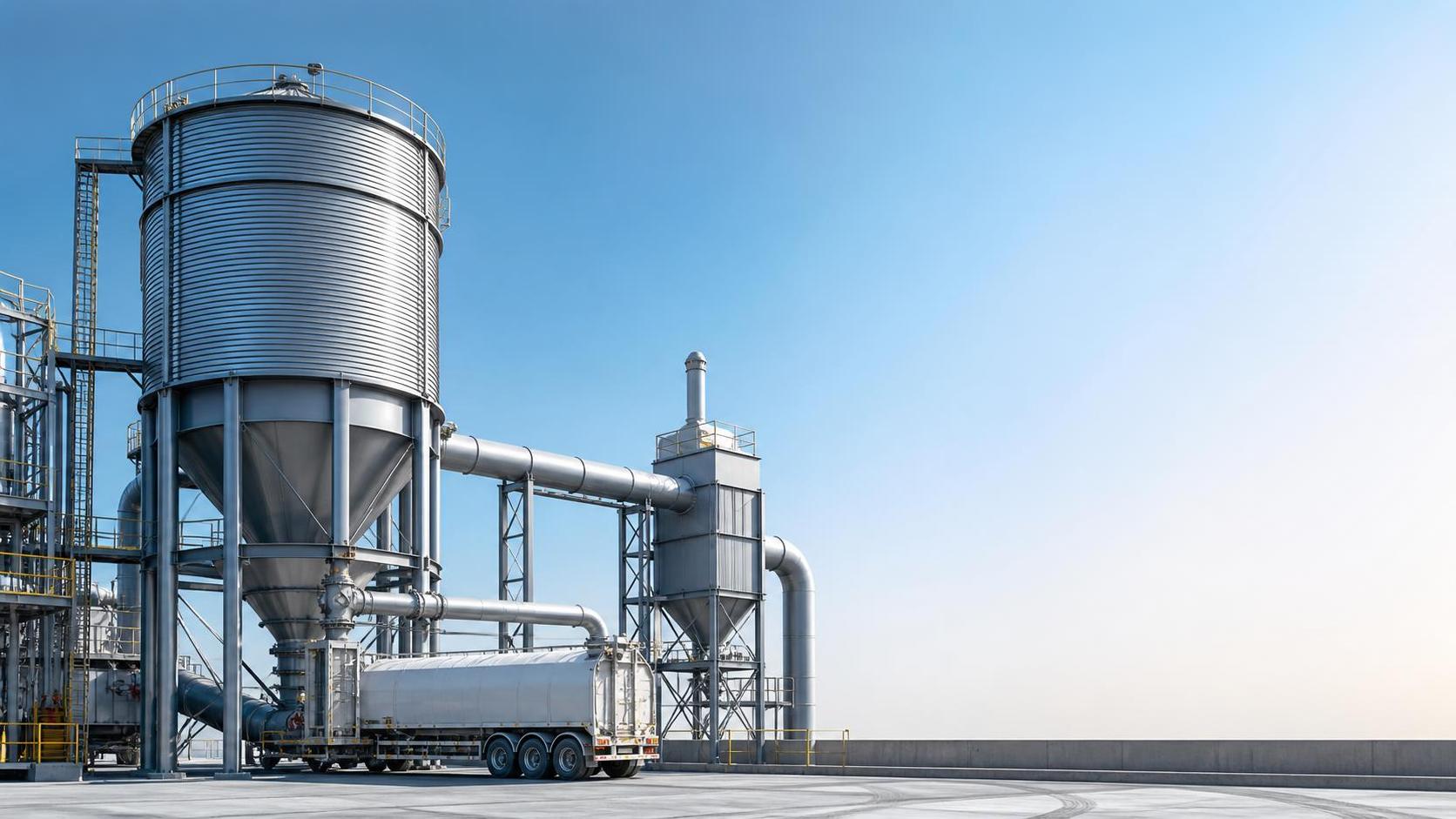
Where Bulk Material Storage Silos Make the Biggest Difference in Plant Efficiency
The real test of bulk material storage silos is not whether they can hold product. It is whether they keep material moving at the pace the plant actually needs, without forcing operators to compensate for poor flow, frequent cleanup, inconsistent feeding, or avoidable downtime. In heavy industrial settings, those problems usually appear long before nominal storage capacity becomes the issue.
That is why silo selection tends to matter most in plants handling powders, granular solids, or blended materials with unstable flow behavior. Cement, fly ash, grain, mineral powder, and chemical feedstocks do not behave the same way on a layout drawing as they do on a humid site, under variable discharge rates, with a loading schedule that changes every shift. A silo that looks sufficient in volume can still create a bottleneck if the discharge cone is wrong for the material, if dust collection is undersized, or if truck and conveying interfaces are treated as an afterthought.
For engineering teams, the value of bulk material storage silos is usually found in three practical gains: buffering supply against production variation, controlling flow into downstream equipment, and reducing manual intervention around receiving and discharge points. Those gains are straightforward on paper. They become more complicated when the plant has limited elevation, a narrow construction window, or materials that compact, segregate, or bridge after short storage periods.
When throughput is the problem, storage becomes part of the handling system
In building materials plants, the silo is often treated as a storage asset during procurement and then expected to solve handling instability after installation. That is usually backwards. If a cement grinding station, batching plant, or dry mortar line experiences uneven truck arrivals or periodic interruptions in upstream supply, the silo is functioning as a process buffer, not just a warehouse. In that role, the question is not only how many tons it can store. The more useful question is how steadily it can receive, retain, and discharge material without quality loss or flow stoppage.
This is where spiral steel silos are often considered, especially for powdered materials that require enclosed handling and quick site assembly. In projects where schedule pressure is high and the plant layout has to be brought online in stages, systems such as Cement & Fly Ash Spiral Silos are commonly evaluated because the structural form, storage duty, and installation method align well with bulk cement and fly ash applications. That does not mean they suit every powder handling project. It means they are often a practical answer where continuous feed and site efficiency matter more than oversized civil work.
A common mistake is to size the silo only around average daily consumption. Plants rarely run on average conditions. They deal with peak unloading windows, weather disruption, maintenance outages, and uneven dispatch timing. If the silo cannot absorb those swings, loaders wait, conveying systems cycle inefficiently, and operators start making short-term workarounds that increase dust, spillage, and labor time.
Flow behavior matters more than nominal capacity
Not every material punishes poor silo design in the same way. Free-flowing grain may tolerate a broader range of hopper and outlet arrangements than ultrafine mineral powder. Fly ash and cement can compact during storage, especially when moisture control is inconsistent or discharge is intermittent. Some chemical powders show segregation or rat-holing tendencies that are not obvious until the plant starts cycling partial loads.
That is why bulk material storage silos should be discussed in terms of flow pattern and discharge reliability, not just steel thickness or shell diameter. If the plant depends on stable feeding into screw conveyors, rotary valves, weigh hoppers, or pneumatic conveying lines, material behavior at the hopper outlet becomes a production issue. When bridging occurs, the result is rarely limited to delayed discharge. It can affect dosing accuracy, batch consistency, compressed air use, and maintenance frequency on downstream equipment.
On site, the warning signs usually show up early: operators tapping the cone, inconsistent feeder loads, sudden surges after partial blockage, or dust spikes when manual intervention begins. Once that pattern starts, the plant has already lost part of the efficiency the silo was supposed to provide.
Different industries use silos for different reasons, even when the structure looks similar
A grain facility often focuses on turnover, aeration strategy, and contamination control. A power or construction materials site may care more about uninterrupted feed to combustion, mixing, or dispatch systems. Chemical plants usually place tighter attention on sealing, corrosion considerations, and compatibility with process safety requirements. The steel silo may look similar from a distance, but the handling objective changes the design brief.
That difference affects layout decisions. In a grain project, access for inspection and cleaning may dominate the conversation. In a cement or fly ash installation, truck unloading rate, bin venting, pressure balance, and outlet consistency can be more critical. In power and utility-related ash handling, the issue may be whether temporary storage can stabilize discharge into transport or reuse systems without causing dust escape around transfer points.
This is one reason companies with cross-industry experience tend to see the silo less as a standalone product and more as part of a handling route. Shandong Guokai International Trade Co., Ltd., for example, works across grain, building materials, electric power, and chemical sectors, and that kind of exposure generally matters because the same vessel geometry does not answer the same operational problem in every plant.
Site conditions usually decide whether a good silo concept performs well
Many efficiency losses attributed to storage equipment are actually site integration issues. A silo can be well designed and still underperform if the foundation interface, truck routing, feeding elevation, or maintenance access was compressed too aggressively during layout. Industrial plants rarely offer ideal conditions. There may be restrictions on crane use, limited room for multiple receiving lanes, or existing structures that force awkward conveyor angles.
Those limitations matter because they shape how material enters and leaves the silo. If unloading trucks queue on a tight loop road, receiving efficiency drops even when storage volume is sufficient. If a hopper discharge line makes too many directional changes, blockages become more likely. If the dust collection point is undersized relative to loading air displacement, material loss and housekeeping burden rise quickly.
Weather exposure is another point often underestimated at the planning stage. Powder handling systems that run adequately in dry conditions can become unstable when moisture intrusion, temperature fluctuation, or condensation is introduced. That does not automatically rule out a storage solution, but it changes what should be checked: sealing details, venting arrangement, insulation where applicable, and whether the material’s storage duration is compatible with local climate behavior.
What plant teams usually ask before committing
The most useful customer questions are usually operational, not cosmetic. How often will this silo be emptied fully? What happens if delivery arrives faster than the conveying line can accept? Will this material sit for days or turn over every shift? Is the discharge feeding one process point or several? Can maintenance reach the key components without shutting down adjacent equipment?
Those questions reveal whether the plant is solving a storage shortfall, a process continuity issue, or an access problem disguised as a storage problem. If the material must be dosed accurately downstream, the discharge arrangement deserves more attention than extra capacity. If supply interruptions are frequent, buffer volume and receiving speed may carry more weight. If housekeeping and dust complaints already exist, enclosure quality and transfer point design should be treated as efficiency variables, not secondary add-ons.
Efficiency is often won or lost at loading and discharge
Plants sometimes overemphasize the storage shell and underemphasize the interfaces. Yet the loading and discharge ends are where handling efficiency is measured every day. If a truck unloading point causes repeated stoppages, the storage asset becomes a waiting area. If the outlet cannot deliver a controlled, repeatable feed, operators end up managing fluctuations manually downstream.
This is especially true in facilities where one silo supports multiple process demands. A line feeding batching, blending, and bulk dispatch at different times of day needs predictable drawdown behavior. Otherwise inventory visibility and actual usable stock begin to diverge. Material may remain in the vessel, but not in a form the plant can extract efficiently.
For that reason, silo projects should be reviewed with the conveyors, valves, feeders, dust collectors, and truck or tanker interfaces already in mind. A well-matched system reduces transfer losses and operator touchpoints. A poorly matched one creates hidden costs through delay, rework, and maintenance that are rarely visible in the original equipment quote.
Choosing between “more storage” and “better handling”
When plants experience recurring material interruptions, the instinct is often to add capacity. Sometimes that is correct. Sometimes the plant actually needs better flow control, cleaner transfer routing, or a silo type that fits the material and construction schedule more closely. Adding volume without solving discharge reliability can simply make a larger bottleneck.
This is where a project team should separate strategic storage from operational handling. Strategic storage protects production from supply variability. Operational handling keeps material usable and available at the required rate. Good bulk material storage silos support both, but only when the site, material behavior, and downstream process are considered together.
In many powder storage projects, a solution such as Cement & Fly Ash Spiral Silos will enter the conversation because it addresses a practical combination of storage, enclosed handling, and construction efficiency. The right decision still depends on what the plant is asking the silo to do hour by hour, not just what it must hold by nameplate.
A useful final check is simple: map the actual material route from delivery to consumption, then identify every point where operators currently wait, intervene, clean, or compensate. If the silo design removes those points, it is improving handling efficiency. If it only adds storage volume while those friction points remain, the plant may have solved the wrong problem.
Related Posts
- ▶ How a Dry Bulk Silo Handles Pneumatic Filling and Gravity Discharge
- ▶ What Is a Dry Bulk Silo, and When Does a Factory Need One?
- ▶ Can dry bulk storage silos be integrated into existing PLC-controlled batching systems?
- ▶ Do dry bulk silos designed for API 650 compliance meet ASME Section VIII requirements?
- ▶ Is almacénamiento de sólidos a granel en silos de acero inoxidable viable for small-scale agrochemical distributors?
- ▶ How do vibration-based level sensors perform in stainless steel silos with powder coating?
Online Message