





What pressure rating is required for dry bulk storage silos handling pneumatic conveying systems?
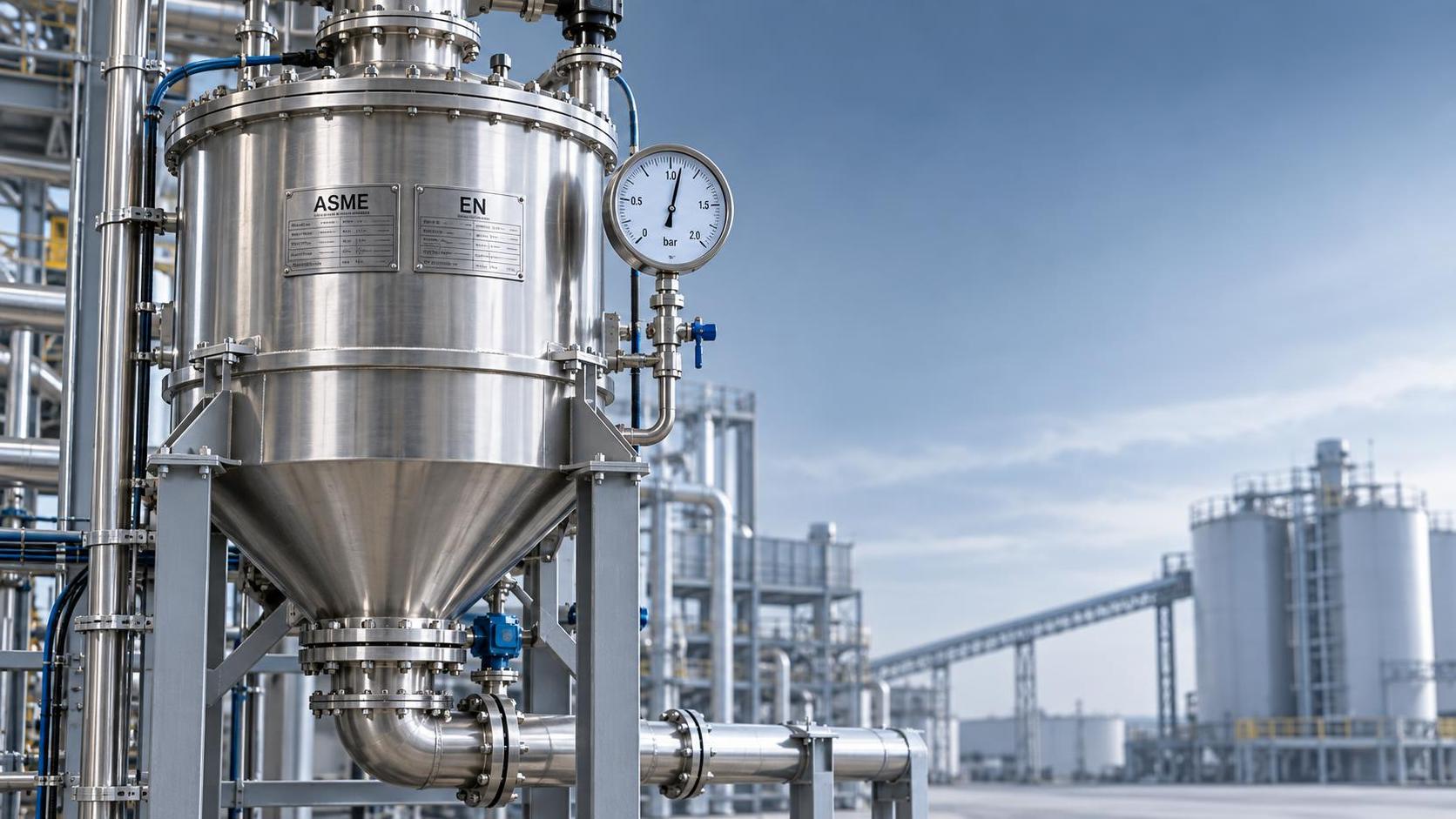
Pressure Rating Isn’t Just a Number — It’s a System Boundary
When technical evaluators ask, “What pressure rating is required for dry bulk storage silos handling pneumatic conveying systems?”, they’re not just checking a box on a datasheet. They’re defining where mechanical design ends and operational risk begins. That number — whether it’s 0.5 bar, 1.2 bar, or -0.3 bar vacuum — becomes the silent contract between the silo shell, the feed system, and the safety protocols downstream.
We see this daily at Shandong Guokai International Trade Co., Ltd.: a grain terminal in Shandong specifying a 1.0 bar positive-pressure silo, only to discover later that their rotary valve isn’t rated for backpressure — causing intermittent surging and weld fatigue near the inlet flange. Or a cement plant in Southeast Asia using a silo designed for atmospheric storage, then retrofitting a dense-phase blower without revalidating the shell’s hoop stress. These aren’t theoretical edge cases. They’re field-confirmed triggers for unplanned downtime, costly repairs, and — in worst cases — localized buckling during commissioning.
It Starts with Conveying Mode — Not Silo Type
Pneumatic conveying isn’t one thing. It’s three distinct regimes — dilute phase, dense phase, and vacuum — each imposing different pressure profiles on the receiving silo:
- Dilute phase (positive pressure): Typically 0.3–1.2 bar(g) at the silo inlet. But peak transient pressure — from valve slam, airlock failure, or sudden line blockage — can spike 20–30% above nominal. This is where ASME BPVC Section VIII Div. 1 design margins matter most.
- Dense phase (positive pressure): Lower velocity, higher solids loading. Inlet pressure often sits between 0.8–2.5 bar(g), but the real challenge is sustained pressure cycling. Fatigue assessment under EN 1993-4-1 Part 4 becomes non-negotiable — especially for large-diameter silos (>8 m).
- Vacuum conveying: Rarely exceeds -0.5 bar(g), but negative pressure introduces global buckling risks. A silo rated for +1.0 bar isn’t automatically safe at -0.5 bar — the structural response differs fundamentally. Vacuum-rated silos need reinforced stiffening rings, not just thicker plates.
None of these values are universal defaults. They depend on your blower’s max discharge pressure, pipe length/diameter, material density, and even local ambient temperature (affects air density and thus pressure drop). We once reviewed a fly ash system where the client assumed 0.7 bar was sufficient — until we mapped the actual pressure profile across eight bends and two elevation changes. The real peak hit 1.15 bar at the silo inlet. That 0.45 bar gap? Enough to invalidate the original design basis.
Standards Don’t Overlap — They Conflict
Don’t assume ASME and EN standards give you the same answer. ASME BPVC focuses on worst-case static pressure with defined safety factors (e.g., 3.5x for brittle fracture prevention). EN 1993-4-1 leans into serviceability — combining pressure, wind, snow, and seismic loads via partial safety factors. And neither directly addresses pulsating flow from rotary feeders or the dynamic amplification caused by vortex shedding in tall, slender silos.
Here’s what we tell evaluators: If your project falls under EU Machinery Directive, EN compliance is mandatory — even if your silo is fabricated in China. If it’s going into U.S. power generation infrastructure, ASME Section VIII + API RP 2A-LRFD may apply. And if it’s feeding into an explosion-hazard area (ATEX Zone 21/22), you’ll need certified pressure relief sizing — which feeds back into the required pressure rating itself. There’s no “global standard.” There’s only *your* jurisdiction, *your* process, and *your* liability exposure.
Material Behavior Changes Everything
Stainless steel behaves differently than carbon steel under cyclic pressure — especially when combined with abrasive materials like ground limestone or silica sand. Grain boundary corrosion in humid environments can reduce effective wall thickness faster than calculated corrosion allowance. We’ve seen Q345R steel lose 0.8 mm over five years in a coastal chemical plant — not enough to fail, but enough to shift the safety margin below code-required minimums for 1.0 bar operation.
That’s why our engineers never start with “what rating do you need?” Instead, we ask: What’s your conveying duty cycle? How many starts/stops per day? Is moisture present? What’s the particle size distribution? These inform not just the pressure rating, but the material grade, surface finish, and inspection protocol. A Grain Seed Steel Silo destined for seed corn storage might prioritize smooth interior welds and low residual stress over ultra-high pressure capacity — because seed integrity matters more than burst strength.
The Real Cost of Under-Rating — and Over-Rating
Under-rating is obvious: leaks, deformation, catastrophic failure. But over-rating carries hidden costs. A silo built for 2.0 bar when 1.1 bar suffices adds 18–25% in plate thickness, welding time, and foundation load — plus longer lead times and tighter fabrication tolerances. Worse, over-engineered silos often get underspecified ancillaries: a 2.0 bar-rated shell paired with a 1.0 bar-rated level sensor or vent filter creates a single-point failure path.
We recently helped a biomass pellet producer avoid this trap. Their initial spec called for 1.5 bar silos — based on vendor brochures, not actual system curves. After reviewing their blower curve, line layout, and historical pressure logs, we confirmed 0.9 bar was sufficient. The result? 12% lower CAPEX, simpler venting, and easier future expansion. Sometimes the right pressure rating is the *lowest* value that covers all credible scenarios — not the highest number someone handed you.
Final Check Before Finalizing
Before locking in a pressure rating, verify these three things:
- Is the rating applied to the *entire silo shell*, or just the inlet zone? Local reinforcement doesn’t excuse full-shell under-design.
- Does the rating include allowances for thermal expansion, settlement, or long-term creep — especially in high-temp applications like fly ash?
- Has the relief system (rupture disc, safety valve, flame arrestor) been sized *for the same pressure class*, with verified discharge path routing?
If any of those answers are “unclear” or “not yet reviewed,” don’t sign off. Pressure rating isn’t a standalone spec — it’s the anchor point for everything else. Get it wrong, and every other decision compounds the error.
For technical evaluators working across grain, power, chemicals, or building materials: treat the pressure rating as your first engineering checkpoint — not your last administrative formality. Because in dry bulk storage silos, the difference between safe operation and system instability is rarely measured in meters or tons. It’s measured in bars — and in how carefully those bars were chosen.
Related Posts
- ▶ How a Dry Bulk Silo Handles Pneumatic Filling and Gravity Discharge
- ▶ What Is a Dry Bulk Silo, and When Does a Factory Need One?
- ▶ Can dry bulk storage silos be integrated into existing PLC-controlled batching systems?
- ▶ Do dry bulk silos designed for API 650 compliance meet ASME Section VIII requirements?
- ▶ Is almacénamiento de sólidos a granel en silos de acero inoxidable viable for small-scale agrochemical distributors?
- ▶ How do vibration-based level sensors perform in stainless steel silos with powder coating?
Online Message