





What Are Dry Bulk Storage Tanks Used for in Industrial Material Handling?
Where do dry bulk storage tanks fit in material handling?
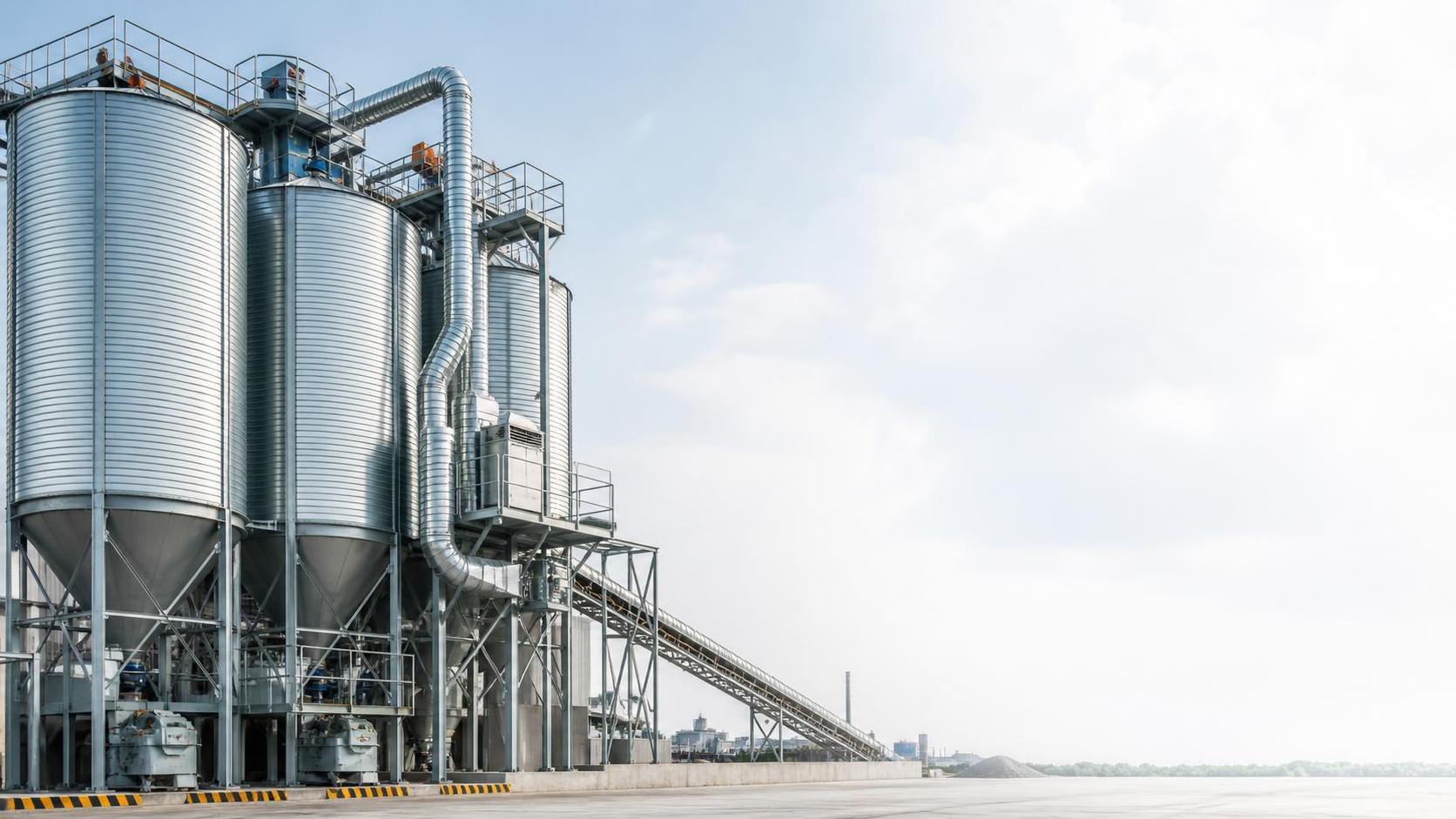
In practical terms, dry bulk storage tanks are used to hold large volumes of loose, flowable solid materials between production, transport, and use. That includes grain, cement, lime, fly ash, mineral powders, plastic resins, and many chemical solids. They are not just passive containers. In most industrial setups, they are part of the handling system itself, helping materials move in a controlled way from delivery to storage, then from storage to batching, processing, or shipment.
That matters because dry bulk materials are easy to lose, contaminate, compact, or bridge if they are stored badly. A properly selected tank helps protect product quality, reduces dust, supports faster loading and unloading, and makes inventory easier to track. For facilities handling high volumes every day, that can have a direct effect on uptime and waste.
What materials are usually stored in dry bulk storage tanks?
The short answer: free-flowing or semi-free-flowing dry solids that are moved in bulk rather than in small packages.
Common examples include agricultural materials such as wheat, corn, soybeans, and feed ingredients; construction materials such as cement and sand-like powders; energy and utility byproducts such as fly ash; and industrial powders used in chemical or manufacturing processes. The exact tank design changes with the material. Grain storage, for example, often needs moisture control and ventilation attention, while cement and ash storage usually demand reliable dust management and discharge systems.
A useful rule is to look beyond the material name and check its handling behavior: particle size, bulk density, moisture sensitivity, tendency to cake, and whether it flows easily under gravity. Two products that sound similar on paper can behave very differently in a tank.
Why not just keep dry bulk materials in bags or warehouses?
Because bulk storage tanks solve a different problem. Bags and flat warehouses can work for smaller volumes, slower turnover, or materials that need manual handling. But once throughput increases, those methods start creating friction. You spend more labor on loading and unloading, inventory counts get less precise, dust control becomes harder, and the risk of moisture exposure or cross-contamination goes up.
A tank is typically chosen when a site needs one or more of these:
- High-volume storage in a compact footprint
- Closed handling to reduce dust and material loss
- Steady feeding into downstream equipment
- Better stock rotation and level monitoring
- Cleaner transfer from truck, rail, conveyor, or pneumatic system
That is why dry bulk storage tanks are so common in grain terminals, concrete plants, power-related material handling, and process manufacturing sites.
Are dry bulk storage tanks only for storage?
Not really. Storage is the obvious function, but in most plants they also support flow control, process continuity, and material conditioning. A tank often acts as a buffer between incoming supply and production demand. That buffer prevents short interruptions in transport or unloading from immediately stopping the line.
In some systems, the tank also helps with batching accuracy by feeding a measured amount of material into mixers, hoppers, or conveyors. In grain applications, the storage unit may be part of a wider preservation setup that focuses on keeping product dry and stable. That is one reason some buyers look at specialized options such as Insulated Moisture-Proof Grain Silos when moisture protection is a key operating concern.
How do you know whether a dry bulk material is suitable for tank storage?
Start with handling behavior, not just product category. A workable first check is whether the material can be unloaded, stored, and discharged consistently without excessive bridging, rat-holing, segregation, or sticking.
The main things to review are:
If those basics are ignored, the tank may still look adequate on a drawing but perform poorly in daily use.
What are the main uses of dry bulk storage tanks in day-to-day operations?
They usually support four jobs at once.
- Receiving bulk material from trucks, railcars, ships, or pneumatic delivery systems.
- Holding that material safely until production, blending, packaging, or dispatch needs it.
- Feeding downstream equipment at a controlled rate.
- Reducing handling losses by keeping the material enclosed and easier to monitor.
That mix of functions is why one storage tank can influence several departments at once: operations, maintenance, quality control, logistics, and purchasing. When material handling runs smoothly, the tank tends to disappear into the background. When it does not, the problems show up everywhere else first.
What problems do these tanks help prevent?
A good dry bulk storage system is often judged by the problems it avoids. The common ones are moisture pickup, contamination, spillage, dust escape, and discharge inconsistency. In grain and food-adjacent uses, poor moisture control can lead to spoilage or reduced quality. In cementitious materials, exposure to moisture can damage usability before the product even reaches the process.
There is also the issue of uneven flow. Materials that compact or form arches above the outlet can interrupt production without warning. That is not just inconvenient. It can create safety issues if operators start manually poking or striking equipment to restore flow. Proper design reduces the chance of that happening.
What should a buyer look at before choosing one?
Capacity matters, but it is rarely the only deciding factor. A better way to evaluate dry bulk storage tanks is to match the tank to the material, the site, and the handling method.
Key questions include:
- What material will be stored, and does it flow easily?
- How is it loaded: conveyor, bucket elevator, truck blower, or another method?
- How is it discharged: gravity, screw conveyor, pneumatic system, or batching equipment?
- Is the material sensitive to moisture or temperature swings?
- Will one tank store one product only, or will changeovers be required?
- How much level monitoring and dust control does the site need?
For grain-related storage, it is also worth considering whether the operating environment calls for a design focused on reducing moisture exposure, such as Insulated Moisture-Proof Grain Silos. That is not a universal requirement, but it becomes more relevant when product quality depends heavily on stable storage conditions.
Where do companies usually make mistakes?
One common mistake is sizing the tank around total tonnage alone and skipping flow behavior. Another is assuming that all powders can be handled the same way. They cannot. A tank that works well for one dry bulk material may cause repeated blockage with another.
Another problem is treating the tank as an isolated purchase. In reality, performance depends on the entire path: inlet, venting, outlet geometry, conveying equipment, and how operators use the system. A strong tank with weak discharge design still creates downtime.
And there is a quieter mistake that shows up later: not planning for inspection and cleaning access. If the site cannot maintain the tank easily, product quality and reliability both suffer over time.
Do dry bulk storage tanks improve inventory control?
Yes, often significantly. Bulk materials stored in enclosed tanks are easier to monitor than materials spread across bags, bins, or open warehouse zones. Once a site knows the tank geometry and material density range, level indicators and usage records can give a much clearer picture of stock on hand.
That helps with purchasing and scheduling, but it also reduces surprises. Running out of a key powder mid-shift is expensive. Over-ordering a moisture-sensitive material can be expensive too. Better storage visibility does not solve every planning issue, but it gives operations a cleaner starting point.
When is a steel silo or tank a sensible option?
It makes sense when a facility needs durable, high-volume dry storage integrated with regular material movement. Industries such as grain processing, building materials, electric power support, and chemical handling often use steel storage systems because they can be engineered for repeated loading cycles and tied into conveyors, feeders, and unloading equipment.
The right choice depends less on the label “tank” or “silo” and more on the job it has to do. If the material must stay dry, flow reliably, and move efficiently through the plant, then the storage structure needs to be selected as part of the handling process, not after it.
So what are dry bulk storage tanks really used for?
At the most useful level, they are used to keep bulk solids available, protected, and under control. They store material, but they also support steady production, cleaner transfer, lower loss, and more predictable handling. If you are evaluating options, start with the material itself, then map the full path from delivery to discharge. That is usually where the right storage decision becomes clear.
Related Posts
- ▶ How a Dry Bulk Silo Handles Pneumatic Filling and Gravity Discharge
- ▶ What Is a Dry Bulk Silo, and When Does a Factory Need One?
- ▶ Can dry bulk storage silos be integrated into existing PLC-controlled batching systems?
- ▶ Do dry bulk silos designed for API 650 compliance meet ASME Section VIII requirements?
- ▶ Is almacénamiento de sólidos a granel en silos de acero inoxidable viable for small-scale agrochemical distributors?
- ▶ How do vibration-based level sensors perform in stainless steel silos with powder coating?
Online Message