





Industrial Silos Supplier Evaluation: What to Check Before Signing
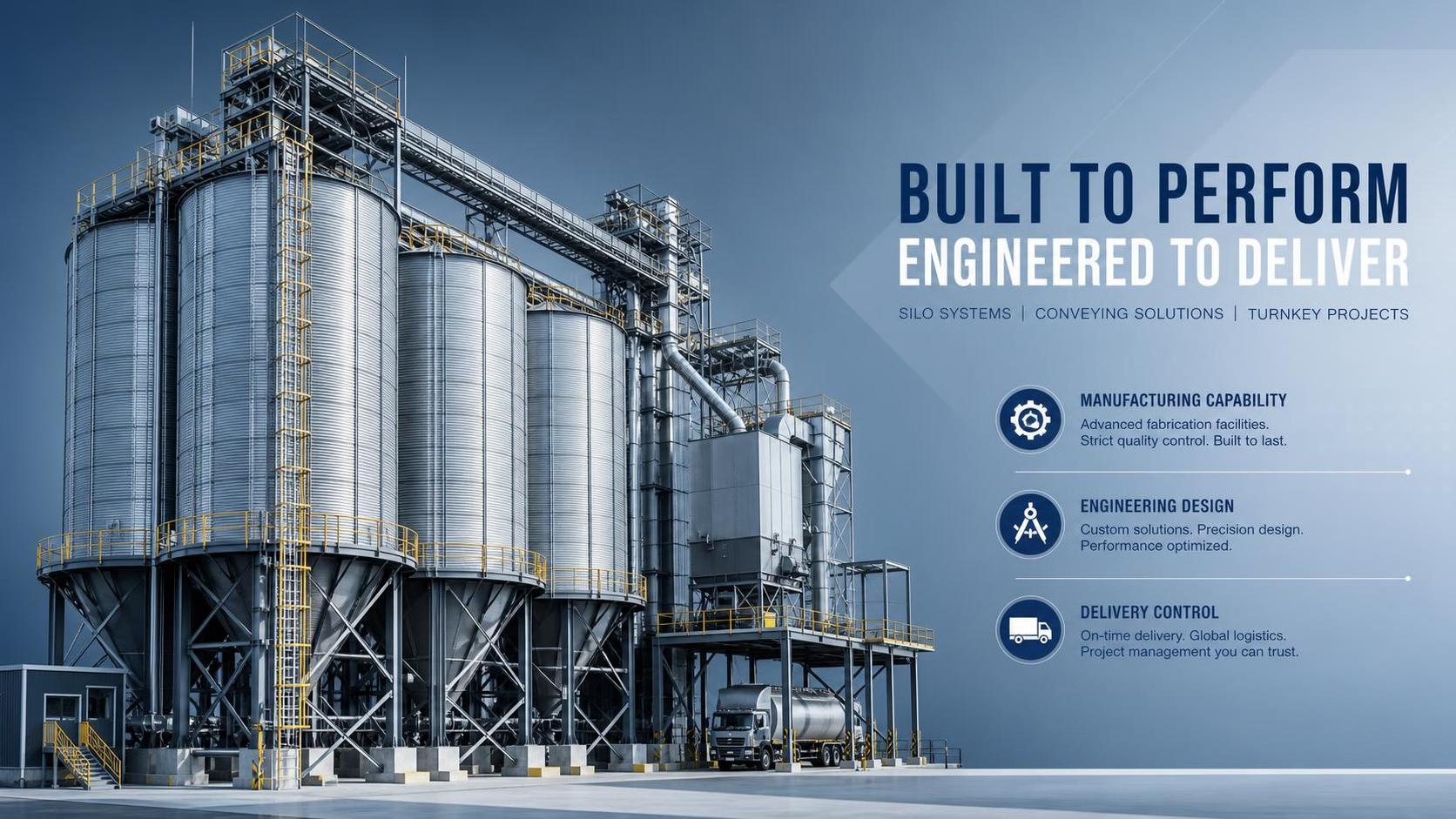
Industrial Silos Supplier Evaluation: What to Check Before Signing
Choosing the right industrial silos supplier can directly affect project safety, storage efficiency, and long-term operating costs.
A weak decision often shows up later through unstable quality, late delivery, and expensive maintenance.
That is why supplier evaluation should go beyond price comparison.
In practice, industrial silos are long-life assets.
Once installed, replacing or modifying them can disrupt production and increase capital pressure.
A careful review before signing helps reduce technical risk and protects budget control.
For companies sourcing industrial silos for grain, cement, fly ash, chemicals, or power materials, several checks matter more than others.
The most reliable suppliers usually show strength in manufacturing, engineering, communication, and service consistency.
Start With Real Manufacturing Capability
The first question is simple: does the supplier actually manufacture industrial silos, or mainly trade them?
This point affects quality control, lead time, customization, and problem solving.
A manufacturer with in-house production usually gives clearer answers on steel grades, fabrication tolerances, and corrosion protection.
It also responds faster when drawings need revision.
Ask for basic evidence, not just brochures.
- Factory photos and workshop layout
- Main production equipment list
- Annual production capacity
- Welding, cutting, and surface treatment processes
- Quality inspection records for recent projects
A serious industrial silos supplier should explain how raw materials are checked before fabrication begins.
This includes plate thickness verification, weld quality inspection, and coating control.
If these answers stay vague, the risk is already visible.
Check Engineering Depth, Not Just Product Photos
Many industrial silos look similar in photos.
The real difference often sits in engineering details.
A supplier should understand storage medium behavior, discharge flow, dust control, structural loads, and site conditions.
This matters even more for difficult powders and abrasive materials.
For example, fly ash and mineral powder require attention to arching, fluidity, sealing, and unloading reliability.
A relevant reference can reveal whether the supplier handles such applications well.
One example is Fly Ash & Mineral Powder Special Storage Silos, which fits projects needing stable storage for fine bulk materials.
During evaluation, request technical documents that show real engineering work.
- General arrangement drawings
- Foundation load data
- Material flow design explanation
- Dust collection and ventilation solutions
- Safety accessories and instrumentation options
If the supplier cannot explain why a design suits your material, be careful before moving forward.
Review Project Experience by Industry
Past experience should match your operating environment.
A supplier strong in grain storage may not automatically perform well in chemicals or mineral powder handling.
Industrial silos serve different industries with different technical demands.
That means the evaluation should focus on similar cases, not total project count alone.
Look for project evidence in sectors such as grain, building materials, electric power, and chemicals.
A company like Shandong Guokai International Trade Co., Ltd. stands out when it combines manufacturing capability with cross-industry silo project experience.
Ask for a short list of completed industrial silos projects with the following details.
- Stored material type
- Silo capacity and dimensions
- Project location and climate conditions
- Scope of supply and installation
- Operating results after commissioning
Case studies become more useful when they include problems solved, not just finished photos.
Look Closely at Materials, Standards, and Safety
Industrial silos must perform under load, weather, vibration, and daily operating stress.
That makes material selection and standards compliance non-negotiable.
Do not rely on general claims like high quality steel.
Request exact specifications.
- Steel grade and origin
- Galvanizing or painting standard
- Bolt grade and connection details
- Wind, seismic, and temperature design basis
- Explosion prevention or dust safety measures where needed
Reliable industrial silos suppliers should also provide testing or inspection plans before shipment.
In real procurement work, hidden weakness often starts with undocumented substitutions.
Clear technical attachments in the contract can prevent that.
Evaluate Delivery Control and Installation Support
Price is visible early, but delivery reliability affects the entire project schedule.
Industrial silos usually connect with civil work, conveyors, dust collectors, and electrical systems.
One delayed shipment can hold everything back.
Ask how the supplier plans production, packing, shipping, and site coordination.
Important review points include the following.
- Confirmed manufacturing schedule
- Shipping split by batch or full delivery
- Packing protection for coated components
- On-site installation guidance or supervision
- Commissioning assistance and training
This is also where communication quality becomes measurable.
Suppliers who answer quickly, document changes clearly, and coordinate across teams usually cause fewer downstream problems.
Compare Total Cost, Not Only Quoted Price
A low quote can make industrial silos look cost-effective at first glance.
Later, weak design, rework, spare part issues, or poor sealing can erase that advantage.
A better approach is to compare total ownership cost across the full operating cycle.
This broader view often changes supplier ranking.
It also creates stronger internal justification when procurement decisions face financial review.
Do Not Ignore After-Sales and Spare Parts Readiness
After-sales support is often treated as a contract appendix.
In reality, it is part of the buying decision.
Industrial silos need periodic inspection, sealing checks, component replacement, and operating guidance.
This is especially true for projects handling fine powder or continuous throughput.
Ask for a practical support framework.
- Warranty scope and exclusions
- Expected response time for technical issues
- Availability of wear parts and accessories
- Remote troubleshooting process
- On-site service availability for urgent cases
A supplier that supports the full lifecycle usually delivers more stable results.
That stability matters more than a small saving at signing stage.
Questions Worth Asking Before Contract Approval
A structured supplier review works best when key questions are asked early.
These questions can quickly expose gaps in technical readiness or commercial discipline.
- What similar industrial silos have you supplied for this material?
- Which design standards and safety assumptions are used?
- What manufacturing stages are inspected and documented?
- What parts of the project are outsourced?
- How do you manage schedule changes and technical revisions?
- What support remains available after commissioning?
Good suppliers answer directly and support claims with records.
That level of clarity usually signals stronger execution later.
Final Check Before You Sign
The best industrial silos decision is rarely based on one factor.
It comes from a balanced review of engineering fit, factory strength, delivery control, and long-term service.
Before contract approval, confirm that drawings, materials, scope, inspection points, and service commitments are all written clearly.
That final check can prevent expensive disputes later.
In practical terms, a reliable industrial silos supplier should help the project run smoothly from fabrication to operation.
When that standard is met, the purchase becomes more than a transaction. It becomes a stable investment in storage performance, safety, and cost control.
Related Posts
- ▶ How a Dry Bulk Silo Handles Pneumatic Filling and Gravity Discharge
- ▶ What Is a Dry Bulk Silo, and When Does a Factory Need One?
- ▶ Can dry bulk storage silos be integrated into existing PLC-controlled batching systems?
- ▶ Do dry bulk silos designed for API 650 compliance meet ASME Section VIII requirements?
- ▶ Is almacénamiento de sólidos a granel en silos de acero inoxidable viable for small-scale agrochemical distributors?
- ▶ How do vibration-based level sensors perform in stainless steel silos with powder coating?
Online Message