





Storage Tank Materials Compared: Steel, FRP, and Stainless Options
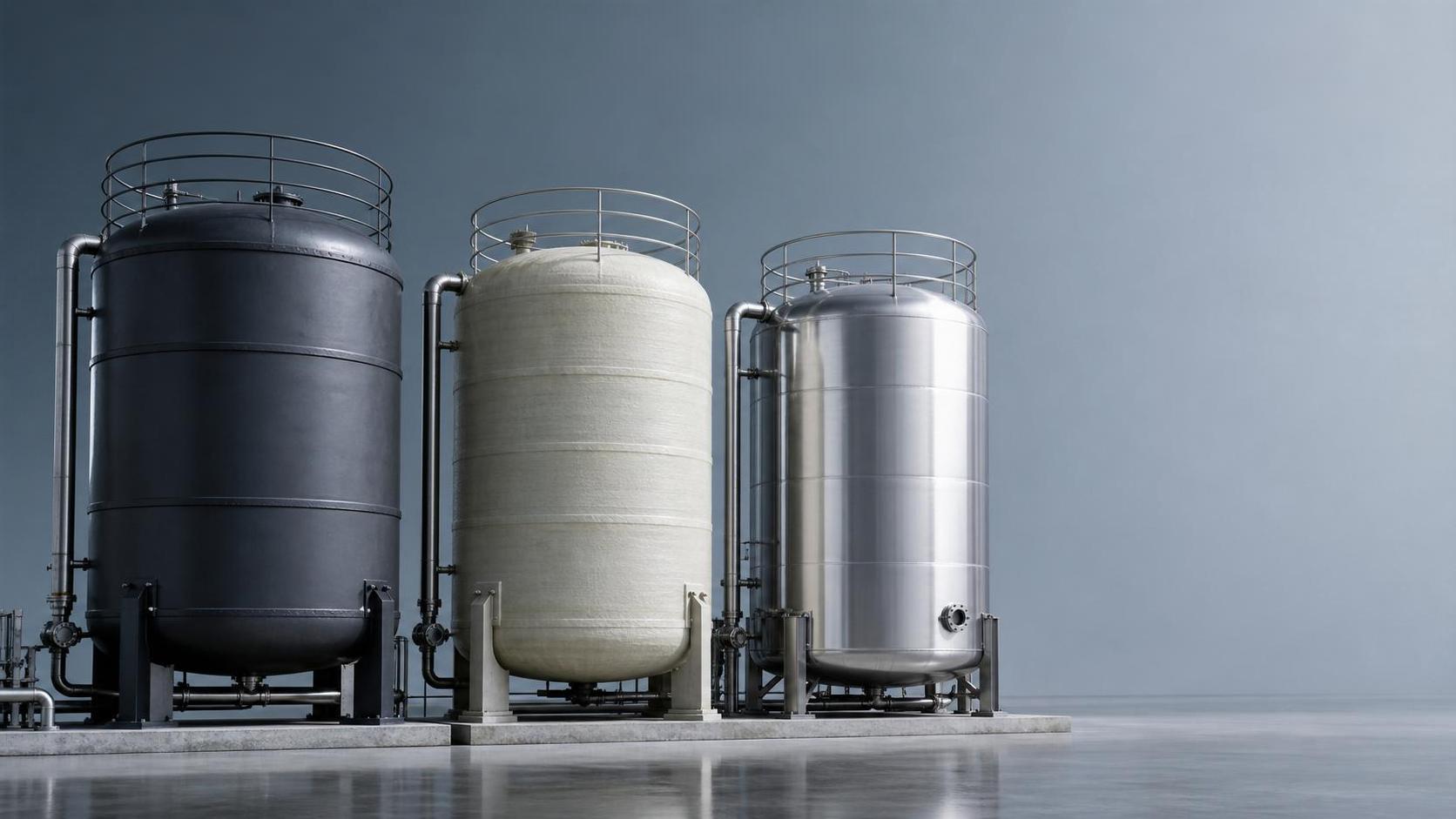
Choosing a storage tank material is rarely a simple price comparison. Steel, FRP, and stainless steel each shape safety, lifespan, maintenance effort, and operating stability in different ways. In sectors such as grain, building materials, electric power, and chemicals, the right material choice affects not only storage performance, but also project risk, compliance planning, and long-term asset value.
That is why material selection matters early. A storage tank may look similar from the outside, yet its resistance to corrosion, pressure, temperature variation, and product contamination can differ sharply. For companies working across mixed industrial applications, the better decision usually comes from matching material behavior to the stored medium, site conditions, and expected service cycle.
Why material comparison matters in real projects
A storage tank is not just a vessel. It is part of a larger system that includes filling, discharge, inspection, cleaning, environmental control, and downstream production continuity.
When material selection is weak, the problems usually appear later. Corrosion may shorten service life. Temperature fluctuation may affect product quality. Maintenance shutdowns may become more frequent than expected.
This is especially relevant in projects that serve several industries. Shandong Guokai International Trade Co., Ltd., for example, works in steel silo development, manufacturing, sales, and project construction for grain, building materials, electric power, and chemical applications. In that kind of operating environment, material choice must support different storage demands without creating unnecessary complexity.
Three common storage tank materials at a glance
Steel remains the most familiar option for large industrial storage. FRP, or fiberglass reinforced plastic, is valued where corrosion resistance is more important than structural weight. Stainless steel sits at a higher investment level, but often delivers advantages in hygiene, chemical stability, and temperature-sensitive processing.
The better material depends on what the storage tank must do over time, not only what it costs on delivery day.
Steel storage tank options and where they perform best
Steel is often selected when scale, structural strength, and fabrication flexibility are major priorities. For silo and tank projects handling grain, cement, fly ash, minerals, or dry chemical inputs, steel can be the most practical answer.
Its main advantage is mechanical reliability. A steel storage tank can be designed for large volumes, demanding support loads, and varied site layouts. That makes it suitable for fixed industrial infrastructure and expansion projects.
Another strength is supply-side familiarity. Fabrication, transportation, erection, and inspection standards for steel are widely understood. This can simplify budgeting and reduce engineering uncertainty.
The tradeoff is corrosion exposure. Bare or poorly protected steel will struggle in humid, acidic, or chemically aggressive conditions. Coatings, linings, drainage design, and inspection access become important parts of lifecycle planning.
Where steel usually makes sense
- Large-capacity dry bulk storage
- Projects where structural load is a major concern
- Sites needing customized geometry or integrated silo systems
- Applications with manageable corrosion risk and planned maintenance
FRP storage tank performance in corrosive service
FRP storage tank systems are often chosen for one reason first: chemical resistance. In environments where moisture, salts, fumes, or reactive liquids create persistent corrosion pressure, FRP can outperform ordinary steel.
FRP also offers a lower weight profile. That can help with transport, installation, and support structure demands, especially for medium-capacity liquid storage.
Still, FRP is not a universal replacement. Its performance depends heavily on resin selection, fabrication quality, and operating temperature. Mechanical impact resistance and stiffness may not match metal options in every setting.
In practical terms, FRP works best when chemical compatibility is the first filter. It is less convincing when the storage tank must handle extreme load conditions, high internal pressure, or frequent mechanical abuse.
Points worth checking before choosing FRP
- Exact chemical composition of the stored medium
- Operating and cleaning temperature range
- Exposure to sunlight, abrasion, and impact
- Repair method and long-term inspection practice
Why stainless steel often carries strategic value
Stainless steel tends to enter the discussion when cleanliness, stable product contact, and long service consistency matter more than lowest initial spend. It is common in food, beverage, pharmaceutical-adjacent, and selected chemical processes.
A stainless steel storage tank offers a cleanable surface, good resistance to many corrosive conditions, and stronger protection against contamination. This becomes important when stored materials are sensitive, regulated, or value-added.
The cost is higher, but the evaluation should include downtime avoidance, sanitation control, product quality protection, and longer useful life. In some projects, those factors offset the capital gap faster than expected.
That logic is clear in process-oriented equipment such as Constant Temperature Stainless Steel Food Fermentation Tanks. In fermentation or temperature-controlled storage, material choice affects heat management, cleaning discipline, and batch consistency as much as tank durability.
How application context changes the decision
The same material can look strong in one project and weak in another. That is why storage tank comparison must stay tied to actual operating conditions.
Grain and dry bulk
Steel usually leads here because volume, strength, and project economics matter most. Moisture control, coating strategy, and discharge design often drive performance more than premium alloy selection.
Building materials and power
For cement, ash, lime, and similar media, steel silo and storage tank systems remain common. Wear, dust control, structural loading, and access for maintenance are usually more critical than cosmetic corrosion resistance.
Chemical service
The answer shifts quickly depending on concentration, temperature, and contamination tolerance. FRP may suit corrosive liquids. Stainless steel may suit higher-purity or temperature-sensitive media. Lined steel can also be competitive.
Food and process storage
Stainless steel often justifies itself where washdown, hygiene, and stable internal conditions are non-negotiable. For that reason, equipment similar to Constant Temperature Stainless Steel Food Fermentation Tanks is evaluated less as a basic vessel and more as a process control asset.
A practical framework for comparing total value
Shortlisting a storage tank material becomes easier when the comparison stays disciplined. A useful review should test capital cost against operating reality.
This approach prevents a common mistake: selecting the lowest quoted storage tank without pricing the cost of corrosion control, cleaning difficulty, product loss, or unplanned replacement.
What to review before moving forward
Before final selection, it helps to organize a few practical checks.
- Define whether the storage tank handles solids, liquids, or process-sensitive media.
- Confirm chemical compatibility under real operating temperature, not room temperature only.
- Review cleaning, inspection, and shutdown access from the start.
- Compare lifecycle cost across at least ten years where possible.
- Check whether the tank must integrate with an existing silo, piping, or batching system.
A clear material decision usually comes from this sequence: define the medium, define the duty, define the risk, then compare cost. That order is more reliable than starting with price alone.
For projects spanning grain, power, building materials, chemicals, or temperature-controlled process storage, the next step is to build a comparison sheet around operating conditions, maintenance expectations, and required service life. Once those factors are visible, the right storage tank material is usually easier to defend internally and perform better in the field.
Related Posts
- ▶ How a Dry Bulk Silo Handles Pneumatic Filling and Gravity Discharge
- ▶ What Is a Dry Bulk Silo, and When Does a Factory Need One?
- ▶ Can dry bulk storage silos be integrated into existing PLC-controlled batching systems?
- ▶ Do dry bulk silos designed for API 650 compliance meet ASME Section VIII requirements?
- ▶ Is almacénamiento de sólidos a granel en silos de acero inoxidable viable for small-scale agrochemical distributors?
- ▶ How do vibration-based level sensors perform in stainless steel silos with powder coating?
Online Message