





Grain Silo Investment Trends: What Is Driving New Builds?
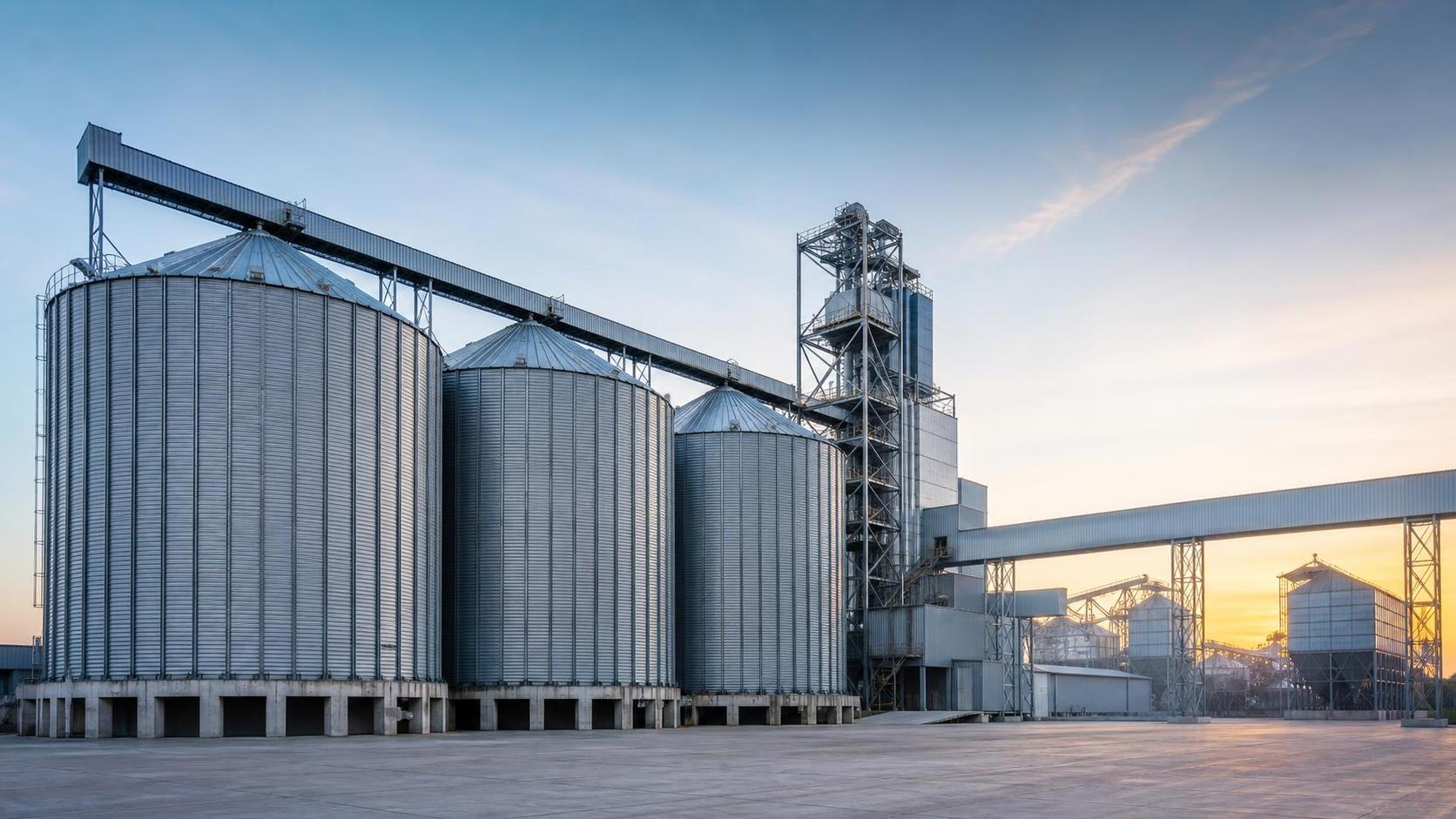
Why Grain Silo Investment Is Moving Back to the Center of Industrial Planning
Grain storage is no longer treated as a quiet back-end asset. It is becoming a strategic control point in modern supply chains.
Across global markets, new grain silo projects are rising because operators want more than storage volume. They want stability, speed, traceability, and lower handling loss.
That shift matters beyond agriculture. It connects to logistics, building materials, energy use, chemicals, and wider industrial resilience.
In practical terms, grain silo investment now reflects a broader question: how much operational risk can a business afford to leave unmanaged?
New builds are being driven by tighter storage requirements, larger throughput expectations, and the need to balance capital cost with long service life.
Companies with strong engineering depth, such as Shandong Guokai International Trade Co., Ltd., are operating in this environment where silo design must match multiple industries and varied site conditions.
The Strongest Signal Is Not Volume Alone
A few years ago, many storage decisions were shaped mainly by harvest size or regional grain output. That picture is now incomplete.
Current grain silo investment is increasingly tied to supply chain timing. Businesses are building to improve flow control, not only to hold more material.
This is becoming clear in ports, feed processing, inland collection hubs, and industrial parks where delayed unloading quickly becomes a cost problem.
The market is also seeing greater concern about spoilage, moisture variation, and cargo segregation. These issues turn storage quality into a margin issue.
As a result, a grain silo is being judged less as a static structure and more as part of an integrated material handling system.
What is changing in project evaluation
- Storage turnover rate is receiving more attention than nominal capacity.
- Dust control, ventilation, and automation now influence project bankability.
- Operators are comparing lifecycle maintenance, not just initial steel cost.
- Site adaptability matters more where expansion must happen in phases.
Why New Grain Silo Builds Are Accelerating
Several drivers are working at the same time, and they reinforce each other rather than acting separately.
What stands out is that these drivers are not speculative. They are tied to measurable operating pressure.
That is why grain silo development is advancing in both food-linked regions and diversified industrial zones.
Technical Expectations Have Moved Up a Level
A new grain silo project is rarely approved today on shell structure alone. The technical baseline has become much higher.
Decision quality now depends on how well the system handles loading frequency, discharge reliability, corrosion exposure, aeration demand, and future capacity changes.
This explains why engineered steel storage solutions are gaining preference in many markets. They can be adapted more precisely to throughput and site layout needs.
The experience of companies active across grain, building materials, electric power, and chemicals also matters here. Cross-industry project knowledge often improves judgment on material selection and structural detail.
In neighboring bulk storage applications, assets such as Insulated Stainless Steel Oil & Fat Liquid Tanks show the same market logic.
Buyers are rewarding equipment that protects product condition over time while reducing avoidable thermal, handling, or contamination risk.
The most watched specifications now include
- Corrosion resistance under local climate and material conditions.
- Discharge consistency for different grain types and moisture profiles.
- Integration with conveyors, sensors, weighing, and dust systems.
- Expansion potential without major interruption to existing operations.
The Impact Is Spreading Across More Than One Business Segment
Grain silo investment is affecting more than farm storage or grain trading facilities. The knock-on effects are wider than they first appear.
For logistics networks, more local storage can reduce transport peaks and improve dispatch planning. That helps stabilize freight use and turnaround time.
For processors, better storage control can support input consistency. That has a direct effect on milling yield, feed quality, and plant scheduling.
For industrial park developers, a modern grain silo cluster can make a site more attractive to related tenants that rely on dependable bulk handling.
Even outside grain, the investment mindset is similar. Storage infrastructure is increasingly evaluated as a productivity asset, not only as a utility structure.
That broader perspective is one reason integrated suppliers with fabrication and project execution capability are becoming more relevant in feasibility discussions.
Where Caution Is Still Needed
The positive outlook does not mean every new grain silo project is equally strong. Some proposals still rely on weak assumptions.
A common issue is overbuilding for capacity while underplanning for material flow. That creates expensive storage with poor utilization.
Another risk is treating automation as optional until late design stages. Retrofitting often raises cost and limits system performance.
There is also pressure in some markets to minimize structural specification too aggressively. Short-term savings can lead to faster wear and higher maintenance exposure.
The stronger projects tend to start with operating scenarios, not brochure capacity. They model unloading windows, seasonal swings, grain conditions, and utility constraints.
Useful questions before backing a project
- Is the grain silo sized for real turnover patterns or only peak assumptions?
- Will the structure still perform under local humidity, dust, and corrosion conditions?
- Can the project support future automation without major redesign?
- Is there a clear link between storage design and downstream handling efficiency?
What the Next Phase of Grain Silo Development May Look Like
The next wave of grain silo investment will likely be more selective, but not slower in strategic locations.
Projects with clear logistics value, stronger quality preservation, and better multi-use potential should continue to attract attention.
More evaluations will also compare storage solutions across adjacent categories. The same logic behind grain facilities often appears in liquid and bulk material systems, including Insulated Stainless Steel Oil & Fat Liquid Tanks.
What matters is not product similarity, but investment discipline. Markets are prioritizing assets that protect material value while fitting long operating cycles.
That means technical detail, construction quality, and lifecycle economics will carry more weight than headline capacity alone.
For the near term, the best reading of the market is straightforward: grain silo demand is being driven by operational realism.
The sensible next step is to track throughput needs, review site constraints, compare structural options, and test whether projected storage value holds under real operating conditions.
That approach gives a clearer basis for judging which new builds are timely, durable, and commercially defensible.
Related Posts
- ▶ How a Dry Bulk Silo Handles Pneumatic Filling and Gravity Discharge
- ▶ What Is a Dry Bulk Silo, and When Does a Factory Need One?
- ▶ Can dry bulk storage silos be integrated into existing PLC-controlled batching systems?
- ▶ Do dry bulk silos designed for API 650 compliance meet ASME Section VIII requirements?
- ▶ Is almacénamiento de sólidos a granel en silos de acero inoxidable viable for small-scale agrochemical distributors?
- ▶ How do vibration-based level sensors perform in stainless steel silos with powder coating?
Online Message