





Industrial Silos Maintenance Planning to Reduce Unplanned Shutdowns
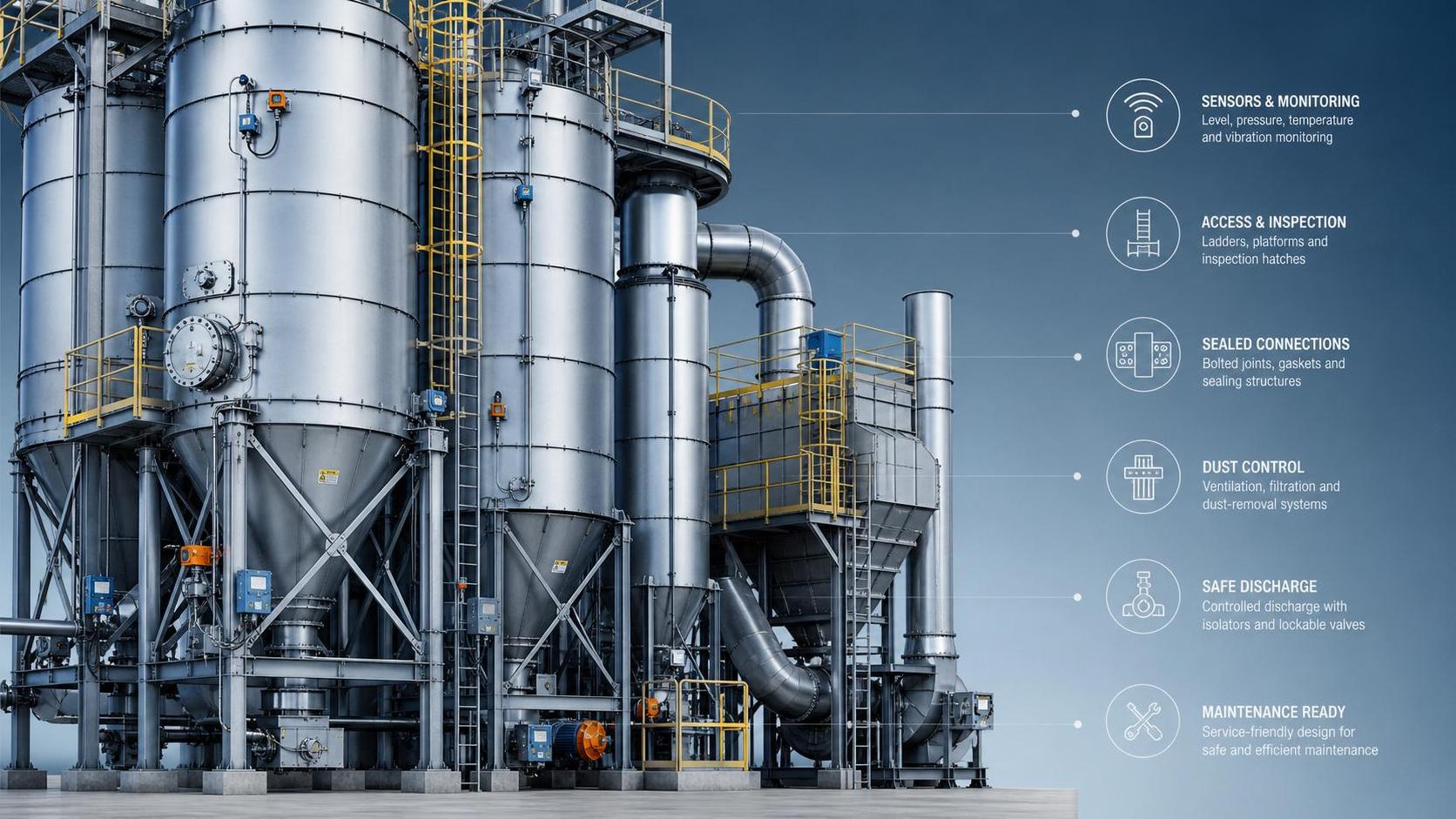
Industrial Silos Maintenance Planning to Reduce Unplanned Shutdowns
For after-sales maintenance teams, planning is what keeps industrial silos running without avoidable stops. Shutdowns rarely begin with one major failure. They usually start with small missed signals.
Wear on discharge systems, unnoticed corrosion, blocked vents, and delayed sealing repairs often build up quietly. By the time production stops, the maintenance window is already expensive.
A practical maintenance plan changes that pattern. It helps teams inspect industrial silos in a predictable rhythm, prioritize the right risks, and fix issues before they affect flow, safety, or output.
This matters across grain, chemicals, electric power, and building materials. Different materials behave differently, but the maintenance logic is similar: control risk early, document conditions clearly, and act before downtime spreads.
Why unplanned shutdowns happen in industrial silos
Most shutdowns are not random. They are the result of incomplete inspections, reactive repair habits, and weak coordination between site operation and field service.
In actual service work, several failure points appear more often than others. These areas deserve closer planning because they affect structural integrity and material handling at the same time.
- Roof and shell corrosion caused by moisture, dust, and poor coating protection.
- Aeration, ventilation, or dust control issues that create internal pressure imbalance.
- Discharge problems such as bridging, rat-holing, and uneven material flow.
- Sensor drift, level monitoring errors, or unreliable alarm feedback.
- Loose bolts, damaged seams, or fatigue near high-load connection points.
- Delayed repair of ladders, platforms, hatches, and access components.
A shutdown often starts when one of these conditions is ignored during a busy production cycle. The clearer signal is not sudden failure. It is repeated minor abnormality.
Build a maintenance plan around risk, not only routine
A calendar alone is not enough for industrial silos. A strong plan combines time-based inspection with risk-based judgment. That approach makes limited maintenance hours more useful.
Start by ranking every silo and related system according to consequence and likelihood. A silo storing abrasive powder or moisture-sensitive grain should never be treated like a low-demand unit.
The basic planning logic can be simple and still effective:
- Identify critical assets and failure history.
- Define inspection frequency by operating severity.
- Set repair thresholds before visible failure appears.
- Reserve spare parts for known weak points.
- Link findings to shutdown planning and production schedules.
This also means every maintenance record should answer one question clearly: what is the risk if this issue stays open for another week or month?
Create inspection routines that catch early warning signs
Inspection routines work best when they are short, repeatable, and specific. Long checklists are often skipped. Tight checklists with clear checkpoints are more likely to be used consistently.
For industrial silos, daily, weekly, monthly, and quarterly routines should each have different goals. Daily checks confirm operating condition. Monthly and quarterly checks confirm equipment health trends.
Daily and weekly focus
- Watch for unusual discharge speed or flow interruptions.
- Check dust leakage around joints, hatches, and conveyors.
- Listen for abnormal vibration from motors, blowers, or feeders.
- Confirm level indicators and alarms respond correctly.
- Inspect access points for loose hardware and seal damage.
Monthly and quarterly focus
- Review corrosion, coating loss, and moisture entry paths.
- Measure wear on gates, screw systems, and discharge components.
- Verify roof vents, aeration devices, and dust collection performance.
- Check structural bolts, stiffeners, and support transitions.
- Compare sensor readings with manual confirmation where possible.
If these routines are documented well, industrial silos become easier to manage over time. Teams stop relying on memory and begin working from evidence.
Match maintenance strategy to material and operating environment
Not every silo ages the same way. Grain storage, cement powder, fly ash, and chemical raw materials create very different maintenance pressures. Planning should reflect that reality from the start.
In grain applications, moisture migration and temperature imbalance can lead to spoilage, wall adhesion, and ventilation problems. In cement or mineral powder systems, abrasion and buildup usually move to the top of the list.
Chemical storage often demands closer attention to sealing compatibility, corrosion resistance, and residue control. Power industry use cases may place more pressure on dust management and continuous discharge reliability.
This is where equipment selection also affects long-term service planning. For medium-capacity projects, 300-500 Tons Silos can support stable storage needs while keeping inspection access and service planning manageable.
Shandong Guokai International Trade Co., Ltd. works across grain, building materials, electric power, and chemical applications. That cross-industry experience is useful because maintenance risks often look different, even when the steel structure seems similar.
Use repair priorities that prevent downtime from spreading
One common mistake is treating all open issues equally. That slows the response to conditions that can shut down industrial silos or trigger wider plant disruption.
A better method is to sort repair items by operational impact. This creates a faster path from inspection finding to maintenance decision.
This approach keeps industrial silos available while avoiding the trap of endless low-value repair activity. It also helps justify maintenance decisions to plant managers more clearly.
Strengthen documentation, spare parts, and service coordination
Good maintenance planning is not only technical. It also depends on records, spare parts readiness, and communication between service teams and plant operations.
For industrial silos, every service visit should leave behind a clean record of conditions, actions, pending risks, and the next recommended inspection point. Short notes are fine if they are specific.
Spare parts planning should focus on repeat failures and long-lead components. Waiting for a standard replacement after the silo stops is where preventable downtime becomes costly.
- Keep a basic stock of seals, sensors, fasteners, and wear parts.
- Track parts by silo type and service history.
- Review repeated failures every quarter.
- Coordinate shutdown windows with operations before peak demand.
Where system expansion or replacement is under review, selecting standardized equipment layouts can simplify later service. In some projects, another configuration of 300-500 Tons Silos may also make spare planning easier across multiple sites.
Turn planning into a stable maintenance rhythm
The main goal is simple: fewer surprises, shorter outages, and safer operation. Industrial silos perform better when maintenance is treated as a continuous process, not an emergency response.
A useful plan does three things well. It finds early warning signs, ranks repair work by real risk, and connects field findings to production timing.
From a practical business view, that reduces unplanned shutdowns more effectively than chasing failures after they happen. It also extends asset life and improves confidence in day-to-day operation.
When industrial silos are supported by disciplined inspection, clear repair thresholds, and well-matched equipment, maintenance teams can keep performance steady across changing site conditions.
The next step is straightforward: review the highest-risk silo first, tighten the inspection checklist, and convert open findings into a scheduled action list before the next operating cycle begins.
Related Posts
- ▶ How a Dry Bulk Silo Handles Pneumatic Filling and Gravity Discharge
- ▶ What Is a Dry Bulk Silo, and When Does a Factory Need One?
- ▶ Can dry bulk storage silos be integrated into existing PLC-controlled batching systems?
- ▶ Do dry bulk silos designed for API 650 compliance meet ASME Section VIII requirements?
- ▶ Is almacénamiento de sólidos a granel en silos de acero inoxidable viable for small-scale agrochemical distributors?
- ▶ How do vibration-based level sensors perform in stainless steel silos with powder coating?
Online Message