





Storage Tank Inspection Standards for Leak Prevention and Safe Operation
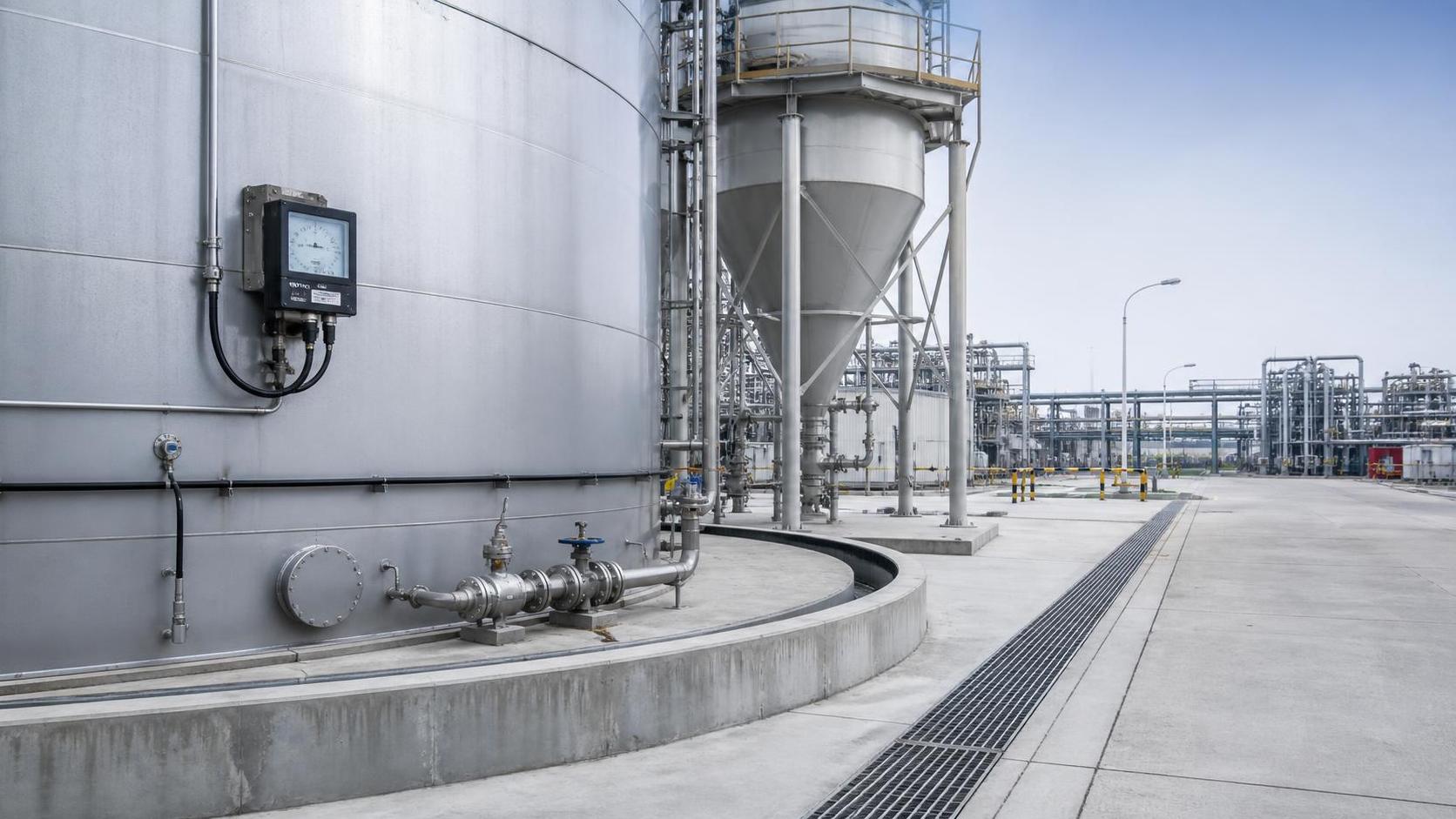
Why Inspection Standards Matter Before a Leak Becomes an Incident
A storage tank leak is rarely an isolated maintenance problem. It can interrupt production, contaminate stored material, damage adjacent equipment, create fire or dust hazards, and expose an operator to regulatory and insurance consequences. In grain handling, building materials, power generation, and chemical operations, the first visible sign of failure may appear long after corrosion, fatigue, poor drainage, or a compromised joint has begun developing.
For quality control and safety managers, the practical question is not whether a storage tank needs inspection. It is whether the inspection program is capable of finding the defects that matter for the tank's actual service conditions. A visually clean exterior, a recent coating job, or a passed pressure test does not by itself establish that a tank remains suitable for safe operation.
Effective inspection standards create a repeatable decision process. They define what must be inspected, how often it should be examined, what methods are appropriate, who is qualified to make the assessment, and what actions are required when damage exceeds acceptable limits. The value is not simply compliance. It is the ability to make repair, replacement, operating-limit, and shutdown decisions before an avoidable event forces them.
Start With the Correct Standard, Not a Generic Checklist
There is no single inspection standard that applies equally to every storage tank. The appropriate framework depends on whether the asset is an atmospheric tank, low-pressure tank, pressurized vessel, steel silo, hopper-bottom storage unit, elevated tank, or a system used to contain hazardous materials. It also depends on the stored medium, operating temperature, pressure, loading cycles, environmental exposure, and local legal requirements.
For welded steel atmospheric tanks in petroleum and chemical service, API 653 is frequently used as a reference for inspection, repair, alteration, and reconstruction. API 650 is commonly relevant to the design and construction of welded tanks, while API 575 provides inspection guidance for atmospheric and low-pressure storage tanks. In other regions or sectors, EN standards, national pressure equipment rules, workplace safety rules, fire codes, and environmental regulations may govern the equipment. Requirements should be confirmed against the site jurisdiction and tank classification rather than assumed from an international reference document.
Bulk solids storage requires a different lens. Grain, cement, fly ash, mineral powder, coal, and similar materials do not create the same internal hydrostatic pressure profile as liquids, but they can impose severe eccentric loads, abrasion, bridging forces, discharge stresses, and dust-explosion risks. A steel silo may therefore need structural reviews that focus on shell buckling, roof loading, discharge geometry, aeration equipment, and foundation movement as much as conventional leak pathways.
The key principle is straightforward: design standards establish what the asset was intended to withstand; inspection standards help determine whether it can still withstand that duty. Applying a liquid-tank checklist to a large bulk-material silo, or treating a modified tank as though it remains in its original design condition, creates a false sense of control.
What a Risk-Based Inspection Program Should Cover
Time-based inspections remain important, especially where regulations prescribe intervals. However, calendar frequency alone is not a reliable indicator of risk. Tanks exposed to corrosive chemicals, alternating wet and dry service, temperature cycling, abrasive solids, coastal air, poor drainage, or frequent filling and emptying may deteriorate faster than similar-looking assets in less demanding service.
A useful inspection plan ranks each storage tank according to consequence and likelihood of failure. Consequence includes employee exposure, environmental release, fire potential, product loss, production dependency, and proximity to other critical equipment. Likelihood is shaped by age, materials of construction, corrosion history, coating condition, previous repairs, process changes, inspection findings, and the reliability of secondary containment.
At a minimum, asset records should preserve original drawings where available, material specifications, fabrication and repair history, inspection reports, thickness readings, coating records, operating conditions, spill or leakage history, and details of changes in stored material. Without this history, inspectors can identify visible defects, but they may struggle to distinguish normal ageing from an accelerating failure mechanism.
External Inspection Is Essential, but It Has Limits
External inspections are often the most frequent and least disruptive part of a maintenance program. They should assess general condition, shell distortion, roof drainage, paint and coating breakdown, corrosion around connections, evidence of product seepage, condition of stairs and platforms, condition of insulation, grounding connections, signage, and the surrounding containment area.
Operators should pay particular attention to locations where water or product can remain trapped: beneath insulation, around nozzle reinforcement areas, near supports, under roof appurtenances, at the shell-to-bottom transition, and inside poorly drained secondary containment. Corrosion under insulation is a familiar risk in temperature-controlled systems, but corrosion can also develop beneath deposits, accumulated dust, damaged linings, and contact points between dissimilar materials.
For silos and dry-bulk systems, routine external rounds should include checks for leakage through seams, unusual dust deposits, bolt loosening, deformed panels, damaged stiffeners, roof-panel movement, and changes around the discharge section. Fine dust around a connection is not always a minor housekeeping issue. It can be evidence of a failed seal, abrasive wear, pressure imbalance, or a defect that may worsen during pneumatic conveying or aeration.
External examination is valuable because it can reveal change over time. But it cannot reliably confirm internal corrosion, floor thinning, hidden cracking, or localized degradation behind liners and insulation. A program that relies only on walk-around checks may detect a problem after containment has already weakened significantly.
Internal Inspection Requires Planning, Competence, and Safe Isolation
Internal inspection is often the point at which the condition of a storage tank becomes clear. It may involve close visual examination, thickness measurement, weld inspection, floor scanning, settlement review, coating assessment, and inspection of internal components such as roof supports, heating coils, mixers, liners, hoppers, aeration systems, and discharge mechanisms.
It also introduces substantial operational risk. Entry into tanks and silos can involve confined-space hazards, oxygen deficiency, toxic residues, engulfment, mechanical movement, dust exposure, and fall hazards. Inspection work must be controlled through isolation, cleaning, gas testing, ventilation, lockout procedures, rescue planning, and permits that match the applicable site and legal requirements. A technically thorough inspection is not acceptable if the entry controls are weak.
Non-destructive examination should be chosen for the suspected damage mechanism rather than used as a routine box-ticking exercise. Ultrasonic thickness testing can help establish remaining wall thickness. Magnetic particle or liquid penetrant testing may be suitable for some surface-breaking crack indications. Radiographic, phased-array ultrasonic, or other advanced methods may be warranted for critical welds or difficult geometries, subject to the material, access, and inspection scope.
Floor condition deserves focused attention in liquid-service tanks because underside corrosion can progress without obvious external evidence. In bulk-storage structures, the equivalent high-risk zones may include the hopper, transition cone, discharge outlet, impact areas, and locations exposed to constant abrasive flow. Inspection intervals should become shorter where repeated findings show accelerated wear rather than waiting for a generic periodic shutdown.
Thickness Readings Are Evidence, Not a Decision by Themselves
Thickness data are frequently treated as the decisive measure of tank condition. They are important, but a single reading or even a set of readings does not automatically answer whether the equipment is fit for service. The result must be compared with design calculations, minimum required thickness, corrosion allowance, expected loading, local thinning patterns, and the uncertainty of the inspection method.
Trend data are usually more useful than isolated values. If repeated readings indicate stable condition, the operator may be able to justify a normal inspection interval. If corrosion rate is increasing, however, simply comparing the latest thickness against a minimum threshold can be misleading. The safety manager must ask why the rate changed: Was the product formulation altered? Has water entered the system? Did a coating fail? Has cleaning practice changed? Has a previously dry area become exposed to condensate?
Remaining life calculations should also be treated cautiously when the damage is localized. A tank wall can meet average thickness expectations while containing a small area of pitting, a crack near a nozzle, or deformation caused by settlement. These local defects may control the repair decision even where general corrosion appears manageable.
Leak Prevention Depends on Details Around the Tank
Leak prevention is often discussed as a shell-integrity issue, but many real releases occur at attachments and interfaces. Flanges, manways, valves, gaskets, flexible connections, level instruments, drain points, expansion joints, roof penetrations, and loading connections all need inspection criteria appropriate to their function.
Vents and pressure-vacuum relief devices are particularly important. A tank can be structurally sound and still be exposed to damaging overpressure or vacuum conditions if venting is blocked, undersized for a changed process, incorrectly maintained, or isolated during operation. Similarly, secondary containment is only effective when its drains, valves, capacity, surface condition, and operating procedures are controlled. A bund with an open drain may satisfy a visual checklist while failing its practical purpose during a release.
Drainage around foundations also deserves more attention than it often receives. Persistent standing water can accelerate external corrosion, obscure product leakage, undermine supports, and contribute to foundation settlement. Good housekeeping is not a substitute for inspection, but it is an early-warning system: unexplained staining, residue, wet spots, dust patterns, or coating blistering should be investigated rather than repeatedly cleaned away.
For Large Steel Silos, Structural Condition Is Part of Containment Integrity
Large-capacity silos are sometimes managed as simple storage assets until a discharge or structural problem occurs. In practice, their safe operation depends on the relationship between material flow, shell loading, foundation performance, and accessory equipment. Changes to feed rate, fill level, stored density, moisture content, aeration settings, or discharge sequence can alter loads in ways that are not obvious from external appearance.
When assessing larger installations such as 1500-3000 Tons Silos, buyers and operators should request more than capacity information. They should review the intended stored material, bulk density range, corrosion protection, wind and seismic design basis where relevant, hopper and discharge configuration, access provisions, dust-control interfaces, foundation requirements, and inspection access. These details determine whether the proposed system can be inspected and maintained safely after commissioning, not merely whether it can store the stated tonnage.
Quality teams should also verify that modifications are controlled. Adding a conveyor support, replacing a feeder, changing a roof-mounted dust collector, or installing extra instrumentation can introduce loads that were not included in the original structural design. A field modification may look minor but can concentrate stress in thin-gauge steel panels or compromise weather sealing.
Common Assumptions That Create Gaps
- "No visible leak means the tank is sound." Hidden floor corrosion, internal cracking, and degraded linings may not produce an external sign until late in the failure process.
- "A new coating solves the corrosion problem." Coatings can extend service life, but surface preparation, compatibility, application quality, curing, and inspection remain decisive.
- "A standard interval is sufficient for every asset." Inspection frequency should reflect service severity, known damage mechanisms, and consequence of failure.
- "The original design documents still describe the current tank." Repairs, operating changes, product substitutions, and attachments can materially change the condition and loading basis.
- "Passing an inspection means no action is needed." A report may support continued operation while still requiring monitoring, derating, cleaning, repair planning, or a shorter next interval.
Turning Findings Into Defensible Decisions
An inspection program is only as effective as the response to its findings. Reports should clearly separate immediate threats from monitored defects and routine maintenance items. They should identify the damage mechanism, location, extent, measurement basis, relevant acceptance criteria, recommended action, and deadline. Vague statements such as "monitor corrosion" are difficult to manage unless they specify what will be monitored, by which method, and at what interval.
Where an issue approaches a fitness-for-service limit, the decision should involve operations, maintenance, engineering, quality, and safety rather than resting with a single department. The options may include repair, temporary controls, reduced fill height, altered operating conditions, increased monitoring, replacement, or shutdown. The correct choice depends on risk, but it should be documented with the same discipline as the inspection itself.
The most mature organizations do not treat storage tank inspection as an annual compliance event. They use it as a feedback loop between equipment condition and operating reality. When inspection evidence, process history, and clear acceptance criteria are kept together, safety managers can identify which assets need intervention now, which require closer surveillance, and which can continue to operate with justified confidence.
Related Posts
- ▶ How a Dry Bulk Silo Handles Pneumatic Filling and Gravity Discharge
- ▶ What Is a Dry Bulk Silo, and When Does a Factory Need One?
- ▶ Can dry bulk storage silos be integrated into existing PLC-controlled batching systems?
- ▶ Do dry bulk silos designed for API 650 compliance meet ASME Section VIII requirements?
- ▶ Is almacénamiento de sólidos a granel en silos de acero inoxidable viable for small-scale agrochemical distributors?
- ▶ How do vibration-based level sensors perform in stainless steel silos with powder coating?
Online Message