





Steel Silo Cost Breakdown: Materials, Fabrication, and Installation
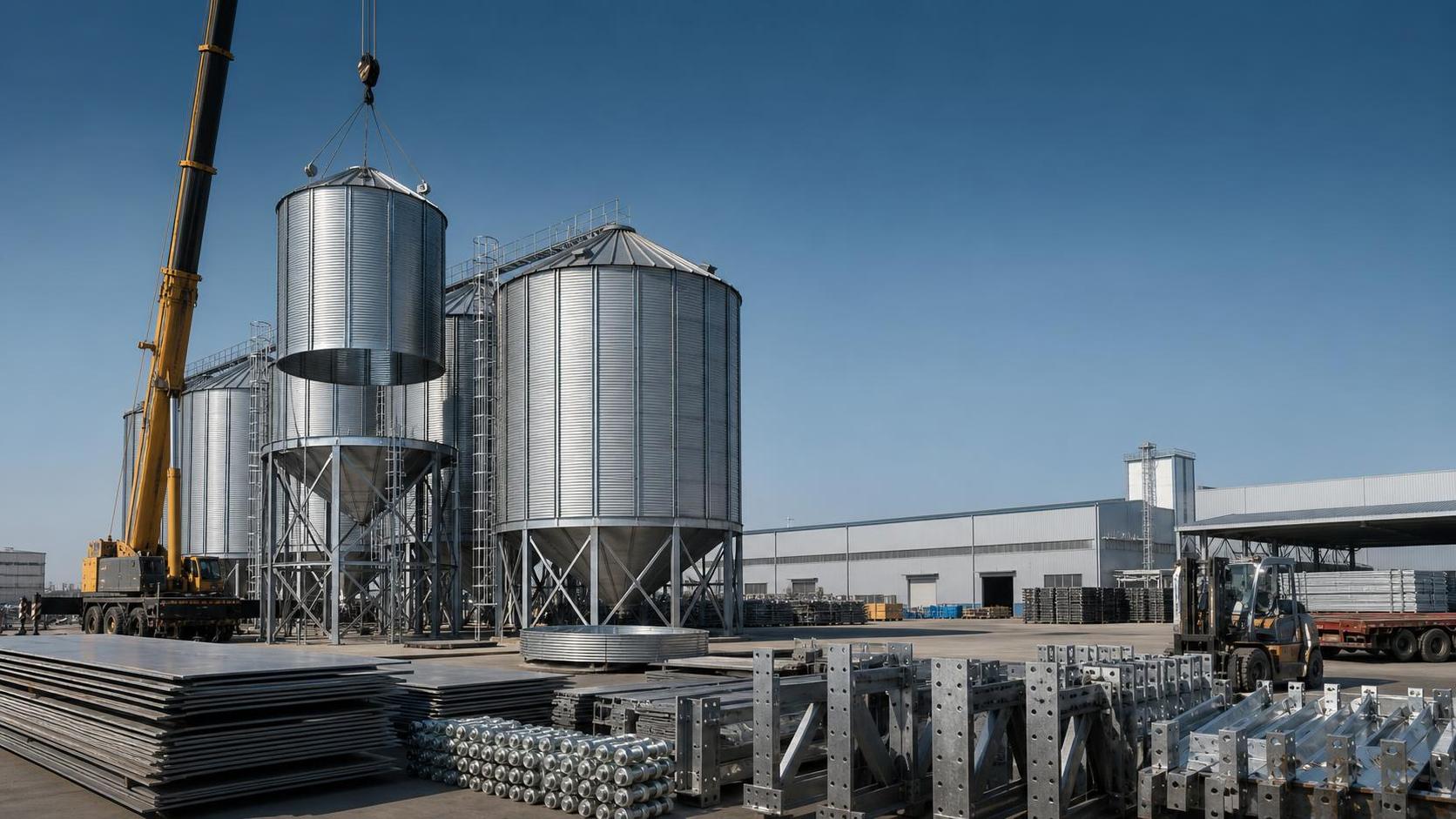
Steel Silo Cost Breakdown: Materials, Fabrication, and Installation
Understanding the true steel silo cost is essential for long-term storage planning.
A low initial quote can hide later spending on fabrication, transport, erection, and maintenance.
That is why cost review should move beyond unit price alone.
This article explains the main cost drivers behind a steel silo project.
It also highlights where hidden risk usually appears during procurement and approval.
Why Steel Silo Cost Varies So Much
The biggest mistake is assuming all storage silos are priced on the same basis.
In reality, steel silo cost changes with capacity, material grade, operating conditions, and project complexity.
A silo for grain has different design needs than one for cement, fly ash, or chemical powders.
Load conditions matter too.
Wind pressure, seismic standards, discharge frequency, and corrosion exposure all influence engineering requirements.
More demanding conditions usually mean thicker plates, stronger supports, and tighter manufacturing control.
That directly raises total steel silo cost, but often reduces lifecycle risk.
Raw Materials: The Largest Cost Block
In most projects, raw materials account for the largest share of steel silo cost.
The main components include steel plates, structural sections, stiffeners, bolts, coatings, and sealing materials.
Steel price volatility can change the final quotation faster than many buyers expect.
A quote that looks attractive today may become unstable without a clear validity period.
Key material factors
- Steel grade and tensile strength requirements.
- Plate thickness based on diameter and stored material density.
- Galvanized, painted, or specialized anti-corrosion treatment.
- Roof structure, hopper design, ladders, and safety accessories.
- Imported versus locally sourced steel supply.
For corrosive or high-moisture environments, coating quality deserves close review.
Choosing cheaper surface treatment may lower upfront steel silo cost.
However, repainting, corrosion repair, and downtime can erase those savings later.
Fabrication Standards and Their Budget Impact
Fabrication quality is where quoted prices often begin to separate.
Two suppliers may offer similar dimensions, yet the manufacturing standard behind each proposal can differ sharply.
Cutting accuracy, welding consistency, bolt-hole alignment, and forming precision all affect installation speed and service life.
This means fabrication is not just a workshop issue.
It is a financial issue because poor fabrication creates rework, delays, and change orders on site.
Reliable manufacturers usually document material traceability, welding procedures, inspection records, and dimensional checks.
That documentation adds some cost.
Still, it often lowers approval risk because technical scope becomes easier to verify.
Companies with integrated engineering and manufacturing capability usually control these variables better.
Shandong Guokai International Trade Co., Ltd. focuses on steel storage silo development, production, and project delivery.
Its experience across grain, building materials, power, and chemical sectors supports more application-specific cost planning.
Transportation and Logistics Costs
Transport is frequently underestimated in a steel silo cost review.
Large silo components require packaging, route planning, loading equipment, and sometimes oversized freight arrangements.
Distance from factory to project site changes freight cost, but site access matters just as much.
Remote industrial sites often increase unloading time and crane dependency.
That pushes the total steel silo cost higher, even before erection starts.
Questions worth asking early
- Is freight included in the quotation or listed separately?
- Who handles export packing, customs, and local delivery coordination?
- Are cranes, forklifts, or temporary storage areas required on arrival?
- What happens if shipment delays affect the installation window?
These points are operational details, but they shape budget certainty.
Installation: Where Hidden Costs Usually Appear
Installation is one of the most sensitive parts of steel silo cost.
Labor rates, local regulations, safety controls, and foundation readiness all affect the final spend.
A project can start with a competitive equipment quote and still go over budget during erection.
Common reasons include incomplete civil work, weather delays, missing tools, and unclear scope boundaries.
Installation cost may cover supervision only, or full mechanical erection with testing and commissioning.
That difference should be explicit.
Otherwise, approval teams may compare offers that are not truly comparable.
Typical installation cost items
- Site preparation and foundation inspection.
- Cranes, lifting devices, and temporary access equipment.
- Assembly labor and welding support.
- Safety compliance and local permits.
- Commissioning, trial operation, and training.
A practical budget review should ask where supplier responsibility ends and site responsibility begins.
Comparing Initial Price With Lifecycle Cost
The lowest steel silo cost on paper is not always the best procurement outcome.
A stronger decision comes from comparing upfront capital cost with expected lifecycle expense.
This includes maintenance, repair cycles, spare parts, shutdown exposure, and service support availability.
For operations with continuous throughput, downtime can outweigh small differences in purchase price.
The same logic applies across adjacent storage assets.
In some facilities, silo investment is reviewed alongside tanks and transfer systems.
Where liquid storage is part of the broader plan, Oil Storage Tanks may also enter the comparison set.
That broader view can improve capital allocation across the whole storage project.
A Simple Framework for Budget Approval
A useful steel silo cost review should combine technical clarity with financial discipline.
One practical framework is to score each proposal across five dimensions.
This approach makes steel silo cost easier to judge beyond headline pricing.
How to Reduce Risk Without Underspecifying the Project
Cost control works best when scope is specific early.
Vague specifications often produce low quotations followed by expensive clarifications.
A more effective strategy is to define performance expectations clearly from the start.
- Confirm stored material characteristics and flow behavior.
- Match corrosion protection to the actual environment.
- Request a full scope list with exclusions highlighted.
- Check the installation plan before issuing approval.
- Review warranty terms against expected operating intensity.
This reduces the chance of hidden additions during execution.
Final Takeaway on Steel Silo Cost
A reliable steel silo cost assessment should cover materials, fabrication, logistics, installation, and future upkeep.
When each part is reviewed in context, the budget becomes more predictable.
More importantly, procurement decisions become easier to defend over the full service life of the asset.
Before approval, compare proposals on delivered value, not just starting price.
That is usually the clearest path to controlling steel silo cost without creating operational risk later.
Related Posts
- ▶ How a Dry Bulk Silo Handles Pneumatic Filling and Gravity Discharge
- ▶ What Is a Dry Bulk Silo, and When Does a Factory Need One?
- ▶ Can dry bulk storage silos be integrated into existing PLC-controlled batching systems?
- ▶ Do dry bulk silos designed for API 650 compliance meet ASME Section VIII requirements?
- ▶ Is almacénamiento de sólidos a granel en silos de acero inoxidable viable for small-scale agrochemical distributors?
- ▶ How do vibration-based level sensors perform in stainless steel silos with powder coating?
Online Message