





Silo Engineering Mistakes That Lead to Flow Problems
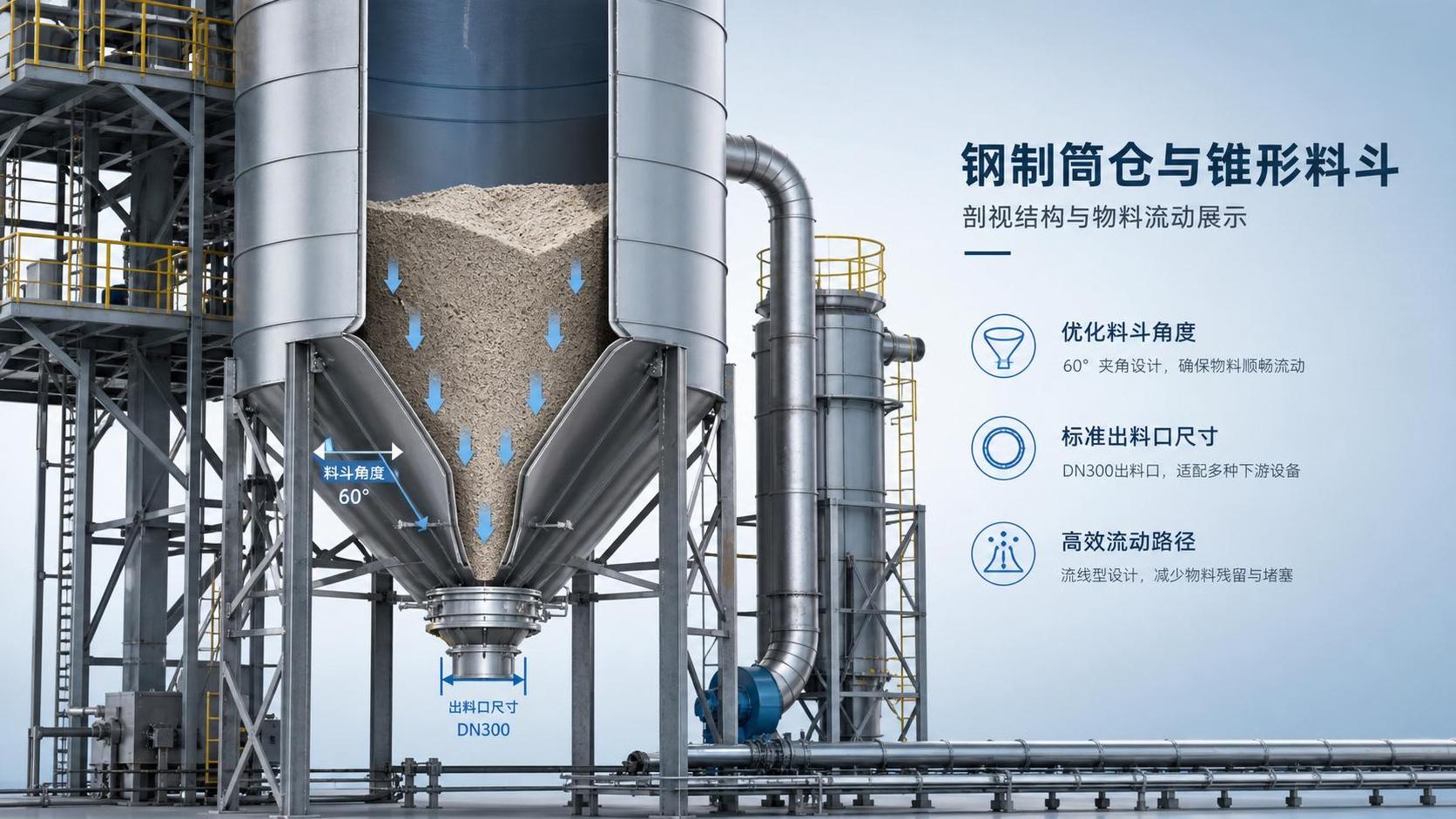
Why do small silo engineering mistakes create major flow trouble later?
Flow problems rarely begin when material stops moving. They usually begin much earlier, during design, fabrication, or installation.
In silo engineering, a slight error in hopper angle, outlet size, wall finish, or stiffener placement can change how bulk solids behave.
That is why flow issues often appear as maintenance problems, even when the real cause is an engineering decision made months earlier.
For steel silo projects used in grain, building materials, electric power, and chemicals, the same pattern appears repeatedly.
Bridging, rat-holing, uneven discharge, dust surges, and shell stress are not isolated failures. They are connected symptoms.
A practical review of silo engineering helps trace those symptoms back to geometry, load assumptions, and material handling choices.
Companies with broad project experience, including Shandong Guokai International Trade Co., Ltd., usually treat flow performance as a system issue rather than a single repair point.
Which design mistakes most often cause bridging and rat-holing?
The most common mistake is assuming all bulk materials discharge the same way. They do not.
Powders, pellets, cement, fly ash, grain, and blended materials each have different internal friction, moisture response, and compaction behavior.
When silo engineering ignores these flow properties, the outlet may be too small or the hopper too shallow.
That creates stable arches above the outlet or narrow flow channels through the center, while material near the wall remains stagnant.
Another frequent problem is poor transition design between the cylindrical body and hopper section.
If the transition introduces abrupt changes, material consolidates unevenly and wall pressure becomes less predictable during discharge.
Surface condition matters too. Rough weld areas, distorted plates, and internal attachments can interrupt mass flow.
In actual operation, these details often explain why one silo works acceptably and another, built for similar duty, blocks repeatedly.
- Outlet opening chosen from habit instead of measured material data
- Hopper slope too flat for cohesive or moisture-sensitive material
- Flow aids added later, instead of designing reliable discharge first
- Internal protrusions left inside the flow path
Can installation errors change flow behavior even when the drawings were correct?
Yes, and this is often underestimated.
A sound silo engineering design can still perform poorly if site installation changes the intended geometry or surface condition.
Misalignment at the outlet is a typical example. Even a small offset can shift discharge patterns and create eccentric loading.
The result may look like a flow problem first, then later develop into cracking around supports, nozzles, or hopper transitions.
Improper bolt tightening, uneven support settlement, and local deformation during lifting also affect bulk material movement.
In powder storage systems, inlet arrangement is another overlooked point. If filling is not centered, segregation and uneven piling can begin immediately.
That can produce one-sided wear, dead zones, and inconsistent reclaim behavior during later cycles.
This is also why some operations compare vertical silos with alternatives such as Horizontal Bulk Powder Storage Tanks when site constraints or product characteristics make flow control more demanding.
What signs usually point to an installation-related flow issue?
This kind of table is useful because it separates visible symptoms from root causes. Flow trouble is often misread when only the blockage is treated.
When does poor material data become the real engineering mistake?
Often, it happens before the first drawing is finalized.
Silo engineering depends heavily on real bulk solid properties, not catalog assumptions.
If moisture range, particle size distribution, compressibility, bulk density, or caking tendency are poorly defined, the entire design basis weakens.
That becomes especially risky in plants where the stored product changes by supplier, season, or process condition.
A silo that handles dry free-flowing powder in winter may struggle badly during humid months.
The mistake is not only missing a test. The bigger issue is treating variable material as fixed material.
A better approach is to review worst-case flow properties and ask whether the outlet, hopper, aeration, and venting still remain workable.
In broader silo engineering practice, this step usually reduces emergency modifications later, which are expensive and disruptive.
What data deserves priority during troubleshooting?
- Recent changes in moisture, particle size, or supplier source
- Actual fill and discharge sequence, not only rated process flow
- Periods of long storage before reclaim
- Wall buildup pattern and cleaning frequency
- Operating condition of aeration pads, vibrators, and vent lines
Are flow aids solving the problem, or hiding a weak silo engineering design?
Sometimes they solve it. Quite often, they only delay a deeper failure.
Vibrators, air cannons, fluidizing pads, and mechanical agitators can be useful, but only when matched to the material and silo geometry.
If they are added after repeated blockages, they may be compensating for outlet undersizing or an unsuitable flow pattern.
That matters because poorly selected flow aids can increase local stress, packing, dust generation, or uneven discharge.
In some cases, frequent vibration worsens compaction instead of reducing it.
A more reliable judgment is to ask one question: if the flow aid stops, does the silo still discharge predictably?
If the answer is no, the underlying silo engineering probably needs review.
That review may include outlet redesign, hopper modification, liner improvement, or a reassessment of whether a different storage configuration is better for the material.
In compact powder handling layouts, equipment such as Horizontal Bulk Powder Storage Tanks may be considered where access, cleaning, and reclaim behavior must be easier to control.
How can recurring discharge problems be diagnosed faster on site?
The fastest diagnosis usually comes from comparing event timing, material condition, and silo geometry together.
When a blockage appears, it helps to record fill level, storage duration, weather condition, feeder status, and recent process changes.
That log often reveals patterns hidden by daily routine.
More importantly, the inspection should not stay only at the outlet.
A proper silo engineering check moves from top inlet to reclaim point, looking for segregation, buildup, leakage, deformation, and vent restriction.
Useful questions include these:
- Did the problem start after a material change or after shutdown?
- Does the failure happen at one fill level or across the whole cycle?
- Is discharge centered, pulsing, or clearly biased to one side?
- Are operators relying more often on impact, vibration, or manual clearing?
When these answers are documented consistently, repeated “maintenance” events become traceable engineering patterns instead of isolated incidents.
What should be reviewed before the next modification or new silo project?
The most useful review is not a generic checklist. It should focus on where flow reliability was lost.
Start with three linked questions: what material is actually stored, how does it really discharge, and where does abnormal stress appear?
Then compare those answers with the original silo engineering assumptions.
If assumptions and operating reality no longer match, modifications should address the mismatch directly.
For some sites, that means changing outlet geometry. For others, it means improving inlet distribution, venting, or internal surface condition.
The wider lesson is straightforward. Reliable flow is designed, installed, and operated as one system.
When silo engineering is reviewed through actual discharge behavior, maintenance records become far more useful than simple failure logs.
A sensible next step is to sort recent flow incidents by material type, fill level, and discharge pattern, then use that evidence to refine design checks for future work.
That approach usually brings clearer decisions on risk, retrofit priority, and long-term storage reliability.
Related Posts
- ▶ How a Dry Bulk Silo Handles Pneumatic Filling and Gravity Discharge
- ▶ What Is a Dry Bulk Silo, and When Does a Factory Need One?
- ▶ Can dry bulk storage silos be integrated into existing PLC-controlled batching systems?
- ▶ Do dry bulk silos designed for API 650 compliance meet ASME Section VIII requirements?
- ▶ Is almacénamiento de sólidos a granel en silos de acero inoxidable viable for small-scale agrochemical distributors?
- ▶ How do vibration-based level sensors perform in stainless steel silos with powder coating?
Online Message