





Industrial Silos for Cement, Grain, and Ash: Key Application Differences
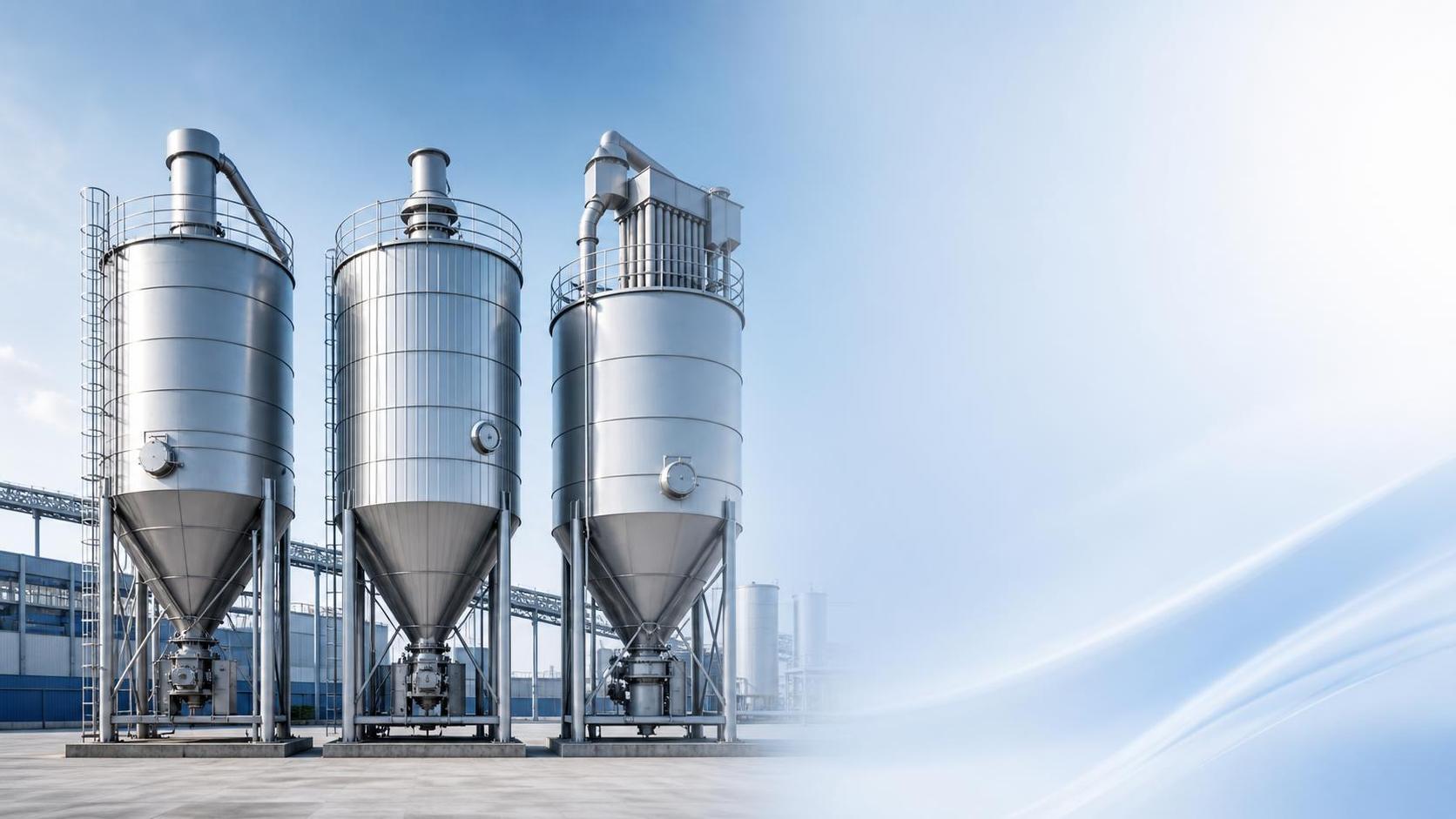
Industrial silos perform differently once the material changes
Choosing industrial silos for cement, grain, or ash is rarely a simple capacity decision.
In actual projects, storage design affects discharge stability, contamination control, structural safety, and daily operating rhythm.
That is why the same silo size can work well in one plant and create constant handling problems in another.
For companies comparing industrial silos across building materials, agriculture, and power applications, the real task is matching storage behavior to material behavior.
Shandong Guokai International Trade Co., Ltd. works across grain, building materials, electric power, and chemical-related projects, so the practical differences between these applications are not theoretical.
They shape wall design, hopper angle, aeration strategy, insulation need, dust control, and maintenance planning from the beginning.
Why similar-looking industrial silos face very different demands
Cement, grain, and ash may all be bulk materials, but they do not move, react, or age in the same way.
Cement is sensitive to moisture and compaction. Grain responds to temperature, airflow, and biological risk. Ash often challenges sealing, abrasion resistance, and dust handling.
Because of that, industrial silos must be judged beyond shell thickness or nominal volume.
A more useful evaluation looks at how the stored material enters, settles, discharges, and changes during its residence time.
Site conditions also matter more than many early comparisons assume.
Coastal humidity, seasonal temperature swings, pneumatic conveying pressure, and local emission standards can shift the preferred silo design significantly.
A quick comparison before looking at each use case
This kind of comparison helps narrow options early, but detailed judgment still depends on how each site operates.
Cement storage usually rewards flow control more than oversized capacity
In cement plants and ready-mix operations, industrial silos are expected to support continuous batching without interruption.
The problem is that cement does not always behave like a freely flowing powder once humidity enters the system.
Even small moisture exposure can trigger lump formation, wall buildup, or discharge funneling.
That is why cement silos are often judged by discharge consistency, not just by how much material they can hold.
A well-matched industrial silo for cement usually needs strong sealing, effective dust collection, and a hopper geometry that supports mass flow where possible.
Aeration devices matter, but they should be sized around actual powder characteristics and unloading frequency.
Overusing aeration can create uneven discharge patterns if the system design is not coordinated with the outlet and screw or pneumatic transfer equipment.
In practical terms, cement projects often benefit from looking at loading mode, daily throughput, and downtime exposure together.
A silo that stands idle in a humid environment needs a different protective strategy than one cycling several times per day.
Grain applications shift the focus from containment to preservation
Grain storage changes the conversation because material quality can decline while the silo still appears structurally fine.
For that reason, industrial silos in grain systems must be evaluated as part of a preservation process, not only as steel structures.
Moisture migration, temperature layering, insect pressure, and residue accumulation all influence long-term suitability.
In actual use, ventilation and monitoring often matter as much as shell design.
A grain silo may need roof vents, aeration floors, temperature cables, sweep augers, and access arrangements that simplify inspection and cleaning.
If turnover is fast, the design emphasis may stay on receiving and unloading efficiency.
If storage duration is seasonal or long term, the priority moves toward environmental control and spoilage prevention.
This is also where broader industrial storage experience becomes useful.
Facilities that manage multiple materials sometimes compare powder silos with liquid systems such as Insulated Stainless Steel Oil & Fat Liquid Tanks, because both require attention to temperature stability, contamination control, and product condition over time.
The equipment is different, but the operational lesson is similar: storage quality depends on process fit, not on capacity alone.
Ash handling often exposes weaknesses in sealing and wear resistance
Ash storage, especially in power and industrial combustion systems, puts different pressure on industrial silos.
Fly ash and similar materials can be extremely fine, highly dusty, and difficult to unload after compaction.
Pneumatic conveying adds another layer because pressure fluctuation can stress the vessel, filters, valves, and venting controls.
In these cases, one of the first things to confirm is whether the silo design accounts for filtration capacity and pressure relief under real loading conditions.
Another common issue is wear at inlets, elbows, and discharge zones.
Industrial silos for ash may need reinforced liners or localized abrasion protection, especially where conveying velocity is high.
Where discharge reliability is critical, fluidization systems should be matched to ash density, temperature, and expected storage time.
A design copied from cement service may look suitable on paper while failing in daily ash handling.
What tends to change across projects even within the same material
Not every cement, grain, or ash installation should use the same industrial silos configuration.
The better approach is to compare a short list of operating conditions before finalizing structure and accessories.
- Storage duration: short-cycle buffering and long-term reserve storage need different risk controls.
- Feeding method: truck loading, bucket elevator feeding, and pneumatic conveying create different stresses.
- Discharge frequency: frequent discharge favors stable flow design and easier cleaning access.
- Climate exposure: condensation risk rises quickly in humid or high day-night temperature swing locations.
- Environmental compliance: dust-sensitive sites often need stronger sealing and filtration integration.
- Future expansion: reserve nozzle positions, structural allowances, or modular planning can reduce later retrofit cost.
This is where experienced steel silo project teams create value.
A supplier familiar with grain, building materials, power, and chemicals can usually identify where one project assumption does not transfer well into another.
Misjudgments that often lead to avoidable silo problems
Several mistakes appear repeatedly when industrial silos are selected from general specifications alone.
- Treating all powders as similar, even when flowability and moisture sensitivity differ sharply.
- Comparing only initial purchase cost while ignoring cleaning frequency, aeration energy, filter replacement, and downtime impact.
- Assuming nominal capacity equals useful capacity under difficult discharge conditions.
- Ignoring local codes for dust emissions, explosion risk, pressure protection, or food storage hygiene.
- Copying a previous project without checking whether material source, particle size, or residence time has changed.
These issues usually appear after commissioning, when modifications cost more and operational trust has already dropped.
A practical way to match industrial silos to the real application
Before deciding on industrial silos, it helps to build a simple application checklist around the material and the site.
That same logic also applies when a site includes related storage systems beyond dry bulk materials, including Insulated Stainless Steel Oil & Fat Liquid Tanks.
Different media require different vessels, yet the selection method remains grounded in operating conditions, lifecycle cost, and process compatibility.
The next step is to define fit before comparing price
Industrial silos for cement, grain, and ash may share a steel structure, but their best designs emerge from different priorities.
Cement needs controlled flow and moisture protection. Grain needs preservation and inspection support. Ash needs sealing, wear management, and dependable pressure handling.
A useful next step is to map the actual storage cycle, site climate, transfer method, and maintenance limits before narrowing equipment options.
When those conditions are clear, comparing industrial silos becomes more accurate, and long-term project value is easier to judge with fewer hidden risks.
Related Posts
- ▶ How a Dry Bulk Silo Handles Pneumatic Filling and Gravity Discharge
- ▶ What Is a Dry Bulk Silo, and When Does a Factory Need One?
- ▶ Can dry bulk storage silos be integrated into existing PLC-controlled batching systems?
- ▶ Do dry bulk silos designed for API 650 compliance meet ASME Section VIII requirements?
- ▶ Is almacénamiento de sólidos a granel en silos de acero inoxidable viable for small-scale agrochemical distributors?
- ▶ How do vibration-based level sensors perform in stainless steel silos with powder coating?
Online Message