





Industrial Silos in 2026: What Is Changing in Bulk Storage Projects?
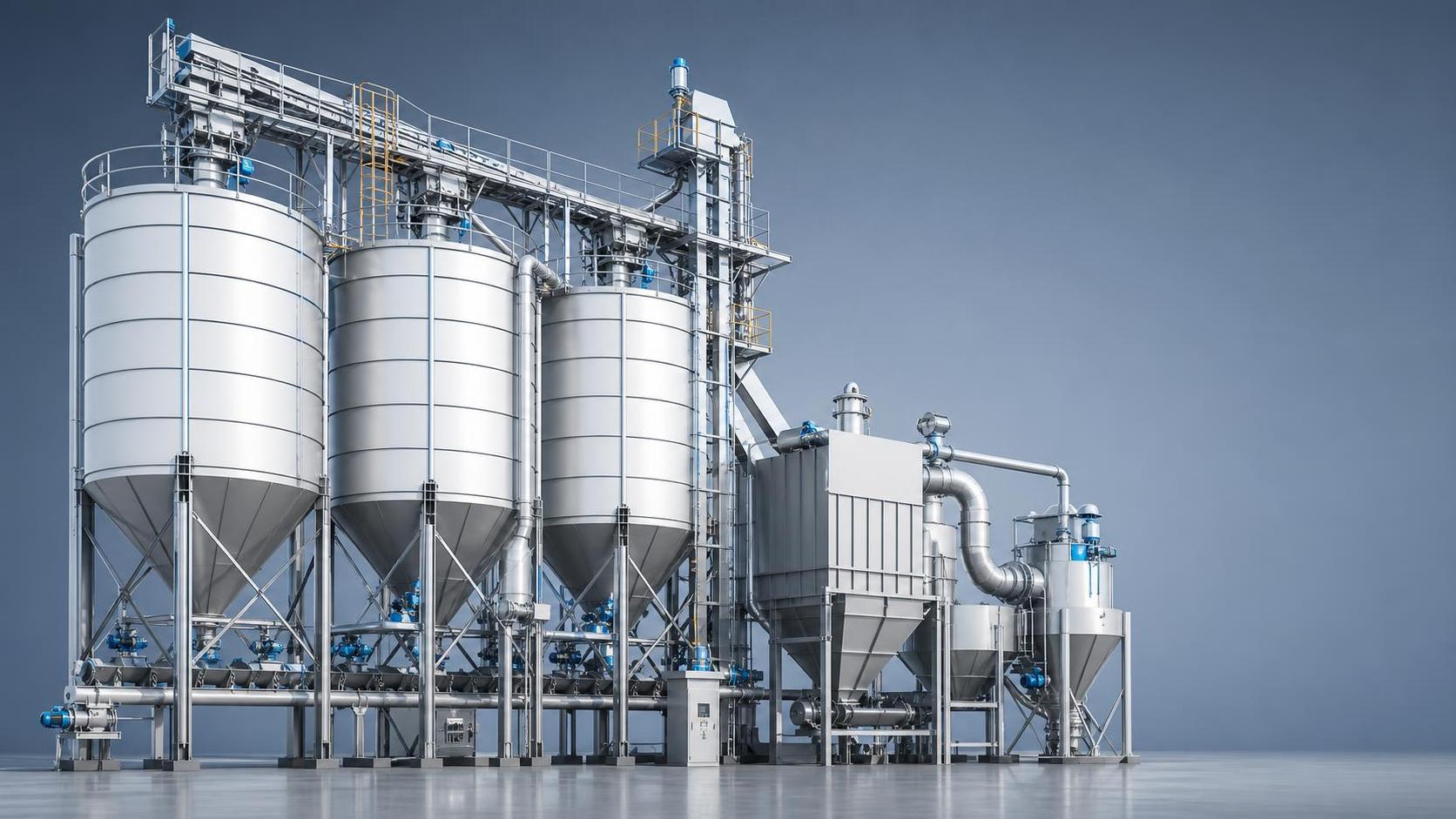
In 2026, industrial silos are no longer viewed as passive containers at the edge of a plant. They are becoming integrated bulk handling assets, shaped by automation, tighter compliance, operating cost pressure, and the need for stable throughput across changing production conditions.
That shift matters across grain, building materials, electric power, and chemical processing. When storage performance affects product quality, feed continuity, dust control, and energy use, silo decisions start influencing the broader economics of a project rather than only its storage volume.
For companies planning new facilities or upgrading existing lines, the main question is no longer whether industrial silos are needed. The real question is what kind of silo system can support reliability, expansion, and lower lifecycle risk in a more demanding operating environment.
Why bulk storage projects are being redefined
The old model treated silo selection as a late-stage civil or mechanical decision. In many projects, that approach now creates avoidable constraints. Material behavior, discharge stability, sensor integration, environmental control, and maintenance access are being considered much earlier.
This is especially visible in sectors with uneven supply patterns or continuous production lines. A silo that stores enough volume but causes bridging, segregation, or slow discharge can damage upstream and downstream efficiency.
As a result, industrial silos are increasingly specified as part of a system. Their value is measured through inventory visibility, material flow consistency, plant safety, and long-term serviceability.
Industrial silos are getting smarter, but only where it adds value
Digitalization is influencing bulk storage, but the trend is becoming more practical. In 2026, the strongest projects do not chase every available feature. They focus on the data that improves control and reduces uncertainty.
Level monitoring, temperature tracking, pressure feedback, aeration control, and discharge status are now common priorities. When connected to plant systems, these functions support better scheduling, less manual checking, and earlier fault detection.
However, not every site needs the same level of automation. For some operations, a robust steel silo with dependable instrumentation is more valuable than a complex digital package that adds cost without solving a real bottleneck.
What operators are watching more closely
- Material flow behavior under different moisture, density, or particle-size conditions
- Real-time inventory accuracy for purchasing and production planning
- Dust, explosion, and emissions control requirements
- Maintenance access for cleaning, inspection, and component replacement
- Compatibility with conveying, batching, and packaging systems
The design conversation now starts with material reality
A major change in bulk storage projects is the stronger focus on the actual material, not just the available footprint. Powder, grain, clinker, fly ash, fertilizer, and chemical intermediates each behave differently inside industrial silos.
That changes hopper geometry, wall design, discharge equipment, ventilation strategy, and anti-blocking measures. In practice, poor matching between material characteristics and silo configuration remains one of the costliest avoidable mistakes.
For building materials projects, this often leads to closer attention on dedicated solutions such as Cement Silos, where flow continuity, dust sealing, and feeding precision directly affect plant output and site cleanliness.
The same logic applies across industries. Storage design now needs to reflect handling frequency, refill pattern, blending needs, and the consequences of downtime.
Cost control is shifting from purchase price to lifecycle performance
Budget pressure remains strong, but capital cost alone is a weak basis for comparing industrial silos. A lower-priced structure may become more expensive if it creates repeated discharge issues, difficult cleaning, unplanned shutdowns, or higher energy use.
In 2026, better project evaluations usually compare at least five cost layers: fabrication, transport, installation, operating efficiency, and maintenance burden. This gives a more realistic picture of project return.
This is one reason experienced silo builders are gaining importance. Companies such as Shandong Guokai International Trade Co., Ltd., with development, manufacturing, and project execution capabilities, are better positioned to align design choices with long-term operating needs.
Industry-specific requirements are becoming harder to ignore
One clear trend is that industrial silos are becoming less interchangeable across sectors. Standardization still matters, but broad similarity no longer means functional equivalence.
In grain projects, sanitation, aeration, and spoilage prevention stay central. In building materials, abrasive wear, dust collection, and metering accuracy often dominate. In electric power applications, ash handling reliability and environmental containment carry more weight.
Chemical storage can add corrosion concerns, sealing requirements, and stricter process control expectations. That means project teams increasingly need industry-fit storage rather than generic capacity with minor modifications.
Where this changes project decisions
- Material testing becomes more valuable before final design approval
- Accessory selection matters as much as the main shell structure
- Environmental and safety systems are specified earlier
- Expansion planning is built into foundations, layout, and loading paths
Project speed still matters, but predictability matters more
Many facilities still work under tight commissioning schedules. Even so, the strongest bulk storage projects in 2026 are not simply the fastest to install. They are the ones with fewer surprises during startup and early production.
This is changing how industrial silos are evaluated during procurement. Buyers are asking more detailed questions about fabrication quality, installation method, sealing performance, corrosion protection, and how the silo behaves during peak load cycles.
Documentation also carries more weight. Drawings, load data, maintenance guidance, and equipment integration details support smoother handover and fewer commissioning delays.
How to assess industrial silos before the next investment decision
A useful evaluation starts with process questions, not only equipment specifications. The right silo project depends on how storage interacts with production targets, material variability, utility limits, and future capacity plans.
Several checks tend to improve decision quality:
- Confirm whether the required capacity is operational or theoretical
- Review discharge reliability under worst-case material conditions
- Compare automation features against measurable operating benefits
- Examine maintenance access, spare parts logic, and inspection intervals
- Check whether the layout supports future lines or added storage units
- Assess whether specialized options, including Cement Silos, fit the material and plant workflow
These steps help separate a nominally adequate design from one that will remain practical after commissioning pressure has passed.
What the 2026 shift really means
The direction is clear: industrial silos are becoming more connected to plant performance, more tailored to material behavior, and more scrutinized for lifecycle value. That does not always mean more complexity. It means more precise decisions.
For upcoming bulk storage projects, the practical next step is to define material demands, flow expectations, automation priorities, and expansion assumptions before comparing structures. A clearer evaluation framework usually leads to better engineering choices and fewer operational compromises later.
In a market where reliability, compliance, and cost discipline are all tightening at once, well-planned industrial silos are increasingly part of competitive infrastructure rather than a background utility.
Related Posts
- ▶ How a Dry Bulk Silo Handles Pneumatic Filling and Gravity Discharge
- ▶ What Is a Dry Bulk Silo, and When Does a Factory Need One?
- ▶ Can dry bulk storage silos be integrated into existing PLC-controlled batching systems?
- ▶ Do dry bulk silos designed for API 650 compliance meet ASME Section VIII requirements?
- ▶ Is almacénamiento de sólidos a granel en silos de acero inoxidable viable for small-scale agrochemical distributors?
- ▶ How do vibration-based level sensors perform in stainless steel silos with powder coating?
Online Message