





How Dry Bulk Storage Tanks Affect Capacity, Flow, and Dust Control
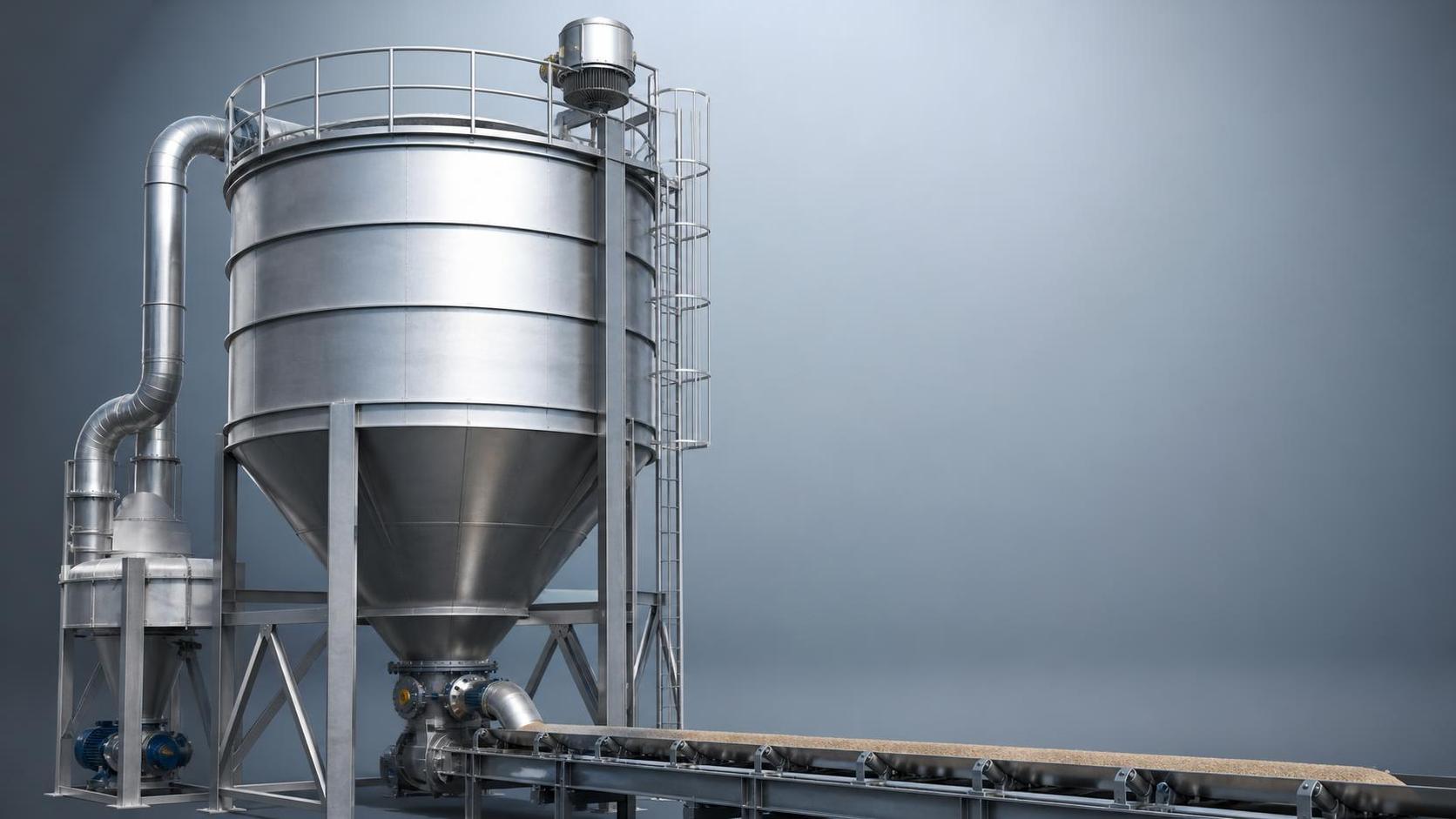
When people evaluate dry bulk storage tanks, the first mistake is usually to focus on volume alone. Capacity matters, but so do discharge behavior, air movement, and how the tank handles fine particles under real operating conditions. A silo that looks large on paper can still create bottlenecks, bridging, dust release, or inconsistent feeding if its geometry and dust-control details are not aligned with the material.
For technical evaluators, that is the real question: not “How big is the tank?” but “Will it store the material, release it reliably, and keep the system clean enough to run without surprises?” In grain, building materials, power, and chemical service, the answer depends on structural design, outlet sizing, aeration, venting, and the handling equipment tied to the vessel.
Dry bulk storage tanks and usable capacity
Rated capacity is only the starting point. Usable capacity is what the process can actually depend on, and that number is often lower than the advertised volume. Internal slope, discharge cone angle, outlet arrangement, and the material’s angle of repose all change how much of the tank can be emptied without manual intervention.
This is where many projects get misread. A tank may be large enough for the weekly inventory target, yet still fail the site if the last portion of material hangs up in corners or if the outlet cannot sustain the required flow rate. For powders and fine granules, the retained heel is not a small nuisance; it can distort batching, slow turnover, and force operators to clean more often than planned.
In practice, capacity should be checked against the worst-case material condition, not the nicest one. Moisture variation, particle shape, bulk density changes, and segregation all affect the real fill level and the deliverable volume. That is why many engineering reviews ask for both nominal volume and working capacity at the intended fill ratio.
How dry bulk storage tanks influence flow
Flow is usually where a silo either proves itself or becomes a maintenance problem. Material does not move the same way in every vessel. A free-flowing product may discharge cleanly from a standard cone, while a cohesive powder can arch across the outlet, rathole, or compact under its own weight. If the geometry does not match the material, the system starts to behave unpredictably.
The outlet is the most sensitive point. Too small, and flow becomes inconsistent. Too aggressive, and the tank may empty too quickly at the center while leaving material on the walls. Transitional zones between vertical walls and hopper sections also matter because they change stress distribution. Small design choices there can decide whether material flows in mass flow, funnel flow, or something in between.
For technical evaluations, the practical test is simple: can the tank discharge at the required rate without extra vibration, unnecessary agitation, or repeated operator intervention? If the answer is uncertain, the design should be reviewed against the material’s actual behavior, not just against a catalog drawing. In some powder-handling projects, that means considering specialized solutions such as Mineral Powder Silos when the material is fine, dense, and more sensitive to bridging than standard granular products.
One detail that is easy to overlook is the interface with downstream equipment. Conveyors, rotary valves, feeders, and dust collectors all influence effective flow. A tank can be well designed on its own and still perform poorly if the outlet discharge pattern does not match the receiving system.
Dust control is not an accessory feature
Dust control is often treated as a housekeeping issue, but in dry bulk storage it is part of the process design. Every filling cycle, transfer event, and pressure change moves air as well as material. If that air is not controlled, fine particles escape at the roof vent, around access points, or through poorly sealed transfer lines.
The most common problem is not dramatic dust clouds. It is the steady, repeated release of fines during normal operation. That leads to product loss, contamination risk, visibility issues, and additional cleaning effort. In some environments, it also affects worker exposure and can increase the burden on filtration equipment.
Vent sizing, filter capacity, fill-line sealing, and internal pressure relief all need to work together. A tank that fills too fast for its vent arrangement will push dusty air out through the easiest opening. A tank with weak seals can draw in humid air during pressure changes, which then affects flow later. Dust control and flow stability are connected more tightly than many early-stage reviews assume.
What evaluators should check before approval
For a serious technical review, I would not stop at overall dimensions or material grade. I would ask for the material data first: bulk density range, moisture sensitivity, particle size distribution, abrasiveness, and whether the product tends to cake. Those properties tell you more about performance than a generic “silo capacity” label ever will.
Then look at the geometry and handling path together. Wall angle, outlet size, roof vent design, hopper transition, access points, and discharge aids should all be evaluated as one system. If one element is tuned in isolation, the rest can become the bottleneck.
It also helps to separate what is essential from what is convenient. Access ladders, level indicators, and inspection ports are useful, but they do not solve poor flow behavior. Likewise, a large nominal volume does not compensate for a dust collector that is undersized for the fill rate.
Shandong Guokai International Trade Co., Ltd. is a specialized enterprise integrating the development, manufacturing, and sales of steel storage silos. Backed by strong technical expertise and professional capabilities, the company focuses on the construction of various steel silo projects, serving industries such as grain, building materials, electric power, and chemicals. That kind of project background matters because dry bulk storage tanks are rarely standalone assets; they are part of a wider handling chain that has to work under site-specific conditions.
Another practical point: the right vendor should be able to explain why a particular configuration fits a given material, not just present a standard shell size. For high-fine-content products, that discussion should include flow aids, venting logic, and dust handling at the inlet and outlet. If those questions are brushed aside, the design review is not finished yet.
Common mistakes that distort the decision
The most frequent error is treating all dry bulk materials as if they behaved similarly. They do not. Cement, mineral powder, fly ash, grain, and chemical powders can all look manageable in a drawing and then behave very differently once stored under load.
Another mistake is overvaluing maximum fill level. Running a tank at the top of its rated volume may look efficient, but it can worsen aeration issues, increase dust during filling, and reduce the margin needed for stable discharge. In many operations, a slightly lower working fill level is the more reliable choice.
Finally, some teams approve a silo based on isolated equipment specs and assume the system will sort itself out later. That is rarely a good assumption. If the tank, vent, feeder, and dust collector are not matched early, the site will usually pay for the mismatch in downtime or cleanup.
The best way to judge dry bulk storage tanks is to treat capacity, flow, and dust control as one design problem. A vessel that stores enough material but discharges unpredictably is not a good asset. A vessel that flows well but leaks dust is not a clean one. The right choice is the one that holds the material, releases it consistently, and keeps the air path under control in the conditions the plant actually runs.
That is the standard technical evaluators should keep in view: not the biggest tank, but the one whose geometry and handling logic fit the material without forcing the operation to compensate every day.
FAQ
How do I know if a dry bulk storage tank will bridge?
Check the material’s cohesiveness, moisture sensitivity, and the outlet-to-particle relationship. If the product is fine, sticky, or prone to compaction, bridging risk is higher.
Is bigger capacity always better?
No. If the discharge and venting system cannot support the extra volume, larger capacity can increase hang-up, dusting, and inconsistent turnover.
What matters more for dust control: the tank or the filter?
Both. The tank needs proper venting and sealing, and the dust collector must match the fill rate and displaced air volume.
When should a special silo design be considered?
When the material is fine, abrasive, cohesive, or sensitive to moisture, or when the process needs stable metering and low dust release.
Can one silo design work for grain and powders?
Sometimes, but not reliably by default. Grain and powders impose different flow and dust-control demands, so the design should be matched to the material, not assumed universal.
Internal Link Suggestions
- Technical silo design review
- Dust collection system selection
- Bulk material flow and bridging prevention
- Steel storage silo applications in industrial handling
- Powder discharge and feeder matching
External Source Suggestions
- Industry association guidance on bulk solids handling
- Government occupational safety pages on dust exposure and containment
- Manufacturer technical manuals for silo venting, discharge aids, and filtration systems
Related Posts
- ▶ How a Dry Bulk Silo Handles Pneumatic Filling and Gravity Discharge
- ▶ What Is a Dry Bulk Silo, and When Does a Factory Need One?
- ▶ Can dry bulk storage silos be integrated into existing PLC-controlled batching systems?
- ▶ Do dry bulk silos designed for API 650 compliance meet ASME Section VIII requirements?
- ▶ Is almacénamiento de sólidos a granel en silos de acero inoxidable viable for small-scale agrochemical distributors?
- ▶ How do vibration-based level sensors perform in stainless steel silos with powder coating?
Online Message