





How Bulk Material Storage Silos Improve Feed Control in Processing Lines
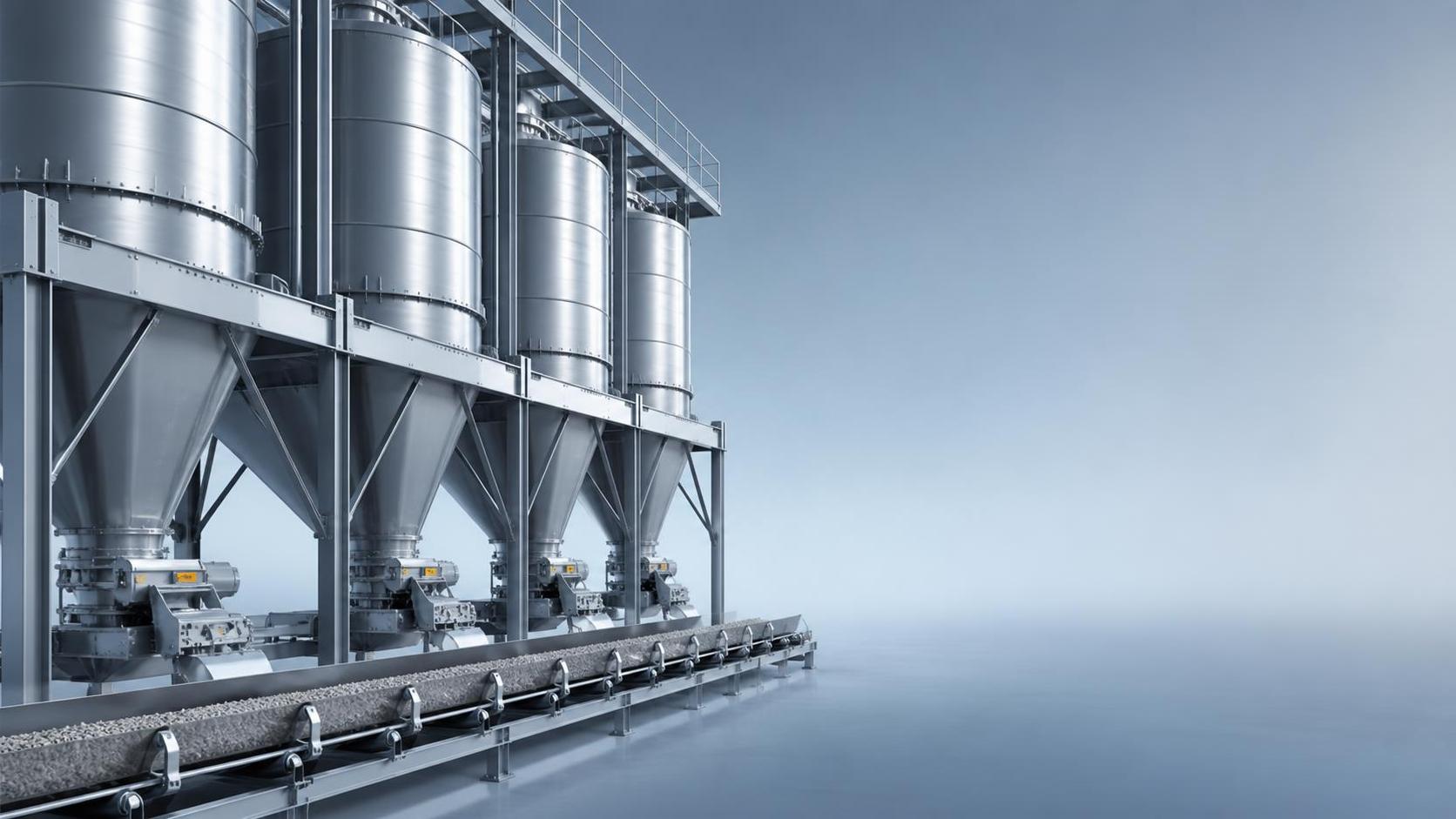
In modern processing lines, bulk material storage silos play a vital role in maintaining stable feed rates, reducing material waste, and improving overall operational efficiency. For operators and plant users, choosing the right silo system means better flow control, safer handling, and fewer production interruptions. This article explores how well-designed steel silos help optimize feed management across different industrial applications.
On many production sites, feed instability is treated as a problem at the dosing machine, conveyor, or control panel. In practice, the issue often starts much earlier—inside storage. When material leaves a silo inconsistently, every downstream step becomes harder to stabilize. Operators see the symptoms as surging flow, bridging, rat-holing, feeder overload, dust release, inaccurate batching, or frequent manual intervention. The root cause is not always equipment failure. Very often, it is poor material discharge behavior combined with an unsuitable silo design.
That is why bulk material storage silos should not be viewed only as static storage assets. In working processing lines, they are part of the feed control system. Their geometry, outlet design, wall finish, aeration arrangement, level measurement, and integration with discharge equipment all influence whether material enters the process at a predictable rate or becomes a constant source of disturbance.
Feed control begins with flow behavior, not storage capacity alone
Operators are usually asked one basic question during expansion or retrofit projects: “How much storage do we need?” Capacity matters, but it is rarely the most important operational question. A better question is: “How will this specific material move from storage into the process under real plant conditions?”
Different bulk solids behave very differently. Grain, cement, fly ash, mineral powder, pellets, fertilizers, and chemical intermediates each respond to moisture, particle size distribution, compaction, temperature, and residence time in different ways. A silo that works well for free-flowing granular material may perform poorly with cohesive powder. If the material forms arches at the outlet or segregates during filling, feed rate control downstream becomes unreliable regardless of how advanced the dosing equipment is.
For line users, this has a practical implication: stable feed starts with matching silo design to material characteristics. That includes hopper angle, outlet size, internal surface condition, and the selected extraction method. When these are wrong, operators end up compensating through vibration, hammering, temporary manual clearing, or feeder speed adjustments that only treat the symptom.
How silo design affects consistency on the line
A well-designed silo improves feed control by reducing the gap between “target discharge rate” and “actual material behavior.” Several design features have a direct effect on this result.
Mass flow versus funnel flow. In mass flow, all stored material moves when discharge starts, which helps reduce dead zones and supports more uniform drawdown. In funnel flow, only a central channel moves while stagnant material remains near the walls. Funnel flow may be acceptable in some applications, but in many processing lines it increases the risk of segregation, caking, and irregular discharge. For operations that need consistent composition and flow, this difference is not minor—it directly affects line stability.
Outlet design and feeder interface. Feed control is rarely determined by the silo alone. The interface between the silo outlet and the feeder is often where good designs succeed or fail. If the outlet does not provide a uniform material load across the feeder width, the feeder may run at a stable speed while the actual material discharge still fluctuates. This is a common source of dosing errors in powders and blended materials.
Wall friction and buildup resistance. Internal wall condition affects whether material slides cleanly or accumulates in patches. In industries handling sticky or fine materials, buildup creates changing flow paths over time. The result is not just lower storage efficiency; it is poorer process control and more unpredictable maintenance intervals.
Ventilation, aeration, and dust management. In powders, air movement can influence discharge significantly. Improper venting may cause pressure imbalance, while poorly configured aeration can either help discharge or create flushing and erratic flow. Operators need these systems to be tuned for the specific material rather than installed as generic accessories.
Where operators feel the difference in daily production
From the control room, a silo may appear passive. On the plant floor, its effect is visible everywhere. Stable silo discharge usually improves operation in four practical ways.
More predictable feeder loading. Screw feeders, rotary valves, belt feeders, and pneumatic transfer points perform better when inlet conditions are stable. This reduces current spikes, uneven wear, and short cycling.
Less process variation. In blending, grinding, combustion, or mixing applications, inconsistent feed can change residence time, product composition, and energy efficiency. The cost is not always immediate downtime; often it appears as reduced yield, off-spec material, or higher rework rates.
Lower operator intervention. Sites with poor discharge behavior often rely on experienced operators to “feel” when material is not moving correctly. They may change settings frequently or physically assist discharge. That knowledge is valuable, but a process that depends too heavily on manual correction is difficult to scale and vulnerable during shift changes.
Cleaner and safer handling. Surging discharge and repeated blockage clearing can increase dust exposure and create unsafe access behavior around hoppers and outlets. In dusty sectors such as cement, grain, and some chemical processes, this is not just a housekeeping issue. It can affect worker safety and regulatory compliance. Applicable standards and local requirements should always be checked according to site location and material hazard profile.
Why material variability is often underestimated
One of the most common mistakes in silo selection is assuming the material is stable because the product name is stable. In real operations, the same material can behave differently from one batch or season to another. Moisture content may rise. Particle size may shift after milling changes. Temperature may alter caking tendency. Recycled fractions may be introduced. A line that runs smoothly in dry weather can become difficult in humid conditions.
This is why operators should be cautious when evaluating storage systems based only on nominal material type. The real question is whether the silo can handle the worst credible flow condition, not just the best one. If a design works only when material is ideal, operators will end up bearing the operational risk.
In larger installations, this is especially important because long residence time can worsen compaction and bridging tendencies. For example, plants considering higher-capacity options such as 3000-6000 Tons Silos usually need to think beyond storage volume and assess discharge reliability over extended holding periods, especially for powders or moisture-sensitive materials.
Application differences across major industries
The role of bulk material storage silos in feed control changes by industry, even when the mechanical principle looks similar.
Grain processing. Feed consistency influences cleaning, milling, blending, and packaging stability. Segregation during filling can create uneven composition, while poor discharge can affect downstream metering accuracy. Hygiene and residue management also become important where product changeovers occur.
Building materials. In cement, lime, fly ash, and similar powder systems, the challenge is often maintaining continuous discharge without surging or arching. Here, silo design influences not only storage efficiency but also kiln feed stability, blending performance, and dust control.
Power generation. Fuel or additive handling systems depend on reliable storage discharge to support stable combustion or treatment performance. Even small flow interruptions can create process imbalance if downstream systems have limited buffer capacity.
Chemical processing. Material sensitivity may be higher, and inconsistent flow can affect reaction ratios, batch accuracy, or contamination risk. In some cases, first-in-first-out behavior matters as much as raw discharge rate.
These differences matter because operators often inherit equipment designed around capacity targets rather than process behavior. A silo that is structurally sound may still be operationally weak if it does not support the feed profile required by the line.
Signs that a silo is limiting feed control
Not every discharge problem means the silo is at fault, but several recurring symptoms usually justify a closer look:
- feeder speed remains constant but actual process input varies;
- frequent bridging, rat-holing, or inconsistent refill cycles;
- material quality changes between the start and end of discharge;
- excessive need for vibration or manual clearing;
- unexpected dust bursts during discharge;
- high wear at specific transfer points caused by surging flow;
- level readings that do not match actual usable material movement.
These are not merely maintenance annoyances. They are indicators that storage and process control are not properly aligned.
What to check before upgrading or specifying a silo system
For plant users and operators involved in selection, a useful evaluation should include more than dimensions and tonnage. Several practical checks are worth prioritizing.
Understand the material as handled, not as described on paper. Use actual operating data where possible: moisture range, bulk density variation, fines content, tendency to cake, and expected residence time.
Review the full discharge path. Feed control depends on the silo, outlet, feeder, valve, air system, instrumentation, and downstream process response. Improving one part while ignoring the interface often produces only limited gains.
Consider cleaning and maintenance access. A design that achieves good flow in theory but is difficult to inspect, clean, or maintain may create long-term operational burden.
Check instrumentation quality. Reliable level sensing and discharge monitoring matter when operators need to prevent empty runs, overfilling, or unstable refill timing. Instrument choice should fit the dust, material, and process environment.
Plan for abnormal conditions. Power interruption, long idle periods, humidity excursions, and partial loads can all change discharge behavior. Good systems are judged by how they perform when conditions are less than ideal.
The practical value of steel silos in controlled feed applications
Steel silos remain widely used because they can be designed for a broad range of capacities and industries while offering relatively efficient installation and structural adaptability. In projects where users need both bulk storage and process integration, steel systems can support customized outlet arrangements, accessory integration, and staged expansion.
That flexibility is useful when a plant is scaling output or reorganizing material flow. A facility may begin with basic storage needs, then later require tighter feed control, improved dust handling, or greater automation compatibility. In such cases, storage should be treated as part of the line architecture rather than as a separate civil structure.
For larger industrial projects, systems in the range of 3000-6000 Tons Silos are often evaluated not just for buffer storage, but for how they support continuous production, reduce refill-related interruptions, and maintain discharge quality over long cycles.
Common misunderstandings that create avoidable problems
A few assumptions repeatedly lead to poor results in real plants.
One is believing that if material can be stored, it can also be discharged consistently. Storage and controlled discharge are related, but they are not the same engineering problem.
Another is assuming that any flow issue can be solved by adding vibration devices or increasing feeder power. These measures can help in specific cases, but when the core geometry is wrong, they often become permanent workarounds rather than real solutions.
A third is focusing only on peak throughput. Many lines fail not during maximum output but during partial operation, startup, shutdown, or after long holding periods. Operators usually know this from experience, yet procurement decisions may still be made using rated capacity as the dominant criterion.
What better feed control looks like in practice
In a well-matched system, operators do not need to “fight” the silo. Material leaves storage in a predictable way. Feeder load is uniform enough that control settings remain meaningful. Blockage events become rare rather than routine. Cleaning is manageable. Inventory readings align more closely with usable material. Downstream equipment sees fewer disturbances, and process quality becomes easier to maintain across shifts.
That does not mean every issue disappears. Bulk solids handling always involves some variability. The real improvement is that variability is kept within a controllable range instead of constantly spilling into production performance.
For plants trying to improve throughput, reduce waste, or stabilize product quality, bulk material storage silos are often more important than they first appear. They are not just containers between delivery and production. In many processing lines, they are one of the main control points determining whether material enters the process smoothly or introduces recurring instability. For operators, recognizing that link is often the first step toward solving feed problems that have been blamed on the wrong equipment for too long.
Related Posts
- ▶ How a Dry Bulk Silo Handles Pneumatic Filling and Gravity Discharge
- ▶ What Is a Dry Bulk Silo, and When Does a Factory Need One?
- ▶ Can dry bulk storage silos be integrated into existing PLC-controlled batching systems?
- ▶ Do dry bulk silos designed for API 650 compliance meet ASME Section VIII requirements?
- ▶ Is almacénamiento de sólidos a granel en silos de acero inoxidable viable for small-scale agrochemical distributors?
- ▶ How do vibration-based level sensors perform in stainless steel silos with powder coating?
Online Message