





Bulk Material Storage Silos: Cost Drivers That Shape Budget Planning
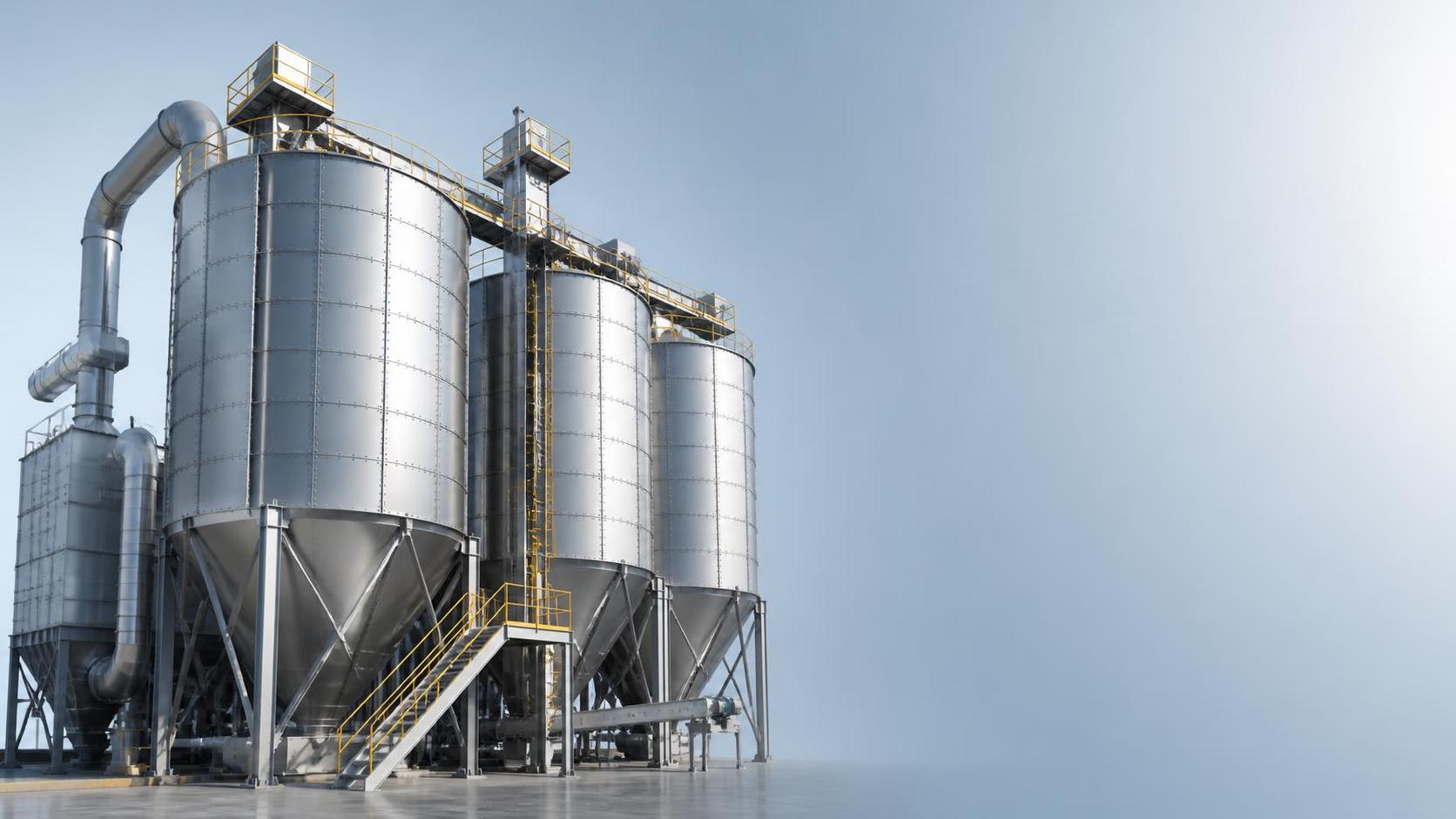
If you are reviewing a silo project budget, the hardest part is usually not the quote itself. It is figuring out whether the price reflects the real project scope or hides costs that will appear later. With bulk material storage silos, the purchase price is only one part of the investment. Capacity, material characteristics, foundation work, loading and unloading systems, corrosion protection, insulation, safety features, and maintenance access can all change the budget in a meaningful way. A good financial review is less about chasing the lowest number and more about understanding what is included, what is missing, and what could become expensive after approval.
A practical answer in one sentence: the total cost of bulk material storage silos is shaped less by the shell alone and more by how the silo must perform in a real plant, under real material conditions, with real operating and compliance requirements.
Why silo budgets often look simple at first and expensive later
Many first-round quotations focus on the main body of the silo because that is the easiest item to price quickly. That can be useful for rough screening, but it is not enough for approval. A silo project becomes financially accurate only when the supplier and buyer agree on operating conditions.
For example, a silo storing cement powder, grain, fly ash, mineral powder, or chemical raw material may look similar from a distance, but the cost structure can be very different. Flow behavior, dust control requirements, moisture sensitivity, temperature stability, cleaning frequency, and discharge method all affect design choices. A lower upfront quote may simply mean some of those decisions have been left unresolved.
This is where many internal approvals go wrong. Finance sees one number. Operations assumes another scope. Engineering expects a third. By the time the project reaches installation, change orders start to fill the gap.
What drives the cost of bulk material storage silos most
The first major driver is storage capacity, but not in a linear way. A larger silo usually costs more, yet the budget impact depends on height, diameter, wall thickness, cone design, and required discharge performance. Two silos with similar tonnage ratings may differ materially in price because one needs faster turnover, better mass flow, or more demanding structural support.
The second driver is the stored material itself. This is often underestimated in budget reviews. Bulk density, particle size, moisture content, abrasiveness, corrosiveness, and bridging tendency all influence design. If the material tends to cake, segregate, or retain moisture, the silo may need steeper hopper angles, vibration or aeration assistance, special liners, or upgraded discharge equipment. Those are not decorative options. They are operating cost control measures in disguise, because poor flow creates stoppages, labor intervention, and product loss.
Material selection for the silo body also matters. Carbon steel may be appropriate for many dry bulk applications, especially where environmental exposure is moderate and internal corrosion risk is low. Galvanized or coated steel may be preferred where weather resistance is a stronger concern. Stainless steel tends to raise the initial budget, but in corrosive or hygiene-sensitive settings it may reduce long-term replacement and maintenance costs. The right financial question is not “Which material is cheapest?” but “Which material is cheapest over the service life we actually expect?”
Site conditions can change the budget faster than the silo design
Some buyers evaluate silo cost as if the equipment arrives and starts working. In practice, site conditions can move the budget sharply.
Foundation complexity is a common example. Soil bearing capacity, wind loads, seismic requirements, drainage conditions, and the need for piling or reinforced civil works can add substantial cost outside the silo fabrication package. This is one reason a low equipment quote does not automatically mean a low project budget.
Transport and installation deserve the same scrutiny. Modular bolted silos, welded silos, and large field-assembled structures have different logistics profiles. Oversized transport, crane access, installation height restrictions, and local labor requirements all affect total installed cost. If the site is remote or space-constrained, installation costs may rise even when the silo itself is standard.
In cross-industry projects, experienced manufacturers usually account for these variables earlier. Companies such as Shandong Guokai International Trade Co., Ltd., which works across grain, building materials, electric power, and chemicals, tend to approach silo budgeting as an engineering scope question rather than a simple product quote. That distinction matters because it reduces the chance that key cost items stay outside the first approval package.
The equipment around the silo is often where budgets expand
A silo rarely works alone. Feeding, discharge, dust collection, level measurement, temperature monitoring, pressure relief, explosion protection where applicable, and control integration can account for a significant share of the real investment.
This is where finance teams should pay attention to the boundary of supply. Ask what the quoted system includes:
- Inlet and outlet conveyors or piping
- Dust filtration and venting equipment
- Flow aids such as air pads, vibrators, or agitators
- Load cells, radar level sensors, temperature cables, and alarms
- Access ladders, platforms, cages, and maintenance points
- Electrical controls and integration with plant systems
When these items are omitted from early discussions, the project looks cheaper than it really is. For internal approval, that creates a familiar problem: the capital request is approved on an incomplete basis, and later additions are treated as overruns even though they were always necessary.
There is also a category issue here. Some facilities use both dry bulk storage and liquid storage in the same process chain. In those cases, procurement teams sometimes compare unlike assets too loosely. A plant handling oils, fats, or temperature-sensitive liquids may need a separate solution entirely, such as Insulated Stainless Steel Oil & Fat Liquid Tanks, rather than trying to force one storage concept to cover every medium. That is less about product preference and more about avoiding a bad technical fit that turns into recurring operating cost.
Cheap now, expensive later: where lifecycle cost usually hides
Not every budget risk appears in fabrication. Some of the most expensive issues show up after commissioning.
Poor discharge performance is one. If material does not flow reliably, operators step in manually, downtime increases, and throughput becomes unpredictable. The cost shows up in labor, production delays, and sometimes product spoilage or contamination. This is especially relevant for fine powders and moisture-sensitive materials.
Maintenance access is another overlooked item. If access platforms, inspection points, and replacement routes for wear parts are poorly planned, ordinary maintenance becomes slower and more expensive. A silo that is hard to inspect is often a silo that is maintained late.
Corrosion protection also deserves a long view. In coastal, humid, or chemically active environments, surface treatment and material choice should be judged against expected maintenance cycles. Saving money at purchase but repainting, repairing, or replacing earlier than planned is rarely a good capital decision.
Energy use can matter too, though its impact varies. Pneumatic conveying, heating, insulation, and flow-assist systems may increase operational cost depending on the application. If these systems are necessary, they should be part of the financial model from the beginning rather than treated as secondary details.
What finance should ask before approving a silo project
A strong review does not require deep engineering knowledge. It requires the right questions.
- What material will be stored, and what are its handling risks?
- Is the quoted capacity based on volume or usable tonnage under actual bulk density?
- What is included in the supplier scope, and what remains with the buyer or contractor?
- Are civil works, installation, commissioning, and controls included or excluded?
- What operating conditions were assumed for corrosion, temperature, humidity, and throughput?
- What maintenance items are expected in the first three to five years?
- Which cost items are still provisional and likely to change after site confirmation?
These questions do two things. They expose hidden cost risk, and they improve comparability between bids. Without that, procurement ends up comparing numbers that were built on different assumptions.
Common budgeting mistakes buyers make with bulk material storage silos
One mistake is approving based on storage volume alone. Capacity matters, but it does not tell you whether the silo will discharge correctly, handle the material safely, or fit the site economically.
Another is treating all steel silos as interchangeable. They are not. Design details that look minor on paper can affect structural stability, wear resistance, maintenance frequency, and operating reliability.
A third mistake is assuming the lowest fabrication price offers the best return. In commodity purchases that may sometimes hold. In project equipment, it often does not. A quote that excludes design refinement, site adaptation, or basic auxiliary systems can create more spending later than a higher but more complete proposal.
There is also a softer mistake that shows up in internal discussions: using benchmark pricing from a different material, industry, or region without checking whether the comparison is technically valid. A grain silo budget is not always a useful reference for a powder chemical application, and a standard dry storage solution is not interchangeable with insulated liquid storage such as Insulated Stainless Steel Oil & Fat Liquid Tanks.
How to compare supplier quotes without getting misled
The cleanest way to compare quotes is to request a scope matrix. Put each supplier’s offer into the same structure: silo body, foundation assumptions, conveying interface, instrumentation, safety features, installation, commissioning, warranty, and expected exclusions. Once this is visible, price differences usually make more sense.
It also helps to ask for clarification on design basis rather than only negotiating price. If one supplier prices for standard weather protection and another prices for a corrosive environment, the cheaper number is not a real saving. It is a different project basis.
Look closely at warranty language, spare parts recommendations, and commissioning support. These are not side topics. They indicate how confident the supplier is in field performance and how much operational support you may need after delivery.
For decision-makers trying to reduce approval risk, the best supplier is often the one that explains constraints early, not the one that keeps every assumption vague until after the order.
Final budgeting view
When you review bulk material storage silos, the useful mindset is simple: buy the operating result, not just the shell. The budget should reflect the stored material, the site, the support equipment, and the maintenance reality. Once those pieces are visible, procurement decisions become easier to defend because the total cost story is clearer.
That is usually the dividing line between a silo project that stays within expectation and one that keeps asking for additional budget after approval. Near the end of evaluation, bring the discussion back to the main question: are these bulk material storage silos priced for real operating conditions, or only priced to win the first quote comparison?
FAQ
Is the lowest silo quote usually the best buying option?
Not by itself. It may be the best option only if scope, material assumptions, civil works, and auxiliary equipment are clearly aligned with other bids.
What cost item is most often missed in early silo budgets?
Auxiliary systems and site-related work. Foundations, installation, dust control, instrumentation, and discharge aids are commonly underestimated or left outside the first quote.
Should finance focus more on CAPEX or lifecycle cost?
Both, but lifecycle cost often tells you more about risk. Corrosion, maintenance access, discharge reliability, and energy use can make a cheap purchase expensive over time.
When does stainless steel make financial sense for storage?
Usually when corrosion resistance, hygiene, or product sensitivity would make carbon steel maintenance or replacement too costly. The decision should be based on service conditions, not preference alone.
Internal Link Anchor Text Suggestions
- steel silo design considerations: product or service page about silo engineering and customization
- how to compare industrial storage equipment quotes: procurement guide or blog article
- grain and powder storage project planning: industry application page
- silo installation and commissioning checklist: technical resource page
- industrial liquid tank selection guide: related storage solution page
External Authority Source Suggestions
- industry association technical guidance on bulk solids handling and storage safety
- government or regulatory agency pages covering industrial structural, safety, or environmental compliance requirements
- official engineering or material manufacturer documentation for corrosion resistance, coatings, and stainless steel application standards
Related Posts
- ▶ How a Dry Bulk Silo Handles Pneumatic Filling and Gravity Discharge
- ▶ What Is a Dry Bulk Silo, and When Does a Factory Need One?
- ▶ Can dry bulk storage silos be integrated into existing PLC-controlled batching systems?
- ▶ Do dry bulk silos designed for API 650 compliance meet ASME Section VIII requirements?
- ▶ Is almacénamiento de sólidos a granel en silos de acero inoxidable viable for small-scale agrochemical distributors?
- ▶ How do vibration-based level sensors perform in stainless steel silos with powder coating?
Online Message