





Bulk Material Storage Silos vs. Tanks: Choosing the Right Layout for Your Site
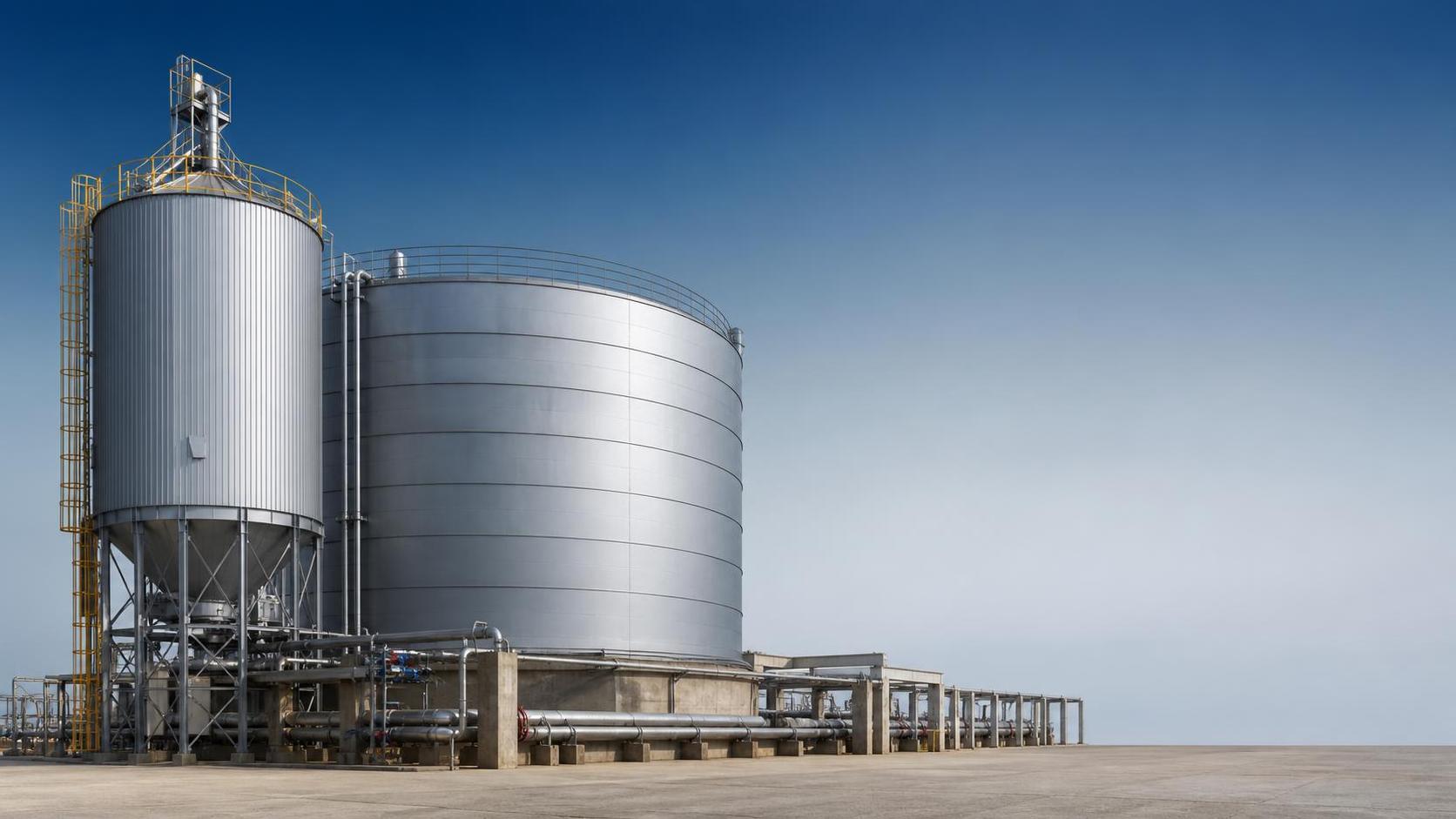
Bulk Material Storage Silos vs. Tanks: Choosing the Right Layout for Your Site
Choosing between bulk material storage silos and tanks is rarely a simple equipment decision. For a project team, it is a site planning problem, an operating model decision, and a long-term cost issue all at once. The shape of the vessel affects truck circulation, foundation design, discharge efficiency, dust control, maintenance access, and even how easily the plant can expand later.
That is why the right answer is not “silo” or “tank” in the abstract. It depends on what you are storing, how the material behaves, and what the site can realistically support. In grain, building materials, power, and chemical projects, Shandong Guokai International Trade Co., Ltd. works with steel storage silo projects that have to fit these constraints from the start, not after civil work has already begun.
The real difference starts with the material
A tank is usually associated with liquids, slurries, or process media that can be pumped, contained under pressure, or managed through piping. A bulk material storage silo, by contrast, is designed around gravity flow, particulate behavior, and controlled discharge. That sounds obvious, but in practice the material details decide nearly everything: moisture sensitivity, particle size, angle of repose, tendency to bridge, segregation risk, and whether the material compacts over time.
For example, a free-flowing grain product behaves very differently from cement, fly ash, or some chemical powders. A layout that works well for one may create dead zones, unstable discharge, or cleaning problems for another. If the stored material is sensitive to contamination or needs strict batch separation, the internal arrangement matters as much as the vessel type. In these cases, the question is not just “can we store it?” but “can we discharge it reliably without slowing the plant down?”
Why site layout matters as much as capacity
Many project managers focus first on tonnage, then on footprint. That order often causes trouble. The same storage volume can be arranged in very different ways: one larger structure, several smaller units, or a mixed layout with conveyors, elevators, and transfer points. The best option depends on whether the site has wide open ground, a narrow plot, limited truck access, or future construction phasing.
A tall, compact silo arrangement can save land, but it may increase structural demands and require more careful lifting, foundation, and wind-load checks. A lower-profile tank or horizontal arrangement may look easier to build, yet it can consume more space and complicate material reclaim. On constrained sites, even the turning radius for vehicles or the location of fire lanes can determine whether a concept is practical. This is where layout planning becomes an engineering task rather than a procurement task.
If the project will expand in phases, it is worth reserving corridors, discharge points, and utility space early. In many industrial plants, the first layout that fits the current budget is not the one that fits the second phase. That is why some teams prefer modular steel silo arrangements, including mid-scale systems such as 800-1500 Tons Silos, when they need a balance between footprint, capacity, and future flexibility.
Comparing the decision points that actually affect operations
Project teams usually compare silos and tanks through five practical lenses: storage behavior, civil complexity, discharge method, maintenance access, and expansion potential. These are the questions that usually expose the right answer.
Storage behavior. Tanks are better aligned with fluids and pumpable materials. Bulk material storage silos are better aligned with dry solids and granular products that need gravity-based discharge. If the product can absorb moisture, compact, or cake, the discharge design deserves special attention.
Civil complexity. Large vertical structures often demand more from foundations, anchoring, and geotechnical review. Soil bearing capacity, settlement risk, and seismic or wind conditions can change the layout quickly. A layout that reduces land use may still be expensive if the ground requires reinforcement or deep foundations.
Discharge method. For solids, the discharge cone, outlet sizing, and flow aids matter more than many early-stage drawings suggest. Poor discharge planning can create residual buildup, manual intervention, or unplanned shutdowns. For tanks, pumping, venting, and liquid level control become the main operating concerns.
Maintenance access. Access ladders, manways, inspection space, cleaning routes, and replacement access for valves or conveying equipment should be defined before the layout is frozen. A technically sound design can still become operationally awkward if equipment is placed too close together.
Expansion potential. Some sites only need one structure today. Others know they will add receiving, blending, or dispatch capacity later. In those cases, a layout with spare room for conveyor lines, future bins, or an extra silo row can reduce the cost of later retrofits.
Where silo layout usually wins
A silo-based layout often makes sense when land is limited, vertical storage is acceptable, and material handling needs to stay efficient. This is common in grain terminals, cement plants, mineral handling facilities, and some chemical powder applications. The main advantage is compact storage with direct gravity discharge and relatively clean material transfer when the system is designed properly.
But “wins” does not mean “automatic.” A silo layout only works well when the discharge system, dust control, and structural design are aligned with the material. If those are ignored, the site may save footprint but lose time in maintenance or reclaim. That trade-off is often more expensive than the land it saved.
This is also why steel silo projects are usually customized rather than copied from a catalog. Different industries ask for different loading methods, insulation needs, corrosion protection levels, and access arrangements. A design that suits a grain project may need meaningful changes before it can serve a power plant or a chemical line.
Where tanks may be the better layout choice
Tanks become the more practical choice when the stored medium is liquid or when process integration depends on pumping, heating, mixing, or closed containment. On some sites, tanks also simplify hygiene or vapor-control requirements. The layout can be easier to isolate from dust-sensitive areas and may fit better with pipe racks and process skids than a silo system would.
Still, a tank-oriented layout should not be chosen just because it feels familiar. If the material is solid or semi-solid, converting it into a tank flow model can add complexity without solving the real handling problem. The wrong layout usually shows up later as extra transfer equipment, more downtime, or a growing list of exceptions in operating procedures.
A practical way to evaluate the site before you commit
Before finalizing the layout, teams should test the design against a few project questions. Can the material be discharged without manual cleaning? Is the site soil suitable for the load path? Will trucks, conveyors, and maintenance access conflict? Is the storage demand fixed, or likely to grow? Does the operating team need batch separation, traceability, or contamination control?
It also helps to review the project in layers instead of as a single drawing. Start with the stored material, then the handling route, then the structure, then the civil footprint, and finally the maintenance plan. If one layer is weak, the whole layout usually suffers. That is why the best results often come from early coordination between process, civil, and equipment teams rather than from late-stage layout fixes.
For project managers, the key is to define what “good” means before comparing options. Is it smallest footprint, lowest operating touch, fastest installation, or easiest expansion? You rarely get all four at once. A clear priority list makes the choice more defensible and reduces redesign later.
A decision that should be built around the site, not the brochure
Bulk material storage silos and tanks are both useful, but they solve different problems. The right layout comes from matching the material to the handling method, then matching the structure to the site constraints. When those two pieces align, the project usually moves more smoothly through design, civil work, and commissioning.
For teams working in grain, building materials, power, or chemicals, it is often worth treating the storage system as part of the production flow rather than a standalone asset. That approach helps avoid oversized structures, awkward discharge points, and later retrofit work. If the project scope is still open, confirm the material behavior, land envelope, utility routes, and expansion plan before locking the layout. That is usually where the right decision becomes visible.
Related Posts
- ▶ How a Dry Bulk Silo Handles Pneumatic Filling and Gravity Discharge
- ▶ What Is a Dry Bulk Silo, and When Does a Factory Need One?
- ▶ Can dry bulk storage silos be integrated into existing PLC-controlled batching systems?
- ▶ Do dry bulk silos designed for API 650 compliance meet ASME Section VIII requirements?
- ▶ Is almacénamiento de sólidos a granel en silos de acero inoxidable viable for small-scale agrochemical distributors?
- ▶ How do vibration-based level sensors perform in stainless steel silos with powder coating?
Online Message