





Fly Ash Silo or Flat Storage: Which Option Fits Your Operation
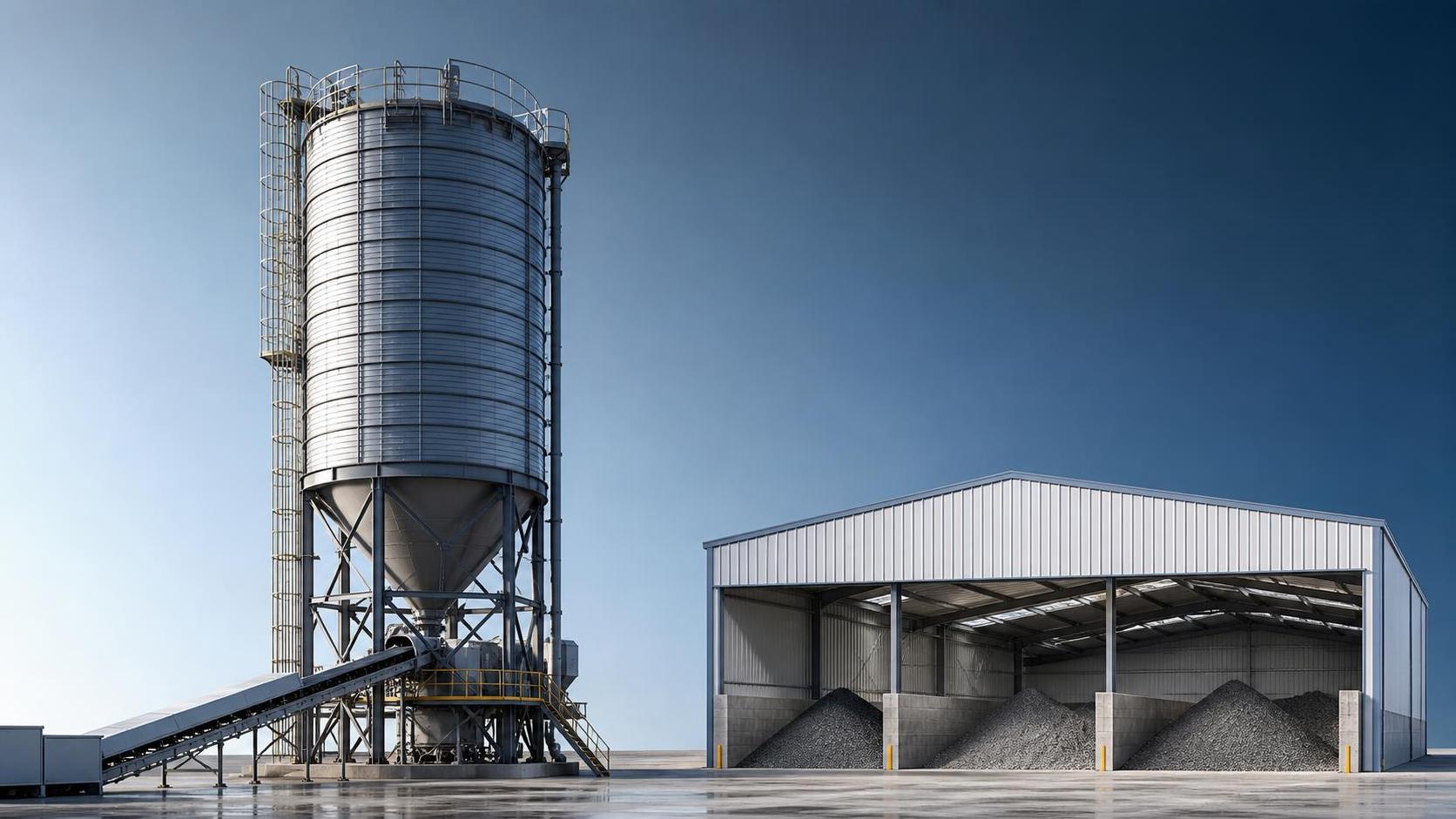
Choosing between a fly ash silo and flat storage is rarely just a layout decision. For project managers and engineering leaders, the real question is which option delivers reliable material flow, lower lifecycle cost, and fewer operational disruptions under actual site conditions.
In most industrial projects, a fly ash silo is the stronger choice when dust control, automation, vertical space use, and future process integration matter. Flat storage can still work in some cases, especially where material turnover is simple and building constraints already favor a warehouse-style setup.
This article looks at the decision from an operational perspective. Instead of comparing storage concepts in theory, it focuses on the issues that typically affect project delivery, plant efficiency, maintenance burden, and long-term return on investment.
What Is the Core Decision Behind a Fly Ash Silo vs. Flat Storage?
When people search for a fly ash silo solution, they usually are not looking for a generic definition. They are trying to decide which storage method best supports conveying, discharge stability, environmental compliance, and future production plans.
That means the comparison should go beyond initial construction cost. The better decision depends on how your operation receives fly ash, how often it is discharged, how consistent the material properties are, and how tightly the storage system must connect with downstream equipment.
For most engineered industrial sites, the storage choice affects project scheduling, foundation planning, transfer equipment design, and safety controls. A poor selection can create repeated handling problems long after the project is commissioned.
Why a Fly Ash Silo Often Fits Modern Industrial Operations Better
A fly ash silo is designed for enclosed, vertical, high-efficiency bulk storage. In operations where fly ash is pneumatically conveyed, weighed, blended, or metered into production, this format usually aligns better with both process control and site efficiency.
One of the biggest advantages is footprint reduction. A vertical silo stores more material on less land, which matters on congested industrial sites where road access, equipment spacing, and utility routing already compete for limited space.
Another benefit is cleaner handling. Because a fly ash silo is enclosed, it helps reduce dust escape during loading, storage, and discharge. This matters not only for environmental compliance, but also for housekeeping, worker exposure, and neighboring facility conditions.
Discharge control is also a major advantage. With properly designed cone geometry, aeration, level monitoring, and conveying systems, a silo can support predictable material movement, which is critical when production depends on steady feed rates.
For project managers, that predictability translates into fewer interruptions. It reduces the risk that storage becomes the weak point in an otherwise automated system, especially in power, cement, mineral, and building material applications.
When Flat Storage May Still Be a Practical Option
Flat storage can still make sense in specific situations. If the material is stored for short periods, reclaimed by loaders, and handled in batches rather than in continuous process flow, a flat building may be operationally acceptable.
It may also appear attractive when a site already has an available warehouse structure. Reusing an existing building can lower upfront civil investment and shorten part of the construction schedule, at least in the early comparison stage.
However, project leaders should look carefully at the full operating model. Flat storage often requires more internal traffic, more loader handling, more dust management effort, and less precise control over inventory rotation and discharge consistency.
These tradeoffs may be manageable for coarse or less sensitive bulk solids. For fly ash, which can be fine, dusty, and flow-sensitive, they often become more serious than expected during daily operation.
Which Option Performs Better on Cost Over the Full Project Lifecycle?
Many teams begin with capital expenditure, but that is only one part of the decision. A flat storage solution may look less expensive at first, especially if it avoids a tall structure or uses an existing enclosure.
But operating costs can shift the picture. If flat storage requires repeated loader use, more manpower, more cleanup, and more transfer steps, the yearly cost of handling can rise faster than projected.
A fly ash silo usually requires more specialized engineering at the beginning. Structural design, discharge systems, dust collection, level controls, and pneumatic interfaces all add scope. Yet those investments often reduce recurring labor and handling inefficiency.
For operations with regular material throughput, the lifecycle case often favors the silo. Lower spillage, lower contamination risk, less mobile equipment dependence, and easier integration into automated processes can offset the higher initial spend.
The right cost comparison should include civil work, steel structure, conveying equipment, dust collection, instrumentation, loading and unloading labor, maintenance, cleaning frequency, and the cost of downtime caused by poor material flow.
How Site Conditions Usually Influence the Best Choice
Site constraints often decide the issue faster than theoretical storage preference. A project with limited land but enough vertical clearance will usually benefit from a fly ash silo because vertical storage preserves operational space around the installation.
In contrast, a site with strict height restrictions may find flat storage easier to permit. Nearby transmission lines, zoning conditions, or visual impact requirements can all affect whether a tall silo structure is practical.
Foundation conditions also matter. Silo projects concentrate loads vertically, so geotechnical review is essential. Weak soil does not rule out a silo, but it may increase foundation complexity and influence overall budget.
Material flow routing is another key factor. If the fly ash must move directly into batching, mixing, or dosing equipment, a silo often creates a cleaner and shorter process path than a flat storage system with multiple reclaim stages.
What Operational Risks Should Project Managers Evaluate Early?
The biggest mistake is treating storage as passive infrastructure. Fly ash behavior can change with moisture, fineness, compaction, and residence time. If discharge design is poor, arching, ratholing, or inconsistent flow can disrupt the whole process chain.
That is why fly ash silo design should include careful review of hopper angle, aeration, flow aids, level measurement, and outlet sizing. The structure alone is not the solution; the discharge system is equally important.
Flat storage introduces a different set of risks. Material segregation, moisture pickup, contamination from repeated loading activity, and variable reclaim rates can reduce process stability. These risks often increase where housekeeping standards are difficult to maintain.
Safety is another concern. Enclosed storage and controlled transfer systems generally reduce airborne dust exposure compared with repeated open handling. For facilities under tighter environmental and occupational standards, this difference is operationally important.
How Expansion Plans Affect the Storage Decision
Project managers rarely build only for current demand. If output may grow, or if additional production lines are expected later, the storage system should support that expansion without forcing a complete redesign of the material handling layout.
A fly ash silo is often better suited to phased growth. Additional silos can be added as parallel units, allowing capacity expansion while preserving a familiar loading and discharge logic across the site.
Flat storage can expand too, but the expansion path may be less efficient. More floor area, more internal traffic movement, and more reclaim coordination can gradually create congestion rather than a scalable storage network.
Companies planning broader dry bulk storage programs often look at related systems such as Mineral Powder Silos because similar design thinking applies across fine powder handling, enclosure, and controlled discharge requirements.
What Selection Criteria Matter Most for Engineering Leaders?
If the goal is a practical decision, five criteria usually matter most: required capacity, available footprint, discharge consistency, environmental control, and future automation needs. These factors have more decision value than generic pros and cons lists.
Capacity matters because high-volume operations gain more from vertical efficiency. Footprint matters because storage must coexist with roads, utilities, and process equipment. Discharge consistency matters because production cannot run smoothly on unstable feed behavior.
Environmental control matters because dust problems create compliance and maintenance cost. Automation needs matter because the more integrated the production line becomes, the less suitable repeated manual reclaim methods usually are.
A strong fly ash silo project starts by ranking those criteria rather than debating storage formats in isolation. Once priorities are clear, the technically suitable solution usually becomes much easier to justify internally.
A Simple Decision Framework for Fly Ash Silo Selection
If your operation needs enclosed storage, precise discharge, low dust emissions, compact land use, and future automation, a fly ash silo is typically the better investment. This is especially true in power, cement, and building material applications.
If your site already has suitable enclosed floor space, turnover is straightforward, material handling is less sensitive, and automation requirements are limited, flat storage may be acceptable as a lower-complexity alternative.
Still, many teams underestimate the cost of repeated material movement and overestimate the convenience of warehouse-style storage for fine powders. Fly ash is not always forgiving, and storage performance depends heavily on how the material must be recovered and used.
For that reason, engineering leaders should evaluate storage as part of the complete bulk material handling system. That includes receiving method, transfer path, metering requirements, cleaning burden, maintenance access, and long-term expansion strategy.
Final Thoughts: Which Option Fits Most Operations Better?
For most industrial projects with ongoing throughput and process integration needs, a fly ash silo is the stronger operational choice. It supports better dust control, more efficient land use, cleaner automation, and more predictable discharge over time.
Flat storage still has a place, but usually in narrower situations where handling simplicity, existing building assets, or height constraints outweigh the benefits of vertical powder storage. It should be selected based on real operating logic, not only initial budget appearance.
The best decision comes from matching storage format to material behavior, site conditions, and production goals. When project teams evaluate those factors carefully, the right fly ash silo strategy becomes a long-term asset rather than just another line item in construction scope.
For organizations comparing different fine powder storage approaches, solutions such as Mineral Powder Silos can also provide a useful reference point when planning broader bulk storage systems across multiple industrial applications.
Related Posts
- ▶ How a Dry Bulk Silo Handles Pneumatic Filling and Gravity Discharge
- ▶ What Is a Dry Bulk Silo, and When Does a Factory Need One?
- ▶ Can dry bulk storage silos be integrated into existing PLC-controlled batching systems?
- ▶ Do dry bulk silos designed for API 650 compliance meet ASME Section VIII requirements?
- ▶ Is almacénamiento de sólidos a granel en silos de acero inoxidable viable for small-scale agrochemical distributors?
- ▶ How do vibration-based level sensors perform in stainless steel silos with powder coating?
Online Message