





Fly Ash Silo Pricing: What Changes the Final Quote Most
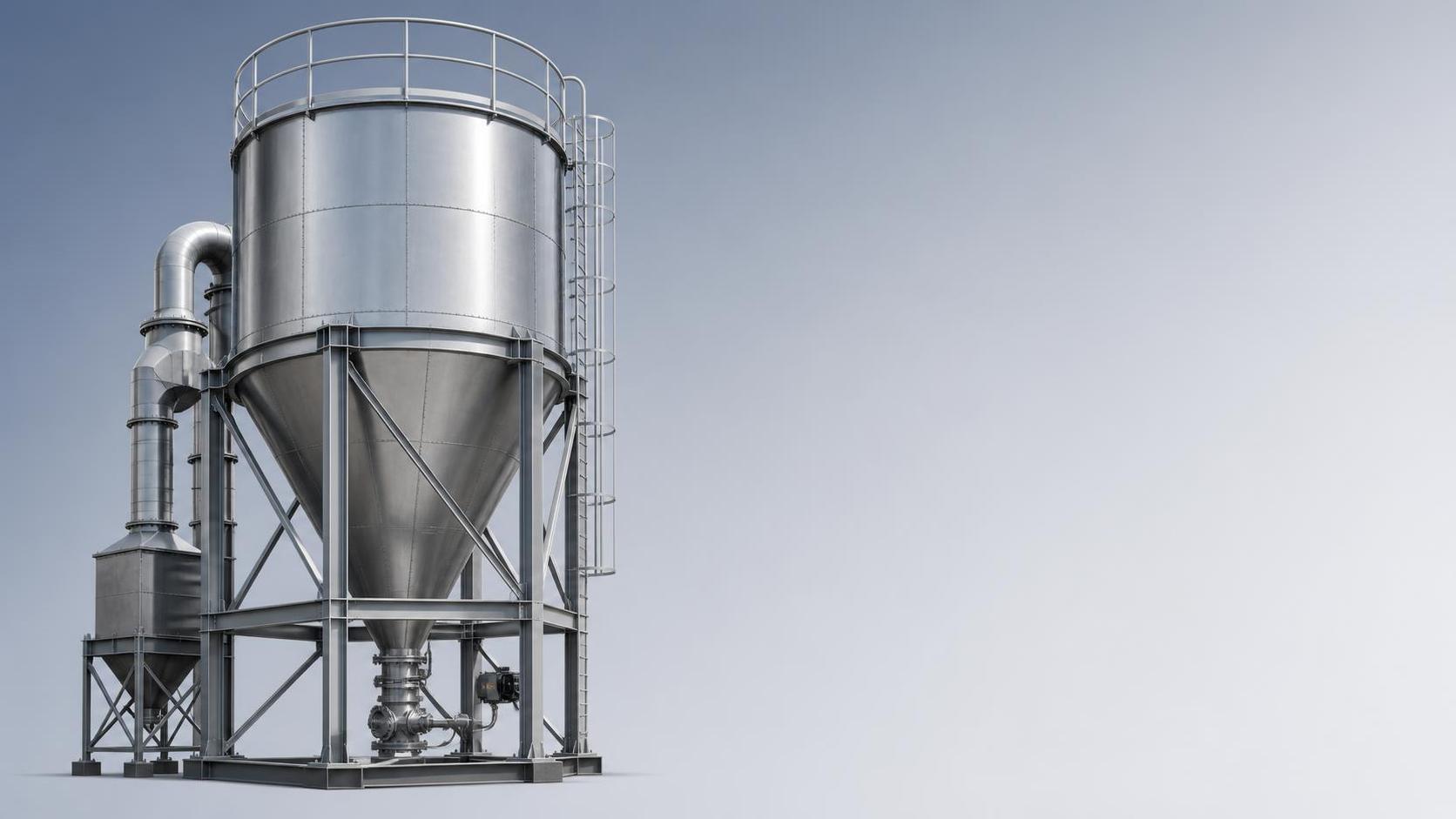
Fly ash silo pricing changes quickly once the quotation moves beyond nominal storage volume. Two silos that appear similar on a one-line inquiry can end up far apart in cost because the quote is shaped by material behavior, structural loads, discharge reliability, environmental control, and site work. A small difference in specification, such as whether the ash must remain free-flowing during humid weather or whether the discharge point must feed a pneumatic conveying line, can alter the steel weight, accessory package, fabrication hours, and installation method.
Capacity is usually the first visible cost driver, but it should be read together with bulk density, required live capacity, and filling frequency. A fly ash silo sized only by geometric volume may be misleading because ash properties vary with source and particle fineness. If the stored material has a tendency to bridge, cake, or compact, usable capacity may be lower than theoretical capacity, which can force changes in cone angle, outlet size, aeration arrangement, or wall reinforcement. Those changes affect the final quote more than the nominal cubic meters alone.
Material characteristics often reshape the entire design
Fly ash is not handled like every dry powder. Its flowability can change with moisture pickup, fineness, carbon content, and storage duration. A quote for a standard powder silo may look attractive at first, yet if the ash is prone to arching or rat-holing, additional design measures become necessary. These may include steeper hopper geometry, fluidization pads, air slides, vibrators, pressure-rated connections, inspection ports, or enlarged discharge transitions. Each measure adds fabrication detail, welding time, accessories, and commissioning work.
That is one reason some projects compare a fly ash silo with related powder-storage equipment such as Mineral Powder Silos. The broad structural concept may overlap, but the discharge system and dust-control details can differ once the stored material demands tighter flow management or cleaner transfer.
When material data is incomplete, fabricators may price conservatively to protect against flow problems discovered later. If no reliable information is given on bulk density, moisture range, air conveying pressure, or expected discharge rate, the quote may include a wider safety margin in steel thickness, hopper design, or accessory selection.
Steel grade and plate thickness are rarely interchangeable line items
Many price discussions focus on “how many tons of steel” are in the silo, but that only tells part of the story. Plate thickness changes with diameter, height, wind exposure, seismic assumptions where applicable, roof loading, and whether the vessel must tolerate pressure fluctuations from pneumatic filling. A fly ash silo handling dense filling cycles through blower systems may require stronger shell sections, stiffer roof framing, and more robust vent arrangements than a gravity-filled storage bin.
Steel grade also affects the quote. If the application calls for better corrosion resistance, improved weldability, or performance under specific site conditions, the material selection may shift accordingly. In some environments, external protective coatings are enough; in others, internal wear protection, upgraded paint systems, or localized liners become necessary around inlet impact zones, cone transitions, and discharge outlets. Each upgrade is tied to service conditions rather than appearance, and each one moves the total cost.
Fabrication quality matters here as well. Rolled plate sections with full-penetration or controlled weld details may cost more than simpler assemblies, especially when roundness tolerance, flange alignment, and air-tightness are important to the operating process. A quote that omits these details may look lower, but it can create later problems in fitting, leakage, or uneven load transfer.
Fabrication method changes both factory cost and field cost
The difference between bolted and welded construction is not just a manufacturing preference. It affects transport volume, installation duration, site equipment requirements, corrosion treatment at joints, and long-term maintenance access. A shop-welded fly ash silo can reduce field assembly complexity, but it may create transport constraints if the vessel diameter or section length exceeds normal hauling limits. That can introduce escort requirements, route restrictions, or sectional lifting plans.
Bolted systems can lower transport difficulty for some projects and may speed assembly in remote areas, but they also require precision in panel fabrication, gasket selection where sealing is needed, and careful control of bolt tightening. If dust containment or pressure behavior is part of the operating requirement, joint design becomes a more serious engineering item and may offset any apparent savings from modularization.
Some quotations also differ because one includes ladders, platforms, handrails, roof access, level indicators, and manholes as standard, while another treats them as options. This is where line-by-line comparison matters more than headline price.
Dust collection and venting can alter the quote more than expected
Fly ash handling usually requires better dust control than basic bulk solid storage. During pneumatic filling, displaced air must be vented without allowing excessive dust escape or pressure buildup. The final quote often changes once the vent filter size, cleaning method, emissions expectation, and overpressure protection are defined. A small top-mounted filter for light-duty service is a different item from a larger pulse-jet filtration unit designed around frequent filling cycles.
Pressure relief devices, vent ducts, explosion-related precautions where site rules require them, and differential-pressure monitoring may all appear once the operating conditions are clarified. Not every project needs the same package, but omitting these details in the inquiry usually leads to either a vague quotation or a low initial number that grows during technical alignment.
Even the filling line arrangement matters. Tangential inlets, wear-resistant elbows, inlet boxes, and internal impact protection can be needed where conveying velocity is high or erosion risk is known. These are not cosmetic additions. They protect service life and reduce maintenance interruption.
Discharge design is one of the biggest quotation variables
A silo that stores ash is not necessarily a silo that discharges ash reliably. The cheapest hopper geometry on paper can become the most expensive choice in operation if material hangs up and requires repeated intervention. Final cost depends heavily on whether the outlet is expected to feed a screw conveyor, rotary valve, loading spout, bulk tanker station, mixer line, or pneumatic transfer system.
Several details typically move the quotation:
- Outlet diameter. A larger outlet may improve flow but increases hopper opening size, reinforcement demand, and valve cost.
- Air fluidization equipment. Pads, nozzles, manifolds, and control valves add cost, yet they may be necessary where powder compaction is likely.
- Isolation and metering components. Slide gates, rotary feeders, double flap valves, and weighing arrangements have very different duty limits and maintenance characteristics.
- Wear protection around the transition cone and discharge throat, especially where repeated high-velocity movement occurs.
If continuous dosing accuracy is part of the process, the discharge arrangement can become far more complex than simple bulk unloading. That complexity usually affects not just equipment price, but support structure, control interfaces, and startup tuning.
Installation conditions often explain the gap between factory price and delivered project cost
Some quotations cover only ex-works fabrication, while others include transport, field erection, crane support assumptions, welding consumables, insulation if needed, and commissioning attendance. This is one of the most common reasons two offers appear inconsistent. A lower manufacturing figure may still lead to a higher total project spend once site assembly and lifting logistics are added back in.
Foundation interface is another point where price moves quickly. If the support structure requires anchor bolt templates, embedded plates, skirt base modifications, or a heavier leg frame due to poor soil conditions, the steel package changes. Where the site is congested, erection sequencing may become slower and require smaller sectional lifts, which can increase labor hours.
Height restrictions, access roads, and weather exposure also matter. A tall fly ash silo erected in an open, windy area may require more temporary stabilization during installation than a smaller unit in a sheltered industrial yard. If night lifting, shutdown windows, or confined work zones apply, installation cost can rise even when the silo design itself remains unchanged.
Instrumentation and controls are easy to underestimate
Basic inquiries often mention only storage and discharge, but the quote becomes more realistic once instrumentation is defined. High-level and low-level indicators, continuous level measurement, pressure monitoring, blockage alarms, load cells, temperature observation where needed, and local control panels are not interchangeable accessories. Their selection depends on the process and on how the site already manages other equipment.
A quotation that includes simple point-level switches is materially different from one that includes weighing support, interlocks with conveying blowers, dust collector feedback, and remote alarm signals. Cable routing, junction boxes, and hazardous-area requirements where applicable can also add to both supply and installation cost. If the specification is silent, suppliers may either exclude these items or make assumptions that later create variation during clarification.
Surface treatment and service environment affect long-term cost, not just purchase price
Outdoor installation near coastal air, chemical vapors, or frequent wet-dry cycling changes coating requirements. Internal condensation risk is another issue. If warm pneumatic conveying air enters a cooler silo, condensation may develop under certain operating conditions, which can influence internal buildup and corrosion potential. In such cases, insulation, upgraded paint systems, roof design adjustments, or dehumidification-related considerations may affect the quotation.
For plants where housekeeping standards are strict, sealing details around manways, nozzles, and maintenance openings may need closer attention. The result may be more fabrication effort and more carefully specified gaskets or hardware. These details are usually low-visibility items in the quotation, but they can have a direct effect on operating cleanliness and maintenance frequency.
Transport packaging and sectionalization can be a hidden cost center
Large-diameter silos are often split into transportable sections, and that sectionalization is not free. More shop flanges, more field joints, extra bracing for shipment, and additional alignment work can all appear simply because transport constraints require them. The route from factory to site sometimes determines whether a design stays economical or becomes labor-heavy in the field.
This is also why two technically similar solutions may carry different logistics assumptions. One offer may include compact packaging and longer field assembly, while another may favor more complete factory fabrication with reduced site work. Neither approach is automatically better. The lower total cost depends on freight conditions, crane access, and local labor availability.
Quotes diverge when the specification leaves room for interpretation
One supplier may assume intermittent filling, another may assume frequent pneumatic loading. One may include standard access equipment, another may leave it out. One may price for carbon steel with a conventional exterior paint system, another may account for enhanced protection due to site exposure. These differences do not always appear clearly in the headline description “fly ash silo.”
A useful comparison usually requires alignment on a short set of operating facts:
- actual storage duty rather than nominal vessel size;
- material density range and moisture behavior if known;
- required unloading rate and downstream equipment type;
- filling method, conveying pressure, and expected cycle frequency;
- site wind, layout limits, and whether erection is included;
- instrumentation, dust control, and access-platform scope.
Once these items are defined, the spread between quotations often becomes easier to explain. Without them, pricing may reflect assumptions more than engineering alignment.
In some projects, a reference review of adjacent powder-storage solutions such as Mineral Powder Silos can help clarify which features belong to general bulk solids storage and which are specific to fly ash behavior. That distinction matters because the final quote usually rises where flow assurance, dust containment, and pressure handling become stricter.
The most expensive fly ash silo is not always the one with the highest initial price. Rework in foundations, added field modifications, undersized venting, chronic discharge issues, or accelerated wear at the inlet can all shift cost after purchase. The most useful quotation is the one that makes its assumptions visible: material basis, structural basis, included accessories, installation boundary, and expected operating conditions. Once those are explicit, price differences stop looking arbitrary and start showing where the real engineering load sits.
Related Posts
- ▶ How a Dry Bulk Silo Handles Pneumatic Filling and Gravity Discharge
- ▶ What Is a Dry Bulk Silo, and When Does a Factory Need One?
- ▶ Can dry bulk storage silos be integrated into existing PLC-controlled batching systems?
- ▶ Do dry bulk silos designed for API 650 compliance meet ASME Section VIII requirements?
- ▶ Is almacénamiento de sólidos a granel en silos de acero inoxidable viable for small-scale agrochemical distributors?
- ▶ How do vibration-based level sensors perform in stainless steel silos with powder coating?
Online Message