





Fly Ash Silo Retrofit Options for Older Plants and Limited Space
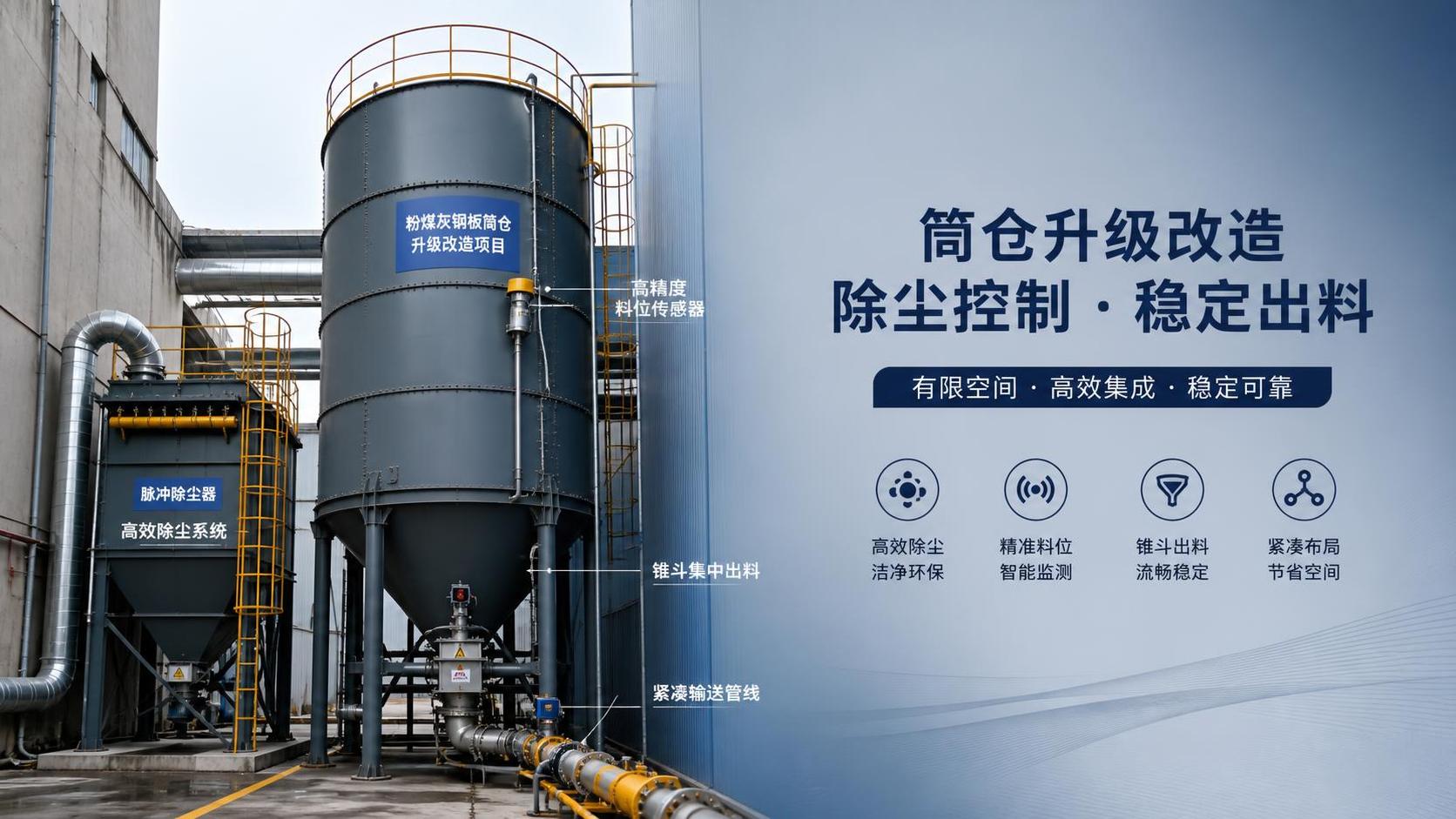
When an older plant needs a fly ash silo retrofit, the real question is usually not “Should we rebuild everything?” It is “How do we improve safety, dust control, capacity, and uptime without taking over half the yard?” In crowded facilities, the best answer is often a targeted retrofit, not a full replacement. The right fly ash silo upgrade can extend service life, reduce unplanned downtime, and make day-to-day operation easier to manage.
What usually makes a retrofit necessary
Aging silos fail in familiar ways: worn aeration parts, unreliable valves, leaking dust collectors, outdated level indicators, and access points that were never designed for modern maintenance standards. In older plants, the problem is often compounded by tight spacing. There may not be room for a new foundation, a crane path, or a long shutdown. That is why retrofit planning starts with constraints, not with equipment brochures.
For decision-makers, the first step is to separate what is actually broken from what is merely inconvenient. A silo that still has sound structural steel may only need upgraded filtration, discharge, instrumentation, and access systems. If the shell, roof, or base is compromised, the conversation changes quickly. In other words, a retrofit is sensible when the structure is still serviceable; it is not a shortcut for ignoring corrosion or fatigue.
Fly ash silo retrofit options that work in limited space
The most practical upgrades are the ones that solve a specific operational pain without creating a second problem. A common example is dust control. If the silo vents are undersized or the collector is aging, product loss and housekeeping issues usually show up first. Replacing or relocating the dust collection system can make a visible difference without changing the silo footprint.
Another common upgrade is the discharge system. Older fly ash silo setups often rely on flow aids or gates that worked well when material quality was consistent, but become unreliable as ash properties vary. Reworking the outlet cone, improving aeration, or changing the valve arrangement can help material move more predictably. For some plants, a smaller interlocked feeding arrangement is easier to fit into a confined layout; in those cases, solutions such as Small Feed Interlock Silos may be worth reviewing as part of a broader material-handling plan, especially where space and process control both matter.
Instrumentation upgrades are often underrated. Many older silos rely on level devices that are too slow, too fragile, or simply too difficult to trust. Modern level sensors, pressure monitoring, and basic interlocks can reduce overfilling risk and improve operator confidence. This is not glamorous work, but it is usually the difference between a silo that is “there” and a silo that can be managed cleanly.
Access and maintenance improvements deserve the same attention. If technicians need awkward lifts, narrow platforms, or temporary scaffolding just to inspect a filter or valve, the system is costing money every time it is touched. Better manways, ladders, platforms, and maintenance clearances do not add production capacity directly, but they lower the hidden cost of keeping the silo available.
How to choose between partial retrofit and replacement
There is no universal rule, but there is a practical test. If the shell, foundation, and main support members are still structurally sound, a retrofit is usually the first option to evaluate. If corrosion has reached multiple load-bearing areas, or the foundation has settlement issues, a retrofit can become a patchwork solution with too much risk and too little life extension.
Decision-makers should also look at operating history. If the plant has repeated dust leaks, bridging, false level readings, and frequent stoppages, the problem may not be one component. It may be a layout that no longer fits the way the plant runs today. In that case, a retrofit still may be the right answer, but it needs to be designed as a system change rather than a component swap.
A useful rule of thumb: retrofit when you can clearly name the bottleneck. Replace when the silo itself has become the bottleneck.
What older plants often miss in the first round of planning
The biggest mistake is treating space as a minor constraint. In a congested plant, every access lane, platform edge, cable route, and maintenance zone matters. A design that looks fine on paper can become difficult to install once civil clearances, overhead obstructions, and operating equipment are accounted for.
Another common oversight is shutdown sequencing. A retrofit that saves money on equipment but requires a long production stoppage can be more expensive in practice. Good planning usually means breaking the project into phases, prefabricating what can be assembled off-site, and minimizing tie-in work during the critical outage window.
There is also a tendency to over-specify. Some teams assume that every retrofit needs the newest sensor suite, the largest collector, and the most complex control package. That is not always smart. If the plant runs a relatively stable ash stream and the main issue is access or wear, simpler upgrades may deliver better value and fewer maintenance headaches.
What a decision-maker should ask before approving the project
Before moving forward, ask four questions. First, what problem are we really solving: dust loss, discharge instability, safety, capacity, or maintenance burden? Second, what part of the current silo is still worth keeping? Third, how much space do we actually have for installation, service, and future access? Fourth, what is the cost of downtime if the retrofit runs longer than planned?
Those questions sound basic, but they force the project away from vague improvement language and toward operational reality. That is where good decisions are made. A retrofit should make the silo easier to run, not just newer to look at.
In practice, many plants benefit from working with a supplier that understands storage systems across multiple industries, not just one narrow application. Shandong Guokai International Trade Co., Ltd. focuses on steel silo development, manufacturing, sales, and project construction for sectors such as grain, building materials, electric power, and chemicals. That broader experience matters because fly ash projects often borrow lessons from other bulk-material environments, especially when space is tight and reliability is non-negotiable.
What good retrofit scope usually includes
A credible retrofit scope is usually specific. It identifies the items that will be replaced, the parts that will remain, the access needed for installation, and the operational condition expected after commissioning. It also defines what is out of scope. That sounds administrative, but it is the only way to keep the project from drifting into an expensive redesign.
For older fly ash silo systems, the most useful scope often includes discharge reliability, dust containment, level control, structural checks, and safe access. If those five areas are covered, the silo usually becomes much easier to operate. If only one is addressed, the plant may still keep fighting the same problems from a different angle.
The best retrofit option is rarely the most ambitious one. It is the one that fits the plant, respects the available space, and solves the issue the operators actually feel every day. That is the standard worth using when evaluating any fly ash silo upgrade.
FAQ
Can an old fly ash silo be retrofitted without full shutdown?
Sometimes, yes. It depends on the work scope and how much of the system can be prefabricated or isolated. Structural work and major tie-ins usually need a planned outage.
What is the first thing to inspect before retrofitting?
Start with the shell, roof, foundation, discharge cone, and dust collection system. If those are weak, the retrofit scope changes quickly.
Is a retrofit always cheaper than replacement?
Not always. If corrosion or settlement is widespread, a retrofit can become a series of expensive fixes. Compare the full life-cycle cost, not just the initial quote.
What matters most in a crowded plant?
Installation access, maintenance access, and shutdown duration. In tight spaces, those three factors often decide whether a project is practical.
How do I know if a fly ash silo upgrade is worth it?
If the current silo is structurally usable and the main pain points are operational, a retrofit usually deserves serious review. If the structure itself is the problem, replacement may be the more honest option.
Related Posts
- ▶ How a Dry Bulk Silo Handles Pneumatic Filling and Gravity Discharge
- ▶ What Is a Dry Bulk Silo, and When Does a Factory Need One?
- ▶ Can dry bulk storage silos be integrated into existing PLC-controlled batching systems?
- ▶ Do dry bulk silos designed for API 650 compliance meet ASME Section VIII requirements?
- ▶ Is almacénamiento de sólidos a granel en silos de acero inoxidable viable for small-scale agrochemical distributors?
- ▶ How do vibration-based level sensors perform in stainless steel silos with powder coating?
Online Message