





Fly Ash Silo Market Trends: Automation, Monitoring, and Storage Demand
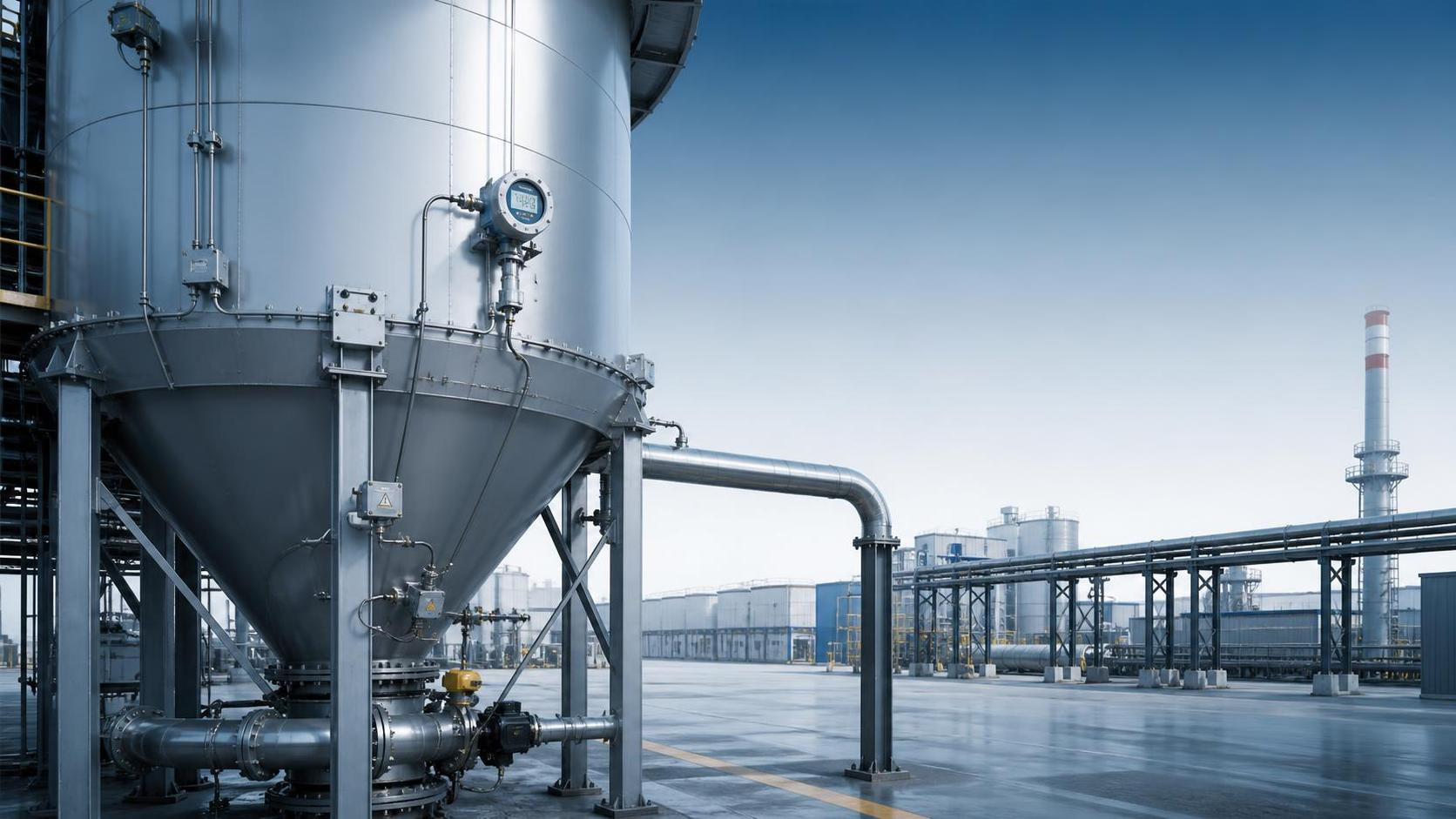
As industrial storage needs evolve, the fly ash silo market is being reshaped by automation, real-time monitoring, and rising demand from power, construction, and material processing sectors. For distributors, agents, and channel partners, understanding these trends is essential to identifying reliable solutions, meeting customer expectations, and expanding market opportunities in a competitive global environment.
What matters now is not simply whether demand for a fly ash silo exists. In many regions, it does. The more important question is how that demand is changing, what end users are beginning to expect from storage systems, and which suppliers are positioned to support projects beyond basic steel fabrication.
For channel partners, this is no longer a straightforward equipment resale category. Storage projects are becoming more technical, more compliance-sensitive, and more integrated with plant operations. A silo may still look like a static asset from the outside, but in commercial terms it is increasingly being evaluated as part of a materials handling system, a dust-control strategy, a digital maintenance framework, and a plant uptime decision.
Why fly ash storage is becoming a more strategic category
Fly ash remains closely tied to coal-fired power generation, cement blending, concrete production, and broader mineral materials handling. In some markets, the long-term energy transition has created a simplistic assumption that fly ash-related infrastructure will inevitably decline. That view is too narrow for distributors trying to identify realistic market opportunities.
In practice, demand is influenced by several overlapping factors:
- continued operation or life extension of existing thermal power facilities in many developing markets;
- steady use of fly ash in cement and construction materials where supply chains remain established;
- growing attention to dry bulk storage efficiency, dust management, and environmental compliance;
- retrofit demand from plants seeking to replace aging silos with safer, more monitorable systems.
This means the market is shifting from pure new-build volume toward a more mixed structure that includes replacement, upgrading, customization, and integration. That shift tends to favor channel partners who understand project variables, not just unit pricing.
Automation is moving from “premium option” to procurement expectation
One of the clearest changes in the market is the rise of automation at the silo level. End users are no longer focused only on shell capacity, discharge rate, and structural strength. They increasingly want a storage solution that reduces manual intervention and operational uncertainty.
Automation in fly ash silo applications typically includes:
- automated level detection and inventory indication;
- pressure monitoring and alarm systems;
- integrated dust collection controls;
- discharge assistance systems for difficult-flow materials;
- PLC or plant control system connectivity;
- remote fault notification for valves, blowers, and feeding equipment.
For distributors, the commercial implication is significant. Customers are increasingly comparing suppliers on system intelligence, not only on vessel cost. A low-priced silo without practical instrumentation may still win in highly price-sensitive projects, but it often becomes less competitive where plants are under pressure to improve labor efficiency, traceability, and maintenance planning.
This also changes the sales conversation. Buyers may ask fewer questions about tonnage alone and more about whether the silo can support unattended operation, reduce overfilling risk, or provide reliable stock visibility. Channel partners that cannot respond at this system level may lose projects even when their pricing is acceptable.
Real-time monitoring is being driven by risk, not fashion
Monitoring has become one of the most important differentiators in industrial storage. This is not because customers want “smart equipment” as a trend label. It is because fly ash handling involves practical risks that are costly when discovered too late.
Common operational issues include:
- material bridging or poor discharge flow;
- moisture ingress affecting flowability;
- overpressure events related to pneumatic conveying;
- dust leakage and filter loading problems;
- inaccurate inventory estimates leading to process disruption;
- structural stress or corrosion developing unnoticed in older installations.
Real-time monitoring helps operators identify these problems earlier, but it also changes how projects are specified. More buyers now expect level sensors, pressure indicators, temperature observation, and remote data visibility to be part of the solution discussion from the beginning.
For channel partners, this creates two distinct opportunities. The first is in new installations where monitoring can be packaged as a value-added specification. The second is in installed-base upgrades, especially where older silos remain structurally usable but lack visibility and control. Retrofit demand is often underestimated because many industrial users prefer phased modernization over complete replacement.
The market is becoming more segmented by application quality requirements
Not all fly ash storage projects should be approached the same way. Distributors that treat the category as a uniform product market often run into margin pressure or post-installation disputes.
The real divide is increasingly application-specific:
- Power generation sites often prioritize dust control, pneumatic conveying compatibility, and continuous reliability.
- Cement and dry mortar producers may focus more on blending consistency, unloading efficiency, and process integration.
- Construction material processors can be highly cost-sensitive but still require stable material condition and simple maintenance.
- Bulk terminal or multi-material operators may need flexible designs that handle more than one powder material under changing operating conditions.
This segmentation affects more than engineering. It determines specification complexity, after-sales requirements, acceptable lead times, and the level of technical documentation needed to close a deal.
Some distributors have started broadening their conversation with customers by drawing comparisons with adjacent storage categories. For example, buyers that operate across agricultural and industrial segments may already be familiar with controlled-storage solutions such as Insulated Moisture-Proof Grain Silos. While grain and fly ash are entirely different materials with different handling and safety requirements, the broader purchasing logic is similar: storage assets are increasingly judged by environmental protection performance, monitoring capability, and lifecycle reliability rather than by metal volume alone.
Environmental compliance is quietly reshaping specification standards
In many markets, environmental pressure is not expressed through one single global rule but through a mix of local emission requirements, plant-level inspection practices, dust management expectations, and occupational safety controls. This matters because it changes what customers consider “acceptable” in silo procurement.
Issues that were once treated as secondary are now moving into core project discussions:
- dust collection efficiency;
- sealing performance at filling and discharge points;
- access arrangements for inspection and maintenance;
- protection against moisture intrusion;
- safe pressure-relief design and instrumentation;
- documentation quality for project approval and site acceptance.
Distributors should be cautious here. It is easy to overpromise compliance support without understanding which standards actually apply in the target market. Structural design codes, welding requirements, electrical classifications, and site safety obligations vary by country and project type. Where specific standards are requested, they should be confirmed against project documentation rather than assumed. If a requirement is unclear, the correct commercial response is to mark it as 【待核实】 and verify it before quotation finalization.
Capacity demand is rising, but not always in the way suppliers expect
There is visible demand in some regions for larger-capacity fly ash silo installations, especially where centralized storage can reduce transport frequency or support larger batching and blending operations. But channel partners should not assume that “bigger” automatically means “better” from the customer’s perspective.
Many end users are balancing several trade-offs:
- site footprint limitations;
- foundation and civil construction cost;
- pneumatic conveying distance and system pressure implications;
- material turnover rate and residence time concerns;
- maintenance access and shutdown planning.
In other words, storage demand is growing, but project optimization is becoming more nuanced. Some customers want larger monolithic silos. Others prefer multiple smaller silos to separate grades, improve scheduling flexibility, or reduce risk concentration. A distributor who only promotes capacity scale may miss opportunities where modularity and operational resilience are more important.
What buyers are starting to ask distributors before they ask about price
Inquiries in this market are often less direct than they appear. A customer may open with a capacity request, but the real decision will depend on whether the proposed system fits the plant’s operating logic.
Questions increasingly shaping procurement decisions include:
- Can the silo interface smoothly with existing pneumatic conveying lines?
- How will the system perform under local humidity and temperature conditions?
- What anti-blocking or flow-assistance measures are available?
- What monitoring data can be viewed remotely?
- How difficult will installation and commissioning be at site?
- What spares or maintenance support will be needed in the first two years?
For agents and distributors, this means technical pre-sales capability has become a commercial asset. The ability to qualify applications properly can protect margin, reduce mismatch risk, and improve conversion rates. It also strengthens long-term account value because customers in this segment often return for line expansion, replacement parts, or related storage projects once confidence is established.
Supplier evaluation is shifting from fabrication capacity to delivery reliability
Many buyers still care about whether a manufacturer can produce steel silo structures at scale, but that is no longer enough on its own. Channel partners are under pressure to assess suppliers more holistically.
Key evaluation points now include:
- engineering support during specification and drawing confirmation;
- ability to integrate accessories, control elements, and monitoring components;
- experience across industries with different powder handling characteristics;
- quality consistency in fabrication, corrosion protection, and assembly interfaces;
- project management discipline for export packaging, documentation, and delivery timing;
- responsiveness during installation support and after-sales troubleshooting.
This is where manufacturer profile matters. Companies with broader steel silo project experience across grain, building materials, power, and chemical sectors often have a practical advantage because they are used to adapting designs to different bulk material behaviors and site conditions. That cross-sector background can be commercially useful for channel partners navigating mixed project portfolios rather than single-industry demand.
The retrofit market may be more attractive than some new-build segments
New industrial construction draws the most attention, but retrofit business can be more accessible and sometimes more profitable for distributors. Many older fly ash silos remain in service despite incomplete monitoring, aging discharge systems, or weak sealing performance. Operators do not always need a full replacement; they may need targeted upgrades that solve specific operational bottlenecks.
Typical retrofit opportunities include:
- adding level and pressure monitoring;
- upgrading filter and venting arrangements;
- improving moisture protection and sealing details;
- replacing worn discharge components;
- reinforcing access and maintenance safety features.
Retrofit projects also fit the way many customers allocate capital. Instead of waiting for a large greenfield budget, they can approve incremental investments tied to safety, maintenance, or process efficiency. For channel partners, this often shortens sales cycles and opens the door to future replacement projects.
In adjacent storage sectors, similar upgrade logic can be seen when customers move from conventional vessels to more controlled-storage solutions such as Insulated Moisture-Proof Grain Silos. The lesson for the fly ash silo market is clear: once users recognize the operational cost of inadequate storage performance, they become more receptive to higher-value upgrades.
Risks distributors should not ignore
The market outlook is not uniformly positive, and channel partners should avoid treating every inquiry as strategic demand. Several risks deserve attention.
Energy transition exposure. In some countries, coal power contraction may reduce long-term fly ash generation. Demand there may shift toward maintenance and replacement rather than major expansion.
Project complexity hidden inside simple quotations. Customers sometimes request silo pricing without finalized process requirements. Quoting too early can lead to under-scoped projects, change-order disputes, or margin erosion.
Local compliance uncertainty. Imported equipment may face certification, electrical integration, or installation approval issues depending on jurisdiction. These points need verification before commitments are made.
After-sales gaps. Monitoring and automation add value, but they also raise expectations for troubleshooting support. A distributor selling “smart” systems without service readiness can damage reputation quickly.
Freight and site execution variables. Large steel structures remain vulnerable to transport cost volatility, packaging damage, and installation delays, especially in export-oriented projects.
Where the strongest channel opportunities are likely to emerge
Over the next few years, the most promising opportunities are likely to appear where three conditions overlap: active use of fly ash or similar powder materials, rising environmental and operational requirements, and a customer base willing to pay for lower-risk storage performance.
That does not always mean the largest markets by absolute volume. Sometimes the better opportunity is in mid-scale industrial regions where plants are modernizing, not necessarily expanding dramatically. In these environments, distributors can compete through application knowledge, retrofit planning, bundled monitoring solutions, and supplier coordination.
The strongest positioning for channel partners will likely come from a portfolio approach:
- basic silo offerings for price-sensitive projects;
- integrated monitored systems for industrial users focused on uptime and control;
- retrofit packages for existing silo fleets;
- documentation and technical support strong enough to reduce procurement uncertainty.
The fly ash silo market is not becoming simpler. It is becoming more selective. End users are putting more weight on automation, monitoring, environmental performance, and practical reliability under real operating conditions. For distributors and agents, that is good news only if they adjust their evaluation criteria accordingly. The opportunity is no longer just to supply storage volume. It is to participate in a more technical, more accountable, and ultimately more defensible part of the industrial materials handling market.
Related Posts
- ▶ How a Dry Bulk Silo Handles Pneumatic Filling and Gravity Discharge
- ▶ What Is a Dry Bulk Silo, and When Does a Factory Need One?
- ▶ Can dry bulk storage silos be integrated into existing PLC-controlled batching systems?
- ▶ Do dry bulk silos designed for API 650 compliance meet ASME Section VIII requirements?
- ▶ Is almacénamiento de sólidos a granel en silos de acero inoxidable viable for small-scale agrochemical distributors?
- ▶ How do vibration-based level sensors perform in stainless steel silos with powder coating?
Online Message