





Dry Bulk Storage Tanks vs Silos: Which Works Better for Your Material Process?
Start with the material, not the vessel
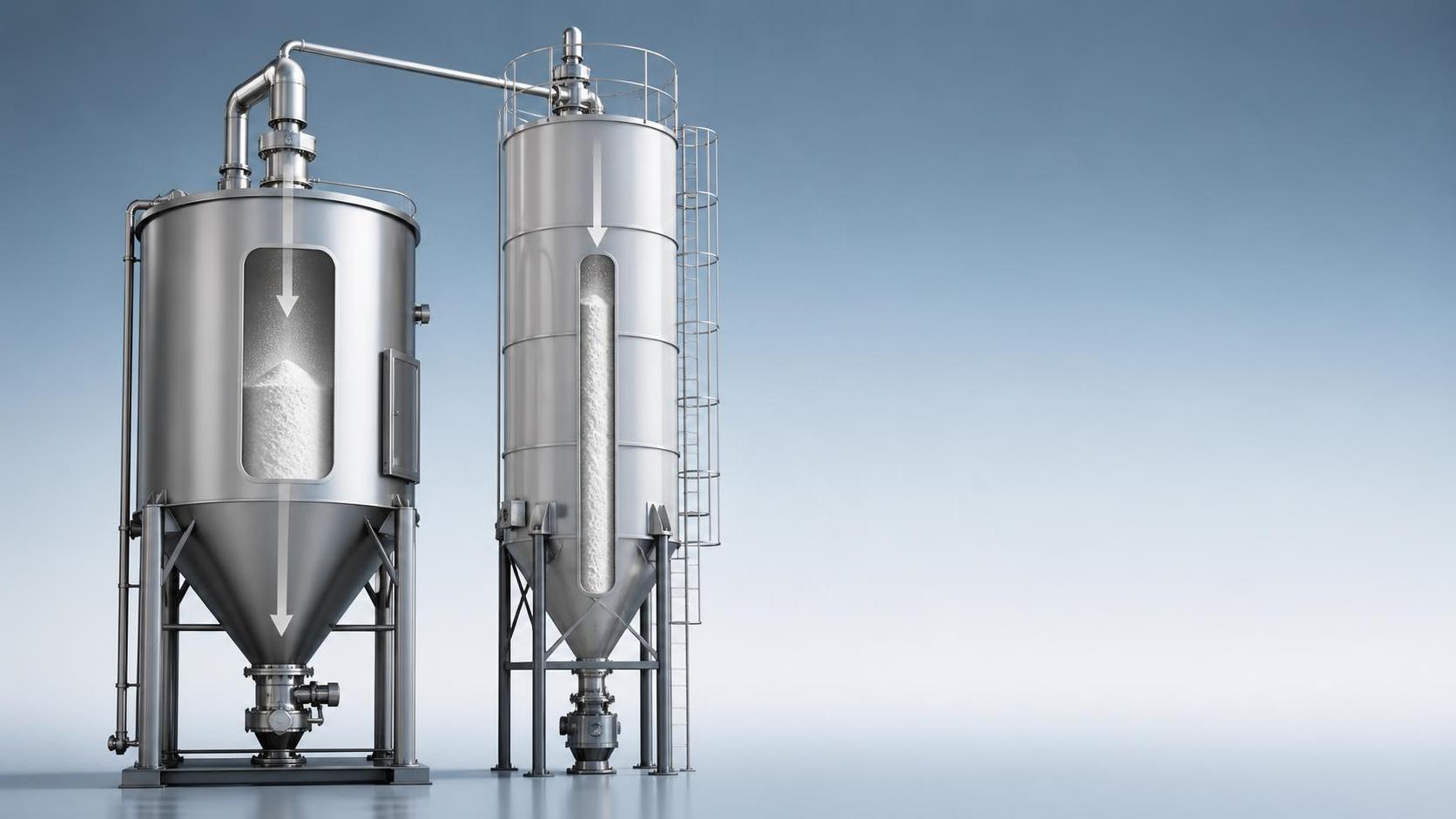
Choosing between dry bulk storage tanks and silos is usually not a branding question. It is a flow question. The wrong choice shows up later as bridging, slow discharge, dust control problems, wasted footprint, or a production line that keeps waiting on the store instead of feeding from it. For grain, building materials, power, and chemical operations, the right container has to fit the material behavior first and the site layout second.
If you are comparing options for a new project or a retrofit, start by writing down what the material actually does. Free-flowing pellets, fine powder, abrasive mineral, hygroscopic product, or mixed-size bulk load each behaves differently. A system that works well for one can become a maintenance burden for another. That is why dry bulk storage tanks are often judged against silos on discharge, hygiene, structural fit, and operating control rather than on appearance or headline capacity.
Check how the material moves before you check capacity
The first practical test is simple: ask whether the material wants to move by gravity, or whether it tends to hang up, compact, or cake. If discharge relies on operators poking, vibrating, or repeatedly restarting equipment, the storage concept is already fighting the product. Silos usually make more sense when controlled vertical discharge and steady feed are central to the process. Dry bulk storage tanks can also work well, but only when the geometry, outlet design, and material characteristics line up cleanly.
- Check particle size distribution, not just the product name.
- Look at moisture pickup risk during storage, transfer, and idle periods.
- Ask whether the material compacts under load or during vibration.
- Confirm whether bridging or rat-holing has already appeared in older storage systems.
A common mistake is to size storage by tons only and ignore flow behavior. A structure can hold the target inventory and still perform badly if discharge is inconsistent. For decision-makers, that is the kind of problem that appears after commissioning and then keeps showing up in maintenance calls.
Match the layout to the site, not the other way around
The best storage choice is often the one that fits the site without creating expensive workarounds. Available footprint, truck access, feeding height, conveyor routing, and future expansion space all matter. On tight sites, vertical storage is often the only practical path. On other projects, a lower-profile arrangement may be easier to integrate with receiving equipment, batching lines, or limited crane access.
This is where project teams sometimes overfocus on nominal capacity and underfocus on operating geometry. If a system requires awkward transfer angles, oversized structural supports, or extra handling stages just to fit the building, the storage decision may be adding cost to the process instead of simplifying it. For some applications, a steel silo project with well-planned feed and discharge points is a cleaner answer than forcing a tank-style layout into a narrow plant.
Use discharge behavior as a tie-breaker
When the material and footprint both look workable, discharge behavior usually separates the winners from the painful compromises. Ask how often the product must leave storage, how stable the outlet flow needs to be, and whether the downstream process can tolerate interruptions. Continuous production lines are less forgiving than batch systems. If storage feeds directly into milling, blending, combustion, or chemical dosing, small interruptions become production losses very quickly.
Dry bulk storage tanks can be a strong choice when the outlet path is short, the process is straightforward, and access for cleaning or inspection matters. Silos tend to win when larger vertical inventory, gravity-assisted discharge, and higher system integration are more important. The right answer is not “which one holds more.” It is “which one empties more reliably without extra intervention.”
Do not separate safety from material choice
Safety questions should be part of the selection meeting, not a later engineering footnote. Dust generation, pressure relief needs, corrosion exposure, temperature swings, and the consequences of contamination all shape the final design. In grain and chemical service, the practical issue is often not just containment but control: how the system behaves when moisture enters, when the material sits too long, or when the operating cycle changes.
Before you commit, check whether the chosen structure makes cleaning, inspection, and isolation realistic. If access is awkward, operators will avoid routine tasks until the problem becomes expensive. If the outlet region is hard to inspect, wear can stay hidden. If the structure creates dust escape points during filling, the operating team ends up managing a design flaw every day.
Compare total operating cost, not just purchase price
The cheapest quote can be the most expensive system over time. A decision-maker should compare installation complexity, civil work, handling equipment, maintenance access, cleaning effort, and the cost of downtime caused by poor flow. Storage that integrates cleanly with the plant usually pays back through fewer interventions and more predictable production.
That is also where project scale matters. For mid-range industrial storage, standardized solutions can reduce engineering risk if they still fit the material and site. A product line such as 800-1500 Tons Silos may be relevant when the process needs a defined capacity band and a vertical storage format, but only if the outlet, access, and foundation plan match the actual operating model. Capacity alone is never enough.
A practical shortlist for final selection
When the project is close to a decision, reduce the discussion to a short checklist. If one option fails more than one of these points, keep looking.
- Does the storage match the material’s flow behavior without constant intervention?
- Can the structure fit the site without adding unnecessary transfer stages?
- Will discharge remain stable enough for the downstream process?
- Can operators inspect, clean, and maintain the system without difficult access?
- Does the design control dust, contamination, corrosion, and wear in a realistic way?
- Is the total operating cost acceptable once downtime and maintenance are included?
The decision rule that usually holds up
If your process depends on reliable gravity feed, vertical inventory, and compact land use, silos are often the stronger fit. If your operation needs a simpler interface, shorter transfer path, or a layout that favors easier access and direct handling, dry bulk storage tanks may be the better choice. The winning option is the one that reduces handling friction in your actual plant, not the one that sounds more robust on paper.
For teams making this choice now, the right sequence is straightforward: define the material behavior, test the site layout, pressure-test discharge and maintenance access, then compare lifecycle cost. That order keeps the discussion grounded and prevents a storage purchase from turning into a permanent process problem.
Related Posts
- ▶ How a Dry Bulk Silo Handles Pneumatic Filling and Gravity Discharge
- ▶ What Is a Dry Bulk Silo, and When Does a Factory Need One?
- ▶ Can dry bulk storage silos be integrated into existing PLC-controlled batching systems?
- ▶ Do dry bulk silos designed for API 650 compliance meet ASME Section VIII requirements?
- ▶ Is almacénamiento de sólidos a granel en silos de acero inoxidable viable for small-scale agrochemical distributors?
- ▶ How do vibration-based level sensors perform in stainless steel silos with powder coating?
Online Message