





Does ambient temperature variation affect material flow consistency in dry bulk storage silos?
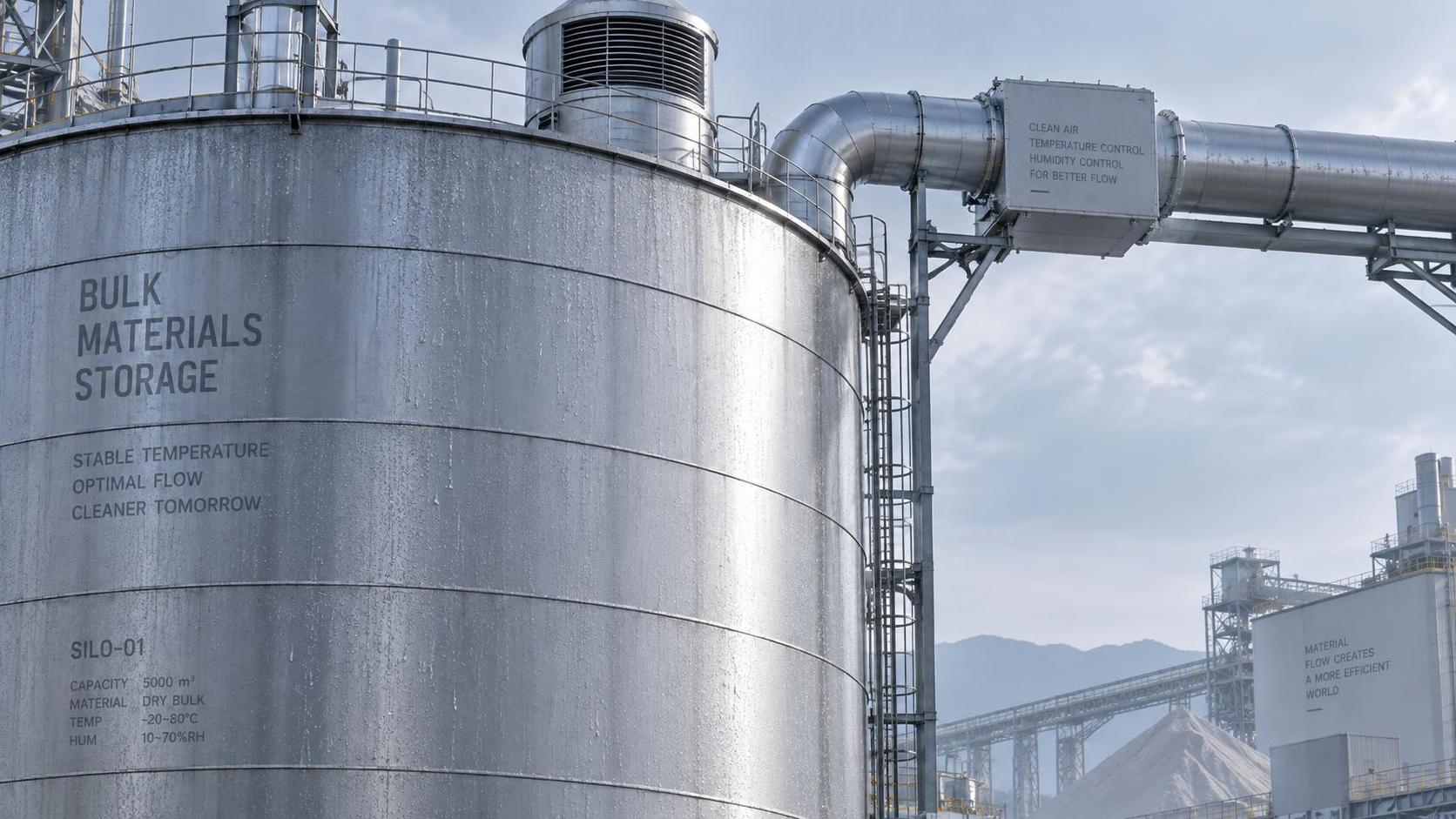
Maintaining consistent material flow in dry bulk storage silos is not merely a matter of hopper geometry or feeder selection—it’s a dynamic response to environmental conditions. Ambient temperature variation directly influences flow behavior in steel silos holding granular or powdered materials like cement, coal, grain, and chemical powders. When external air temperatures swing significantly—especially across seasonal transitions—steel walls expand and contract, internal moisture migrates, and surface condensation forms. These physical changes alter particle cohesion, interstitial air pressure, and wall friction, often triggering bridging, ratholing, or erratic discharge rates. For operators managing daily loading, blending, or downstream processing, such inconsistencies rarely announce themselves with warning lights; instead, they appear as unplanned stoppages, inconsistent feed rates to conveyors or mixers, or increased manual intervention at discharge hoppers.
Yes—ambient temperature variation does affect material flow consistency in dry bulk storage silos. The effect is not uniform or always predictable, but it is measurable, repeatable, and addressable through design-aware operation and appropriate equipment selection. The degree of impact depends less on absolute temperature and more on the rate and magnitude of change, combined with local humidity, material hygroscopicity, and silo construction details. A 20°C drop overnight in a humid coastal region may induce more flow disruption than a steady 35°C ambient in an arid inland facility—even if the latter exceeds typical operating thresholds.
How Thermal Cycling Triggers Flow Disruption
Thermal effects act through three primary physical pathways:
- Wall condensation and moisture migration: As ambient air cools against a relatively warm silo wall (e.g., after daytime heating), dew point is reached, depositing thin films of moisture on interior surfaces. This promotes particle adhesion—especially in fine, hygroscopic materials—and increases cohesive strength. In layered storage, moisture can migrate upward via vapor diffusion, creating localized “sticky zones” near the top of the stored bulk.
- Differential expansion between shell and lining: Many steel silos incorporate internal liners—polyurethane, rubber, or stainless steel—for abrasion resistance or corrosion control. These materials have different coefficients of thermal expansion than structural steel. Repeated cycling causes micro-gaps or compressive buckling at interfaces, disrupting smooth flow paths and creating localized hang-up points.
- Thermal-induced stress in stored bulk: While bulk solids don’t conduct heat well, temperature gradients across a silo’s cross-section do develop—warmer near sun-exposed walls, cooler near shaded or insulated sections. These gradients generate subtle density differences and lateral pressure imbalances, shifting flow patterns from mass-flow toward funnel-flow behavior even in otherwise well-designed hoppers.
What Operators Should Observe—Not Just Measure
Instrumentation alone won’t reveal thermal flow issues. Temperature sensors on the exterior or even embedded in walls miss the critical interface: the boundary between steel and powder. Instead, rely on observable operational cues:
- Discharge rate drops during early morning hours following cold nights—particularly after high-humidity periods;
- Inconsistent flow from multiple outlets on the same silo base, despite identical valve settings;
- Increased frequency of bridging just below the outlet, especially when material has been static for >12 hours;
- Visible condensation streaks or water droplets on interior inspection hatches or access doors;
- Higher-than-expected power draw on vibratory feeders or rotary valves during cool-down phases.
If two or more of these occur together, thermal influence is highly likely—not speculative. It’s also worth noting that this isn’t exclusive to unheated outdoor silos. Even indoor facilities with HVAC systems experience diurnal cycling if ventilation schedules or setpoints fluctuate widely.
Design-Level Mitigations That Matter
Once thermal influence is confirmed, retrofitting insulation or adding heaters may seem intuitive—but those approaches often misdiagnose the root mechanism. Condensation forms where warm, moist air meets cold metal—not because the metal is too cold, but because its surface falls below dew point. So the most effective interventions target either air moisture content or thermal inertia:
- Ventilation with dew-point control: Passive roof vents work only when ambient air is drier than internal air. Active, filtered, and dehumidified purge air—introduced near the silo top—reduces internal relative humidity without inducing large thermal gradients.
- Thermal mass enhancement: Adding concrete or dense mineral insulation to the exterior cladding slows temperature transmission. A 50-mm layer of calcium silicate insulation reduces wall temperature swing by ~60% compared to bare steel under identical ambient cycling.
- Material-specific hopper angles: Standard design angles assume stable moisture content. For materials prone to moisture adsorption (e.g., fly ash, hydrated lime), increasing hopper angle by 3–5° beyond standard recommendations compensates for temporary cohesion spikes during cooling phases.
These aren’t theoretical adjustments—they’re field-validated responses to observed thermal flow breakdowns across grain terminals, cement plants, and chemical depots where seasonal variation exceeds ±25°C annually.
When Equipment Selection Becomes Part of the Solution
Some silo configurations inherently dampen thermal effects. Larger-diameter, shorter-height silos exhibit lower surface-to-volume ratios, reducing overall thermal exchange. Similarly, silos with thicker shell plates (≥8 mm for diameters >6 m) respond more slowly to ambient swings—buying time for internal equilibrium to stabilize before discharge begins.
For new installations or major retrofits where ambient variation is known to exceed ±20°C, engineered solutions become practical. The 800-1500 Tons Silos series incorporates dual-layer shell construction with integrated thermal break spacers, allowing independent expansion of inner and outer skins while maintaining structural rigidity. This design reduces internal wall temperature fluctuations by up to 40% compared to conventional single-shell units under identical exposure—directly improving flow predictability during transitional weather periods.
Operational Adjustments That Require No Hardware
Before modifying infrastructure, try these low-cost, high-impact practices:
- Stagger discharge timing: Avoid initiating flow immediately after ambient temperature lows. Delay start-up by 1–2 hours post-sunrise to allow passive warming of near-wall material layers.
- Use controlled bin rotation: If multiple silos feed the same line, rotate usage so no single unit remains static through full thermal cycles. Even brief agitation—via short-duration pneumatic pulsing or gentle vibrator activation—disrupts incipient bridge formation.
- Monitor material moisture at intake: Record moisture content alongside ambient temperature logs. Correlate flow events with moisture shifts—not just temperature alone. Many operators discover their “temperature problem” is actually a moisture ingress issue amplified by thermal cycling.
None of these require capital investment. Each leverages existing equipment and observable data—and each addresses the actual physics at play, not just symptoms.
When to Escalate Beyond Operational Fixes
Consistent flow disruption tied to ambient shifts—despite applying the above measures—signals deeper mismatch between silo design and site-specific thermal profile. At that point, reassessment isn’t about troubleshooting; it’s about redefining the design envelope. Key indicators include:
- Repeated bridging within 2 meters of the outlet, regardless of material fill level;
- Condensation persisting >4 hours after ambient temperature stabilizes;
- Flow rate variance exceeding ±25% across identical material batches under similar ambient conditions.
If these occur, thermal influence has moved beyond operational management into structural or material compatibility territory. That’s when silo geometry, liner specification, and wall construction must be reviewed—not as isolated components, but as an integrated thermal-mechanical system.
Related Posts
- ▶ How a Dry Bulk Silo Handles Pneumatic Filling and Gravity Discharge
- ▶ What Is a Dry Bulk Silo, and When Does a Factory Need One?
- ▶ Can dry bulk storage silos be integrated into existing PLC-controlled batching systems?
- ▶ Do dry bulk silos designed for API 650 compliance meet ASME Section VIII requirements?
- ▶ Is almacénamiento de sólidos a granel en silos de acero inoxidable viable for small-scale agrochemical distributors?
- ▶ How do vibration-based level sensors perform in stainless steel silos with powder coating?
Online Message