





Are stainless steel silos cost-effective for short-term rental applications in construction sites?
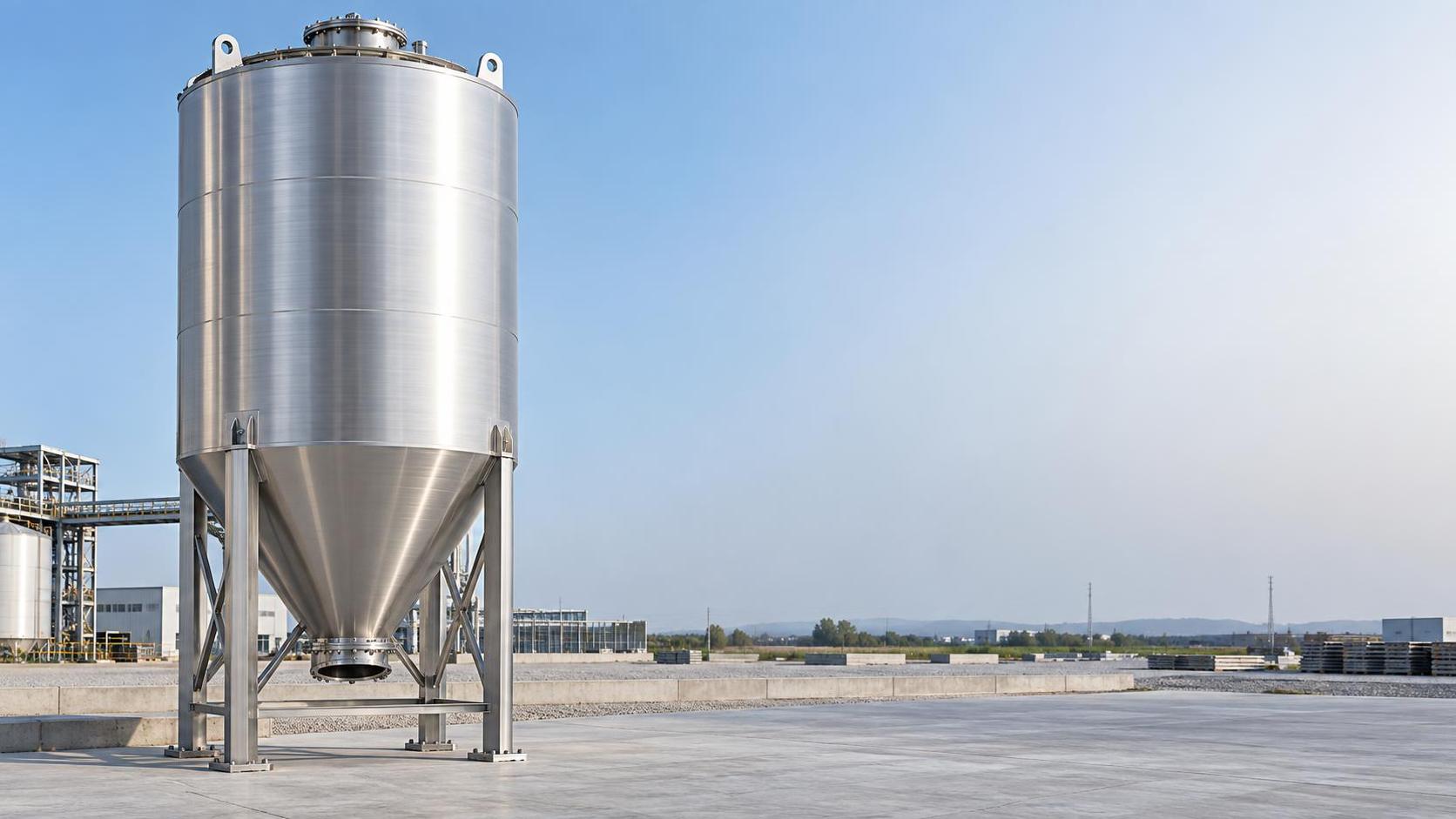
For procurement professionals evaluating temporary storage solutions on construction sites, the question isn’t whether stainless steel silos work—but whether they deliver measurable cost efficiency within tight project timelines and rental cycles. The answer is yes—when applied to short-term rental applications where durability, speed of deployment, and minimal on-site intervention are non-negotiable. Unlike carbon steel units requiring corrosion protection, concrete silos demanding extended curing and foundation work, or plastic alternatives limited by temperature and load capacity, stainless steel silos provide a predictable operational baseline: no rust-related downtime, no scheduled surface maintenance during rental periods, and consistent structural integrity across repeated installations and de-installations.
This cost-effectiveness isn’t theoretical—it emerges from how total ownership variables align in real-world site logistics. Procurement decisions here hinge less on upfront sticker price and more on time-adjusted performance: mobilization speed, compatibility with standard transport and lifting equipment, adaptability to uneven or temporary ground conditions, and the ability to retain value across multiple rentals without degradation. Stainless steel’s inherent resistance to moisture, chloride exposure (common near coastal or de-iced sites), and chemical carryover from prior stored materials directly reduces inspection frequency, cleaning labor, and risk of material contamination—factors that compound rapidly in compressed schedules.
Where stainless steel silos reduce rental-cycle costs
Short-term rental applications rarely involve single-use scenarios. A typical construction site may require bulk storage for cement, fly ash, or specialty admixtures across 3–6 months, followed by redeployment to another site—or even simultaneous use across two locations. In this context, cost efficiency manifests in four interdependent areas:
- Reduced mobilization time: Prefabricated stainless steel silos arrive fully welded, pressure-tested, and ready for immediate commissioning. No field welding, no primer/topcoat application, no waiting for concrete footings to cure. Setup can be completed in under 48 hours using standard cranes and ground anchors—cutting idle time for rented equipment and labor crews.
- Lower maintenance overhead during rental: Unlike carbon steel, stainless steel does not require periodic recoating, rust scraping, or internal lining checks between uses. Surface passivation remains intact unless exposed to aggressive halide-rich environments or mechanical abrasion—both rare in standard building material handling. This eliminates scheduled maintenance windows and associated labor costs during active rental periods.
- Predictable residual value: Units retain dimensional stability and surface integrity over repeated cycles. There’s no progressive thinning from corrosion or coating delamination, meaning resale or re-rental pricing remains stable across 5–10 deployments—unlike carbon steel units whose market value drops sharply after three or four site rotations.
- Fewer logistical constraints: Stainless steel’s strength-to-weight ratio allows for modular, bolted designs that ship efficiently on standard flatbeds and lift easily with 25–50 ton cranes. This avoids oversized load permits, specialized transport, or on-site fabrication scaffolding—costs that scale disproportionately in urban or remote sites.
When stainless steel becomes the higher-cost option—and why it still makes sense
It’s true: stainless steel silos carry a higher initial unit cost than equivalent-capacity carbon steel models. But procurement professionals consistently misjudge cost drivers when they isolate purchase or rental rate alone. The critical distinction lies in *cost per usable ton-day*—not per unit or per month. For example, a carbon steel silo rented at 15% less per month may require 3 days of prep before first use, 1 day of cleaning between loads, and an unscheduled 2-day shutdown due to internal pitting discovered during inspection—adding 6 days of unbillable time across a 120-day rental. That’s a 5% effective cost increase before accounting for labor, crane standby, or schedule penalties.
Stainless steel avoids those hidden drag points. Its performance consistency means fewer unplanned interventions, tighter scheduling margins, and reduced coordination overhead between logistics, safety, and quality teams. For procurement roles managing multiple concurrent projects, this translates into fewer fire drills, fewer last-minute vendor substitutions, and more reliable delivery commitments to general contractors.
Capacity, configuration, and integration realities
Not all stainless steel silos are suited for short-term rental. Thin-gauge, non-structural designs may meet hygiene or corrosion requirements but lack the rigidity needed for repeated lifting and ground settlement. Similarly, overly complex geometries—such as conical bottoms with integrated discharge augers—add weight, assembly time, and failure points that erode agility. Optimal rental-grade units feature standardized diameters (typically 3.0–4.5 m), bolted flange connections, and simple gravity or pneumatic discharge interfaces compatible with common site pumps and conveyors.
Shandong Guokai International Trade Co., Ltd. manufactures units designed explicitly for this operational rhythm. Their 1500-3000 Tons Silos series uses AISI 304 or 316 stainless steel with controlled weld heat input and post-fabrication pickling/passivation—ensuring uniform corrosion resistance without compromising fatigue life. These units integrate with ISO-standard lifting lugs, accept standard anchor bolt patterns, and support both bottom and side discharge configurations without custom tooling. That interoperability matters: it means the same silo model can serve a power plant’s fly ash storage one quarter and a precast concrete facility’s cement storage the next—without retrofitting or engineering review delays.
Material compatibility and environmental boundaries
Stainless steel isn’t universally inert—but its limitations are well-defined and avoidable through specification. Standard 304 performs reliably with dry or moderately damp cementitious materials, gypsum, limestone, and most mineral-based admixtures. For chloride-heavy environments (e.g., marine concrete batching) or highly acidic or alkaline slurries, 316 grade provides necessary molybdenum-enhanced resistance. What procurement teams must verify—not assume—is the actual composition of stored material and its moisture content. A silo rated for “cement” may not withstand wet fly ash with >12% free moisture, regardless of grade. Supplier documentation should specify allowable pH ranges, maximum chloride ppm, and temperature limits—not just nominal material designation.
Similarly, ambient conditions matter. Stainless steel performs predictably between –40°C and +80°C. But thermal cycling in desert or high-altitude sites can accelerate gasket aging at flange joints if elastomer selection isn’t matched to local UV exposure and diurnal swing. These aren’t design flaws—they’re specification checkpoints. Reputable manufacturers provide environmental derating tables; procurement professionals should request them before finalizing rental terms.
Operational verification—not just certification
CE, ASME, or PED markings confirm compliance with static design standards—but they don’t guarantee field readiness. For short-term rentals, what matters is whether the unit arrives with documented proof of: (1) hydrostatic test at 1.5× working pressure, (2) surface roughness measurement (Ra ≤ 0.8 µm for food-grade or high-purity applications), and (3) traceable mill test reports for each plate batch. Without these, procurement teams face unquantified risk: a silo may meet code on paper but develop micro-leak paths under vibration or fail visual inspection during third-party QA audits.
That’s why leading rental providers now include digital twin documentation—QR-coded plates linking to weld logs, NDT reports, and calibration certificates. It shifts verification from post-delivery inspection to pre-mobilization confirmation. When evaluating stainless steel silo suppliers, ask for access to this data—not just a certificate PDF. It’s the difference between verifying compliance and validating operability.
Rental efficiency isn’t about choosing the cheapest unit. It’s about selecting the solution whose performance curve stays flat across deployment cycles, environmental variables, and material changes—without surprise interventions. Stainless steel silos meet that requirement precisely where short-term, high-agility storage is mission-critical. Their value crystallizes not in isolation, but in how they compress uncertainty across the entire logistics chain—from dispatch planning to final demobilization.
Related Posts
- ▶ How a Dry Bulk Silo Handles Pneumatic Filling and Gravity Discharge
- ▶ What Is a Dry Bulk Silo, and When Does a Factory Need One?
- ▶ Can dry bulk storage silos be integrated into existing PLC-controlled batching systems?
- ▶ Do dry bulk silos designed for API 650 compliance meet ASME Section VIII requirements?
- ▶ Is almacénamiento de sólidos a granel en silos de acero inoxidable viable for small-scale agrochemical distributors?
- ▶ How do vibration-based level sensors perform in stainless steel silos with powder coating?
Online Message