





Do dry bulk storage silos need explosion venting when handling combustible powders?
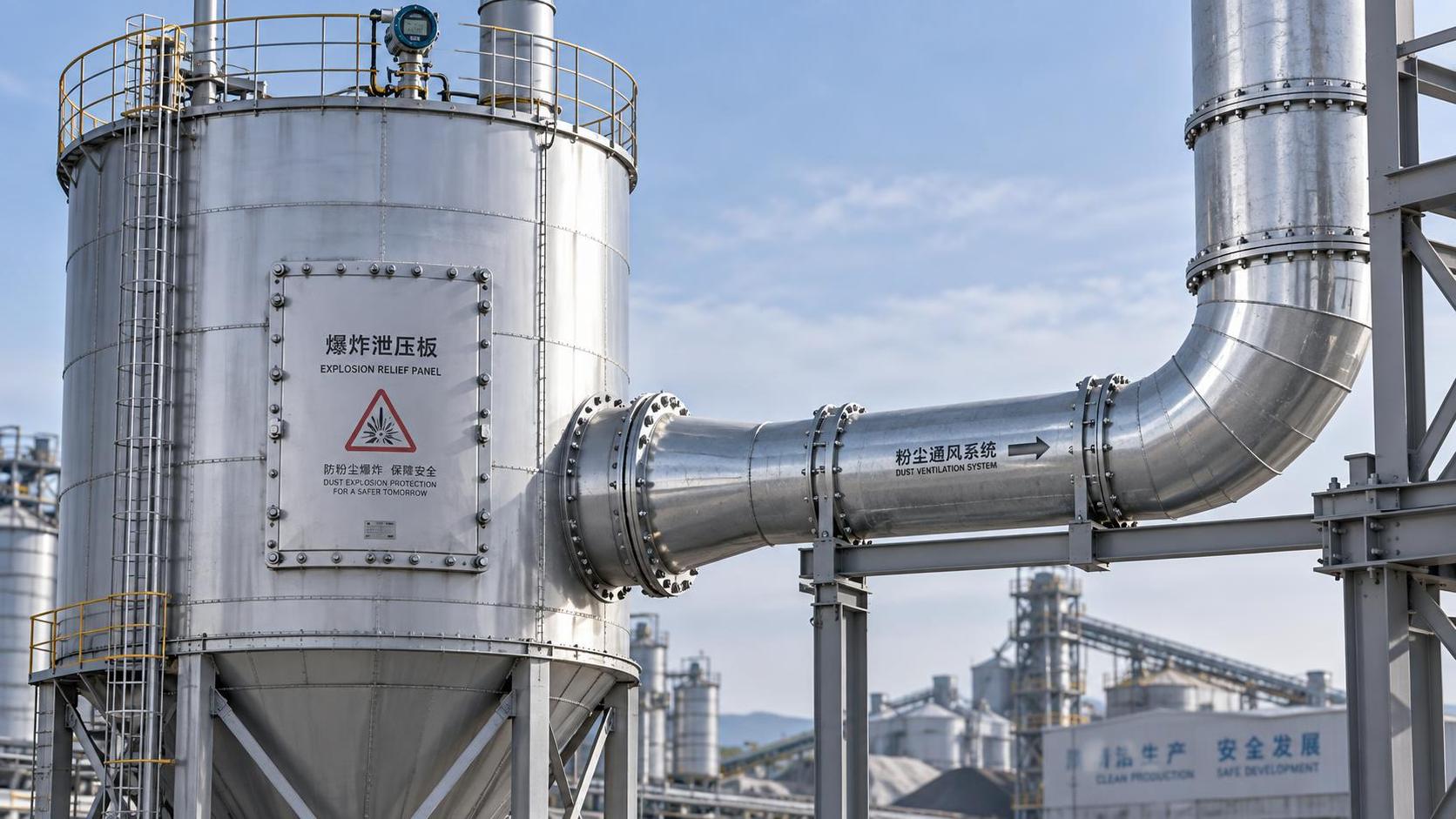
Do dry bulk storage silos need explosion venting when handling combustible powders?
Yes — but not universally, and never automatically. For quality control and safety professionals managing dry bulk storage in grain elevators, cement plants, power station fly ash systems, or chemical powder handling facilities, the requirement for explosion venting hinges on three interdependent conditions: whether the stored material is *actually* combustible under process conditions, whether the silo’s design and operation create a credible ignition source *and* confinement sufficient to propagate deflagration, and whether local regulatory frameworks — particularly those aligned with NFPA 652, EN 14491, or ATEX Directive 2014/34/EU — mandate protection based on documented hazard analysis.
This isn’t a binary “yes/no” question answered by material category alone. Flour is combustible. So is aluminum powder. But so is dried corn starch — yet many small-capacity grain silos operate without venting because their geometry, pressure rating, and operational practices (e.g., infrequent filling, no internal dust clouds during discharge) render the explosion risk negligible *in practice*. Conversely, a silo storing fine polymer granules at high fill rates, with pneumatic conveying feed and ungrounded internals, may require venting even if the material’s KSt value falls just below typical thresholds — because real-world ignition energy and turbulence amplify risk beyond lab test conditions.
What triggers the obligation — and what doesn’t?
The most persistent misconception is that “combustible powder = automatic venting requirement.” That’s incorrect. Regulatory frameworks don’t prescribe venting based solely on material classification. They require a systematic, site-specific combustible dust hazard evaluation — typically mandated under NFPA 652 (US), DSEAR (UK), or the EU’s ATEX framework. This evaluation must address:
- Dust explosibility parameters: Not just whether dust ignites, but its minimum ignition energy (MIE), minimum explosive concentration (MEC), maximum pressure rise rate (dP/dt)max, and KSt class (Class I–III). A Class I dust (KSt < 200 bar·m/s) poses lower venting urgency than Class III (KSt > 300 bar·m/s), but confinement and ignition probability still govern the final decision.
- Confinement and geometry: Venting only mitigates explosion effects if the vessel can withstand the initial pressure rise long enough for the vent to open and relieve pressure. Thin-walled silos or those with large unsupported panels may rupture before vent activation. Conversely, over-engineered steel silos with high static pressure ratings (e.g., ≥1.5 bar g) provide the necessary containment time — making venting both feasible and effective.
- Ignition source inventory: Static discharge from pneumatic transfer, hot surfaces from mechanical equipment, or stray currents from instrumentation all count. If credible ignition sources are eliminated or rigorously controlled (e.g., grounding, inerting, temperature monitoring), venting may be deferred — provided the hazard analysis documents this justification.
Crucially, many jurisdictions treat “dry bulk storage” as part of a larger process train. A silo feeding a mill or classifier may inherit venting requirements from downstream equipment, even if its own stored volume presents low intrinsic risk. The boundary of the “protected enclosure” matters — and it’s rarely limited to the silo shell alone.
Where standard assumptions break down
Two common oversights undermine reliable decisions:
First, assuming existing silo design accommodates venting. Retrofitting vents onto older bolted or welded steel silos often fails because vent panels require precise mounting stiffness, unobstructed relief paths, and structural reinforcement around the opening. A vent installed on a silo wall without verifying panel anchorage strength or calculating dynamic load transfer can become a projectile — worsening, not mitigating, risk. This is why engineered solutions — like integrated vent flanges, reinforced nozzle zones, and certified burst disc assemblies — are specified during original design, not added as an afterthought.
Second, conflating venting with explosion isolation. Venting protects the silo structure and nearby personnel by directing flame and pressure outward. It does nothing to prevent propagation into connected ducts, feeders, or downstream equipment. If a silo vents into an unisolated conveyor, the explosion travels — potentially escalating. True protection requires layered strategy: venting *plus* isolation valves or chemical suppression where interconnected equipment exists. For facilities handling materials like sugar, coal fines, or metal powders, overlooking this interface is a frequent audit finding.
Practical implications for procurement and commissioning
For safety and quality teams evaluating new silo installations, venting readiness must be assessed at specification stage — not during FAT or commissioning. Key checkpoints include:
- Confirming the manufacturer provides certified venting integration — not just mounting points, but full pressure relief calculations per EN 14491 or NFPA 68, including vent area, opening pressure, and reaction force modeling.
- Verifying that structural design accounts for dynamic vent loads, especially on tall, slender silos where asymmetric relief can induce torsional stress.
- Ensuring vent orientation avoids directing flames toward walkways, control rooms, or adjacent equipment — a requirement frequently missed in dense plant layouts.
- Validating compatibility between vent type (rupture disc vs. hinged panel) and operational environment: outdoor exposure, corrosion potential, and maintenance access all affect long-term reliability.
Manufacturers who embed explosion protection into structural design — rather than offering it as an add-on kit — significantly reduce implementation risk. For example, pre-engineered solutions such as Grain Bolt Assembly Silos integrate vent flange reinforcements and pressure-rated base plates during fabrication, eliminating field welding and alignment uncertainties. This approach aligns with ISO 45001’s emphasis on “hazard elimination at source” — shifting safety from reactive mitigation to inherent design integrity.
Final judgment: When venting is non-negotiable
Venting becomes effectively mandatory — not merely advisable — when all three conditions converge: (1) the material has documented KSt ≥ 100 bar·m/s (or equivalent MIE/MEC data), (2) the silo operates under positive pressure or experiences frequent dust cloud generation during filling/emptying, and (3) the facility falls under jurisdictional enforcement of NFPA 652 Chapter 7, EN 14491, or similar binding standards. In these cases, omitting venting isn’t a cost-saving measure — it’s a regulatory exposure point and a latent liability trigger.
But even then, venting is only one layer. Its effectiveness depends entirely on correct sizing, installation, and maintenance — and on whether upstream ignition controls and downstream isolation are equally robust. Treating it as a standalone “compliance checkbox” misses the systemic nature of dust explosion risk. For professionals overseeing dry bulk storage, the real work begins before the first bolt is tightened: in defining the hazard scope, challenging assumptions about material behavior, and insisting on integrated, verifiable protection — not just certified components, but a certified system.
Related Posts
- ▶ How a Dry Bulk Silo Handles Pneumatic Filling and Gravity Discharge
- ▶ What Is a Dry Bulk Silo, and When Does a Factory Need One?
- ▶ Can dry bulk storage silos be integrated into existing PLC-controlled batching systems?
- ▶ Do dry bulk silos designed for API 650 compliance meet ASME Section VIII requirements?
- ▶ Is almacénamiento de sólidos a granel en silos de acero inoxidable viable for small-scale agrochemical distributors?
- ▶ How do vibration-based level sensors perform in stainless steel silos with powder coating?
Online Message