





Choosing Dry Bulk Storage Tanks for Abrasive Materials and High Wear
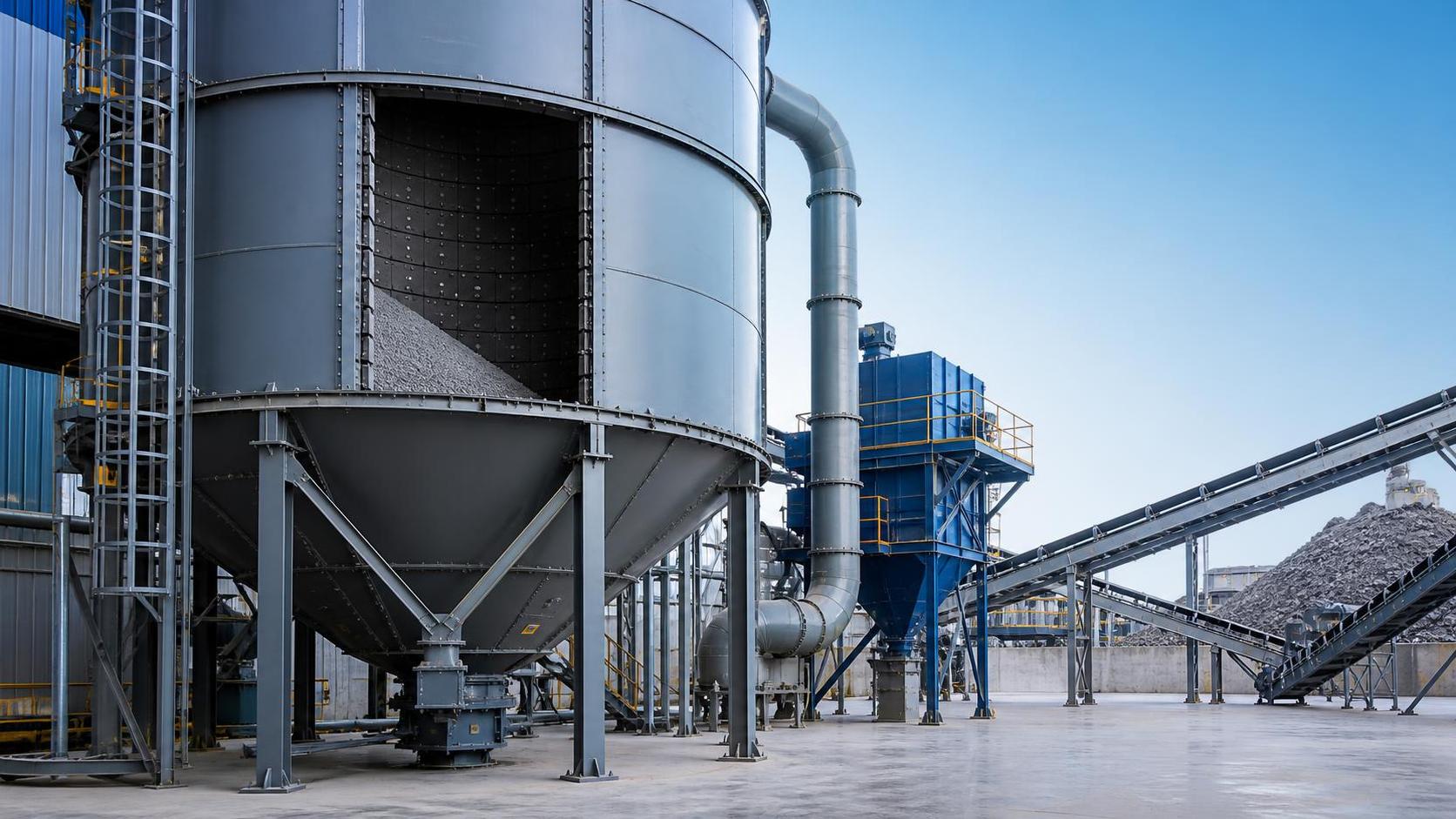
Choosing the right dry bulk storage tanks for abrasive materials starts with one practical question: how do you reduce wear without creating higher lifetime costs elsewhere? For project managers and engineering leaders, the answer is rarely a bigger tank or a heavier shell alone. The better choice is a storage system designed around the actual material behavior, wear points, discharge pattern, maintenance access, and operating cycle.
The core search intent behind this topic is clear. Buyers are not looking for a general definition of dry bulk storage tanks. They want to know which tank or silo design decisions matter most when storing abrasive powders, aggregates, minerals, cementitious products, and other high-wear bulk solids. They also want to avoid failures that delay production, increase maintenance shutdowns, and weaken project economics.
That is why the most useful evaluation framework focuses on service life, liner strategy, hopper geometry, discharge reliability, dust control, structural strength, and inspection planning. For industrial projects, a successful storage solution is one that performs consistently under abrasive duty while staying practical to fabricate, install, inspect, and repair.
With experience in steel silo development, manufacturing, and project construction, Shandong Guokai International Trade Co., Ltd. supports clients in grain, building materials, electric power, and chemical applications. In high-wear storage environments, that background matters because the right tank is defined as much by long-term operating fit as by initial capacity.
What project managers are really trying to prevent
When abrasive materials are involved, the biggest risk is not simply visible surface wear. The more expensive problem is uneven wear concentrated at transfer impact zones, hopper transitions, wall interfaces, air inlet areas, and discharge outlets.
Those local failures often appear long before the overall structure reaches the end of its intended service life. The result can be unscheduled repair work, interrupted throughput, contamination risk, reduced safety margins, and a constant cycle of patching instead of planned maintenance.
For project leaders, this turns storage selection into a risk management decision. The tank must protect both the asset and the schedule. If a silo design looks cost-effective at procurement stage but demands frequent relining or welding repairs later, the total project value quickly deteriorates.
That is why dry bulk storage tanks for high-wear duty should be assessed from the inside out. The critical question is where abrasive energy is concentrated during filling, storage, and discharge, and whether the design deliberately controls those zones.
Understand the material before you compare tank designs
Many specification problems begin when abrasive materials are treated as a single category. In reality, wear behavior changes significantly based on particle size, shape, moisture level, temperature, bulk density, hardness, and flow pattern.
Angular crushed aggregate does not behave like fly ash. Silica-rich mineral powders wear surfaces differently from cement clinker fines. Moisture can also change the flow path, creating ratholes, bridging, or unstable discharge that intensifies localized abrasion.
Before comparing dry bulk storage tanks, project teams should document at least six practical inputs: particle characteristics, expected throughput, fill method, discharge frequency, environmental conditions, and acceptable maintenance intervals. These inputs shape nearly every meaningful design recommendation.
Another essential point is whether the material is free-flowing, cohesive, or variable across seasons and supply lots. Storage systems that work well for a stable product stream can perform poorly when feed consistency changes, especially if the hopper and outlet were selected too narrowly.
Where wear usually happens in dry bulk storage tanks
Most wear is predictable if the operating path is understood early. During pneumatic or mechanical filling, the incoming material stream can strike one section of the wall repeatedly, creating a high-energy impact band.
In conical sections and transitions, abrasive flow often accelerates, especially when the hopper angle and outlet size push the material into concentrated channels. This can thin local areas faster than the vertical shell.
At discharge points, repeated sliding abrasion is common. If air-assist systems, feeders, rotary valves, or screw conveyors are poorly matched, the outlet area can experience both abrasion and mechanical stress at the same time.
Project managers should also watch for wear around inspection openings, level measurement penetrations, and internal attachments. These details are easy to underestimate during procurement, but they can become chronic maintenance points once the tank enters full service.
Which design features matter most for abrasive applications
The best dry bulk storage tanks for abrasive service usually combine structural durability with deliberate wear management. That means the design does not rely on shell thickness alone to survive demanding duty.
Wear liners are often one of the most important decisions. Depending on the material and throughput, designers may use abrasion-resistant steel, replaceable internal liners, ceramic-lined zones, polymer-based liners, or hybrid systems placed only at known impact points.
Hopper geometry matters just as much. A poorly chosen angle can create inconsistent flow, dead zones, or high-velocity channels that accelerate wear. Mass flow and funnel flow behavior should be evaluated against the actual bulk solid, not assumed from generic rules.
In many industrial applications, welded steel silos are favored because they allow robust structure, controlled fabrication quality, and integration of reinforcement and wear protection in targeted locations. For example, Aggregate Welded Silos can be relevant where coarse, abrasive bulk materials require durable storage with engineered internal protection and reliable unloading performance.
Capacity is important, but operating pattern matters more
It is common to start selection by volume requirement, but capacity alone does not define a successful storage asset. A tank storing abrasive material under low turnover may wear very differently from one with the same volume under continuous cycling.
Daily fill and discharge frequency, peak loading periods, and residence time all affect internal wear. High turnover generally increases abrasion exposure, while long storage periods can introduce compaction or moisture-related discharge issues depending on the product.
For project managers, this means storage sizing should be aligned with process logic, not only inventory targets. An oversized vessel can create flow inefficiencies, while an undersized one may force excessive cycling and accelerate wear in the most vulnerable zones.
The correct specification balances buffer capacity, steady process feed, and manageable maintenance planning. In abrasive service, operational rhythm is often a stronger predictor of lifecycle performance than nominal tonnage alone.
How to compare material of construction and liner strategies
There is no universal best material for all abrasive storage systems. The right choice depends on whether the dominant wear mode is impact, sliding abrasion, corrosion plus abrasion, or a mix of all three.
Standard carbon steel may be adequate for noncritical shell areas but insufficient in direct impact zones. Abrasion-resistant plate can improve life in those areas, though it may raise fabrication complexity and cost.
Replaceable liners can make more economic sense than overspecifying the whole structure. When liners are modular and accessible, maintenance becomes planned and localized instead of disruptive and structural.
However, liner selection should never be isolated from flow design. Some liner materials reduce friction and improve discharge, while others may affect product behavior or require different attachment methods. The best solution is often a targeted wear package rather than a uniform internal treatment.
Maintenance access is a design issue, not an afterthought
One of the clearest differences between a practical storage solution and a problematic one is how easy it is to inspect and maintain. High-wear duty requires periodic checking, even when the original design is strong.
If access points are poorly located, or if wear areas cannot be viewed without major shutdown work, inspection frequency tends to drop. That leads to reactive maintenance, which is exactly what project teams are trying to avoid.
Good dry bulk storage tanks should allow safe access to known wear zones, practical liner replacement where relevant, and straightforward integration with plant maintenance routines. This is especially important on sites where outage windows are short.
For engineering decision-makers, maintainability has direct business value. Faster inspections, shorter repair time, and easier component replacement reduce labor cost and lower the probability of schedule disruption across the wider operation.
Questions to ask suppliers before approving a tank specification
Supplier comparison is often too focused on dimensions and price. For abrasive service, buyers should ask how the proposed design addresses actual wear mechanisms and whether those assumptions are backed by operating experience.
Useful questions include: where are the predicted high-wear zones, what liner or reinforcement strategy is proposed, how is flow pattern validated, what maintenance access is included, and what service life is expected for replaceable components?
It is also worth asking whether the supplier can adapt the design to site-specific filling arrangements, discharge equipment, and environmental loads. Storage performance depends on the whole system, not the vessel in isolation.
Companies with integrated design, manufacturing, and project execution capability can often add more value here because they understand how fabrication choices affect installation, commissioning, and long-term use. That practical continuity is especially important in abrasive bulk handling projects.
Balancing upfront cost with lifecycle value
Project budgets naturally emphasize initial capital cost, but abrasive material storage punishes short-term thinking. A lower-cost tank can become more expensive within a short period if it requires repeated shutdowns, liner replacement, or structural repair.
The better purchasing approach is lifecycle-based. Compare not just shell price, but expected maintenance frequency, component life, downtime exposure, labor demand, inspection burden, and compatibility with future throughput increases.
In some cases, a more robust welded silo with targeted wear protection delivers a lower total cost over time than a simpler design with weaker internal defense. That is where specification quality has direct financial impact.
For buyers evaluating options across building materials, power, chemical, or aggregate handling applications, solutions such as Aggregate Welded Silos may fit best when the project requires both structural reliability and planned resistance to repeated abrasive loading.
A practical decision framework for selecting the right system
To choose among dry bulk storage tanks effectively, project managers should use a structured checklist. Start with verified bulk material data rather than assumptions from similar products or past projects.
Next, map the actual operating cycle: how the tank is filled, how often it is discharged, what equipment is connected, and what failure consequences are acceptable. This defines the real duty level.
Then evaluate construction type, internal wear protection, hopper and outlet design, dust and venting requirements, access arrangement, and maintainability. These are the areas where durable performance is won or lost.
Finally, compare suppliers on engineering depth, customization capability, fabrication quality, and field execution support. In abrasive environments, a well-matched design from an experienced silo partner usually outperforms a generic low-cost option over the life of the asset.
Conclusion
Choosing dry bulk storage tanks for abrasive materials and high wear is fundamentally a decision about control: control of abrasion, flow behavior, maintenance exposure, and lifecycle cost. The right answer is rarely the simplest vessel on paper.
For project managers and engineering leaders, the most dependable path is to specify storage around actual material behavior and wear zones, then pair that with a design that supports inspection, repair, and stable discharge.
When those factors are addressed early, the result is more than a durable tank. It is a storage system that protects uptime, preserves budget predictability, and supports the long-term performance of the entire bulk handling project.
That is the standard worth aiming for in any abrasive-duty installation, especially where project success depends not only on commissioning the system, but on keeping it operating reliably year after year.
Related Posts
- ▶ How a Dry Bulk Silo Handles Pneumatic Filling and Gravity Discharge
- ▶ What Is a Dry Bulk Silo, and When Does a Factory Need One?
- ▶ Can dry bulk storage silos be integrated into existing PLC-controlled batching systems?
- ▶ Do dry bulk silos designed for API 650 compliance meet ASME Section VIII requirements?
- ▶ Is almacénamiento de sólidos a granel en silos de acero inoxidable viable for small-scale agrochemical distributors?
- ▶ How do vibration-based level sensors perform in stainless steel silos with powder coating?
Online Message