





Can dry bulk silos be relocated after installation without structural compromise?
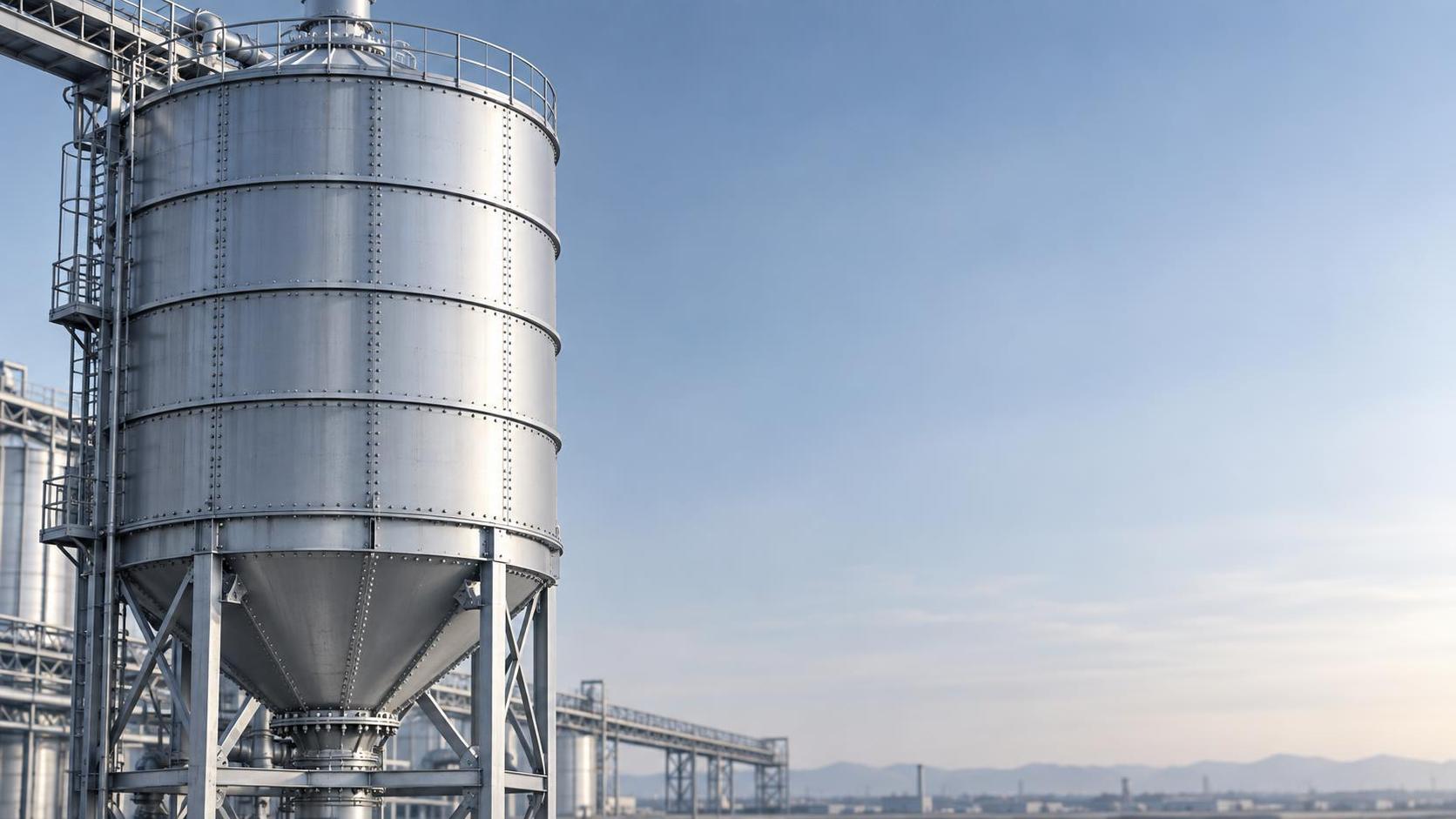
Relocation Isn’t a “Yes or No” Question—It’s a Sequence of Engineering Decisions
The short answer is yes—dry bulk silos can be relocated after installation without structural compromise. But that “yes” comes with weight. It’s not about whether it’s physically possible to unbolt, lift, and re-erect. It’s about whether the original design anticipated reuse, whether the foundation was built for disassembly, and whether your maintenance team has access to as-built documentation, bolt torque records, and material traceability—not just a crane and a transport permit.
For after-sales maintenance teams, relocation often emerges mid-lifecycle: a plant expansion shifts material flow paths; regulatory changes require silo repositioning away from new facility boundaries; or a client acquires adjacent land and wants to consolidate storage. In those moments, assumptions matter more than specs. A silo built for single-site permanence behaves differently under disassembly than one engineered with modularity in mind—from day one.
Three Non-Negotiable Checks Before Lifting a Single Bolt
Don’t start with logistics. Start with integrity.
1. Foundation compatibility
Most dry bulk silos rely on moment-resisting foundations—designed to resist overturning forces from stored material and wind. If the original base plate was grouted directly into concrete (common in older installations), removal may fracture anchor embedment zones. Relocation isn’t just about lifting the shell—it’s about whether the foundation can be reused, modified, or must be demolished and rebuilt. For newer projects, Shandong Guokai International Trade Co., Ltd. designs with adjustable base plates and removable grout sleeves where feasible—enabling controlled separation without compromising load-path continuity.
2. Bolted joint history—not just current condition
Bolts aren’t static. They relax. Thermal cycling, vibration, and long-term preload loss degrade clamping force over time. A visual inspection won’t reveal micro-yield in high-strength ASTM A325 bolts installed five years ago. If torque records weren’t archived—or worse, if non-torque-controlled tightening was used—you’re operating blind. At minimum, ultrasonic bolt tension verification should precede disassembly. And every bolt removed needs replacement with traceable, certified hardware—not field substitutions.
3. Shell panel integrity beyond visible corrosion
Surface rust doesn’t always mean structural failure—but it’s a proxy for exposure history. More critical is weld seam degradation at stress-concentrated zones: hopper transitions, manway reinforcements, and stiffener intersections. These areas rarely get NDT during routine maintenance. Relocation stresses those same zones anew—during lifting, transport flexure, and re-erection alignment. Without prior baseline UT or phased-array scans, you’re reintroducing load to unknown metallurgical conditions.
Why Modularity Isn’t Just a Buzzword—It’s a Maintenance Strategy
Modular design isn’t about ease of assembly alone. It’s about predictable disassembly. Think of it this way: a monolithic welded silo demands cutting—introducing heat-affected zones, residual stress, and weld-repair validation. A bolted modular system trades some initial rigidity for lifecycle flexibility. Panels are standardized. Flanges align repeatably. Gasket interfaces are designed for multiple compression cycles—not just one installation.
Shandong Guokai International Trade Co., Ltd. applies this principle across its engineered steel dry bulk silo systems—not as an add-on option, but as part of structural specification. That includes calibrated bolt patterns, consistent flange thickness tolerances, and pre-engineered lifting lugs integrated into panel geometry—not welded on-site as an afterthought. This matters when your team is evaluating whether to relocate an existing unit or commission a new one.
One practical example: our 800-1500 Tons Silos series uses a radial bolt pattern with dual-seal gasketing at inter-panel joints. The design allows full disassembly using standard torque tools—not hydraulic tensioners—and maintains hopper angle integrity through reinforced transition rings. That doesn’t eliminate risk—but it narrows the variables your maintenance team must verify onsite.
The Hidden Cost of “Good Enough” Documentation
Relocation fails not at the crane site—but in the office, three months earlier. Missing or incomplete as-built drawings are the most common bottleneck we see across grain, power, and chemical clients. Not just general arrangement sketches—but actual weld procedure specifications, material test reports (MTRs) for each shell course, and anchor bolt installation logs.
Without MTRs, you can’t confirm whether a panel was fabricated from ASTM A572 Grade 50 or A36—critical when recalculating wind uplift capacity at a new location. Without weld logs, you can’t know if post-weld heat treatment was applied to critical seams—information needed before reapplying load.
If your silo lacks this documentation, don’t assume it’s lost forever. Start with manufacturer records—even if the original supplier is no longer active. Many structural steel fabricators retain project archives for 20+ years. Shandong Guokai maintains digital project files for all commissioned systems, including revision-controlled GA drawings, bolt torque schedules, and non-destructive testing reports—all accessible to maintenance teams upon request.
When Relocation Makes Sense—And When It Doesn’t
There’s no universal threshold. But here’s what consistently tips the balance:
- Age under 12 years, with documented maintenance history
- No record of major overpressure events or seismic loading
- Original foundation designed for future modification (e.g., embedded anchor cages instead of cast-in-place studs)
- Panel thickness ≥ 8 mm throughout shell and hopper—reducing fatigue sensitivity during handling
Conversely, relocation becomes high-risk if the silo has undergone undocumented repairs, shows localized pitting near weld toes, or was installed on a soil classification now known to settle unevenly. In those cases, replacement isn’t a cost—it’s a risk mitigation step.
One final note: never skip a post-relocation performance validation. That means more than checking for leaks. It means verifying hopper flow consistency with bulk density tests, confirming pressure relief valve calibration against new venting calculations, and validating level sensor alignment against updated fill geometry. A relocated silo isn’t “back online” until its behavior matches its original functional spec—not just its physical form.
If you’re assessing relocation feasibility for an existing dry bulk silo, start by gathering what you have—not what you wish you had. Then match those documents against the three checks above. If gaps exist, treat them as engineering inputs—not obstacles. Because in this context, uncertainty isn’t noise. It’s data waiting to be measured.
Related Posts
- ▶ How a Dry Bulk Silo Handles Pneumatic Filling and Gravity Discharge
- ▶ What Is a Dry Bulk Silo, and When Does a Factory Need One?
- ▶ Can dry bulk storage silos be integrated into existing PLC-controlled batching systems?
- ▶ Do dry bulk silos designed for API 650 compliance meet ASME Section VIII requirements?
- ▶ Is almacénamiento de sólidos a granel en silos de acero inoxidable viable for small-scale agrochemical distributors?
- ▶ How do vibration-based level sensors perform in stainless steel silos with powder coating?
Online Message