





Grain Silo Moisture and Ventilation Problems: Common Causes and Practical Fixes
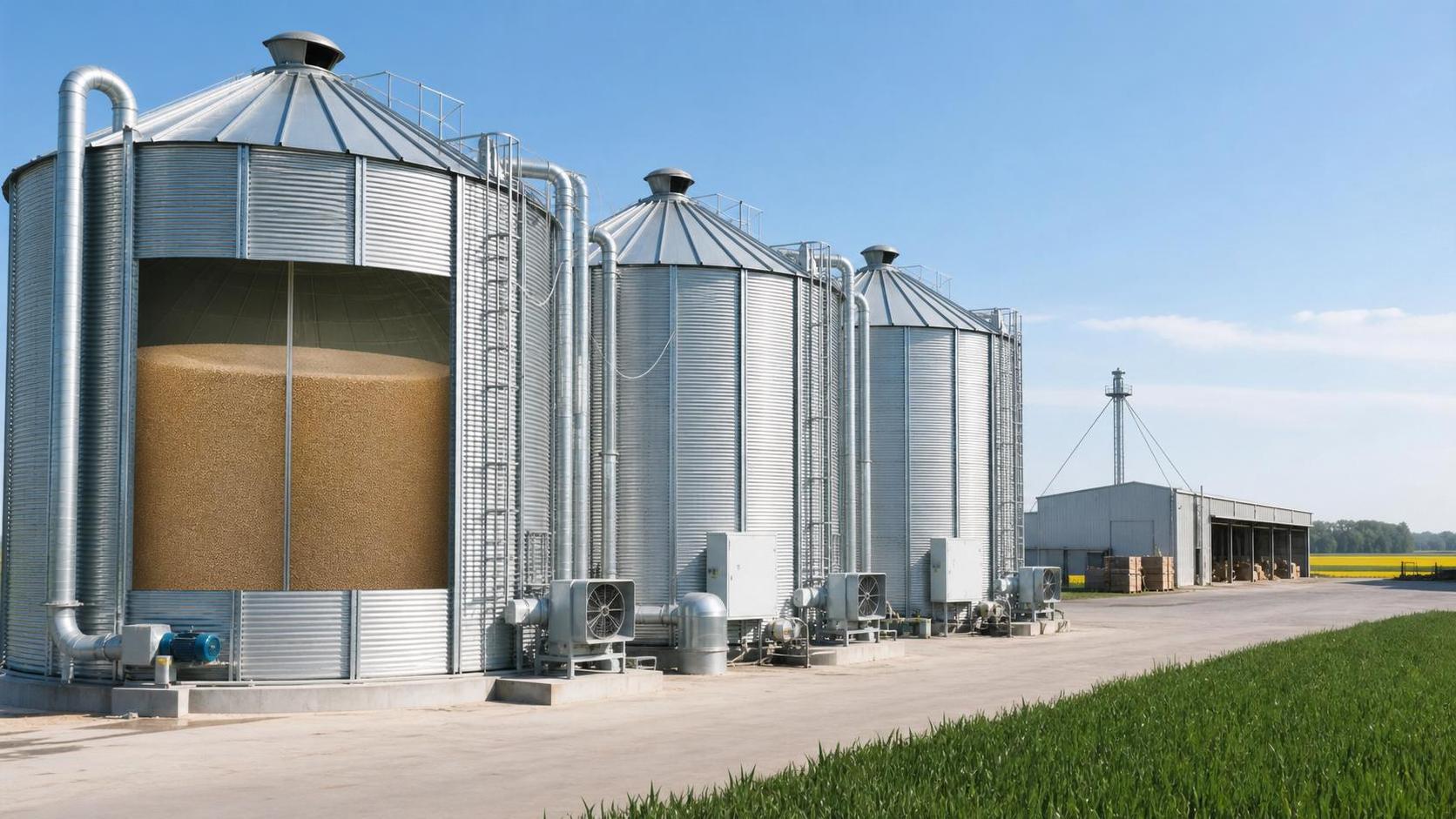
Why moisture and airflow problems rarely come from one cause
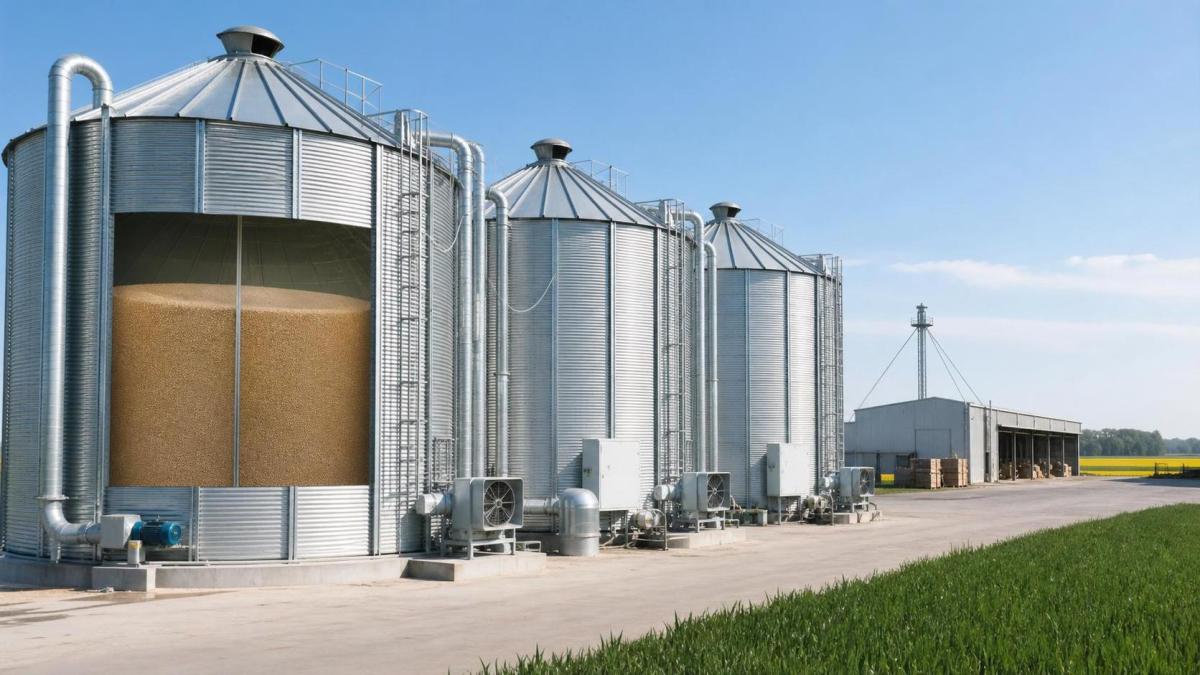
A grain silo works well only when moisture, temperature, airflow, and handling practices stay in balance.
When that balance shifts, grain spoilage often starts quietly, long before odors, crusting, or visible mold appear.
In daily operation, the same grain silo can behave very differently across harvest intake, short-term holding, or long storage cycles.
That is why moisture and ventilation issues should be judged by storage conditions, fill patterns, local weather, and grain condition.
A silo filled with warm grain after harvest faces different risks than one holding dry grain through a cold season.
In practical terms, moisture buildup in a grain silo usually comes from migration, leaks, condensation, or uneven aeration.
Poor ventilation often adds to the problem, because trapped heat and humidity create pockets where grain quality declines faster.
During harvest intake, the main risk is uneven grain entering the grain silo
The most challenging period often starts at filling, not months later.
Freshly harvested grain may arrive with mixed moisture levels, broken kernels, fines, and field heat.
When that material is stored quickly, airflow resistance becomes uneven inside the grain silo.
Fines usually gather near the center or under spouts, forming dense zones that restrict ventilation.
In this setting, operators often assume fan operation alone solves the issue.
A more reliable approach is to combine cleaning, leveling, and early monitoring.
If hot spots appear soon after filling, the cause is often non-uniform grain rather than fan size alone.
What to check first in this stage
- Incoming moisture variation between loads, not just average moisture content.
- Fine material concentration near the core of the grain silo.
- Whether grain is leveled after filling instead of left peaked.
- Fan runtime matched to grain depth and ambient air conditions.
A common misjudgment is treating all harvested grain as if it responds the same to aeration.
High-test grain with little fine material behaves differently from grain carrying more damage and dust.
In cold weather storage, condensation at the top often signals moisture migration
Longer storage creates a different pattern inside a grain silo.
When outside temperatures drop, warm air inside the grain mass tends to rise through the center.
That air cools near the roof and upper walls, then releases moisture as condensation.
The result may be wet crusting near the top center, surface spoilage, or frozen clumps in winter.
This is one of the most overlooked grain silo problems because the lower layers may still look stable.
In actual use, roof drips are not always caused by structural leaks.
They may reflect moisture migration caused by temperature differences within the stored grain.
Practical fixes that usually help
- Cool grain in stages rather than relying on one long fan cycle.
- Monitor upper grain layers more often during seasonal temperature swings.
- Check roof vents for blockage so humid air can escape properly.
- Remove crusted sections early before damage spreads deeper into the grain silo.
When the grain silo is opened often, outside humidity changes the ventilation strategy
Some storage operations are not static.
Repeated unloading, topping off, and inspection access expose the grain silo to outside moisture and shifting temperatures.
This is common where grain moves in batches rather than staying untouched for months.
In these cases, ventilation decisions should not rely on a fixed schedule.
Running fans during high-humidity periods can add moisture instead of removing it.
That risk grows when ambient air is warm and grain below is relatively cool.
A grain silo used in a humid coastal or rainy environment needs tighter control than one in dry inland conditions.
The key point is simple: ventilation in a grain silo should follow air conditions, not just the calendar.
Some ventilation problems start with equipment layout, not fan capacity alone
Many sites focus first on adding larger fans.
That can help, but it does not correct a poorly matched airflow path.
If ducts are blocked, floors are dirty, or vents are undersized, the grain silo will still ventilate unevenly.
In taller silos, air may favor easier channels and leave dead zones untreated.
This matters even more where grain depth changes between filling cycles.
A shallow grain bed and a deep grain bed do not need the same airflow pattern.
Signs the layout deserves closer review
- One section cools faster while another stays warm.
- Fan pressure rises unusually fast after loading.
- Condensation appears despite regular ventilation cycles.
- Spoilage repeats in the same zone of the grain silo.
A practical fix may be simpler than replacing major equipment.
Cleaning underfloor channels, restoring vent area, or redistributing fines can improve airflow noticeably.
Different grain conditions create different moisture behavior inside the same silo
One reason grain silo management is often misunderstood is that storage behavior depends on grain condition, not only silo design.
Dry, clean grain with minimal breakage tolerates storage stress better than grain with higher fines or insect activity.
Even when two silos share the same fans and sensors, the needed ventilation strategy may differ.
That is why moisture readings should be paired with temperature trends, odor checks, and grain surface inspection.
In practical applications, local compaction and fines often explain why a grain silo develops isolated trouble spots.
Ignoring that detail leads to the false conclusion that the entire ventilation system has failed.
Where misjudgments happen most often
Several recurring mistakes make grain silo moisture problems harder to solve.
- Assuming condensation always means roof leakage, without checking internal temperature movement.
- Judging ventilation quality by fan runtime, without measuring actual airflow distribution.
- Treating all stored grain as uniform, even after mixed harvest conditions.
- Focusing on equipment purchase cost while overlooking inspection and cleaning routines.
- Using fixed fan schedules in weather conditions that demand more selective operation.
These errors are common because they simplify a complex storage environment into one visible symptom.
A grain silo should be evaluated as a whole system, including grain quality, airflow path, structure, and seasonal use pattern.
A practical way to improve grain silo performance without overcorrecting
The best fixes are usually staged rather than dramatic.
Start by identifying whether the main driver is incoming grain condition, internal migration, outside humidity, or ventilation imbalance.
Then match the response to the actual operating scene.
- Review filling methods and reduce fines concentration before long storage.
- Inspect vents, ducts, floors, and roof areas before peak weather changes.
- Use temperature and moisture checks at several points, not one reading only.
- Adjust fan operation to ambient conditions and grain depth.
- Record recurring trouble zones to separate pattern issues from random events.
A grain silo performs better when monitoring and maintenance are linked to actual storage behavior.
That approach reduces spoilage risk without assuming every problem requires a full system rebuild.
Before the next storage cycle, it helps to map the real use pattern, compare seasonal conditions, and confirm where moisture is most likely to develop.
That kind of review makes grain silo decisions more precise, especially when balancing grain quality, maintenance effort, and operating reliability.
Related Posts
- ▶ How a Dry Bulk Silo Handles Pneumatic Filling and Gravity Discharge
- ▶ What Is a Dry Bulk Silo, and When Does a Factory Need One?
- ▶ Can dry bulk storage silos be integrated into existing PLC-controlled batching systems?
- ▶ Do dry bulk silos designed for API 650 compliance meet ASME Section VIII requirements?
- ▶ Is almacénamiento de sólidos a granel en silos de acero inoxidable viable for small-scale agrochemical distributors?
- ▶ How do vibration-based level sensors perform in stainless steel silos with powder coating?
Online Message