





Fly Ash Storage: Why Dust Collection and Sealing Matter for Safety
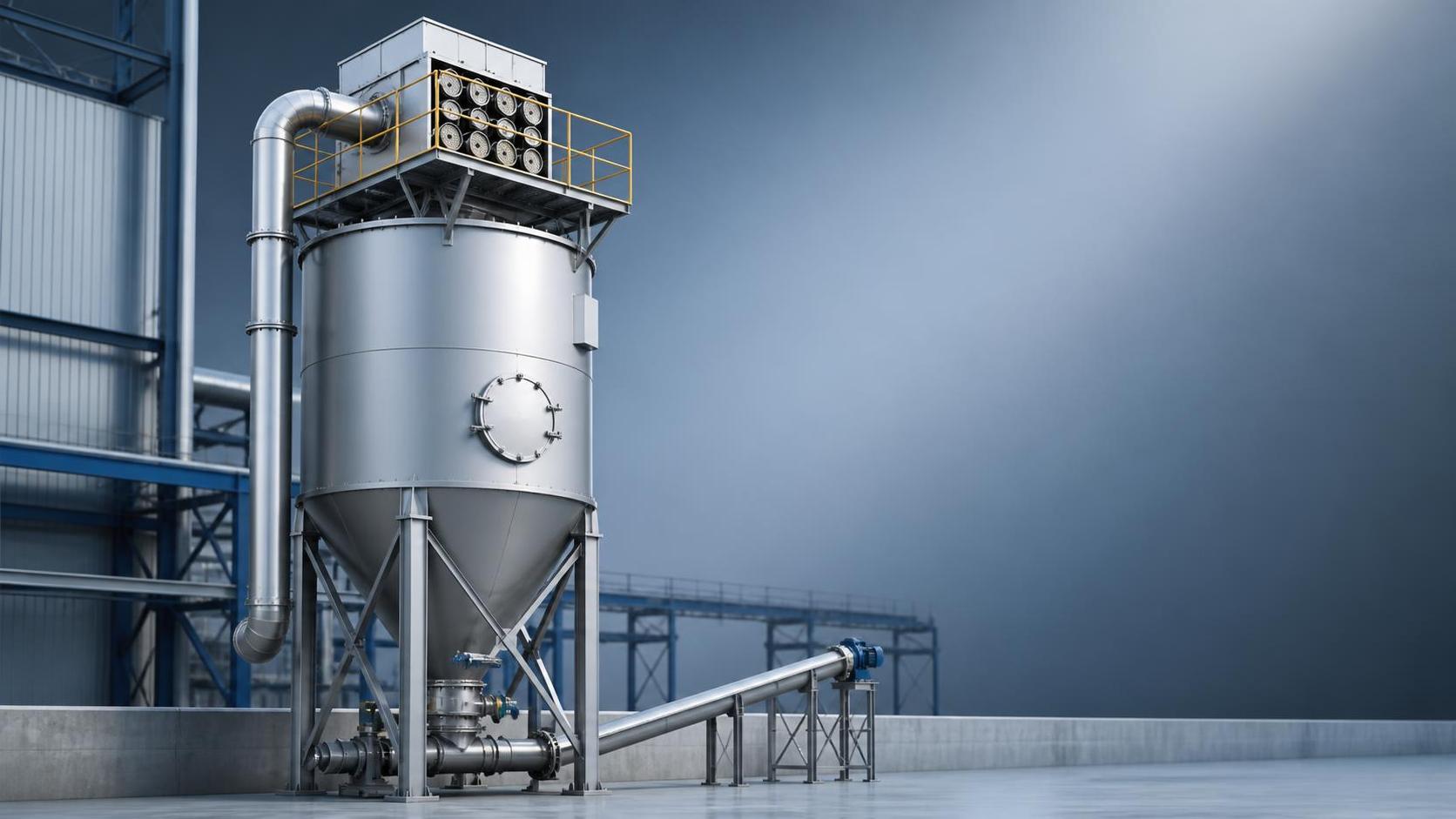
It usually starts with something small: a faint gray film on nearby surfaces, a door that does not quite close cleanly, or a fine puff of powder escaping when a silo is filled too quickly. In fly ash storage, those signs are easy to dismiss at first because the system still “works.” But dust leakage rarely stays harmless. It can make housekeeping harder, create breathing concerns for workers, stress equipment, and turn routine transfers into a constant maintenance problem.
If you are responsible for plant safety or storage operations, the real challenge is often not whether fly ash can be stored, but whether it can be stored without spreading dust or pulling in moisture. That is where dust collection and sealing stop being optional details and become part of the storage design itself. A silo that looks solid from the outside can still perform poorly if the venting path, access points, or discharge zones are not handled carefully.
Where fly ash storage problems usually begin
Fly ash is light, dry, and easy to move, which is useful until air movement starts doing the moving for you. During unloading, filling, or pressure changes inside the silo, fine particles can escape through weak points. Common trouble spots include the top vent, manhole covers, flange joints, discharge gates, and any place where maintenance access has been opened and reclosed many times.
Another frequent issue is moisture ingress. Even a small amount of water vapor entering a storage tank or silo can lead to caking, bridging, or uneven discharge. Once material flow becomes unstable, operators often respond by increasing vibration, changing feed rates, or opening panels more often. Those actions may help in the short term, but they can also create more wear and more leak paths.
In practice, the problem is rarely just “dust” or just “sealing.” The two are linked. If the silo cannot breathe in a controlled way, pressure finds another path. If the seal is weak, the dust collection system works harder than it should and still may not capture everything.
What good dust collection is actually doing
People sometimes think dust collection is only there to keep the area clean. That is part of it, but in fly ash storage it also helps manage pressure during filling and protects the storage structure from overloading its weakest points. A proper dust collector gives displaced air a controlled route instead of forcing it out through joints or openings.
The important point is to match the collector to the way the silo is used. If filling is fast, the venting path needs to handle that movement without creating a strong pressure spike. If the system is connected to other process equipment, you also want to avoid backflow or fine particles entering areas that were not designed for them. A filter that is too small, poorly placed, or difficult to inspect tends to become a recurring problem rather than a solution.
When reviewing fly ash storage systems, it helps to ask simple questions: Where does the displaced air go? Is the vent path protected from weather? Can the filter be checked without disrupting the whole operation? These are not glamorous questions, but they matter more than adding complicated controls that no one wants to maintain.
Sealing is not one part; it is a set of weak points
Reliable sealing is less about a single gasket and more about how the entire storage system closes under real operating conditions. A well-sealed silo should keep dust in, keep moisture out, and remain stable after repeated opening, closing, and thermal changes.
That means looking closely at access covers, inspection doors, pipe connections, discharge assemblies, and the interface between the roof and shell. Seals can fail because of poor alignment, worn components, uneven tightening, or simple damage during maintenance. In some cases, the design is the issue: if a panel is difficult to close consistently, operators may use whatever method gets the job done quickly, and that often leads to leakage later.
For steel silo systems used in industrial storage, including building materials and power-related applications, the structure should support routine inspection without making resealing a guesswork task. Systems such as Mineral Powder Silos are often considered when the material is fine and requires controlled containment, because the interface between storage, dust control, and discharge has to be handled as one operating unit, not as separate afterthoughts.
A practical way to review an existing setup
If you are trying to improve an existing fly ash storage area, start with the visible signs. Look for dust accumulation around joints, staining near vents, uneven material flow, and any place where powder tends to settle after normal operation. Those clues often point to where air is escaping or where material is not flowing smoothly.
Next, trace the storage cycle from filling to discharge. During filling, check whether the vent system is capturing displaced air instead of letting it escape. During standby, confirm that the silo remains sealed against rain, humidity, and wind-driven dust. During discharge, watch for sudden pressure changes, irregular flow, or material that hangs up near the outlet.
It also helps to think in terms of access. If maintenance requires opening a panel frequently, the sealing method needs to tolerate that reality. If inspection is difficult, small defects are more likely to be missed. Many storage issues persist not because no one noticed them, but because no one had a simple way to verify them.
Design choices that reduce recurring problems
A cleaner result usually comes from design discipline rather than from adding more cleanup work afterward. In fly ash storage, that means choosing a silo layout that supports controlled airflow, reliable closure points, and easy inspection. Roof vents, dust collection interfaces, and discharge components should be planned together so they do not compete with one another.
Material handling details matter too. Smooth transitions reduce dead zones where ash can build up. Good discharge geometry lowers the chance of bridging. Properly positioned access points reduce the temptation to leave covers half-sealed after maintenance. And because fly ash can be sensitive to moisture, the sealing strategy should be checked not only for tightness but also for durability over repeated use.
Steel silo systems are often selected because they can be adapted to different powders and bulk materials, but the benefit only shows up when the storage chamber, dust collector, and seal points are all treated as part of the same process. If one part is overdesigned and another is left weak, the whole setup still leaks trouble.
When to bring in a specialist review
Some issues can be handled by routine cleaning or seal replacement. Others call for a closer look at the silo structure itself. If dust appears despite normal operation, if discharge keeps becoming unstable, or if moisture seems to be entering even after basic fixes, the problem may be in the way the storage system is configured rather than in one damaged part.
That is usually the point where a technical review is worth the time. A specialist can compare the storage layout, venting path, sealing points, and discharge behavior instead of treating each symptom separately. In many cases, that leads to a clearer decision: repair the weak points, adjust the flow path, or consider a different silo arrangement better suited to the material and operating conditions.
Fly ash storage does not need to be complicated, but it does need to be controlled. Once dust collection and sealing are designed and maintained as part of the same system, the storage area becomes easier to manage, cleaner to work around, and less likely to interrupt the rest of the plant.
Related Posts
- ▶ How a Dry Bulk Silo Handles Pneumatic Filling and Gravity Discharge
- ▶ What Is a Dry Bulk Silo, and When Does a Factory Need One?
- ▶ Can dry bulk storage silos be integrated into existing PLC-controlled batching systems?
- ▶ Do dry bulk silos designed for API 650 compliance meet ASME Section VIII requirements?
- ▶ Is almacénamiento de sólidos a granel en silos de acero inoxidable viable for small-scale agrochemical distributors?
- ▶ How do vibration-based level sensors perform in stainless steel silos with powder coating?
Online Message