





Fly Ash Storage Regulations: What Environmental Teams Need to Verify
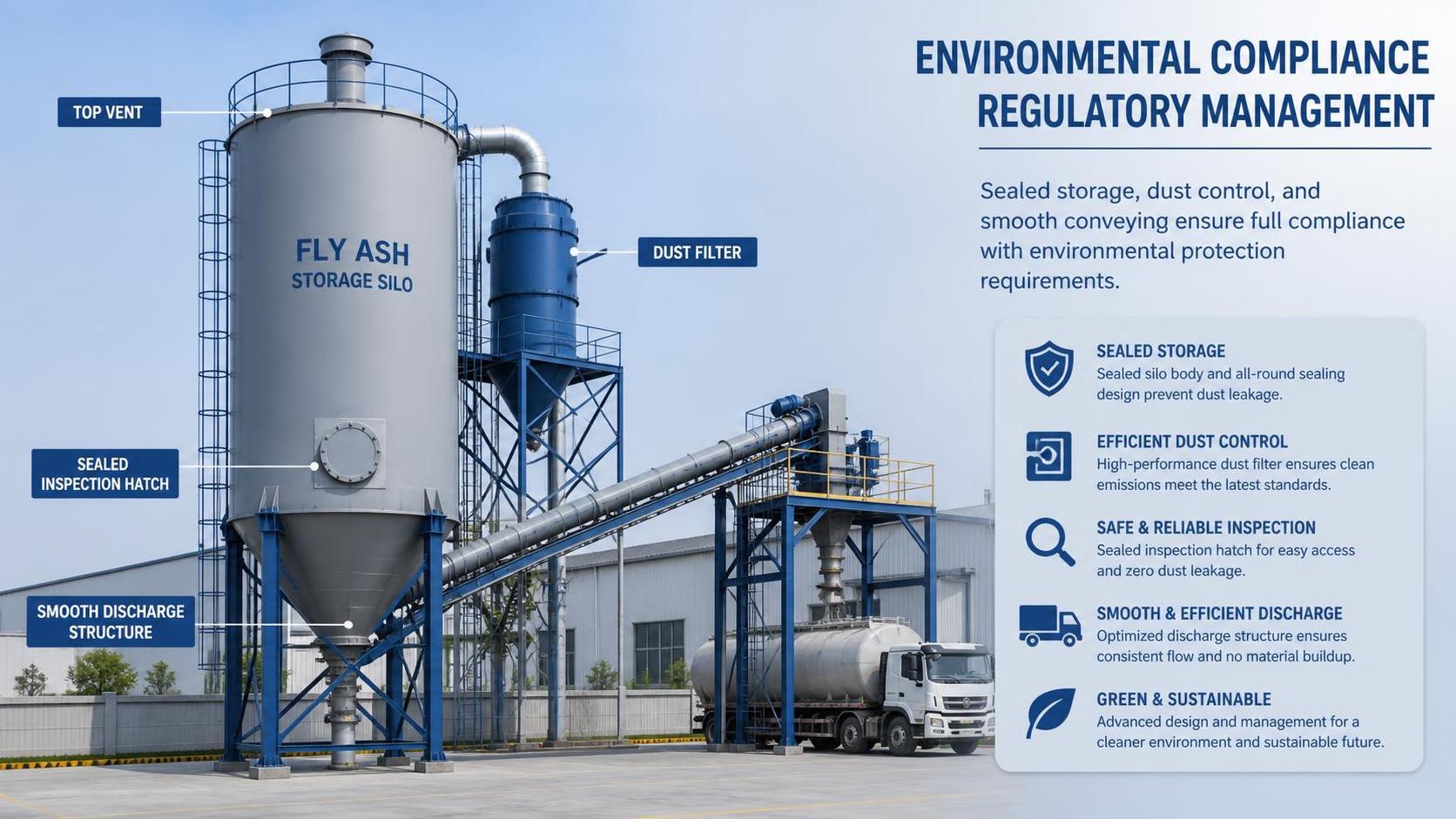
When a fly ash storage area starts causing trouble, it is rarely because of one dramatic failure. More often, the warning signs are small: dust drifting near the loading point, a roof hatch that does not close properly, moisture sneaking into the silo, or inspection notes that are missing just when someone asks for them. In daily operations, those issues can look minor. Under environmental review, they can become a compliance problem fast.
That is why fly ash storage cannot be treated as a simple material-handling task. Environmental teams usually need to verify more than whether the silo is full or empty. They have to check containment, emission control, housekeeping, structural condition, and recordkeeping together, because one weak link can affect the whole system.
Start with the symptoms people actually notice
The first clue is often dust. If operators see residue around vents, conveyor transfer points, or truck unloading areas, the issue may not be the ash itself but the way it is being contained. Fine powder behaves differently from bulk material that settles quickly. A small leak, a loose seal, or an overfilled bin can create a visible problem before anyone finds the root cause.
Moisture is the other common trigger. Fly ash absorbs water, clumps, and becomes harder to move. That changes discharge behavior and can also create cleanup problems around access points. In some sites, the storage unit looks fine from the outside, but internal buildup already affects flow and makes routine inspection harder than it should be.
Environmental teams usually notice these patterns first during walkdowns, complaint follow-up, or pre-audit checks. The key is to treat each symptom as a verification point, not just a housekeeping issue.
What needs to be verified before anyone calls it compliant
A proper review starts with the storage structure itself. The silo or bin should match the material it is holding, especially when the product is light, dusty, and sensitive to moisture. If the storage design was originally chosen for a different powder, the team should confirm whether the current setup still fits the actual handling conditions.
For sites considering a dedicated storage unit, Fly Ash & Mineral Powder Special Storage Silos are often evaluated because they are intended for fine powders that need controlled storage and simpler material protection. The point is not the name on the equipment; the point is whether the unit supports sealed storage, stable discharge, and practical inspection access.
Next, verify the dust-control points. That includes vents, filters, seals, loading connections, and any transfer line where air can escape. Even if the system has a dust collector, it still needs routine checks for blockage, wear, and poor fit. A compliant setup is one that keeps emissions under control during normal operation, not only when it is freshly installed.
A practical inspection path teams can actually use
It helps to move from outside to inside. Begin with the visible condition around the storage area: ground accumulation, spill marks, damaged covers, and signs that material is escaping during transfer. Then move to the top section, where roof joints, access ports, and vent hardware often show the first signs of wear.
After that, check internal function through operational behavior. Does the ash discharge smoothly, or does it bridge and hang up? Does the feeder need repeated intervention? Are operators opening access points too often because flow is inconsistent? Those are not just production annoyances; they can also indicate moisture ingress, poor aeration, or an unsuitable discharge angle.
Finally, review the documents people tend to postpone: inspection logs, maintenance records, dust-control maintenance notes, and any corrective actions taken after abnormal findings. If the site cannot show what was checked, when it was checked, and what was repaired, the system is harder to defend during an audit.
Common misunderstandings that create avoidable problems
One frequent mistake is assuming that a clean exterior means the storage system is fine. In reality, hidden buildup, worn seals, and poor internal flow can exist long before dust becomes visible.
Another is treating moisture protection as a weather issue only. Rain is obvious, but humidity, condensation, and open transfer windows can matter just as much. If the storage area sits idle for long periods, material condition can change even without obvious leaks.
A third misconception is believing that one-time inspection is enough. For fly ash storage, conditions shift with use, season, and handling frequency. What worked during commissioning may not be enough after months of operation.
Where a stronger storage choice helps the verification process
Sometimes teams do everything right on paper, but the physical setup still makes compliance difficult. Narrow access, poor sealing details, or inconsistent discharge performance can turn routine checks into repeated work. In that case, the question is not just “How do we inspect better?” but “Does the storage equipment support the inspection and control tasks we need?”
That is where equipment selection matters. A storage silo designed for fine powders can make it easier to manage dust suppression, protect material quality, and keep the site more orderly during transfer. For environmental teams, that usually translates into fewer surprise findings and a clearer maintenance routine. Still, even a well-designed unit depends on correct installation, daily attention, and timely repair.
When to bring in specialists
If repeated dust escape, unstable discharge, or structural concerns keep showing up, the issue may be beyond basic operations. Professional support is worth considering when sealing problems return after repairs, when the team cannot trace the source of moisture entry, or when the silo shows signs of deformation, corrosion, or abnormal wear.
That is especially true in multi-industry sites where fly ash storage sits near other powders, heavy traffic, or outdoor exposure. In those settings, the challenge is not only storage capacity but also how the system handles real work conditions over time. A technical review can help determine whether the problem is maintenance-related, design-related, or a combination of both.
Questions worth asking during the next review
Before closing out an inspection, ask whether the storage unit is still matched to the material characteristics, whether dust-control points were checked under operating conditions, whether moisture protection is working in practice, and whether records are complete enough for an outside review.
If the answer is unclear on any of those points, the site is not fully ready yet. The good news is that most fly ash storage issues are manageable once teams focus on the actual failure points instead of relying on appearance alone. A careful inspection routine, supported by the right storage design, is usually the fastest path to fewer surprises and better control.
Related Posts
- ▶ How a Dry Bulk Silo Handles Pneumatic Filling and Gravity Discharge
- ▶ What Is a Dry Bulk Silo, and When Does a Factory Need One?
- ▶ Can dry bulk storage silos be integrated into existing PLC-controlled batching systems?
- ▶ Do dry bulk silos designed for API 650 compliance meet ASME Section VIII requirements?
- ▶ Is almacénamiento de sólidos a granel en silos de acero inoxidable viable for small-scale agrochemical distributors?
- ▶ How do vibration-based level sensors perform in stainless steel silos with powder coating?
Online Message