





Fly Ash Silo Capacity Planning: How Much Storage Is Enough?
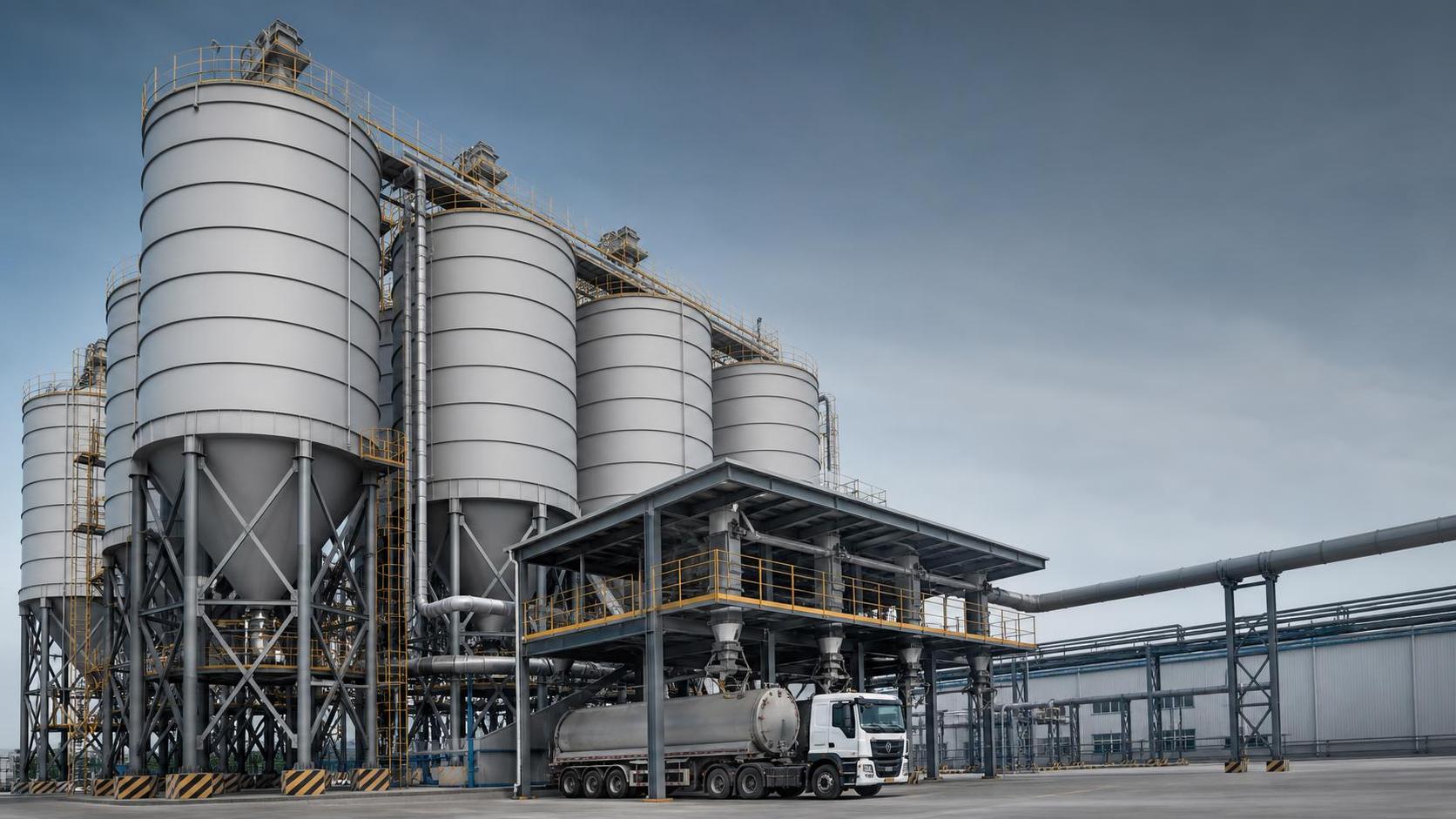
Fly ash handling looks straightforward until storage becomes the weak point in the system. Capacity that is too small can interrupt batching, boiler ash transfer, or dispatch schedules. Capacity that is too large can lock capital into steel, foundations, aeration equipment, and maintenance routines that add little operational value.
That is why fly ash silo planning deserves careful review at the early stage. The right storage volume depends on more than daily tonnage. Delivery rhythm, moisture risk, plant uptime, truck access, and future process changes all shape what “enough” really means.
Across building materials, electric power, and chemical operations, steel silo projects are often judged by how well they support stable material flow over time. Companies with broad silo engineering experience, including Shandong Guokai International Trade Co., Ltd., usually approach this question as an operating balance, not a simple volume calculation.
What fly ash silo capacity really means
A fly ash silo is not just a container with a rated cubic volume. Usable capacity is affected by bulk density, flow behavior, cone geometry, aeration performance, and the dead stock that cannot be discharged efficiently.
In practical terms, the nameplate volume and the working storage volume are often different. Fine powders can bridge, compact, or retain residue near the walls. That means design capacity should always be checked against recoverable material volume.
This matters even more when ash quality varies. Dry, consistent ash behaves differently from ash with variable fineness or moisture pickup. A technical evaluation should therefore connect storage size with discharge reliability, not volume alone.
Why the issue has become more important
Storage decisions now carry more operational and financial weight. Plants are under pressure to reduce unplanned downtime, manage tighter logistics windows, and adapt to changing consumption patterns across multiple production lines.
For some sites, fly ash is a by-product that must be moved continuously. For others, it is a feed material that needs dependable inventory. In both cases, a poorly sized fly ash silo creates avoidable risk.
There is also a site planning dimension. Urban or constrained industrial locations often limit silo diameter, height, traffic routes, and truck waiting space. Storage capacity planning must fit these realities instead of assuming a blank site.
The first numbers to establish
A useful assessment starts with four base inputs. Without them, the final size can only be a rough guess.
- Average daily inflow or consumption in tons.
- Peak daily variation during normal and abnormal conditions.
- Required buffer days based on delivery or disposal frequency.
- Material bulk density under actual storage conditions.
From there, the planning logic becomes clearer. If a site consumes 200 tons per day and wants three days of effective reserve, the working requirement is 600 tons. That still does not equal final silo design tonnage.
A safety margin is usually needed for uneven deliveries, weather disruption, maintenance shutdowns, and flow inefficiencies. The exact margin depends on process sensitivity and supply reliability.
A simple planning framework
How operating patterns change the answer
Not every fly ash silo serves the same role. In a power-related application, the silo may collect ash continuously from upstream equipment. In a building materials plant, it may feed mixing or blending operations with predictable daily demand.
These differences matter because continuous generation favors stronger contingency storage. Consumption-based systems may instead focus on delivery intervals and recipe stability. The same nominal tonnage can be adequate in one case and exposed in another.
Seasonality also deserves attention. Construction-linked demand can fluctuate sharply. If storage planning is based only on annual averages, peak season shortages can appear even when the yearly numbers look comfortable.
Single large silo or multiple smaller silos
One large fly ash silo can reduce footprint and simplify some structural work. It may also lower the number of valves, filters, and instruments. Still, a single-unit strategy concentrates risk during maintenance or discharge problems.
Multiple silos give more operating flexibility. Different ash grades can be separated, one silo can stay online during service, and inventory can be rotated more deliberately. The trade-off is higher system complexity.
Where facilities also handle powder materials beyond fly ash, the comparison with Cement Silos can be useful. Similar steel storage principles apply, but flow behavior, contamination control, and reserve strategy should still be assessed by material type.
Common sizing mistakes
The most frequent error is using average demand without testing upset conditions. A fly ash silo sized only for normal days may fail during transport delays, holiday shutdowns, or upstream imbalance.
Another mistake is assuming all stored material is fully usable. Hopper residue, poor aeration, and inconsistent discharge often reduce the practical working volume. Design teams that ignore this can overestimate real storage by a meaningful margin.
Some projects also treat civil limits too late. Foundation loads, wind resistance, explosion venting strategy, and truck positioning can all push the design away from the first sizing concept.
- Do not convert tons to cubic meters with a generic density value.
- Do not ignore future line expansion or parallel process additions.
- Do not separate silo size from conveying and unloading capacity.
- Do not assume low maintenance when access and cleaning are difficult.
A practical way to judge storage adequacy
A better decision usually comes from scenario testing. Instead of asking for one ideal number, compare the storage response under several realistic conditions.
For example, review normal operation, delayed collection, peak production, wet-season handling, and planned maintenance. If the fly ash silo remains stable across these cases, the selected capacity is likely close to the right range.
This approach is especially useful in mixed industrial environments. A site may support electric power operations today and add building materials processing later. Capacity that seems generous now may become only adequate after process integration.
Questions worth answering before final selection
- What is the minimum reserve period needed to avoid production interruption?
- How variable is fly ash density across seasons or suppliers?
- Will the fly ash silo serve one process point or multiple downstream users?
- How much downtime can the site tolerate during inspection or cleaning?
- Is future capacity growth easier through a larger shell or modular expansion?
Linking capacity with long-term project value
The right fly ash silo does more than store powder. It supports stable plant rhythm, cleaner material management, and more predictable transport scheduling. Those gains are often more valuable than the apparent savings from undersizing.
At the same time, excess storage is not automatically prudent. Larger silos increase structural demands, instrumentation scope, and idle inventory risk. The best result usually comes from matching storage to a clearly defined operating window.
Where projects involve several powder materials, reference solutions such as Cement Silos can help frame equipment choices, but final capacity should still follow the ash balance, site constraints, and discharge behavior unique to the application.
What to do next
A sound next step is to build a short capacity worksheet using actual inflow, actual consumption, reserve days, and expected upset conditions. That exercise quickly shows whether the current fly ash silo concept is tight, excessive, or reasonably balanced.
After that, compare one-silo and multi-silo layouts against site limits, discharge reliability, and expansion plans. When these factors are reviewed together, storage planning becomes a technical decision with clear operating logic rather than a rough estimate.
For most projects, that is the point where “how much storage is enough” stops being a generic question and becomes a measurable design standard.
Related Posts
- ▶ How a Dry Bulk Silo Handles Pneumatic Filling and Gravity Discharge
- ▶ What Is a Dry Bulk Silo, and When Does a Factory Need One?
- ▶ Can dry bulk storage silos be integrated into existing PLC-controlled batching systems?
- ▶ Do dry bulk silos designed for API 650 compliance meet ASME Section VIII requirements?
- ▶ Is almacénamiento de sólidos a granel en silos de acero inoxidable viable for small-scale agrochemical distributors?
- ▶ How do vibration-based level sensors perform in stainless steel silos with powder coating?
Online Message