





Can dry bulk silos be retrofitted with level monitoring systems without downtime?
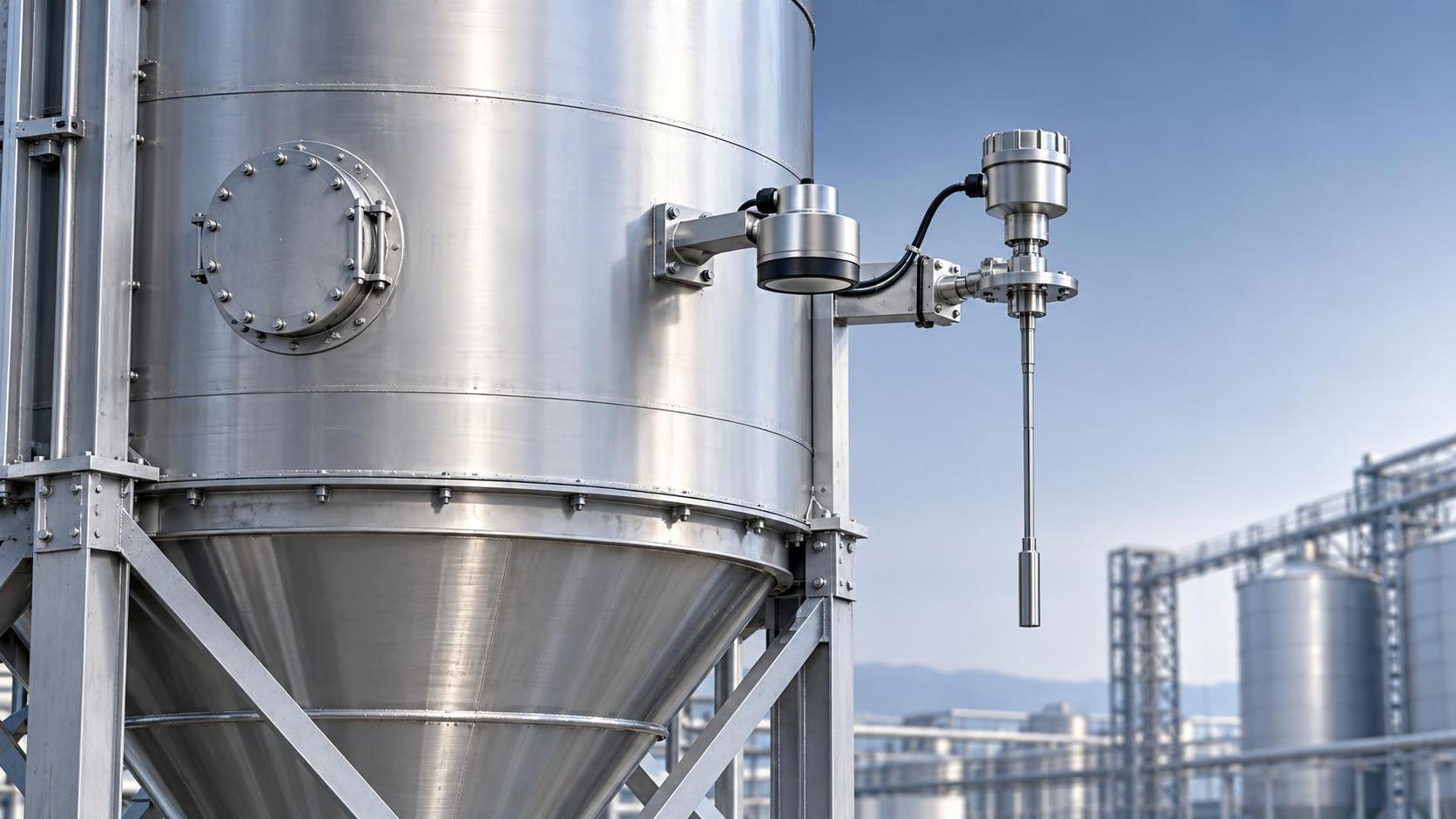
Yes—dry bulk silos can be retrofitted with advanced level monitoring systems without operational downtime, a critical advantage for project managers overseeing continuous production. At Shandong Guokai International Trade Co., Ltd., we engineer non-intrusive integration solutions tailored to existing steel dry bulk silo infrastructure—ensuring real-time inventory accuracy, safety compliance, and zero process interruption. Leveraging our expertise in grain, power, chemical, and building materials sectors, we deliver seamless upgrades that align with your schedule, budget, and performance goals.
Think of the last time you stood beside a towering steel silo—maybe during a routine site walk, maybe while reviewing a maintenance log—and felt that quiet tension: *What if the level sensor fails again? What if we overfill and trigger a shutdown? What if we don’t know the true inventory until it’s too late?* These aren’t hypotheticals. They’re daily pressures for project managers who balance output targets against risk exposure, where even a 90-minute stoppage ripples across logistics, labor scheduling, and contractual obligations.
That’s why the question isn’t *whether* level monitoring should be added—it’s *how*, and *when*. And increasingly, the answer is: *now*, and *without stopping the line*.
The misconception persists that retrofitting means scaffolding, welding, draining, or decommissioning—even for something as seemingly simple as a level sensor. But modern dry bulk silo retrofits rely less on brute-force installation and more on intelligent interface design. It starts with understanding what’s already there: vessel geometry, material flow behavior, access points, structural integrity, and existing instrumentation architecture. A silo built for grain storage behaves differently under cement dust than under fly ash; its wall thickness, liner type, and internal baffles all influence sensor placement and signal fidelity. That’s where generic off-the-shelf kits fall short—and where domain-specific engineering makes the difference.
At Guokai, our approach begins with a non-invasive assessment—not just of the silo shell, but of the operational rhythm around it. We map valve cycles, discharge patterns, fill intervals, and ambient conditions (humidity, temperature swings, vibration from adjacent conveyors). This isn’t about dropping in a radar unit and calling it done. It’s about embedding visibility into the workflow—not disrupting it.
Take ultrasonic sensors, for instance. Once considered unreliable for dusty, high-temperature bulk environments, today’s models feature adaptive echo filtering, temperature compensation, and self-cleaning transducers. Mounted externally through existing manways or welded flanges—no cutting, no welding—they transmit pulses through the steel wall itself. The signal travels cleanly through uniform plate thickness, and algorithms compensate for minor surface irregularities or thermal expansion. No need to empty the silo. No need to isolate the system. Just calibrated mounting, secure cabling, and integration into your existing SCADA or DCS via standard protocols (Modbus TCP, HART, or OPC UA).
Then there’s guided wave radar—ideal for silos handling cohesive or bridging materials like hydrated lime or fine coal powder. Its probe can be inserted through a top-mounted port, often using a retractable housing that avoids contact with moving material. Crucially, this insertion happens during a natural lull: between batches, during scheduled inspection windows, or even while material is flowing at reduced rates. Because the probe doesn’t require full vessel access, it sidesteps the biggest bottleneck—confined-space entry permits and lockout-tagout delays.
We’ve also seen growing adoption of strain-based load monitoring for older silos lacking top access altogether. By installing precision load cells at support legs or skirt bases—again, without lifting or unloading—the system infers mass indirectly. Calibration uses historical fill data and known density ranges, then refines itself over time. It’s not a substitute for point-level measurement, but it’s exceptionally robust for trend-based inventory reconciliation and overload prevention—especially valuable in chemical or power applications where overpressure or foundation stress poses real safety risks.
None of this works without context-aware integration. A level reading is only useful if it speaks the same language as your control room. That means translating raw signal outputs into actionable thresholds—“low-level alarm at 15% volume”, “reorder trigger at 3 days’ consumption”, “high-level interlock before secondary transfer initiates”. We build these logic layers *with* your automation team, not over them. No black-box software. No proprietary gateways. Just clear I/O mapping, documented configuration, and operator-facing HMI screens designed for clarity—not clutter.
And yes—this applies equally to legacy silos and newer builds. In fact, many of our recent projects involve 800-1500 Tons Silos commissioned five to fifteen years ago. Their structural integrity remains excellent, but their instrumentation hasn’t kept pace with today’s data demands. Retrofitting isn’t about replacing hardware—it’s about unlocking latent capability.
What often holds teams back isn’t technical feasibility—it’s uncertainty about sequencing. Will the vendor coordinate with your maintenance planner? Can calibration happen during a weekend shift? What happens if the first reading drifts? We address these not as disclaimers, but as built-in checkpoints: pre-installation simulation using digital twin models, on-site commissioning support during low-risk windows, and post-installation validation against manual dip tapes or weighbridge logs for 72 hours. Transparency, not promises.
There’s also a subtle but important cultural shift happening: project managers are no longer evaluating level monitoring solely on cost per unit. They’re weighing it against downtime cost per hour—calculated not just in lost throughput, but in overtime premiums, delayed deliveries, and reputational friction with downstream partners. One cement plant we worked with calculated that a single unplanned 4-hour silo shutdown cost more than three full sensor retrofits—*combined*. That math changes priorities.
Still, caution remains warranted. Not every sensor suits every application. Guided wave radar struggles in highly aerated fly ash. Capacitance probes degrade in conductive slurries. Even non-contact radar can misread when condensation coats the dome interior. That’s why our assessments include material sampling—not lab analysis, but field observation: how it flows, how it settles, how it coats surfaces. We ask operators what they *see*, not just what the PLC reports.
Ultimately, retrofitting a dry bulk silo with level monitoring isn’t about adding hardware. It’s about restoring confidence—in inventory, in scheduling, in safety margins. It’s the quiet certainty that lets you approve a weekend delivery without checking your phone at 2 a.m. It’s knowing that when the next audit comes, your stock records won’t hinge on estimation—but on traceable, timestamped, calibrated data.
For project managers carrying the weight of uninterrupted operation, that kind of reliability isn’t an upgrade. It’s operational insurance—installed without interrupting the very process it protects.
And if you’re evaluating options right now—not just for one silo, but for a fleet—we’ll help you prioritize based on risk exposure, not just age or size. Because the most urgent retrofit isn’t always the oldest one. Sometimes, it’s the one feeding your critical path line. The one with no backup. The one where “we’ll check it manually” no longer holds up.
You don’t need to choose between continuity and capability. With the right partner—and the right approach—you get both.
Related Posts
- ▶ How a Dry Bulk Silo Handles Pneumatic Filling and Gravity Discharge
- ▶ What Is a Dry Bulk Silo, and When Does a Factory Need One?
- ▶ Can dry bulk storage silos be integrated into existing PLC-controlled batching systems?
- ▶ Do dry bulk silos designed for API 650 compliance meet ASME Section VIII requirements?
- ▶ Is almacénamiento de sólidos a granel en silos de acero inoxidable viable for small-scale agrochemical distributors?
- ▶ How do vibration-based level sensors perform in stainless steel silos with powder coating?
Online Message